






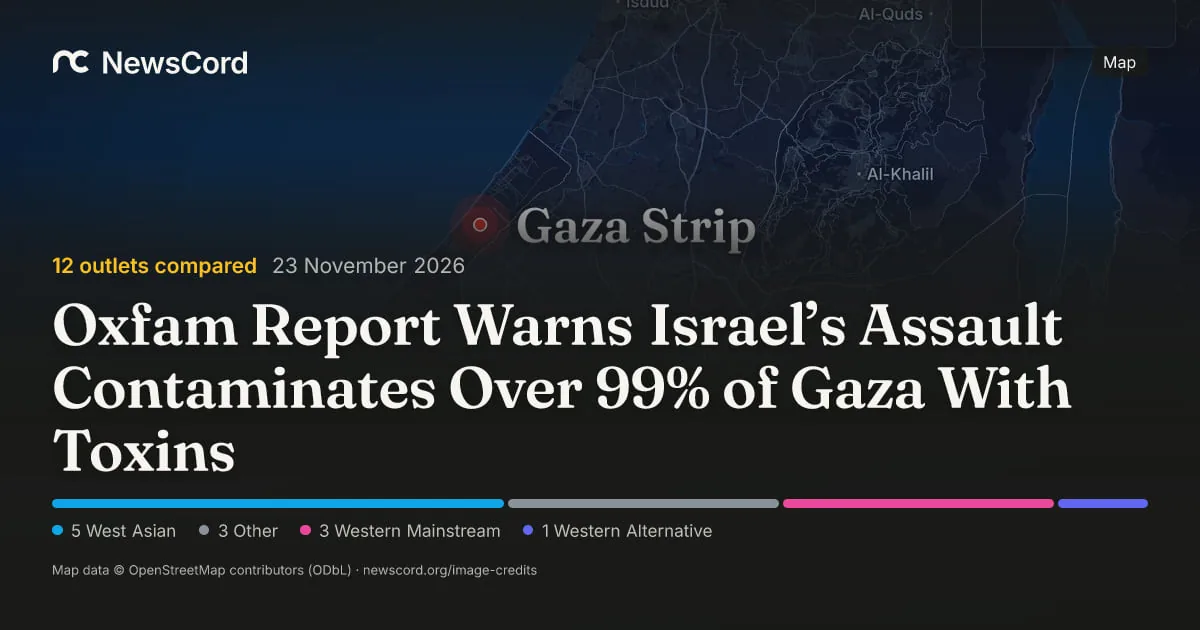
The new Oxfam Gaza report warns that military attacks left chemical residues, untreated wastewater, and toxic rubble over more than 99 percent of the strip. Oxfam published the research jointly with the UK-based Conflict and Environment Observatory (CEOBS), describing how three years of heavy bombardment degraded basic living conditions needed for human survival in Gaza [1]. Researchers combined satellite pictures, remote sensing data, and open-source records to map environmental fallout from the war. Toxic materials now contaminate local soil, air, and coastal water systems [2]. Will families returning to ruined neighborhoods in Gaza face persistent chemical hazards for decades to come? Industrial debris and collapsed sanitation systems now endanger daily civilian life [1].
What the Oxfam Gaza Report Team Discovered
Researchers from Oxfam and CEOBS determined that Israeli military strikes affected about 78 percent of the total land area of the Gaza Strip, mapping severe pollution hotspots in Gaza City, Khan Younis, Rafah, Jabalia, and along Salah al-Din Road [2]. Executive director Amitabh Behar said the bombardment turned Gaza into a toxic wasteland. He accused Israeli forces of committing environmental war crimes during the conflict [1].
Toxic pollutants enter the human body through air, food, drinking water, and direct skin contact with ruined building materials [2]. Displaced families in Gaza live in makeshift shelters surrounded by piles of pulverized concrete and uncollected waste [1]. In July 2026, field samplers found faecal coliform bacteria in 19 percent of 79 tested water wells, up from 2 percent recorded in 2021 [2].
Gaza soil testing remains impossible because local laboratories lie completely destroyed. Even the UN Environment Programme (UNEP) confirmed that security risks kept its expert staff from traveling into the enclave to collect ground samples. Israeli border controls blocked diagnostic equipment [1]. Without field access, investigators relied on satellite imagery, remote sensing, spatial analysis, and open-source records to calculate the spread of toxic materials in Gaza [2].
Munitions and Debris
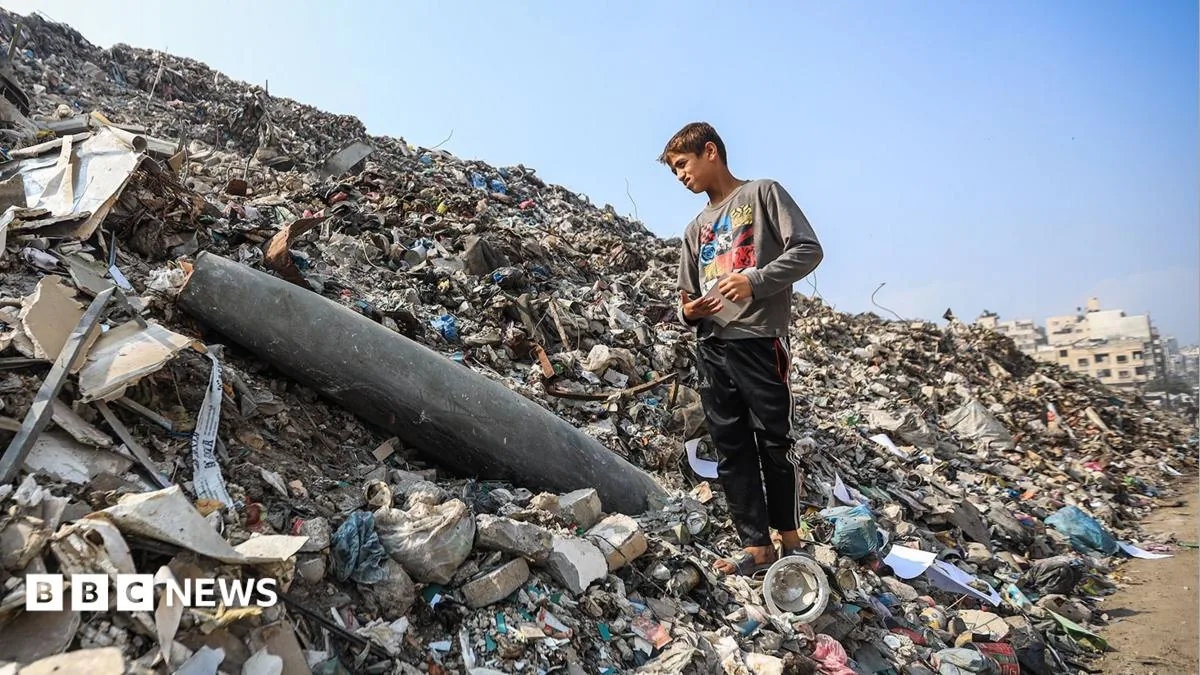
The volume of munitions detonated during the fighting created an environmental burden that researchers say will outlast the war by decades. In February, a UN special rapporteur stated that military forces dropped more than 200,000 tonnes of explosives on Gaza over twenty-four months, an amount equaling the explosive power of about 13 Hiroshima-type atomic bombs. A study by UNEP estimated that demolitions generated over 61 million tonnes of rubble, with roughly 15 percent carrying a high risk of hazardous chemical contamination [1]. When residential buildings in Gaza collapse under intense airstrikes, drifting clouds of pulverized asbestos, heavy metals, and dioxins settle into nearby displacement camps where young children breathe the fine particles. Toxic residues remain dangerous long after explosions cease [2].
Clay-rich soils around Beit Hanoun, Wadi Gaza, and northeastern Khan Younis hold onto chemical pollutants for decades because dense earth does not let rainwater wash heavy metals away [2]. Farmers risk harvesting poisoned vegetables [1]. Lama Abdul Samad, the lead author of the Oxfam Gaza report, warned that persistent contaminants in agricultural soil pose long-term hazards to public health and farming communities in Gaza [2].
Unexploded aerial bombs and artillery shells scattered through the rubble present immediate hazards to cleanup teams working in ruined neighborhoods across Gaza [2]. Crews cannot move debris until bomb disposal specialists defuse live munitions. This explosive danger halts clearance operations in Rafah and Jabalia [1].
Water and Sewage
All six wastewater treatment plants in Gaza stopped working because of power cuts, fuel shortages, and direct airstrike damage. Without functioning treatment facilities, millions of liters of untreated raw sewage flow into sandy coastal soil, shallow groundwater aquifers, and the Mediterranean Sea every single day. Dr Alaa Abu Hajar told BBC News that overflowing sewage lines now run directly past family tents in displacement camps [1].
Winter storms made the sanitation collapse worse as seasonal rains flooded unpaved roads and dirt paths. Heavy downpours pushed foul sludge into temporary shelters, soaking family bedding and clothes. Coastal fisherman Abu al-Abed Sultan complained that untreated sewage ruins nearshore waters, while submerged building rubble tears their fishing nets and kills local fish along the coast. He said nets pull up masonry instead of fish [1].
Can underground aquifers beneath Gaza ever recover once raw sewage and toxic military residues seep deep into the coastal sand beds? Hydrologists investigating the Mediterranean coastline warn that subterranean contaminants migrate slowly through groundwater layers, while local water authorities lack the complex desalination and filtration systems required to purify poisoned wells [2]. Gazan families now rely entirely on private tanker trucks [1].


Camp Health Risks
Medical staff working in refugee camps report a fast rise in illnesses linked to environmental contamination and ruined sanitation. Dr Alaa Abu Hajar, a Palestinian dermatologist, told the BBC that he documented a five-fold jump in long-term skin conditions following the outbreak of fighting. Scabies, painful rashes, and fungal infections spread quickly through crowded living spaces where families share unwashed blankets. Swarms of flies, rodents, and mounds of rotting garbage worsen the spread of faecal coliform bacteria among young children who play near open drains [1].
Air quality in displacement camps across southern Gaza deteriorated rapidly from demolition dust and open fires. Displaced residents burn scrap plastic, rags, and discarded cardboard boxes to cook food or warm their shelters during cold winter nights [1]. Children breathing smoke from burning scrap plastics develop respiratory irritation and acute asthma attacks [2]. Medical teams in Gaza warn that breathing fine silica dust and chemical smoke over extended periods causes permanent lung damage [1].
Lead author Lama Abdul Samad said toxic exposures may cause long-term health crises, including organ damage, cancer, and elevated rates of birth defects. At least 74,746 Palestinians have died since the conflict began, according to health records cited by the UN. Surviving residents in Gaza now face silent chemical risks from the air they breathe, the water they drink, and the soil beneath their tents [1]. When toxic dust coats living spaces and untreated wastewater saturates sandy soil, children suffer the heaviest biological burden because their developing organs absorb heavy metals more readily than adults [2]. Chronic illnesses may follow children for decades [1].
How Israel Questioned the Oxfam Gaza Report Data
The Israeli embassy in London rejected the study and claimed its conclusions fell short of professional academic standards. Israeli representatives stated that the researchers relied on satellite images and unverified assumptions instead of direct ground sampling. In its statement, the embassy argued that the assessment drew conclusions about local soil and groundwater without considering how hundreds of kilometers of underground tunnels built by Hamas affected the land [1].
Israel has defended its military operations as legitimate self-defence following the Hamas attack on 7 October 2023. Government spokespersons stated that armed forces take steps to mitigate civilian harm during combat operations. In submissions to the International Court of Justice (ICJ), Israel rejected accusations of genocide and environmental war crimes, characterizing the legal claims as baseless and distorted [1].
Political disputes continue to complicate future reconstruction efforts in the destroyed territory of Gaza. In July, Hamas accepted a peace plan drafted by a US-led Board of Peace to surrender weapons in exchange for an Israeli troop withdrawal, but government officials in London and Jerusalem noted that Israeli leaders rejected the proposal as insufficient. Israel conditions all rebuilding on full Hamas disarmament [1].
Reconstruction Hurdles
Clearing more than 61 million tonnes of rubble from ruined streets in Gaza City, Khan Younis, and Rafah will require years of labor and billions in international aid [1]. Authors of the Oxfam Gaza report urged foreign donors to treat environmental rehabilitation as an urgent humanitarian priority [2]. Amitabh Behar insisted that Palestinian communities must lead all recovery operations directly [1]. He stressed that rebuilding must remain rights-based and reparations-oriented [2].
Environmental agencies plan to conduct a formal Post-Conflict Environmental Assessment across Gaza before cleanup operations begin. Field assessment teams need full access for independent scientists, soil chemists, and testing equipment. Without permission to import diagnostic tools and protective gear for workers, local crews face dangerous exposure to toxic residues and unexploded ordnance while clearing roads in Gaza [2].
Agricultural specialists need long rehabilitation periods to remediate contaminated soil around Beit Hanoun and Wadi Gaza. Deep chemical contamination cannot be fixed overnight [2]. Until international agreements guarantee open borders and independent environmental testing, millions of residents will continue to live among hazardous ruins [1].
- ONLINE NEWS Yolande Knell. (2026, November 23). Israeli attacks have turned Gaza into ‘toxic wasteland’, Oxfam says. BBC News. [Article Link]
- ONLINE NEWS NewsCord. (2026, November 23). Oxfam Report Warns Israel’s Assault Contaminates Over 99% of Gaza With Toxins: 12 outlets compared. NewsCord. [Article Link]
APA 7: PerEXP Teamworks. (2026, November 24). Oxfam Gaza Report Warns Toxic Damage Threatens Public Health. PerEXP Teamworks. https://perexpteamworks.com/en/oxfam-gaza-report-toxic-contamination/


