






SpaceX caught an orbiting rocket stage in midair for the first time on Saturday afternoon, returning its massive vehicle directly to the launch site at Starbase in South Texas. During the flight, the Starship upper stage known as Ship 42 fired its Raptor engines to drop out of orbit, traveled through the atmosphere, and slid between two metal arms attached to the launch tower. The test proved that a large orbital spacecraft can return safely to its launch mount [1].
Tower Catch at Starbase
The Starship upper stage touched down at the Starbase launch complex at 4:20 p.m. EST (2120 GMT; 3:20 p.m. local Texas time) after completing 14 orbits around Earth during a 22-hour orbital test flight. Ground crews in South Texas watched Ship 42 drop through coastal clouds into a hover [4].
The launch tower, named Mechazilla, used two steel arms called chopsticks to grab the falling hull. SpaceX commentator Dan Huot called the recovery “the missing link” and “the holy grail of spaceflight” during live coverage while the song “Baby Come Back” played for engineers in the control room. Webcast announcer Jessie Anderson praised the technical achievement. Catching the stage in midair eliminates heavy landing legs, protects structural hardware, and lets technicians inspect the vehicle directly at the pad. Professor Joseph Gonzalez of the University of Illinois Urbana-Champaign, who contributed to Artemis II, said tower arms offer a faster path to reuse than ocean recovery [1].
Engineers prepared offshore landing options in the Pacific Ocean. Flight controllers prepared diversion routes into waters west of Hawaii or Chilean coastal waters if onboard thermal sensors indicated excessive heating during the descent through the atmosphere. Because trajectory telemetry remained within limits, flight directors cleared the vehicle to aim directly for the Texas tower [2].
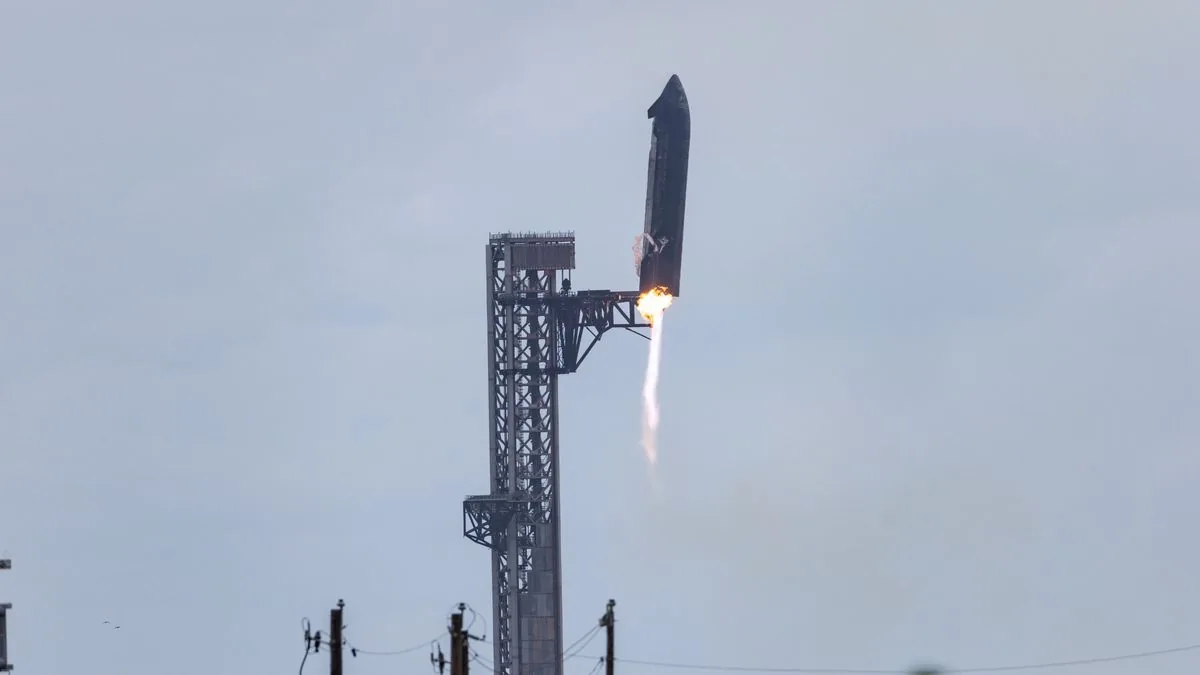
Why the Super Heavy Booster Aborted
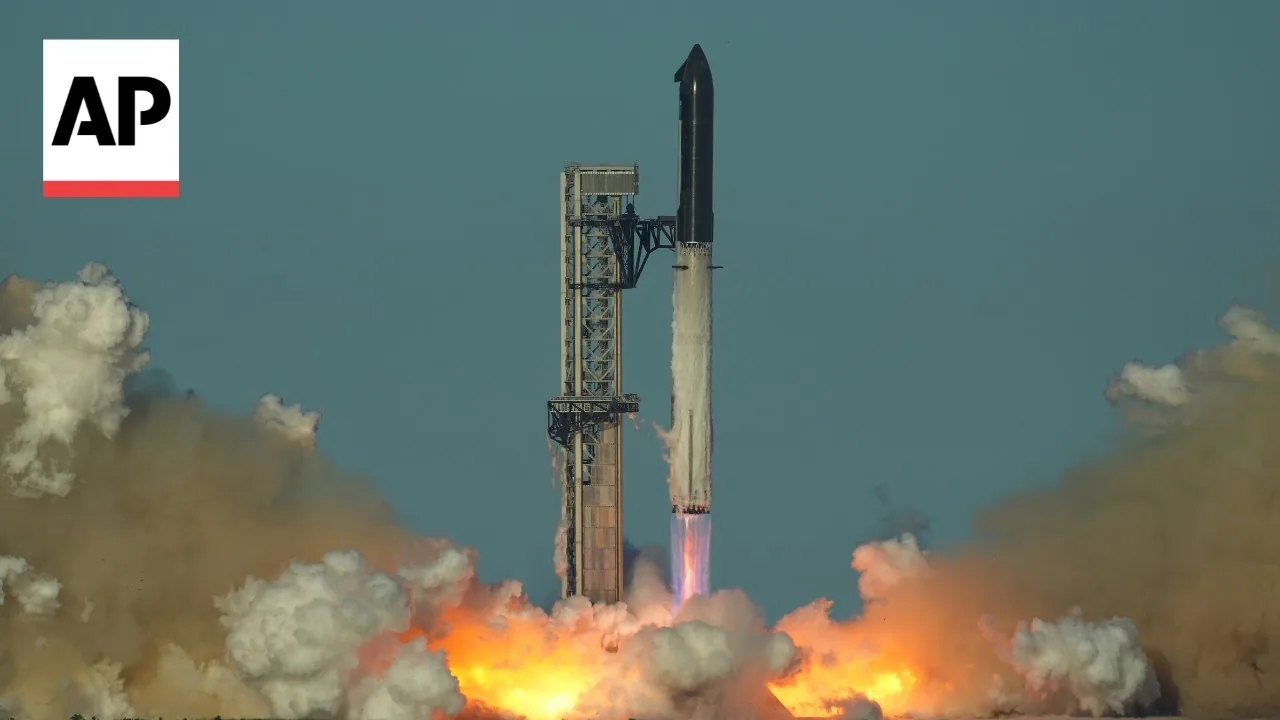
SpaceX had sought a double catch by trying to recover both rocket stages at Starbase during Flight 15. Liftoff occurred Friday from South Texas at the start of a 75-minute launch window, sending the 41-story rocket into flight with all 33 Raptor engines firing simultaneously. After stage separation, the booster flipped around and ignited 32 of the 33 engines to push back toward the Texas coast before guidance alarms triggered. Earlier mission planning outlined how SpaceX wanted to achieve a Starship double catch during operational tests. An automated abort stopped the return just 6.5 minutes after liftoff [3].
The booster, cataloged as Booster 22, fired 13 Raptor engines during its final descent maneuver before triggering its flight termination system over open waters in the Gulf of Mexico. Kate Tice said low fuel mass triggered the shutdown. The rocket detonated just above the water [3].
Dan Huot said Guidance and Navigation Control performed as planned by aborting when the booster was out of position. Elon Musk posted that a “slight underperformance of engines” affected the attempt, but added that older hardware prototypes would not delay the overall Starship flight schedule. SpaceX had caught boosters on three previous flights. Engineers will use data from the Gulf splashdown to adjust fuel alarm limits before the next launch [3].
Starship Upper Stage Satellite Deployment
The spacecraft climbed into space along an orbital path reaching 170 miles in altitude. Earlier program evaluations documented how Starship test flight milestones established orbital flight profiles and velocity margins during previous test campaigns. The vehicle circled Earth 14 times at speeds exceeding 17,000 miles per hour over roughly 22 hours before beginning descent operations [6]. Orbit held steady.
About 35 minutes after launch, the vehicle began releasing a payload of 26 Starlink V3 satellites into low Earth orbit. That deployment lasted 42 minutes across space. This was the second batch of V3 satellites to reach orbit, following the 26 units launched on Flight 14 in September. SpaceX operates 11,000 satellites today and aims to deploy 100,000 spacecraft across future networks. Several of the new satellites carried inspection cameras that pointed back at the ship during flight, providing high-resolution views of its thermal tiles to help flight controllers verify heat shield health before reentry [4].

Ground teams in South Texas studied camera imagery throughout the mission to track tile conditions. Dan Huot reported on Friday that visual data showed the heat shield was in good posture for atmospheric reentry. Controllers monitored hull temperatures until deorbit thrusters ignited [3].


Atmospheric Entry and Steering Flaps
How does the heavy steel ship shed speed without burning through its frame? Traveling faster than 17,000 miles each hour, the vehicle met the upper atmosphere and converted its orbital momentum into glowing plasma across its belly. Four steering flaps moved constantly to maintain a belly flop orientation throughout the descent. Alistair John, director of aerospace engineering at the University of Sheffield in England, compared the posture to a skydiver who uses arms and legs to adjust direction. The ship carried the slogan “DON’T PANIC” as an homage to author Douglas Adams and The Hitchhiker’s Guide to the Galaxy, celebrating its designation as hull number 42 off the assembly line [1].
The craft crossed Mexico before descending through clouds over South Texas. Onboard computers ignited the Raptor thrusters to pivot the 170-foot hull from horizontal flight into an upright hover just above the launch pad, allowing the steel arms of Mechazilla to clamp shut around the vehicle [1].
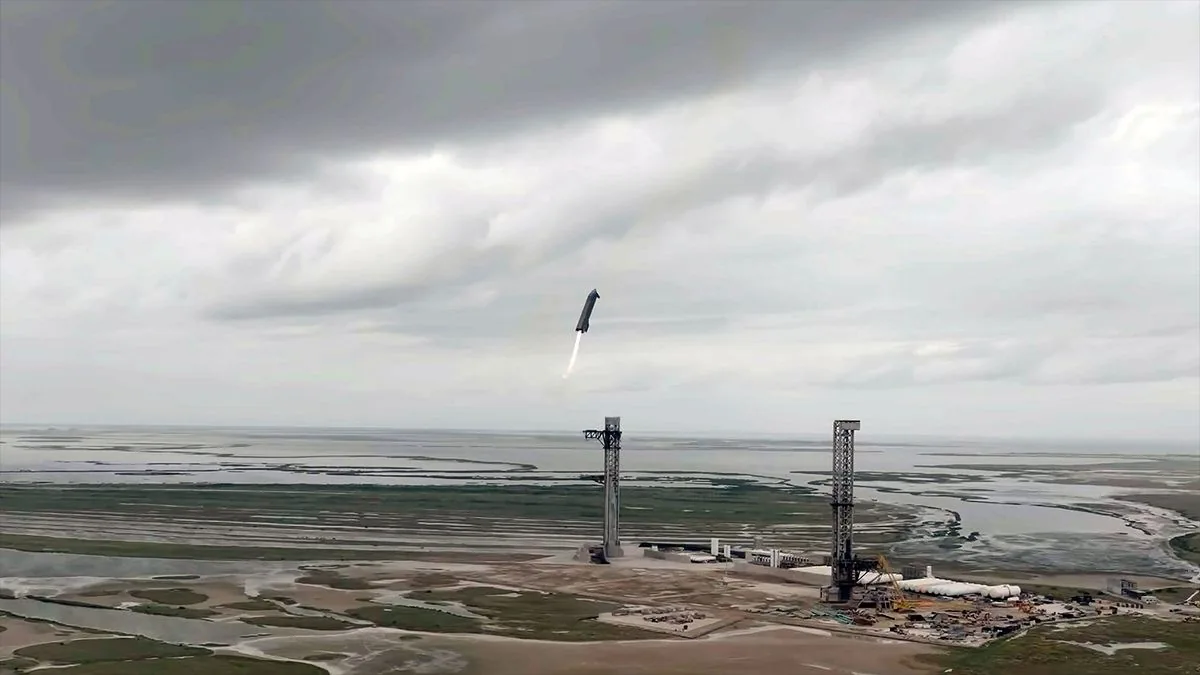
SpaceX workers gathered outside at Starbase. Alistair John said tower catches carry high risk because any guidance error could demolish the launch tower, but ground controllers cheered as the mechanical arms latched safely against the hull [1].
How Starship Upper Stage Hardware Enables Reuse
Returning the Starship upper stage solves a primary engineering barrier in spaceflight. SpaceX has recovered Falcon 9 first-stage boosters for more than a decade, but all previous upper stages were discarded in orbit after delivering their payloads. SpaceX preserves expensive Raptor engines and guidance electronics by retrieving the hardware directly at the launch complex [1].
Engineers must now inspect the heat shield to measure post-flight wear. Alistair John said that the thermal tiles take heavy punishment during descent, meaning technicians must verify that the engines and protective materials can fly again without extensive refurbishment. Joseph Gonzalez said landing directly on launch mounts eliminates days needed for ocean recovery while avoiding the structural weight of heavy landing legs, allowing faster reuse cycles for orbital missions [1]. Fast turnaround is required for Starmind [4].
Lawmakers in Washington followed the recovery closely and issued statements praising the technical progress. NASA Administrator Jared Isaacman described the maneuver as “almost magic” on social media, while Federal Communications Commission Chair Brendan Carr congratulated the engineering teams. Defense Secretary Pete Hegseth and California Democratic Representative Ted Lieu also commended the accomplishment [5]. Reaction was positive.
Support for NASA Artemis Flights
Starship anchors lunar exploration plans. Under the Artemis III test flight, four astronauts will ride an Orion capsule into Earth orbit atop the Space Launch System rocket built by NASA contractors to evaluate docking procedures. The crew will dock with Blue Origin’s Blue Moon built by Jeff Bezos before testing links with Starship. NASA Artemis program manager Jeremy Parsons said docking tests in Earth orbit provide valuable measurements on structural forces before astronauts begin their journey toward the moon, confirming that Orion will remain docked with Starship for two hours during orbital checks [1].
NASA requires an orbital demonstration where two Starship vehicles dock to transfer superchilled liquid methane and liquid oxygen between their propellant tanks before heading toward deep space. Because the rocket consumes almost all fuel reaching low orbit, refilling tanks in space is essential for lunar voyages. Jeremy Parsons said SpaceX plans to launch two vehicles in close succession to test this transfer process [1]. Tanks will refill in orbit.
SpaceX is expanding its launch sites to support these paired launches. Flight 16 may launch from a renovated launchpad at Kennedy Space Center in Florida, with another operational site currently rising at Cape Canaveral Space Force Station. The company also announced plans for a launch complex in Louisiana to supplement its one-million-square-foot Starfactory in South Texas. Pennsylvania Republican Senator Dave McCormick commended the engineering culture behind the project as preparations begin for subsequent orbital trials [1]. Facilities continue to grow.
- ONLINE NEWS Chang, K., & Liederman, M. (2026, November 14). Highlights from the Starship landing. The New York Times. [Article Link]
- ONLINE NEWS Wall, M. (2026, November 13). Watch SpaceX attempt a historic Starship launch and double-catch landing today (Nov. 13). Space.com. [Article Link]
- ONLINE NEWS Malik, T. (2026, November 14). Why did Starship Flight 15 booster abort ‘chopsticks’ landing catch? SpaceX still investigating. Space.com. [Article Link]
- ONLINE NEWS Wall, M. (2026, November 14). ‘Now everything changes’: SpaceX catches Starship upper stage for 1st time ever. Space.com. [Article Link]
- ONLINE NEWS Davis, S. (2026, November 14). SpaceX catches Starship for first time, drawing praise in Washington. The Hill. [Article Link]
- ONLINE NEWS Baig, H. N. (2026, November 15). SpaceX catches orbiting Starship with tower arms for first time; Elon Musk shares sparkling Starship videos. The News International. [Article Link]
APA 7: PerEXP Teamworks. (2026, November 16). SpaceX Starship Upper Stage Returns to Texas Tower After Flight. PerEXP Teamworks. https://perexpteamworks.com/en/starship-upper-stage-tower-catch/


