






Meta and eyewear partner EssilorLuxottica released the camera-free Ray-Ban Meta Audio smart glasses on October 13, pricing the audio-focused eyewear at $349 for United States shoppers [2]. The hardware drops front-facing image sensors and recording lights to answer persistent public criticism over covert surveillance in public spaces [6]. Open-ear sound delivery pairs with voice commands from Meta AI, and the lighter frames deliver up to twelve hours of continuous playback on a single charge [7].
Two Distinct Frame Styles
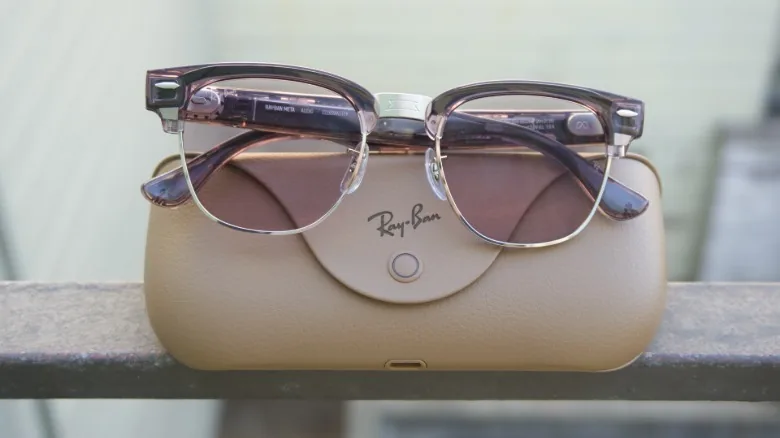
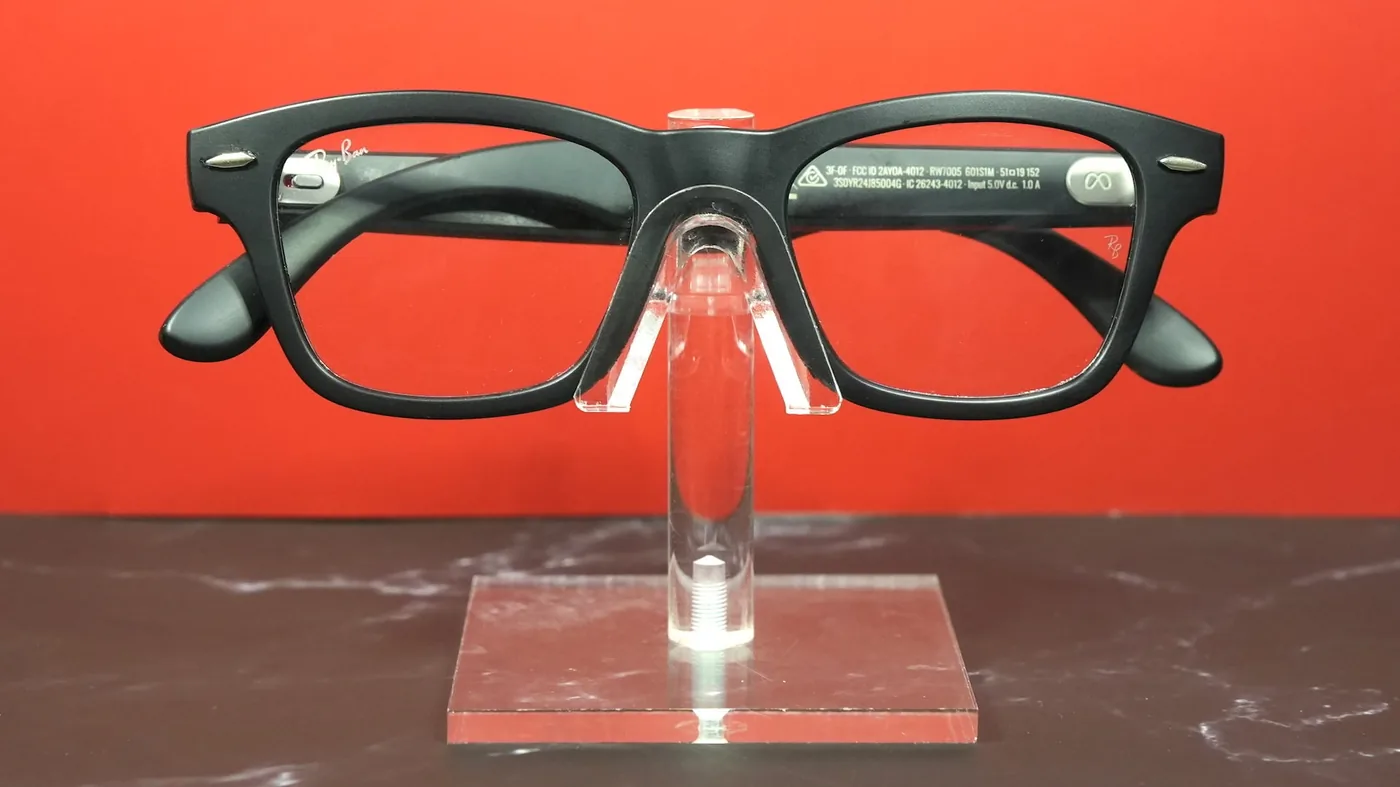
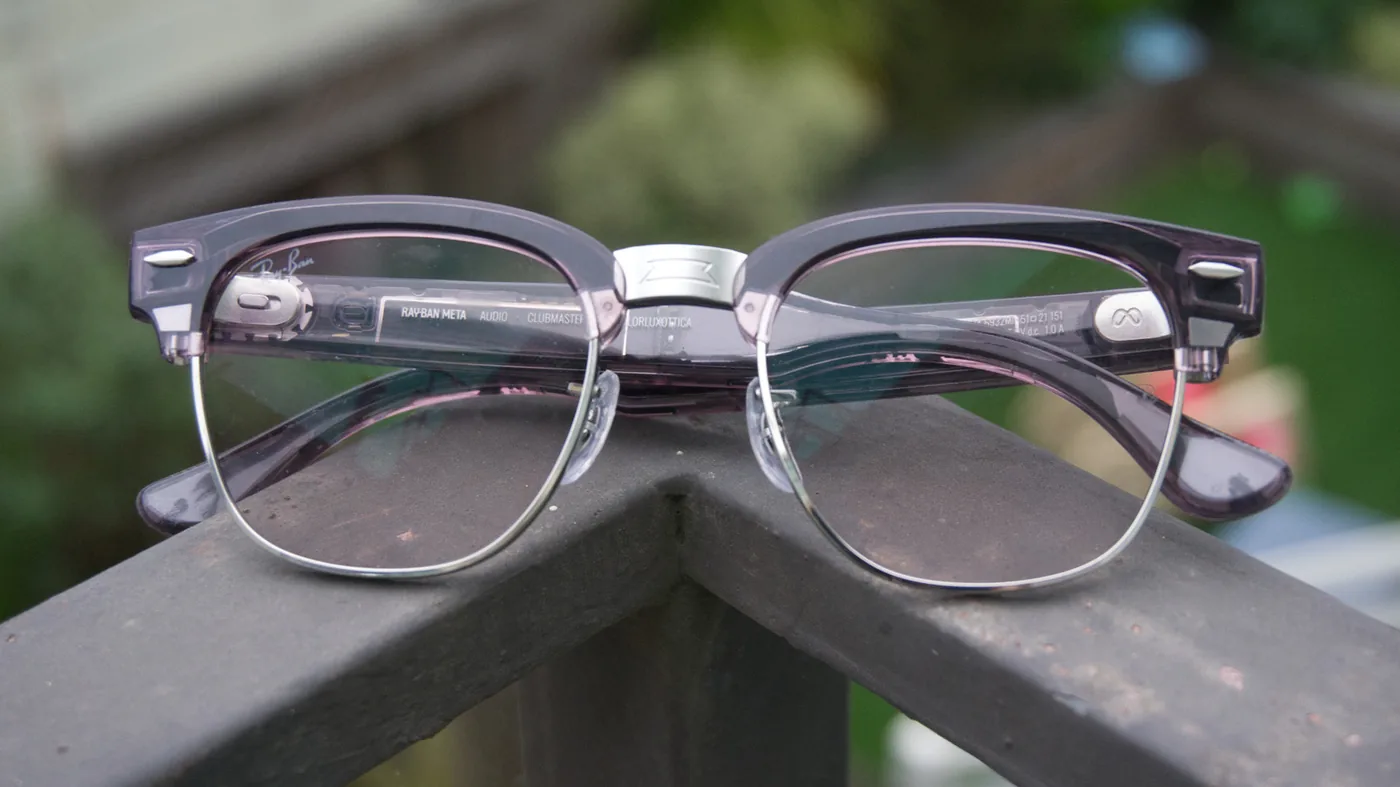
Will Greenwald at PCMag Australia tested the Burbank frame in matte black with clear lenses, pointing out that its thick acetate silhouette resembles classic Ray-Ban Wayfarer frames. Standard Wayfarers reach 1.82 ounces. Meta builds the standard Burbank at 5.67 inches wide and 1.5 inches tall, with the frame weighing 1.52 ounces. The large Burbank expands to 5.91 inches wide and 1.57 inches tall at 1.59 ounces, which gives wearers with broader heads extra room [6]. Vintage enthusiasts can select the Clubmaster style [5]. The Clubmaster frame stands 1.73 inches high across a 5.67-inch width, registering a total weight of 1.66 ounces [6]. Scott Younker at Tom’s Guide reported that Meta Connect attendees saw 23 color and lens combinations across the two silhouettes [5].
Hardware controls sit on the right temple arm. A small power switch rests behind the right hinge, while a round shortcut button sits directly overhead on the upper edge to activate Meta AI voice prompts or launch Spotify playlists without reaching for a phone. Users tap the temple to answer calls. Swiping adjusts volume. Thin metallic trim pieces replace cameras on both front corners [6].
Retail cost varies. Preconfigured Burbank frames start at $349, but choosing bespoke prescription glass through the Meta online customizer pushes the baseline price to $369, with polarized tint adding $30 and Transitions adding $80. Meta also offers a sapphire Transitions blue frame for $429 and emerald Transitions styles. Clubmaster costs $349 to $429 [6]. The entry price sits $100 below the $449 Gen 3 camera model, though Gen 1 frames sell for $224 [5].
Ray-Ban Meta Audio Weighs Less
Meta dropped optical sensors to remove front-heavy balance issues that burdened previous smart glasses. The Burbank edition weighs 43 grams, but the Clubmaster comes in at 47 grams [7]. Standard camera-equipped Ray-Ban models typically weigh between 51 and 55 grams, with the classic Wayfarer hitting 1.82 ounces [6]. By comparison, the Oakley Meta Vanguard and older Bose Frames also weighed heavier on the face [3]. Dumb prescription frames without electronics weigh about 30 grams [7].
Karissa Bell at Engadget spoke with Ming Hua, Meta’s VP of Wearables, who explained that engineers rebuilt the microphone and speaker arrangement from scratch to fit inside smaller acetate arms. The Clubmaster frames shed two grams compared with the Ray-Ban Meta Optics line, yet Bell found they feel noticeably lighter because the center of gravity shifts backward toward the ears [2]. Kerry Wan at ZDNET wore the Burbank frames through gym workouts and grocery shopping in Manhattan without feeling midday bridge fatigue [7]. The Clubmaster uses adjustable nosepads. Victoria Song at The Verge tested the Clubmaster in Manhattan and Prague, noting that temple tips can be adjusted at optical shops or Meta retail pop-ups to get a stable fit [2].

Vision prescription support covers a broad range from -12.00 to +6.00 diopters, accommodating severe myopia that often rules buyers out of smart eyewear [7]. Song pointed out that her -10 prescription normally blocks her from smart glasses, so the wide optical range serves as a practical advantage for daily wear [3]. Earlier iterations focused on cameras, but Meta Ray-Ban display frames pointed toward separate display and audio tracks. People who rely on corrective lenses can wear these frames all day without swapping pairs [4].


Battery Performance and Case
Dropping cameras cuts power draw. Meta rates the audio frames for up to 12 hours of mixed playback on a single charge. Second-generation Ray-Ban frames ran for eight hours, but Gen 3 camera models cap playback at nine hours, leaving this camera-free design with Meta’s highest battery endurance [6]. Bell streamed audio for five hours and took a one-hour call, keeping nearly half the battery intact [2].
Song stretched playback over two full working days in New York before placing the frames back in their case [3]. Amanda Caswell wore them during youth soccer games and family trips in New Jersey without checking a battery gauge [4]. Casual listeners who use the glasses primarily for intermittent calls and quick voice assistant queries can easily go all day without ever needing a recharge [2]. At Meta Connect 2026, Scott Younker verified that the battery lets owners wear the glasses continuously [5].
The included charging case features a light brown faux-leather exterior with a rigid hard-sided shell that protects the hardware inside pockets and bags. A magnetic front flap secures the closure over a front peg that houses an LED status light [6]. The case holds 48 additional hours of reserve power, bringing total listening time away from wall outlets to 60 hours [7]. Recharging happens through a standard USB-C port placed along the bottom edge, where an embossed circle doubles as a button to check battery status via the front indicator. The frames snap onto the internal bridge hook, seating electrical contacts directly against the charging pins. Greenwald said the case feels durable [6].
Open-Ear Sound Quality
Audio playback relies on open-ear directional micro-speakers placed along the temples just ahead of where the frame curves behind the ears. High and midrange frequencies come through with crisp clarity on acoustic tracks like the opening guitar plucks of Roundabout by Yes, as well as upbeat pop tracks [6]. Song listened to Kendrick Lamar’s Not Like Us during park walks and found vocal articulation sharp and punchy [3]. Amanda Caswell at Tom’s Guide tested the Burbank frames over 72 hours in New Jersey, relying on navigation audio as she drove with her children sitting in the back seat. The open-ear setup lets drivers hear turn-by-turn prompts without blocking external traffic noise like standard earbuds do [4].
Greenwald tested energetic dance tracks like Demon’s Shot by Aiobahn and Demondice, confirming that bass drums carry enough low-mid punch to drive tempo. However, physical acoustic limits restrict sub-bass output because open speakers can’t build deep pressure without a sealed ear canal [6]. Volume above 80 percent causes treble distortion and leaks audio to bystanders. Loud subways overwhelm the speakers [3].

Microphone placement shifted on the audio frames to accommodate the slimmer acetate temples. Four microphones sit along the temple arms, and two pinhole microphones now rest directly on the front frame, replacing the nosepad mics used in earlier versions. Callers reported clear vocal transmission in Engadget’s tests, comparing favorably with second-generation AirPods Pro [2]. In contrast, Wan said background noise suppression can make voices sound muffled, like speaking on an AM radio broadcast. The inner switch mutes calls [7].
Privacy Changes in Ray-Ban Meta Audio
Removing cameras directly addresses public unease that earned camera-equipped glasses the moniker of “pervert glasses” among critics. Boone Ashworth at WIRED recalled testing navigation audio in Los Angeles, noting that ditching the lens eliminates awkwardness [1]. The CEO of Even Realities decried cameras on personal eyewear, stating that “Adding a camera onto a pair of glasses definitely introduces many more downsides than upsides” [5]. In September, Meta faced lawsuits over facial recognition systems [1]. Without lenses, wearers enter stores without drawing stares [3].
Dropping the camera does not eliminate every privacy question, however. Meta continues to capture and store voice recordings from assistant interactions, and United States account holders can no longer opt out of audio storage. The company states that trained human reviewers may listen to voice snippets to train AI systems, though users can delete stored audio manually in the companion app. Furthermore, venues that enforce blanket bans on smart eyewear may still prohibit camera-free frames because security staff can’t quickly verify hardware models at the door [2]. Other hardware makers have taken an audio-first approach, as seen in the camera-free RayNeo iO smart glasses. That shift shows how wearable audio carves out a separate path away from video recording.
The onboard assistant operates without machine vision. Wearers can’t ask Meta AI to identify plants, inspect monuments, or translate printed restaurant menus during foreign travel. Instead, the software focuses on spoken utility, linking to Spotify, Amazon Music, Audible, Shazam, and WhatsApp so wearers can dictate messages or queue songs hands-free [6]. The frames run the lighter Muse Spark engine rather than Meta’s upcoming flagship Muse AI [3]. It manages Google Calendar and Outlook [6]. At $349, the Ray-Ban Meta Audio glasses ask shoppers to pay for daily listening comfort rather than camera vision [3]. That compromise works [4].
- ONLINE NEWS Ashworth, B. (2026, October 24). Meta Finally Ditched the Cameras—and Made Its Best Smart Glasses Yet. WIRED. [Article Link]
- ONLINE NEWS Bell, K. (2026, October 13). Ray-Ban Meta Audio glasses review: No camera, no problem. Engadget. [Article Link]
- ONLINE NEWS Song, V. (2026, October 13). I don’t miss the camera on the Ray-Ban Meta Audio glasses. The Verge. [Article Link]
- ONLINE NEWS Caswell, A. (2026, October 13). I’ve been testing Ray-Ban Meta Audio glasses for 72 hours — and ditching the camera was the absolute right call. Tom’s Guide. [Article Link]
- ONLINE NEWS Younker, S. (2026, September 23). Ray-Ban Meta Audio hands-on — an attempt to allay privacy concerns. Tom’s Guide. [Article Link]
- ONLINE NEWS Greenwald, W. (2026, October 13). Ray-Ban Meta Audio Review: Smart Glasses Are Better Without Cameras. PCMag Australia. [Article Link]
- ONLINE NEWS Wan, K. (2026, October 13). I wore Ray-Ban Meta Audio glasses in public, and my biggest concern never came up. ZDNET. [Article Link]


