



Microsoft announced refreshed editions of its smallest portable computers at Qualcomm’s Snapdragon Summit in Hawaii, outfitting both machines with custom Arm silicon. Corporate Vice President Brett Ostrum confirmed that the Surface Pro 12-inch tablet and Surface Laptop 13-inch now feature the Snapdragon X2 Plus processor to improve battery longevity and on-device machine learning. Both devices introduce 500-nit displays, eliminate entry-level 8GB memory tiers, and arrive with an updated haptic mouse on October 13 [7].
Snapdragon X2 Plus Architecture and Silicon Gains
The transition to second-generation silicon represents a distinct architectural pivot for Microsoft’s lightweight hardware. Matt Elliott of CNET reported that the refreshed machines utilize the six-core Snapdragon X2 Plus chip (specifically the X2P-42-100) rather than the eight-core X1P-42-100 found in earlier releases. While users trade away two physical CPU cores, the newer configuration integrates an upgraded X2-45 Qualcomm Adreno GPU paired with a significantly more capable neural engine [6].
Silicon efficiency translates into measurable productivity advantages across common desktop workflows. Andrew E. Freedman of Tom’s Hardware highlighted that the internal Qualcomm Hexagon NPU on the Snapdragon X2 Plus delivers 80 TOPS (Trillion Operations Per Second), nearly doubling the 45 TOPS threshold of its predecessor to accelerate local AI inferencing by up to 95 percent. Microsoft claims that standard Office workloads run 17 percent faster, while graphics performance improves by more than 60 percent [5].
Thermal management remains completely passive inside both compact aluminum chassis. Patrick O’Rourke of XDA Developers noted that the fanless architecture operates silently while battery efficiency improves by 18 percent over first-edition models. Both computers upgrade to 500-nit PixelSense touchscreens that deliver 25 percent higher peak brightness for outdoor legibility [1].

Surface Pro 12 Hardware and Tablet Portability
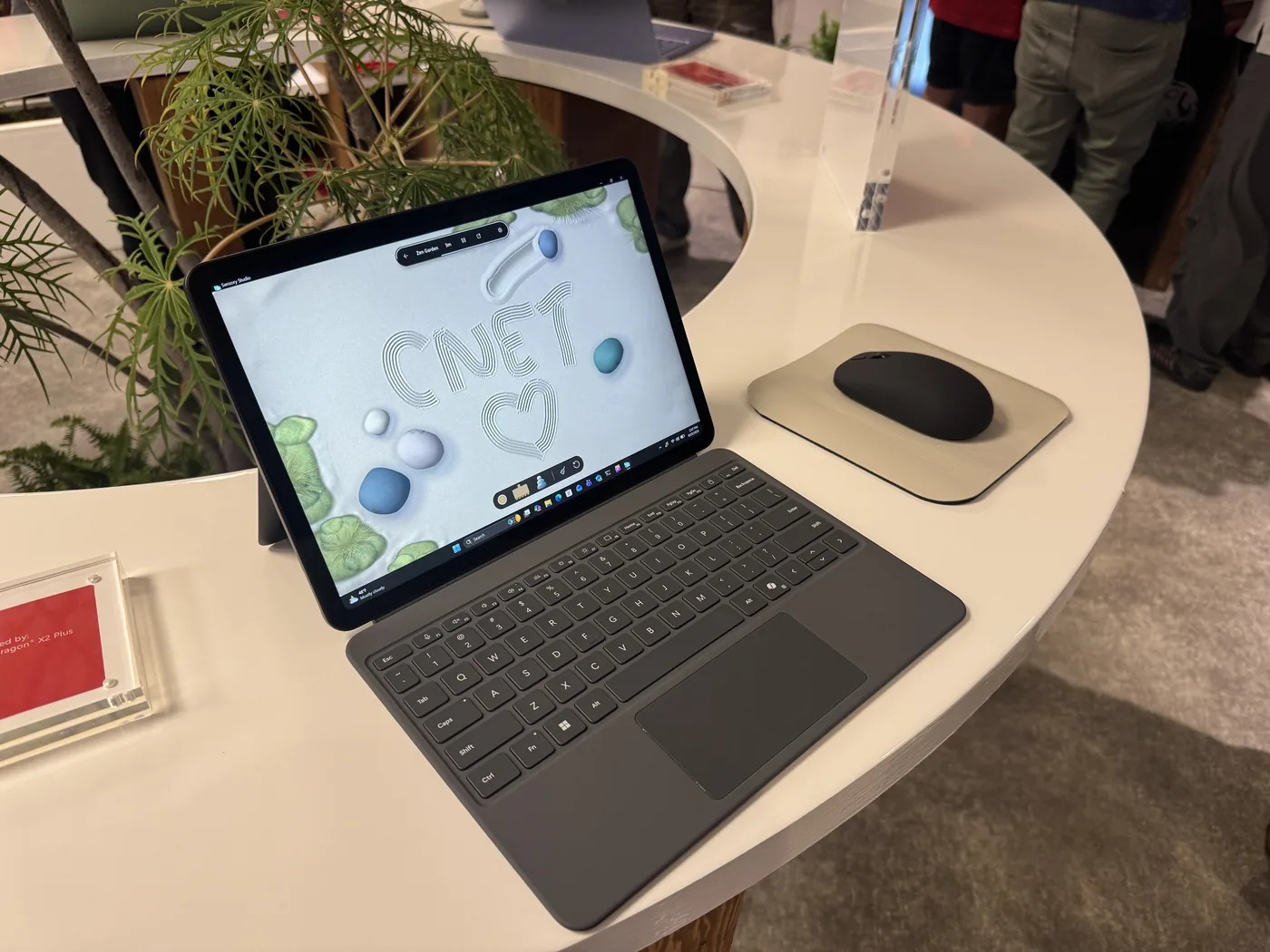
The 12-inch Surface Pro maintains its familiar two-in-one form factor while adopting the Snapdragon X2 Plus and refining core display specifications. Zac Bowden and Daniel Rubino of Windows Central observed that the tablet weighs just 1.5 pounds (0.69 kg) and houses a 2196 x 1464 resolution LCD with a 3:2 aspect ratio and dynamic refresh rates reaching 90Hz. The panel incorporates adaptive color technology to maintain visual comfort in changing light. Microsoft rates the tablet for up to 15.5 hours of local video playback and 13 hours of active web browsing on a single charge [8].
Creative workflows center around software enhancements designed specifically for stylus interactions. Devindra Hardawar of Engadget reported that the tablet arrives preloaded with Microsoft Ink Canvas, a specialized Windows 11 tool that uses on-device neural processing to summarize handwritten notes, generate graphics, and polish raw sketches. The application pairs directly with the Surface Slim Pen. Full typing functionality still requires the detachable Surface Pro keyboard, which Microsoft sells separately for $150 [4].
Mobile professionals also gain expanded connectivity options that address longstanding enterprise requests. Ben Schoon of 9to5Google confirmed that Microsoft will offer an optional 5G model exclusively for commercial clients. Wi-Fi 7 and Bluetooth 5.4 handle standard wireless data transfer across all consumer configurations [2].
Surface Laptop 13 Battery and Everyday Performance
The refreshed Surface Laptop 13 pairs Qualcomm’s Snapdragon X2 Plus with classic notebook ergonomics within a rigid 2.7-pound (1.23 kg) aluminum structure designed for mobile utility. Tom Warren of The Verge noted that the system retains a 1920 x 1280 resolution PixelSense panel with 178 pixels per inch and a standard 60Hz refresh rate, which falls short of higher-density competitor panels but achieves 500 nits of peak brightness. Microsoft preserves essential physical connectivity by equipping the notebook with two USB-C 3.2 ports, one legacy USB-A 3.2 port, and a dedicated 3.5mm headphone jack. Internal storage consists of removable 256GB or 512GB UFS solid-state drives, giving enterprise IT teams serviceability advantages over fully soldered hardware designs [3].
Microsoft claims up to 22.5 hours of video playback and 18 hours of active web browsing. Real-world testing will soon verify those ambitious manufacturer estimates [8].
Extended battery longevity sharpens competition across the broader Windows on Arm landscape. Consumers evaluating portable computing options can compare these figures against the Lenovo Yoga Slim 7X retail markdown, which previously established aggressive sub-thousand-dollar benchmarks for portable Arm machines. Matt Hanson of TechRadar emphasized that while Qualcomm’s six-core silicon achieves notable stamina, Apple’s M5 MacBook Air still maintains an advantage in single-core speeds and display sharpness with its 2560 x 1664 screen [7].
Why Microsoft Raised Base Surface Pricing
The economic entry barrier for Microsoft’s smallest PCs has shifted significantly upward with this generation. Tom Warren of The Verge highlighted that the Surface Pro 12 launched at $799.99 last year, whereas the refreshed model debuts at $1,149.99. Similarly, the 13-inch Surface Laptop stepped from an introductory $899.99 up to $1,199.99. The base price jumped $350. Can mainstream consumers justify an entry price above one thousand dollars? Upgraded Snapdragon X2 Plus silicon alone does not explain the full commercial premium [3].
Memory configuration changes explain the largest share of the pricing adjustment. Ben Schoon of 9to5Google pointed out that Microsoft completely eliminated the 8GB baseline memory tier that permitted lower starting prices on earlier hardware. Both computers now launch with a mandatory minimum of 16GB of LPDDR5x RAM, expandable up to 24GB. Devindra Hardawar of Engadget and Tom Warren referenced industry-wide memory cost pressures, informally dubbed RAMageddon, as a driving catalyst behind the uniform shift toward higher entry-level hardware standards [2].
International pricing reflects similar shifts across European and Australian retail markets. Matt Hanson of TechRadar noted that the Surface Pro converts roughly to £900 in the United Kingdom and AU$1,650 in Australia, while the Surface Laptop lists near £920 or AU$1,700. Retail availability begins October 13. Consumers will find both systems distributed through the Microsoft Store as well as third-party outlets including Amazon and Best Buy [7].
Qualcomm Snapdragon X2 Plus Ecosystem and Accessories
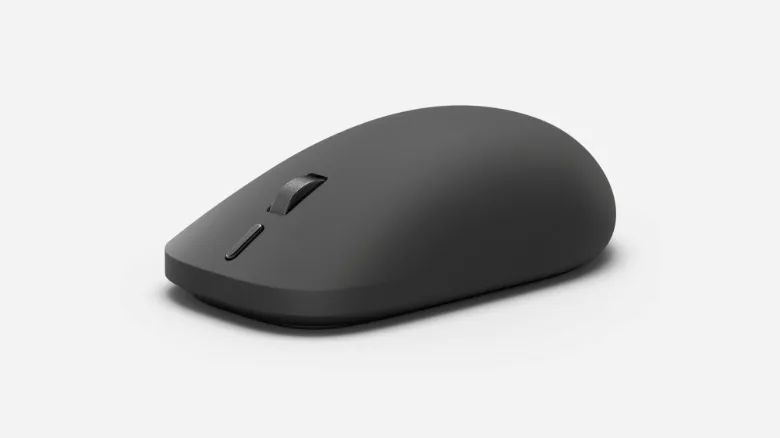
Peripheral development accompanied the mobile computer refresh with the debut of a rebuilt pointing device. Andrew E. Freedman of Tom’s Hardware highlighted that the new $79.99 Surface Mouse introduces a comprehensive haptic feedback system capable of producing subtle physical pulses beneath the user’s palm. The ambidextrous chassis connects via modern Bluetooth 6.0 standards rather than older wireless protocols. Two AAA batteries provide power. The hardware represents Microsoft’s first major refresh of the standalone Surface Mouse line in ten years [5].
Software integration allows the peripheral to communicate interface cues directly to the hand. Matt Elliott of CNET reported that the mouse triggers tactile pulses during window snapping and object alignment inside creative applications including PowerPoint, Concepts, Affinity by Canva, and Filmora. The design also incorporates a dedicated customizable action button situated directly ahead of the scroll wheel. Devindra Hardawar compared the sensory response to features found on the Logitech MX Master 4 while noting subtle ergonomic nods to Microsoft’s classic Intellimouse heritage [6].
Aesthetic options round out the hardware rollout across both portable computers and accessories. Zac Bowden and Daniel Rubino noted that Microsoft introduced a stealthy Black finish to complement traditional Platinum and Violet colorways. Ocean Blue has been retired. Both machines run Windows 11. Microsoft is timing the launch of both Snapdragon X2 Plus machines and the companion haptic mouse to test whether consumers embrace premium price points for compact Arm portability [8].
- ONLINE NEWS O’Rourke, P. (2026, September 23). Microsoft’s new Surface Pro 12-inch and Surface Laptop 13-inch get a Snapdragon X2 Plus upgrade. XDA Developers. [Article Link]
- ONLINE NEWS Schoon, B. (2026, September 23). Microsoft launches 12-inch Surface Pro with Snapdragon X2 Plus & 5G, 13-inch Surface Laptop too. 9to5Google. [Article Link]
- ONLINE NEWS Warren, T. (2026, September 23). Microsoft refreshes its smaller Surface Pro and Laptop with Qualcomm’s X2 Plus. The Verge. [Article Link]
- ONLINE NEWS Hardawar, D. (2026, September 23). Microsoft’s new Surface Pro 12 and Surface Laptop 13 feature Snapdragon X2 Plus chips. Engadget. [Article Link]
- ONLINE NEWS Freedman, A. E. (2026, September 23). Microsoft brings Snapdragon X2 Plus to 13-inch Surface Laptop, 12-inch Surface Pro — low-end systems finally get upgrades. Tom’s Hardware. [Article Link]
- ONLINE NEWS Elliott, M. (2026, September 23). Microsoft Brings Snapdragon X2 to Smallest Surface Pro and Laptop Lines. CNET. [Article Link]
- ONLINE NEWS Hanson, M. (2026, September 23). Microsoft announces new Surface Pro and Surface Laptop devices powered by Qualcomm’s Snapdragon X2 Plus chip. TechRadar. [Article Link]
- ONLINE NEWS Bowden, Z., & Rubino, D. (2026, September 23). Microsoft unveils new Surface Pro 12-inch and Surface Laptop 13-inch with Snapdragon X2 Plus, brighter screens, and 5G options. Windows Central. [Article Link]


