






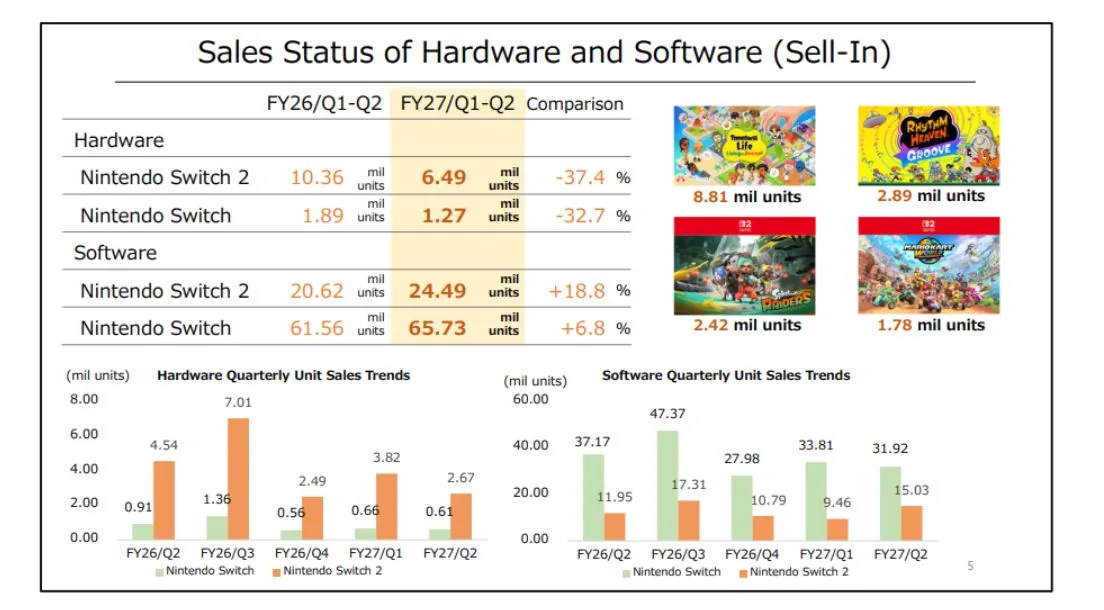
Nintendo reported that Switch 2 sales fell 37% over the summer six-month period, dropping to 6.49 million units compared to the bumper stretch the platform enjoyed during its launch year in 2025. The slowdown arrived before a $50 price increase took effect in September. Nintendo reduced its full-year hardware target by 16.9% as chip shortages raised production expenses [3].
Switch 2 Sales Fall After Record Debut
The slowdown covers the six months between April 1, 2026 and September 30, 2026, a window Nintendo designates as FY27 Q1-Q2 in official earnings materials delivered to investors in Tokyo. During this six-month stretch, worldwide Switch 2 shipments reached 6.49 million units [3]. Retail demand cooled down noticeably following a record launch run in North America, Europe, and Japan.
Financial results published in Tokyo placed the contraction at 37.4 percent year-over-year [2]. PC Gamer reported that shipments fell by 3.87 million units from the 10.36 million consoles moved in the same months of 2025 as Switch 2 sales slowed in Western retail markets [3]. The hardware departed from the momentum of the original Switch. The predecessor grew for five years without an early summer slowdown.
Older Nintendo devices experienced a similar slump as consumer attention shifted to the new generation. The original Switch sold 1.27 million units between April and September, down 32.7% from the prior year [3]. Nintendo executives expected shipments of the nine-year-old console to taper off gradually, but the combined contraction across both product generations reduced overall hardware volume delivered to retail stores in North America, Europe, and Japan. Retailers in the United States scaled back replacement hardware reorders during July and August before autumn game showcases took place, leaving warehouse inventories largely unchanged until autumn. Store shelves held sufficient inventory as warehouse shipments paused. Nintendo relied on software revenue to offset lower console receipts.
Revised Targets for the Second Year
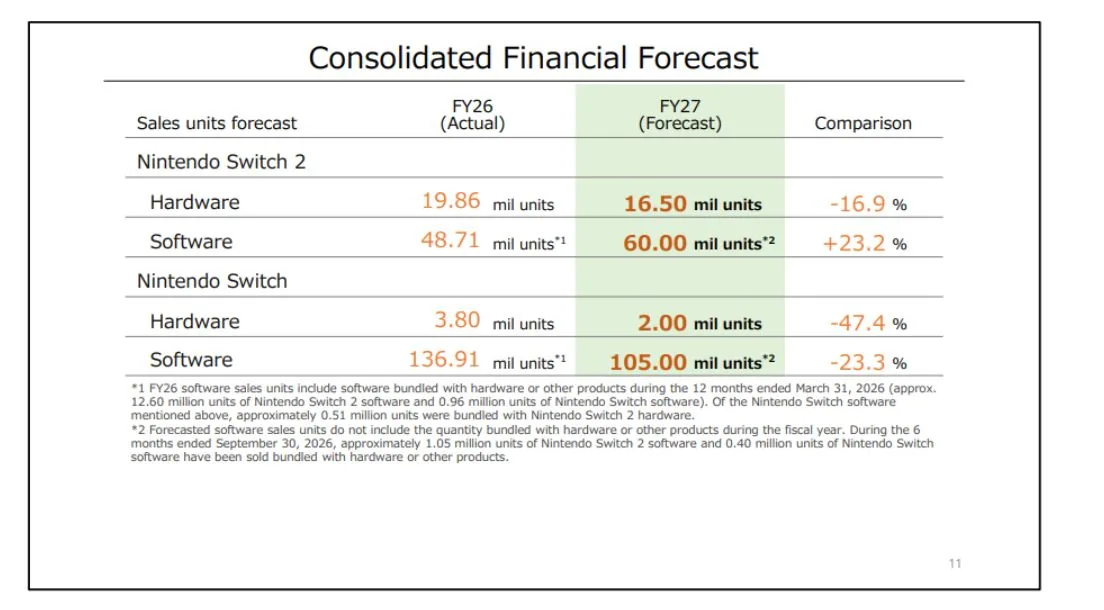
Following the slower summer quarter, Nintendo cut its full-year sales projections. Nintendo now expects 16.5 million Switch 2 sales for the complete fiscal year ending March 31, 2027, cutting its target from the 19.86 million units the company originally anticipated [3]. The revised goal represents a 16.9% reduction in expected volume. Slower momentum forced a reset.
The downward revision stands out because the system posted remarkable launch numbers during its first twelve months on store shelves. The Switch 2 shipped 19.8 million units during its opening twelve months on the market, surpassing the 17.7 million units that the original Switch achieved over its own comparable debut run [3]. When the original Switch entered its second year, it doubled hardware shipments globally, but the successor will not match that pattern after encountering softer export demand in Western retail markets. PC Gamer pointed out that softer export demand in Western retail markets curbed early optimism. Nintendo now prepares for a tighter market as rivals adjust their own hardware pricing.
Nintendo addressed the sales drop in its earnings disclosures. “Although unit sales of Nintendo Switch 2 hardware declined compared to the same period of last fiscal year, many consumers continued to adopt the system, spurred on by factors like the release of new titles,” Nintendo said in its financial report [3]. Leadership expects software to drive consumer interest through the winter.

Rising Memory and Component Costs
The hardware slowdown coincided with parts bottlenecks in the electronics sector. Skyrocketing procurement demand from artificial intelligence data centers drained supplies of RAM and solid-state storage [2]. Component inflation pushed manufacturing expenses higher for gaming manufacturers in Japan and the United States. Handheld consoles felt the squeeze because compact systems depend on power-efficient memory modules.
Supply strains increased when a cartridge partner for the console announced it would halt ROM production to supply memory for enterprise data centers. The supplier’s shift forced console builders to compete with hyperscale computing operators for silicon allocations. Competing console makers responded to memory inflation by raising hardware prices, creating retail pressure as Xbox and PlayStation sales fell to decades-old lows across North American stores over the course of the year. Microsoft increased the Xbox Series S price from $299 to $499 after successive price revisions [2]. Sony raised the flagship PlayStation 5 console to $649 to offset escalating manufacturing expenses. Higher hardware prices from Microsoft, Sony, and Nintendo created persistent barriers for budget-conscious families preparing for the upcoming holiday shopping season in North America, Europe, and Japan.
Nintendo raised the Switch 2 retail price from $450 to $500 to address those rising component bills [1]. Nintendo announced the $50 increase in May 2026, but delayed implementation in North America and Europe until September 1, while Japanese consumers absorbed the price adjustment in May [3]. Japan received the hike first. Because the higher price took effect near the end of September, the summer sales drop occurred while the console still cost $450.

Software Rises as Switch 2 Sales Slow
Software demand told a contrasting story as game purchases surged. Switch 2 game sales increased 18.8% year-over-year, climbing from 20.62 million units to 24.49 million units during the summer reporting period [3]. Even as Switch 2 sales slowed, software purchases grew in major genres. Consumers built their game libraries even as hardware adoption moderated in international retail channels.
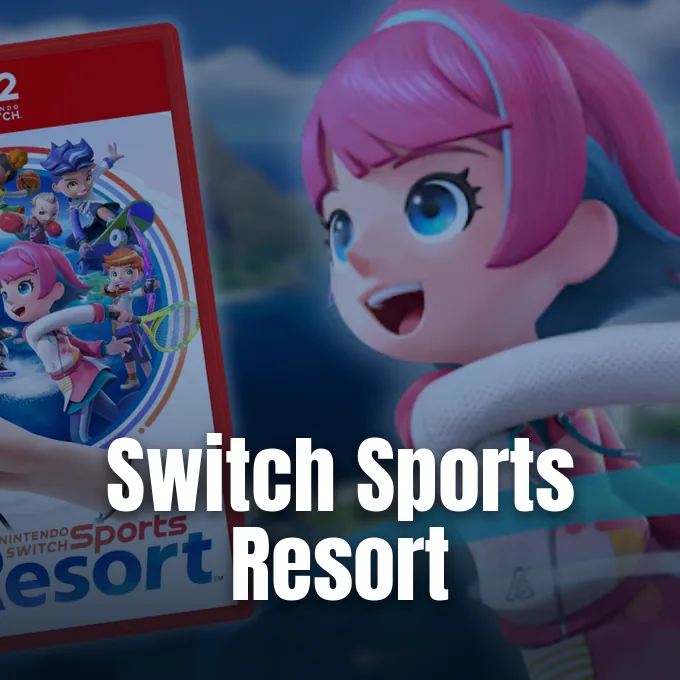
Original Switch software climbed to 65.73 million copies during the half-year window, up from 61.56 million a year earlier, representing a 6.8% gain [3]. Most Nintendo players still play on the original hardware, providing a vast install base for ongoing software releases. Families and casual players continued buying catalog titles, even as reviews for games like Nintendo Switch Sports Resort review scores averaged 79 across review aggregators without matching the critical reception of tentpole adventures. The vast user base helped stabilize Nintendo’s balance sheet during slower hardware cycles. Software revenue cushioned the financial impact of declining device shipments and supported cash flow heading into the holiday season.
New game releases could spark fresh hardware interest before Christmas. Nintendo launched The Legend of Zelda: Ocarina of Time remake for Switch 2 on Friday [1]. GameSpot noted that the remake stands as the highest-rated video game release of 2026. High-profile exclusive titles historically spur console purchases, and Nintendo counts on Link’s return to boost hardware sales during the winter shopping quarter in North America, Europe, and Japan.

Price Stability and Tariff Funds
Nintendo does not plan to increase the Switch 2 price again in the near future. Nintendo president Shuntaro Furukawa stated during Thursday’s earnings call that the Kyoto company is “not considering additional changes” to console pricing, Reuters reported [2]. Furukawa’s statement provided clarity for consumers who feared further hardware price hikes before the end of the year.
Furukawa also addressed memory constraints directly during the investor meeting. “There has been no major change to the memory situation and Nintendo is in a position to secure sufficient quantities,” Furukawa told investors through Reuters during the company’s financial presentation [2]. GameSpot and VGC reported that Nintendo stockpiled sufficient memory supplies to insulate hardware assembly from short-term market spikes [1]. Those inventory stockpiles protect the manufacturer from paying inflated prices on open spot markets. By securing memory components in advance, Nintendo can keep retail prices steady while Sony and Microsoft navigate higher component bills. Consistent pricing will help stabilize Switch 2 sales as holiday shoppers evaluate their options against higher-priced rival platforms from Sony and Microsoft in retail stores throughout the United States and Europe.
Nintendo disclosed that it received millions of dollars in customs tariff refunds during the fiscal period, but chose to keep those funds rather than distribute discounts to consumers [1]. Similar rebate policies occurred at Sony after global trade changes took effect. Technology stocks experienced sell-offs after the US midterm elections, yet component market relief remains uncertain. Nintendo expects pricing discipline and flagship software to steady hardware shipments.
- ONLINE NEWS GameSpot. (2026, November 5). Switch 2 Won’t Get Another Price Hike, At Least Not Soon, Nintendo Says. [Article Link]
- ONLINE NEWS Bonifield, S. (2026, November 5). Nintendo says it’s not planning another Switch 2 price hike. The Verge. [Article Link]
- ONLINE NEWS Ridley, J. (2026, November 5). Nintendo expects Switch 2 sales to slump 16.9% in its second year after slow summer. PC Gamer. [Article Link]


