





In concurrent computing, understanding what is a deadlock helps software engineers identify why two or more active processes halt permanently while waiting for one another. The condition arises when each task holds at least one shared resource and refuses to release it until it gains another lock that some other blocked task currently owns [3]. This circular wait prevents all involved threads from completing their work, meaning that the kernel cannot resolve the freeze without algorithmic intervention.
- What Is a Deadlock in Computing?
- The Four Necessary Coffman Conditions
- Resource Allocation Graphs for Cycle Detection
- How Operating Systems Handle Deadlocks
- Banker’s Algorithm and Safe State Verification
- Dynamic Detection Scheduling to Minimize Message Overhead
- Sound Prediction Tools for Multithreaded Software
- Why Valve’s MOBA Shooter Shares the Deadlock Name
What Is a Deadlock in Computing?
A deadlock is a static state in concurrent code where no member of a processing group can proceed because every thread waits for an event that only another member in that set can produce [3]. In multi-core systems, applications share memory tables, disk drives, and input lines through mutual exclusion locks (a state known as thread starvation if prolonged). If thread one locks resource A and asks for resource B while thread two holds resource B and asks for resource A, both threads freeze because neither task can proceed without the other releasing its hold. Unlike a livelock where tasks change their inner states without forward progress, a deadlocked task stays completely dormant.
Operating systems encounter these freezes in local kernel routines as well as distributed server networks where competing jobs lock shared files [3]. Modern web searches for this term also surface Valve’s multiplayer shooter project, but computing literature defines the phenomenon purely as unbroken resource contention [9]. System engineers treat it as a concrete software flaw that can propagate until an entire server stops answering network calls if left unmanaged.
Resource contention differs sharply from simple system lag or temporary queue delays, because a blocked task normally resumes once another finishes. Why do simple task timeouts fail to eliminate these recurring halts? When circular dependency enters the graph, waiting times stretch to infinity because the releasing event will never run [2]. Detecting these stalled loops requires inspecting process tables and checking lock chains so administrators can stop frozen tasks and recover system throughput.
The Four Necessary Coffman Conditions
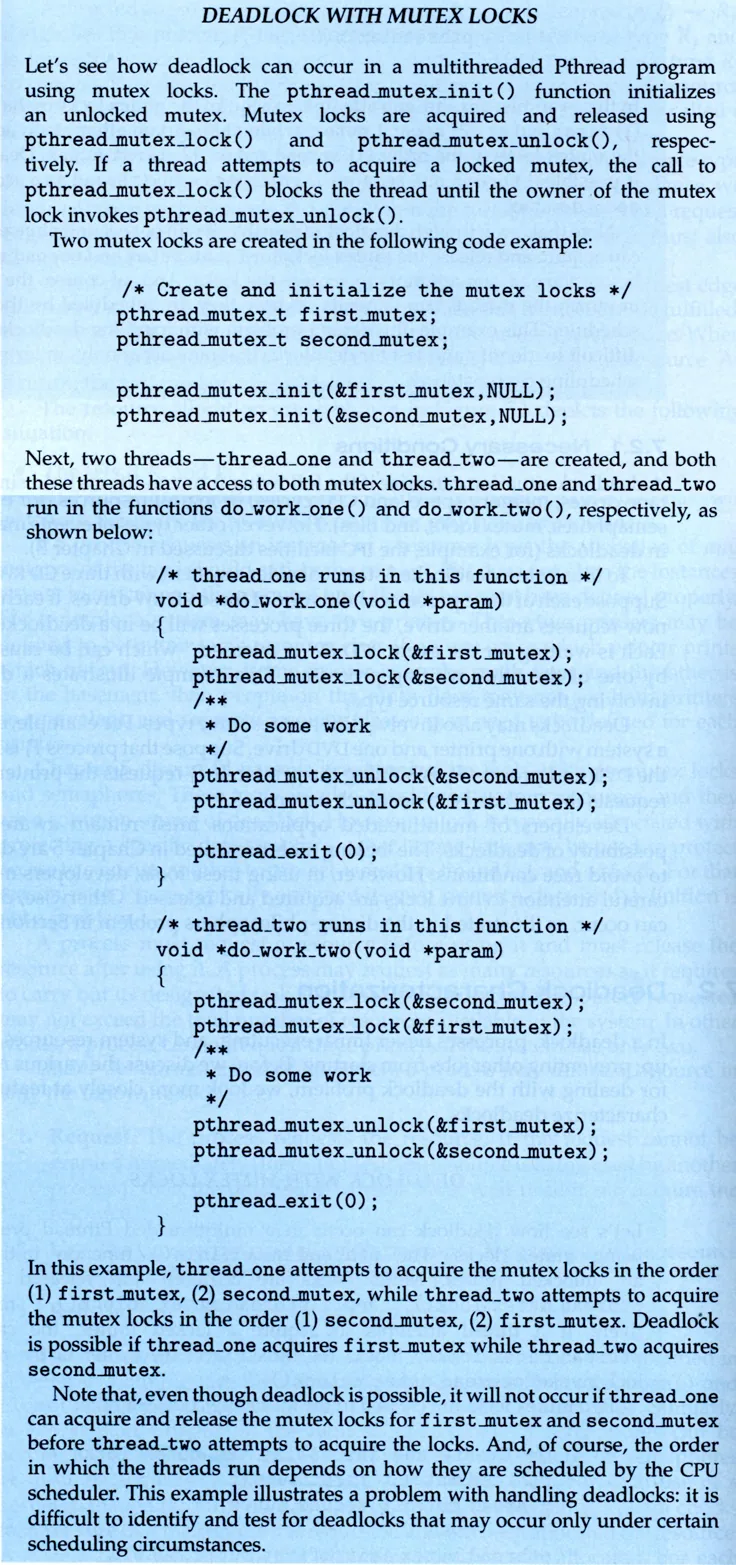
In 1971, computer scientist Edward G. Coffman, Jr. and his colleagues formulated the four foundational rules that must hold at the same time for a deadlock to occur (formalized in his 1971 operating systems research) [3]. First, mutual exclusion requires exclusive control over an unshareable unit so that any other process seeking access is placed on hold until release. If another task requests that held resource, the system forces the requester to wait. Second, the hold and wait rule demands that a task must hold at least one resource while seeking more units held by others [1]. Without simultaneous retention and acquisition, circular dependency cannot form in running software architectures during heavy workloads.
The third rule is no preemption, which specifies that allocated resources cannot be forcibly seized by the kernel. A process must release its assigned items voluntarily after finishing its work. The fourth rule is circular wait, where a closed chain of processes exists such that each member waits for a resource held by the next link in the loop [2]. Computer scientists at the University of California at Davis noted in their ECS 150 course archive that all four conditions are necessary to produce a permanent freeze [1].
Breaking any single one of these four Coffman conditions prevents a deadlock from forming in the system [3]. In single-instance resource setups, their presence guarantees a freeze, whereas on multi-instance systems they merely indicate a risk [2]. Engineers study resource topologies to verify whether extra units break circular chains.
Resource Allocation Graphs for Cycle Detection
To reason about concurrency and system states visually, computer scientists employ directed structures known as resource allocation graphs. In these graphs, processes appear as circular nodes labeled from P1 to PN, while resource categories appear as rectangular boxes containing individual instance dots. A directed arc pointing from a process node to a resource box represents a request edge, showing that the process is waiting for that resource. When the operating system grants the request, the arc reverses direction to point from a specific instance dot to the process, becoming an assignment edge [2].
Graph theory provides a reliable rule for identifying system deadlocks through the cycle theorem [1]. If a directed resource allocation graph contains no closed cycles, the current configuration is mathematically guaranteed to be deadlock-free. When each resource category possesses only one unit, any cycle in the graph indicates that a deadlock exists [2]. The cycle means that every process in the loop holds a resource that the next process needs, producing an unrecoverable system stall.
When resource types hold several instances, a cycle suggests that a deadlock might exist but does not guarantee one. Other unblocked processes outside the cycle might finish their tasks and return spare units to the shared pool, resolving the conflict. Course notes at cs.uic.edu illustrate this distinction through detailed graph models [2]. System schedulers use these graphical representations to track lock allocations before granting new access requests.
How Operating Systems Handle Deadlocks
Operating system developers rely on distinct strategies to deal with concurrency conflicts: ignoring them, preventing them, or detecting and recovering from them. The simplest method is the Ostrich algorithm (named after the bird that buries its head in the sand), which assumes that deadlocks happen so rarely that the cost of prevention outweighs the inconvenience of an occasional reboot [3]. Early versions of UNIX and MINIX adopted this pragmatic approach for desktop workloads. If a deadlock strikes, administrators simply restart the stuck application or reboot the machine.
While ignoring deadlocks works for non-critical workstations, high-reliability frameworks like the Real-Time Interrupt-driven Concurrency (RTIC) environment use formal models to prove mathematically that deadlocks cannot occur in safety-critical code [3]. Prevention techniques stop deadlocks before they start by invalidating at least one of the four Coffman conditions [1]. Systems eliminate circular wait by assigning an integer index to every resource and requiring threads to request resources only in strictly increasing order [2]. Under this linear protocol, a process holding resource Rj cannot request resource Ri if index i is smaller than or equal to j, breaking the circular dependency loop so schedulers can preserve system stability.
When prevention proves too restrictive for dynamic software, kernels permit deadlocks to happen and later resolve them through detection routines. Once a cycle is detected, the kernel can terminate one or more competing processes to break the freeze [3]. Aborting all deadlocked processes clears the bottleneck fast, but destroys intermediate computation data. Alternatively, the operating system can preempt allocated resources one by one, rolling back affected threads to previous checkpoints until normal execution resumes.


Banker’s Algorithm and Safe State Verification
Instead of static prevention, systems can use deadlock avoidance by evaluating resource requests dynamically before granting them. The prominent model for multi-instance resources is the Banker’s Algorithm (a strategy first designed for resource scheduling), named because it mimics a conservative banker who never allocates cash unless every client can be paid out in full. When a new process launches, it must declare in advance the maximum number of each resource type it will ever need [2]. The scheduler then tracks current allocations, remaining needs, and available system units across matrix data structures.
At the center of avoidance lies the concept of a safe state. An allocation state qualifies as safe whenever the scheduler can order all active threads into a sequence where every remaining task can finish by claiming free units together with locks released by earlier processes. If such a sequence exists, every task can run to completion without deadlocking because safe states guarantee an orderly path forward. If no safe sequence exists, the system sits in an unsafe state that carries the immediate risk of deadlock [2].
Consider an operating system managing twelve tape drives shared among three processes. If process P0 holds five drives, P1 holds two, and P2 holds two, three drives remain free in the available pool. The scheduler checks whether those three remaining drives can satisfy the maximum need of at least one process to establish a safe sequence [2]. If a process requests an extra drive that would push the system into an unsafe state, the kernel delays the request until other tasks release their drives.
Dynamic Detection Scheduling to Minimize Message Overhead
In distributed clusters and parallel servers, deadlocks must often be detected at runtime rather than avoided in advance. In a study published in IEEE Transactions on Computers, researchers Yibei Ling, Shigang Chen, and Cho-Yu Jason Chiang analyzed how often detection routines should run to maximize efficiency. Frequent check routines flood the network with control messages, degrading system performance even when no deadlock exists [4]. Conversely, running detection infrequently lets deadlocked processes persist for long periods, multiplying the cost of eventual resolution.
To balance this performance trade-off, Ling, Chen, and Chiang modeled detection scheduling mathematically as a function of the deadlock formation rate, denoted as lambda, and the total process count (represented by the variable n). For the leading detection and resolution algorithms, their analysis showed that the optimal detection frequency that minimizes overall message overhead scales asymptotically as O((lambda * n)^(1/3)) when the process population n is sufficiently large [4]. The authors also archived an earlier 2010 preprint on arXiv:1008.0451 without peer review that detailed these message complexity curves [5]. Centralized coordinated detection outperforms uncoordinated distributed scheduling in minimizing message overhead.
These mathematical findings show why cluster schedulers do not run detection algorithms continuously. Instead, distributed engines initiate cycle checks at calculated intervals tied to observed transaction arrival rates. A well-chosen check interval stops wasteful message storms, ensuring that frozen locks get cleared before timeouts trigger while preserving network bandwidth [4].
Sound Prediction Tools for Multithreaded Software
Code checks for concurrency bugs are notoriously difficult because thread interleavings change unpredictably during execution. In an academic paper presented at OOPSLA and published in the Proceedings of the ACM on Programming Languages, computer scientists C. G. Kalhauge and J. Palsberg introduced a method for sound deadlock prediction in Java programs. A sound prediction tool maps the execution history of a single run to predict genuine concurrency bugs across an exponential number of alternative thread schedules [6]. If every predicted bug can actually occur, the tool is mathematically sound.
Prior prediction utilities for concurrent software frequently suffered from false alarms or missed edge cases. Earlier tools like DeadlockFuzzer attempted to verify candidates by re-executing input programs, while data race analyzers like RVPredict lacked sound counterparts for locking cycles. Kalhauge and Palsberg solved this problem by capturing request events and formulating executability constraints, which they mapped to an equivalent decision problem solved by an SMT-solver [6]. Their tool discovered real deadlocks in Java software that previous fuzzing tools had missed.

Sound prediction bridges the gap between dynamic testing and formal verification in software engineering. When analyzing real execution traces with constraint solvers, developers locate hidden synchronization flaws before production deployment. The technique guarantees that reported lock inversions represent real bugs, saving development teams hours of manual debugging [6].
Why Valve’s MOBA Shooter Shares the Deadlock Name
To eliminate concurrency flaws entirely, modern software embraces architectural paradigms that guarantee deadlock freedom by design. In ACM SIGPLAN Notices, M. Carbone and F. Montesi proposed a global model verifying choreographies against multiparty session specifications. By applying Endpoint Projection, their framework translates choreographies into pi-calculus terms that are structurally deadlock-free [7]. Factory automation also applies these principles, as shown in IEEE Transactions on Systems Man and Cybernetics where K. Xing, L. Han, M. Zhou, and F. Wang embedded deadlock policies into Petri net models [8].
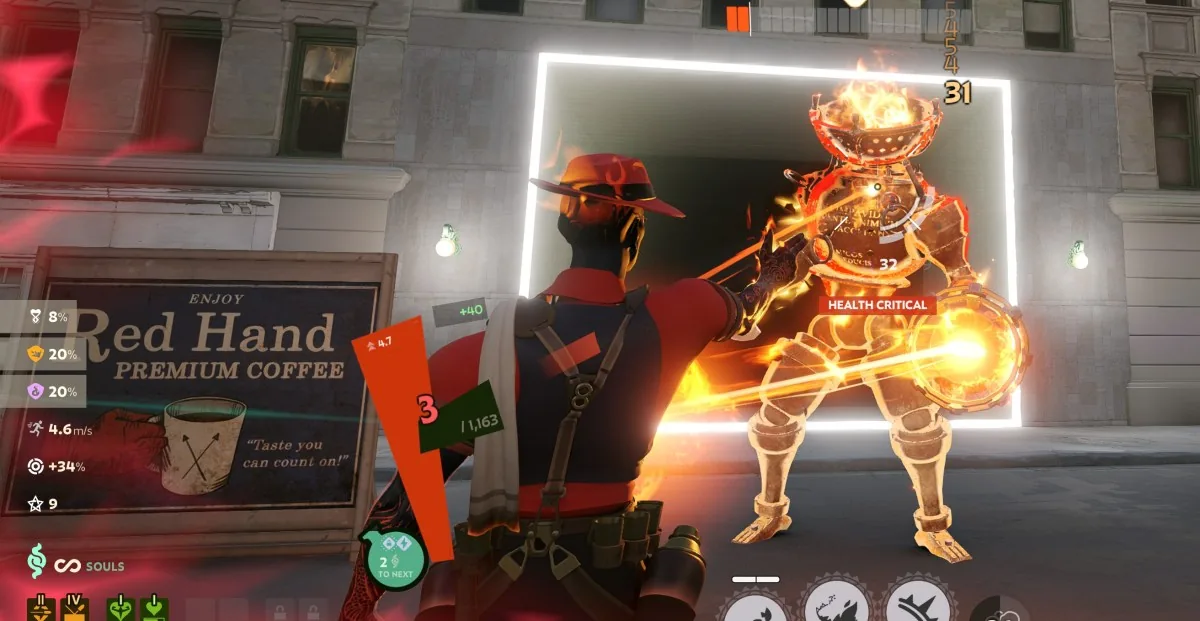
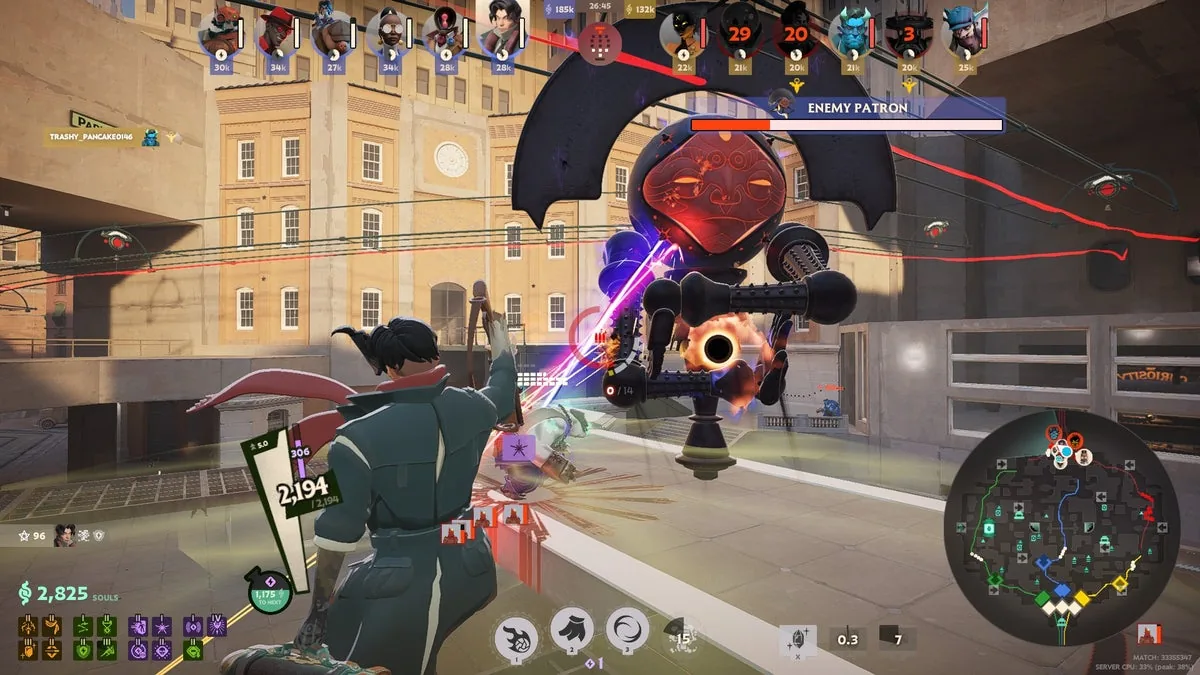
While computer science defines deadlocks through mathematical resource graphs, modern culture frequently associates the word with Valve and its video game development. Though Valve kept the project quiet without a formal reveal, playtesters leaked that the title was built in the Source 2 engine as a 6v6 MOBA shooter. The game blends traits from Dota 2, Team Fortress 2, and Blizzard’s Overwatch, diverging from snappy shooters like Valorant while carrying heritage from Half-Life [9, 11]. In August 2024, Sean Hollister of The Verge reported that nearly 20,000 players were active without an NDA, testing hero classes like McGinnis alongside NPC troopers on lanes named York, Greenwich, and Broadway [9, 13].
The thematic link between computing deadlocks and competitive gaming lies in mutual gridlock [10, 11]. In Valve’s Cursed Apple setting, teams clash over lane Guardians and Walkers to reach rival Patrons known as the Hidden King and the Archmother [10, 13]. To offer faster matches without long farming phases, Valve introduced a 4v4 single-lane mode called Street Brawl [11, 13]. Similarly, Black Lab Games and Slitherine Software explored turn-based fleet combat in Battlestar Galactica Deadlock [12]. Whether in server operating systems or tactical MOBA lanes, a deadlock captures the moment when competing forces freeze in an unbreakable stall [3, 11].
- WEBSITE Department of Computer Science, University of California, Davis. (1999). Four Necessary and Sufficient Conditions for Deadlock. ECS 150 Course Archive. [Article Link]
- WEBSITE Department of Computer Science, University of Illinois Chicago. (n.d.). Operating Systems: Deadlocks (Chapter 7). cs.uic.edu. [Article Link]
- WEBSITE Wikipedia contributors. (n.d.). Deadlock (computer science). In Wikipedia, The Free Encyclopedia. [Article Link]
- ACADEMIC JOURNAL Ling, Y., Chen, S., & Chiang, C. J. (2006). On Optimal Deadlock Detection Scheduling. IEEE Transactions on Computers, 55(9). [Article Link]
- PREPRINT Ling, Y., Chen, S., & Chiang, C. J. (2010). On Optimal Deadlock Detection Scheduling. arXiv:1008.0451. [Article Link]
- ACADEMIC JOURNAL Kalhauge, C. G., & Palsberg, J. (2018). Sound deadlock prediction. Proceedings of the ACM on Programming Languages, 2(OOPSLA), 1-29. [Article Link]
- ACADEMIC JOURNAL Carbone, M., & Montesi, F. (2013). Deadlock-freedom-by-design. ACM SIGPLAN Notices, 48(1), 263-274. [Article Link]
- ACADEMIC JOURNAL Xing, K., Han, L., Zhou, M., & Wang, F. (2011). Deadlock-Free Genetic Scheduling Algorithm for Automated Manufacturing Systems Based on Deadlock Control Policy. IEEE Transactions on Systems Man and Cybernetics Part B (Cybernetics), 42(3), 603-615. [Article Link]
- ONLINE NEWS Hollister, S. (2024). We played Valve’s secret new shooter, Deadlock. The Verge. [Article Link]
- ONLINE NEWS Cox, M. (2025). Deadlock’s biggest update yet marks a threshold moment: now’s the time to grab yourself an invite. Eurogamer.net. [Article Link]
- WEBSITE Wikipedia contributors. (n.d.). Deadlock (video game). In Wikipedia, The Free Encyclopedia. [Article Link]
- WEBSITE Wikipedia contributors. (n.d.). Battlestar Galactica Deadlock. In Wikipedia, The Free Encyclopedia. [Article Link]
- ONLINE NEWS GR Staff. (2026). A Beginners guide to Deadlock, Valve’s upcoming MOBA. Gamereactor. [Article Link]
Cover image: Novikov Alexander / Wikimedia Commons, CC BY-SA 3.0


