





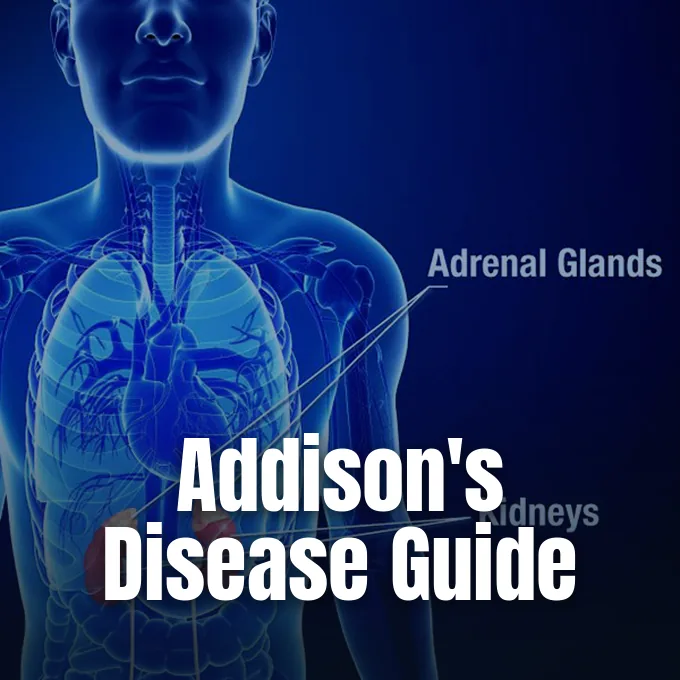
What is Addison’s disease? It is an endocrine condition where the adrenal glands cannot make enough steroid hormones, leaving the bloodstream deficient in cortisol and aldosterone [12]. Without these hormones, body tissues struggle to manage physical stress, maintain blood pressure, and keep fluids balanced. Clinical reviews in the United States and Western Europe estimate that the condition affects roughly one in 20,000 people, developing quietly over months or years [14]. People often spend months consulting doctors before obtaining a diagnosis [17].
Addison’s Disease Hormone Loss
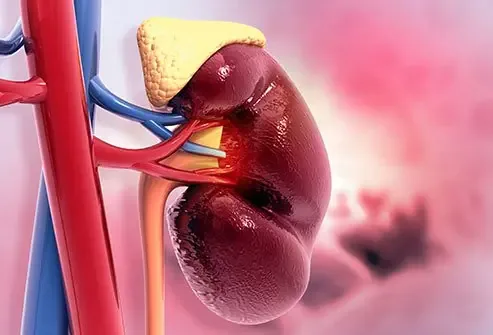
The adrenal glands rest on top of both kidneys in the retroperitoneum, where an inner medulla makes epinephrine while the outer adrenal cortex produces three separate classes of steroid hormones (including cortisol and aldosterone) to support human metabolism and fluid balance [11]. In Addison’s disease, damage cuts off hormone output [14].
Cortisol helps regulate glucose metabolism, curbs inflammation, and supports vascular tone when the human body encounters illness, psychological strain, or accidental injury, whereas aldosterone acts on the distal tubules of the kidneys to conserve sodium and water while promoting the renal excretion of potassium into urine [12, 13]. Primary adrenal insufficiency halts both pathways [14]. When the adrenal glands fail, potassium accumulates in extracellular fluids, blood pressure drops, and circulating blood sugar falls below healthy physiological targets [13]. Without medical care, this multi-hormone deficit undermines cellular energy pathways across diverse organ systems, leaving patients unable to complete ordinary daily activities without feeling completely depleted [12, 14].
Registry data from the National Organization for Rare Disorders and clinical updates by Barthel and colleagues report that Addison’s disease affects about 40 to 60 people per million in the general population [2, 12]. In Iceland, researchers Olafsson and Sigurjonsdottir recorded a prevalence of 22.1 per 100,000 people, whereas Hong and colleagues in Korea documented 4.17 per million [16]. In the United Kingdom, approximately 8,400 people live with the disorder, and most adults receive their initial diagnosis between 30 and 50 years of age [10, 17]. Great Britain documented 39 per million [16].

How Autoimmune Damage Affects Adrenal Tissues
In industrialized countries, autoimmune reactions cause 75 to 85 percent of all Addison’s disease cases, whereas tuberculosis remains the primary cause of adrenal damage across developing nations [14, 17]. The immune system mistakenly attacks healthy adrenocortical cells, generating autoantibodies against the steroid 21-hydroxylase enzyme [17]. Because 21-hydroxylase is needed to produce cortisol, this targeted immune attack damages glandular tissue over months or years, ultimately leading to hormonal failure [14].
Autoimmune adrenalitis often develops with other endocrine disorders rather than appearing as an isolated medical problem. Medical surveys indicate that up to 50 percent of affected patients develop another autoimmune condition during their lifetime, most commonly Hashimoto’s thyroiditis, Graves’ disease, type 1 diabetes, vitiligo, or pernicious anemia [14, 18]. When Addison’s disease coincides with hypoparathyroidism and chronic mucocutaneous candidiasis, clinicians classify the presentation as autoimmune polyendocrine syndrome type 1. When it combines with autoimmune thyroid disease or diabetes, the pattern represents autoimmune polyendocrine syndrome type 2, historically known as Schmidt syndrome [14, 18]. Genetic factors such as HLA-B8, HLA-DR3, HLA-DR4, and AIRE gene variations increase individual susceptibility to these autoimmune clusters [4, 14].
A survey by Betterle and colleagues in Padova, Italy, evaluated 633 patients with Addison’s disease over multiple decades. The investigation revealed that 77.7 percent had autoimmune adrenalitis, 9 percent had tuberculous destruction, and 4.6 percent carried genetic defects. Adrenal cortex autoantibodies appeared in nearly all patients with recent-onset autoimmune disease, and imaging confirmed atrophic adrenal glands [4].
Addison’s Disease Clinical Symptoms
The early symptoms of Addison’s disease develop slowly [12]. Clinical reviews published by Aaron Michels and Nicole Michels in the American Academy of Family Physicians journal show that weakness, fatigue, and loss of appetite occur in 100 percent of patients. Unintentional weight loss occurs in every patient, and 92 percent experience nausea, vomiting, or persistent abdominal pain. Roughly 16 percent of patients develop strong cravings for salty foods [14, 17].
Skin darkening, known medically as hyperpigmentation, develops in roughly 94 percent of people with primary adrenal failure, arising because the anterior pituitary gland increases production of pro-opiomelanocortin when cortisol drops [14, 17]. Cleavage of adrenocorticotropic hormone produces alpha-melanocyte-stimulating hormone, which stimulates melanin synthesis by binding to melanocortin 1 receptors on epidermal keratinocytes [14, 18]. Bronzing appears across palmar creases, surgical scars, knuckles, nipples, and the inner cheeks [14, 15]. Dental researchers Sarkar and colleagues in Contemporary Clinical Dentistry observed that oral mucosal pigmentation often develops earlier than skin changes, offering dentists an early clinical clue [3].

Cardiovascular instability is another hallmark of adrenal hormone deficiency, with postural hypotension (systolic blood pressure below 110 mm Hg) affecting roughly 90 percent of patients. Postural dizziness occurs when patients stand up, occasionally causing fainting episodes [14]. In women, reduced adrenal androgens lead to dry skin, loss of pubic hair, and diminished sex drive [18]. A study by Vogt and colleagues showed that 10.2 percent of women with autoimmune Addison’s disease also develop premature ovarian failure [6].
Diagnostic Blood Tests and Imaging
Because early complaints are nonspecific, securing a correct diagnosis of Addison’s disease often takes months, during which patients frequently consult multiple specialists in search of explanations for their chronic fatigue and weight loss. A clinical review by Burton, Cottrell, and Edwards in the British Journal of General Practice revealed that 60 percent of patients consult two or more doctors before receiving a diagnosis [7]. Routine blood tests provide initial biochemical clues, showing low serum sodium in 90 percent of newly diagnosed individuals and high potassium in 50 percent [17]. A morning serum cortisol measurement taken at 8 a.m. below 3 mcg per dL (83 nmol per L) strongly indicates adrenal insufficiency [14].
To confirm adrenal insufficiency, endocrinologists rely on the cosyntropin stimulation test, also known as the short Synacthen test [10, 14]. Clinicians measure baseline cortisol and adrenocorticotropic hormone before administering 250 micrograms of synthetic adrenocorticotropic hormone (tetracosactide) intravenously or intramuscularly [14, 18]. In individuals with healthy adrenal glands, the cortices respond promptly, pushing peak cortisol concentrations above 18 to 20 mcg per dL within 30 to 60 minutes. When the adrenal cortex is damaged, cortisol levels fail to rise, providing laboratory proof of primary glandular failure [14, 18]. This clear lack of adrenal responsiveness distinguishes primary disease from pituitary or hypothalamic disorders [13, 17]. Guidelines reviewed by Constantine Stratakis at the National Institutes of Health emphasize the diagnostic value of this stimulation test [8].
After establishing hormone deficiency, clinicians use immunologic tests and medical imaging to determine the underlying cause. Blood tests for antibodies directed against the 21-hydroxylase enzyme confirm autoimmune adrenalitis and eliminate the need for invasive biopsies. Computed tomography scans show small atrophic glands in autoimmune cases or calcification from past tuberculosis infection [11, 14].


Emergency Risks of Adrenal Crisis
An adrenal crisis, or Addisonian crisis, represents an acute medical emergency that occurs when circulating cortisol levels cannot meet acute bodily needs [10, 12]. Burton, Cottrell, and Edwards observed that nearly half of all patients with Addison’s disease are diagnosed only after collapsing in an acute crisis [7]. The crisis is typically triggered by an intercurrent physiological stressor, such as a systemic infection, gastroenteritis, surgery, or physical trauma [10, 16]. Without prompt intervention, severe dehydration and hypovolemic shock can lead to fatal cardiovascular collapse [7, 10].
A research survey published by White and Arlt examined patients across the United Kingdom, Canada, Australia, and New Zealand, finding that approximately 8 percent of diagnosed individuals need hospital admission each year for adrenal crisis management. Gastric infections proved to be the single most common trigger because persistent vomiting prevents the oral absorption of daily steroid medications [16]. Patients in crisis experience agonizing abdominal and lower back pain, persistent vomiting, profound lethargy, and low blood pressure [12, 18]. Body temperature can surge to 105 degrees Fahrenheit or fall, culminating in confusion, delirium, convulsions, or comatose collapse [6, 18]. Hospital care helps prevent permanent organ failure or cardiac arrest during an acute episode [10, 16].
When an adrenal crisis strikes, treatment must begin before laboratory confirmation is complete [10, 13]. Emergency services (calling 999 in London and the United Kingdom or 911 in the United States) should be contacted without delay [10, 11]. Clinicians inject an immediate dose of 100 milligrams of hydrocortisone and begin rapid intravenous fluid replacement using isotonic saline [12, 16]. Patients should wear medical identification jewelry at all times [10, 18].

Hormone Replacement in Addison’s Disease
Because damaged adrenal tissue cannot regenerate, treatment for Addison’s disease requires lifelong daily hormone replacement therapy [10, 14]. The clinical practice guideline formulated by Bornstein, Allolio, Arlt, and international co-authors for the Endocrine Society outlines standardized replacement regimens. Hydrocortisone tablets remain the primary medication for replacing cortisol, administered in divided daily doses of 15 to 25 milligrams. Patients divide the daily dose—taking the largest portion upon waking and smaller amounts in early afternoon—to mimic the natural circadian rhythm of cortisol secretion [1, 14].
In addition to glucocorticoids, patients with primary adrenal failure need mineralocorticoid replacement to regulate systemic electrolyte balance. Physicians prescribe oral fludrocortisone at daily doses ranging from 0.05 to 0.2 milligrams, titrating the amount to maintain normal blood pressure and keep plasma renin activity in the upper normal range. In hot summer weather, patients often need higher fludrocortisone doses to compensate for increased sodium excretion through heavy perspiration. For female patients experiencing persistent exhaustion and low libido despite optimized cortisol, supplemental dehydroepiandrosterone (DHEA) at 25 to 50 milligrams daily can improve overall mood, energy levels, and psychological well-being. Clinicians monitor blood electrolytes regularly to evaluate mineralocorticoid dosing throughout therapy. Careful dose adjustments help prevent both mineralocorticoid deficiency and excess sodium retention [1, 14].
Daily hormone therapy requires learning sick day rules to prevent adrenal crisis during everyday illnesses [1, 10]. When experiencing fevers or infections, patients must double or triple their oral hydrocortisone dose until recovery occurs [1, 14]. If persistent vomiting makes retaining oral tablets impossible, patients or family members must administer an emergency intramuscular hydrocortisone injection [10, 12]. Regular specialist visits keep therapy safe and effective over the lifespan [1, 10].
Dietary Salt Needs for Patients
Dietary adjustments play a helpful supporting role in managing Addison’s disease in addition to prescription medications [8, 9]. Because aldosterone deficiency causes the kidneys to excrete sodium wastefully, many patients benefit from eating a high-sodium diet. Extra dietary salt helps maintain circulating blood volume, prevents dehydration, and reduces the frequency of orthostatic dizziness [9, 12]. Clinical advice from the National Institute of Diabetes and Digestive and Kidney Diseases in Bethesda, Maryland, emphasizes that patients should freely salt their food, especially during hot weather or physical exercise [8, 9].
Long-term use of replacement glucocorticoids can influence skeletal health over time. While physiologic replacement doses aim to replicate natural hormone concentrations, taking slightly higher steroid doses during repeated illnesses increases the risk of reduced bone mineral density and osteoporosis. To safeguard bone strength, patients receiving glucocorticoid therapy need adequate daily intake of calcium and vitamin D. Registered dietitians frequently advise patients to consume calcium-rich foods like dairy products and leafy greens, adding supplements when dietary intake falls short of recommended age benchmarks. Routine bone mineral density scans help clinicians detect early skeletal changes before fractures occur. Skeletal health requires steady collaboration between endocrinologists and clinical nutrition specialists [8, 9].

Proper hydration is helpful for preventing circulatory strain in patients with primary adrenal insufficiency [12]. Adequate fluids help maintain blood volume, but water alone is insufficient without accompanying sodium ions to prevent hyponatremia [13, 17]. Regular visits with an endocrinologist enable patients to personalize their salt and fluid targets based on work environments and climate conditions [9].
Discovery by Thomas Addison
The modern medical understanding of adrenal insufficiency began in London during the nineteenth century through the pioneering work of Thomas Addison [16, 19]. Born in Long Benton near Newcastle upon Tyne in April 1795, Addison studied at the University of Edinburgh Medical School, earning his medical doctorate in 1815. He joined Guy’s Hospital in 1817 as a physician pupil, rising to full physician in 1837 and lecturing on practical medicine with Richard Bright. A brilliant diagnostician and dedicated clinical teacher, Addison focused his attention on bedside observations and post-mortem pathological examinations [19].
In 1855, Addison published his historic monograph titled On the Constitutional and Local Effects of Disease of the Supra-Renal Capsules, documenting eleven clinical cases featuring profound languor, debility, stomach irritability, cardiovascular weakness, and a distinctive dingy discoloration of the skin. At the time of his research, the biological role of the adrenal glands (then known as supra-renal capsules) was unknown to science [16, 19]. Addison deduced that these small organs were needed to sustain human life. Medical historians celebrate his acute observational powers as a turning point in clinical medicine [19].
Addison also described pernicious anemia, which was later designated Addison-Biermer disease before researchers identified vitamin B12 deficiency as its root cause. Guy’s Hospital honored Addison’s legacy by placing a commemorative bust in his memory and naming a hall within the institution after him [19]. Today, modern endocrinology continues to refine his fundamental insights, using advanced antibody assays and precise hormone therapies to safeguard patients worldwide [2, 17].
- ACADEMIC JOURNAL Bornstein, S. R., Allolio, B., Arlt, W., Barthel, A., Don-Wauchope, A., Hammer, G. D., Husebye, E. S., Merke, D. P., Murad, M. H., Stratakis, C. A., & Torpy, D. J. (2016). Diagnosis and Treatment of Primary Adrenal Insufficiency: An Endocrine Society Clinical Practice Guideline. The Journal of Clinical Endocrinology & Metabolism, 101(2), 364–389. [Article Link]
- ACADEMIC JOURNAL Barthel, A., Benker, G., Berens, K., Diederich, S., Manfras, B. J., Grüber, M., Kanczkowski, W., Kline, G. A., Kamvissi, V., Hahner, S., Beuschlein, F., Brennand, A., Boehm, B. O., Torpy, D. J., & Bornstein, S. R. (2018). An Update on Addison’s Disease. Experimental and Clinical Endocrinology & Diabetes, 127(02/03), 165–175. [Article Link]
- ACADEMIC JOURNAL Sarkar, S., Sarkar, S. K., Ghosh, S., & Bandyopadhyay, S. (2012). Addison′s disease. Contemporary Clinical Dentistry, 3(4), 484–486. [Article Link]
- ACADEMIC JOURNAL Betterle, C., Scarpa, R., Garelli, S., Morlin, L., Lazzarotto, F., Presotto, F., Coco, G., Masiero, S., Parolo, A., Albergoni, M. P., Favero, R., Barollo, S., Salvà, M., Basso, D., Chen, S., Smith, B. R., Furmaniak, J., & Mantero, F. (2013). Addison’s disease: a survey on 633 patients in Padova. European Journal of Endocrinology, 169(6), 773–784. [Article Link]
- ACADEMIC JOURNAL Meyer, G., Hackemann, A., Penna-Martinez, M., & Badenhoop, K. W. J. (2013). What Affects the Quality of Life in Autoimmune Addison’s Disease? Hormone and Metabolic Research, 45(02), 92–95. [Article Link]
- ACADEMIC JOURNAL Vogt, E., Breivik, L., Røyrvik, E. C., Grytaas, M. A., Husebye, E. S., & Øksnes, M. (2021). Primary Ovarian Insufficiency in Women With Addison’s Disease. The Journal of Clinical Endocrinology & Metabolism, 106(7), e2656–e2663. [Article Link]
- ACADEMIC JOURNAL Burton, C., Cottrell, E., & Edwards, J. (2015). Addison’s disease: identification and management in primary care. British Journal of General Practice, 65(638), 488–490. [Article Link]
- WEBSITE National Institute of Diabetes and Digestive and Kidney Diseases. (2018). Adrenal Insufficiency & Addison’s Disease. National Institutes of Health. [Article Link]
- WEBSITE National Institute of Diabetes and Digestive and Kidney Diseases. (2025). Eating, Diet, & Nutrition for Adrenal Insufficiency & Addison’s Disease. National Institutes of Health. [Article Link]
- ONLINE NEWS National Health Service. (2018). Addison’s disease. NHS UK. [Article Link]
- WEBSITE MedlinePlus. (2025). Addison disease. National Library of Medicine. [Article Link]
- REPORT National Organization for Rare Disorders. (2023). Addison’s Disease. NORD. [Article Link]
- WEBSITE Lecturio. (2024). Adrenal Insufficiency and Addison Disease. Lecturio Medical Concepts. [Article Link]
- ACADEMIC JOURNAL Michels, A., & Michels, N. (2014). Addison disease: early detection and treatment principles. American Family Physician, 89(7), 563–568. [Article Link]
- ONLINE NEWS Juber, M. (2026). How Does Addison’s Disease Affect the Skin? MedicineNet. [Article Link]
- WEBSITE Medscape. (2026). Addison Disease: Practice Essentials, Epidemiology. WebMD LLC. [Article Link]
- WEBSITE McKechnie, D., & Vakharia, K. (2024). Adrenal insufficiency and Addison’s disease. Patient.info. [Article Link]
- WEBSITE Wikipedia contributors. (2026). Addison’s disease. Wikipedia, The Free Encyclopedia. [Article Link]
- WEBSITE Wikipedia contributors. (2026). Thomas Addison. Wikipedia, The Free Encyclopedia. [Article Link]


