




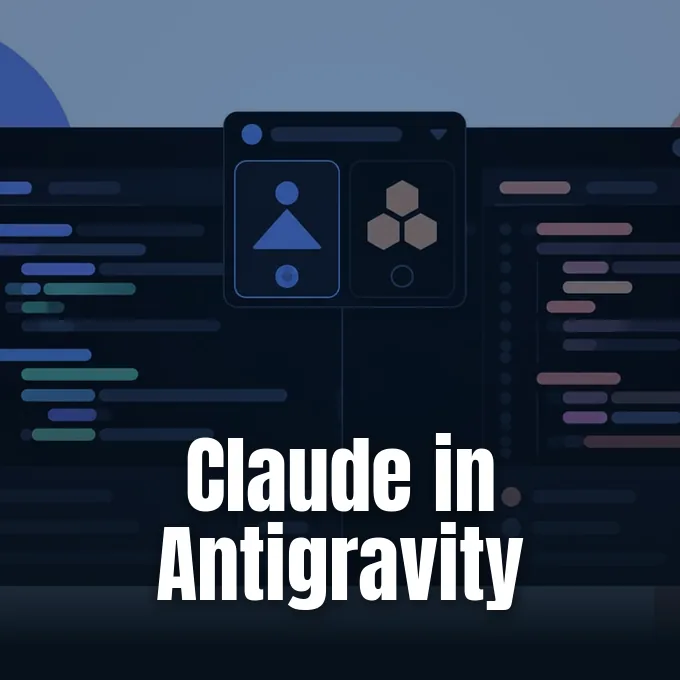
Google introduced Antigravity Claude models to its autonomous development workspace on October 3, 2026, placing Anthropic’s flagship Claude Opus 5.5 and Claude Sonnet 5.5 systems directly into the primary model selector. The engineering update provides software teams with native access to dual frontier reasoning architectures without requiring external account provisioning. While paid subscribers on Google AI Pro and Google AI Ultra tiers gain immediate workspace access, basic accounts face strict exclusions and an approaching platform deadline [1].
Antigravity Claude Models Enter Paid Tier Lineup
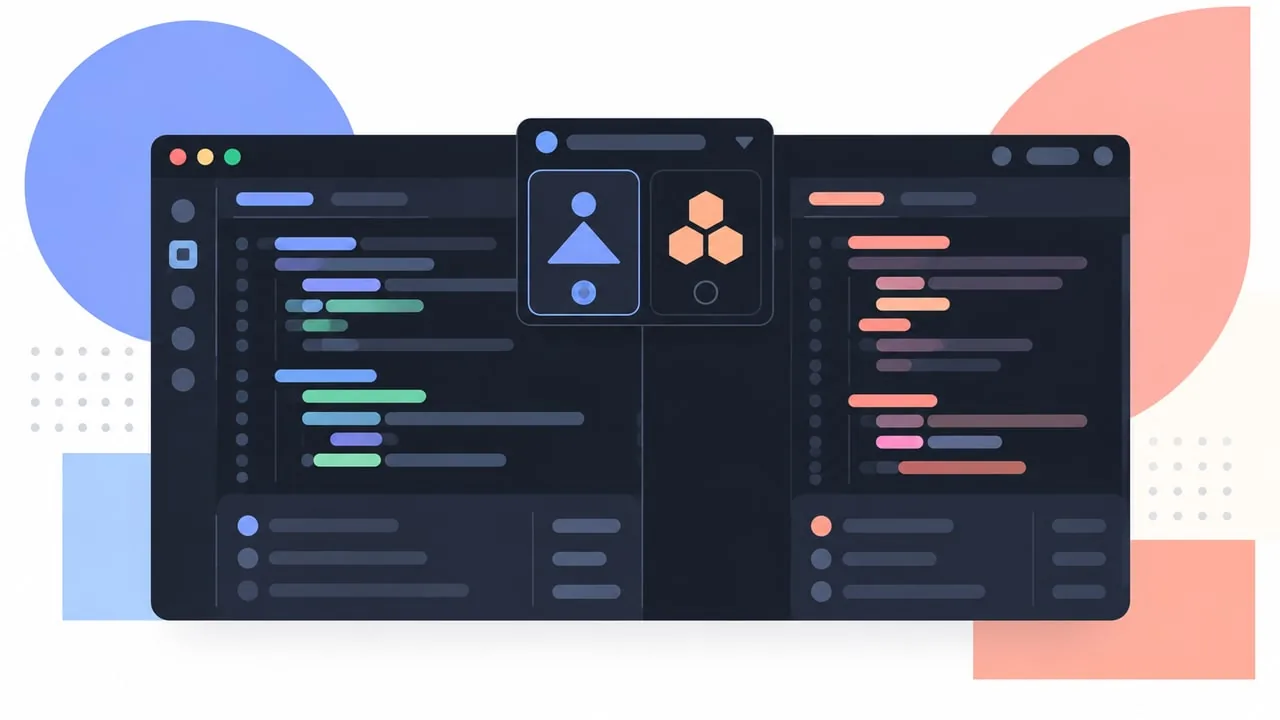
The newly added drop-down entries sit directly below the active prompt input, allowing developers to switch between first-party models and Anthropic’s newest releases within the unified editor interface. Anthropic operates out of San Francisco as an artificial intelligence safety research lab, developing the Claude model family with specialized agentic coding capabilities. Both models arrive without API keys. Instead of requiring engineers to purchase separate API credits or manage independent rate limits, Antigravity routes all generation requests through active plan allocations [1].
This dual deployment extends an orchestration strategy that began when Google launched Antigravity in November 2025 following a $2.4 billion licensing transaction and talent acquisition involving Windsurf. At that initial debut, Google supplied Claude Sonnet 4.5 and OpenAI’s open GPT-OSS in parallel with its default Gemini 3.1 Pro engine, demonstrating a clear willingness to host external systems within a single programming environment. Enterprise buyers adjusted operational calculations after Anthropic released Claude Opus 5.5 with substantial runtime optimizations. While Gemini 3.1 Pro retains a dedicated context window of 1 million tokens for repository comprehension, bundling external reasoning tools into identical prompt workflows enables teams to run real-world comparative evaluations under one unified corporate billing agreement rather than juggling distinct developer invoices [3].
Technical documentation published on explainx.ai underscores that running an identical model inside different agentic harnesses often produces noticeable variations in execution speed and quota consumption. An engineer running Claude Opus 5.5 inside the Antigravity editor executes tasks through Google’s orchestration layer, whereas executing that same model in Anthropic’s Claude Code command line interface relies on direct token consumption. Software architects evaluating these environments can now verify whether unified developer tooling reduces context switching across daily repository maintenance cycles [2].
Subscription Requirements Exclude Free and Trial Accounts
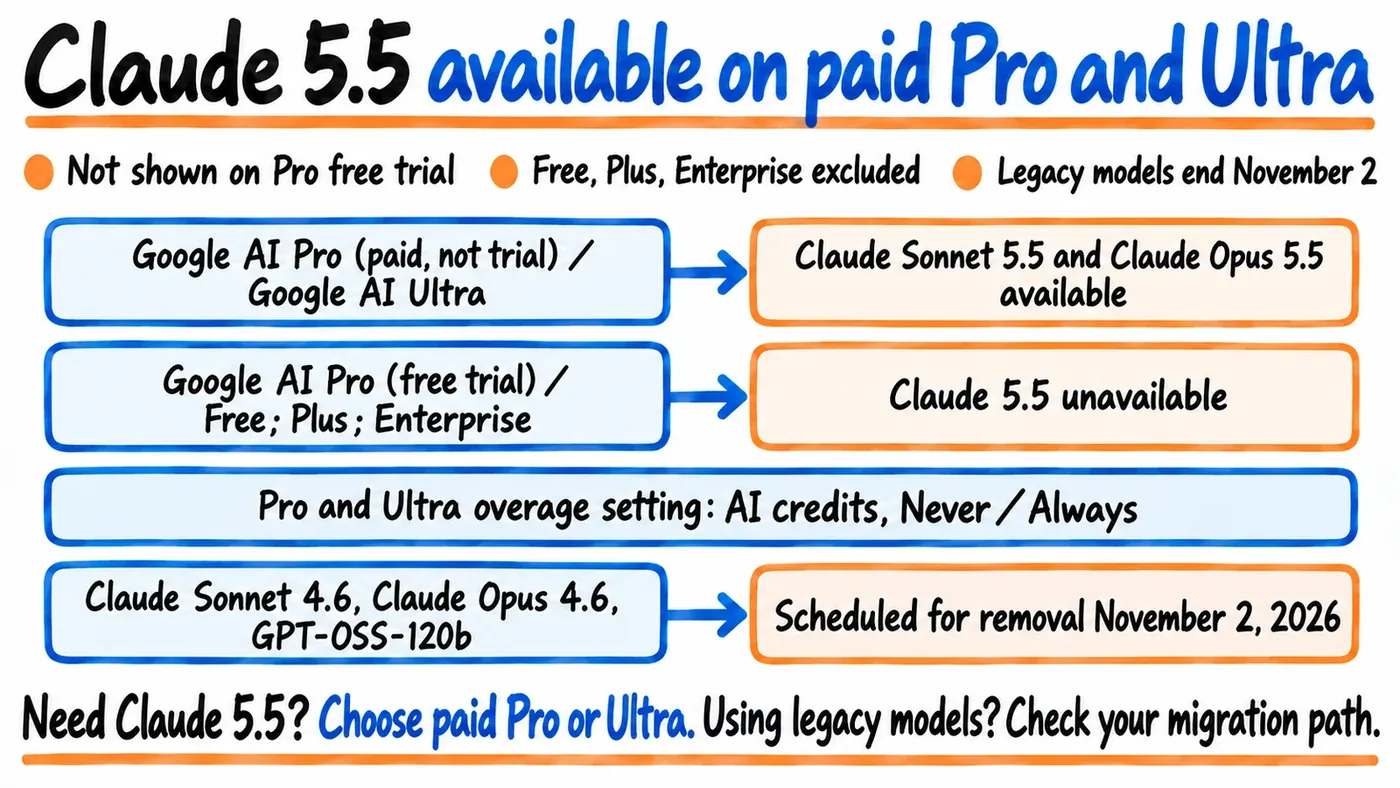
Google enforces strict tier boundaries across its developer workspace. Free accounts, promotional arrangements, and corporate Enterprise subscriptions cannot run the newly integrated reasoning models [4].
Full access demands an active, paying commitment. The base entry tier begins at $19.99 monthly for Google AI Pro, while heavy engineering demands scale to Google AI Ultra, priced at $99.99 per month for the Ultra 5x tier and $199.99 for Ultra 20x according to CloudZero pricing figures. Crucially, Google’s model specification table contains a restrictive stipulation: users participating in promotional free trials of Google AI Pro cannot select either 5.5 release. The interface prevents trial members from running the newer reasoning models until their billing status transitions into a standard paid subscription [3].
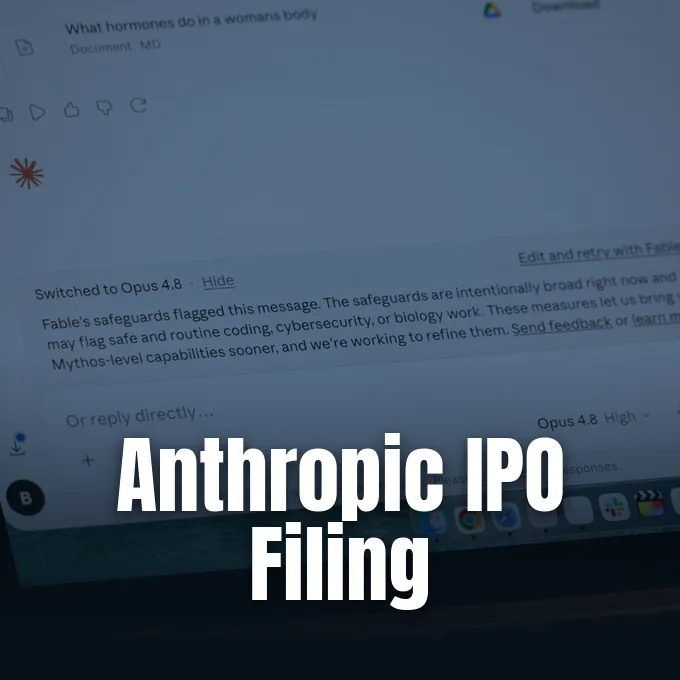
Confusion over these tier boundaries spread across developer channels when an X user named Bee (@thtbee_) shared screenshots showing in-app warnings on an account marked as Pro. Why would an active subscriber receive notices barring third-party model access? The answer traced back to the trial exclusion footnote, though Google had offered minimal public commentary on the restriction. In an earlier community thread discussing outdated listings, Varun Mohan, who develops Antigravity at Google DeepMind, acknowledged catalog maintenance by stating: “Yes, we will clean this up shortly!” [6].
Benchmarking Opus 5.5 Against Sonnet 5.5 Workflows
In practical software development, the two 5.5 releases serve fundamentally distinct operational duties. Claude Sonnet 5.5 functions as the routine workhorse for code generation, syntax repair, and swift file refactoring. On standardized evaluation frameworks such as Terminal Bench 4.0 (an agentic benchmark measuring multi-step software command execution), Sonnet 5.5 registered a score of 70.6 points. That result surpassed the 66.4 mark achieved by the more computationally intensive Opus 5.5. Sonnet runs thirty percent faster. Furthermore, its lower token consumption protects engineers from rapidly depleting their recurring allocation [1].
Claude Opus 5.5 targets comprehensive architectural refactoring, complex bug isolation, and long-horizon autonomous planning where shallower systems stumble. On the independent Epoch Capabilities Index, Opus 5.5 captured the top global position with a score of 167, edging out OpenAI’s GPT-6 Astra. While higher capability scores demonstrate mastery over intricate repository logic, deploying Opus for modest script edits wastes valuable computing credits. Teams extracting maximum utility from Antigravity tend to reserve Opus for multi-file dependency resolution while delegating daily terminal execution to Sonnet [2].
The release timing also highlights rapid shifts in Anthropic’s product deployment pace amid escalating compute expenditure documented in recent Anthropic financial disclosures. Anthropic delivered Opus 5.5 on September 22, 2026, followed six days later by Sonnet 5.5 on September 28. The releases arrived ten days after Anthropic chief executive Dario Amodei publicly urged frontier developers to pace artificial intelligence progress to preserve safety guardrails. Yet both models surpass Fable 5.1 across public benchmark tables, illustrating intense competitive pressure across the frontier programming sector [3].
Retiring Claude Models in Antigravity Before November
While paid tiers welcome the new generation, older reasoning systems face a definitive departure date. Google scheduled the permanent removal of Claude Opus 4.6, Claude Sonnet 4.6, and the open-weights model GPT-OSS-120B for November 2, 2026. Automated build pipelines, custom agent scripts, and repository templates that hardcode these legacy designations will fail if developers do not update their model flags before the cutoff. The retirement removes older systems that had remained in the catalog even after Anthropic shipped its 5.5 generation in late September [1].
This catalog pruning carries severe implications for non-paying users. Because Claude 5.5 access requires a paid Google AI Pro or Ultra plan, the removal of the 4.6 tier leaves Free and Google AI Plus tiers without Anthropic technology. Free accounts lose Claude access. Unless Google alters its policy, non-paying developers will rely exclusively on the first-party Gemini catalog, which includes Gemini 3.8 Flash, Gemini 3.7 Flash, Gemini 3.6 Flash, and Gemini 3.1 Pro [2].
Social media observers speculated that phasing out third-party models signaled an imminent rollout of Gemini 4 Argon. Argon remains unlisted in documentation. Google connected the catalog cleanup to routine maintenance rather than an unannounced product launch. Testing for Argon stays confined to trusted cybersecurity partners through the Fairwind initiative, leaving the November 2 retirement as a standalone roster adjustment [6].
Managing Compute Quotas and Active Agent Sessions
Working with third-party reasoning engines inside Antigravity introduces distinct operational constraints around quota limits. Google allocates compute quotas on a five-hour refresh cycle backed by weekly administrative ceilings, with Gemini and third-party models pulling from independent consumption buckets. Multiple Pro developers reported on Lookonchain that running continuous, multi-step debugging tasks on Claude Opus 5.5 can exhaust allocations rapidly. In extreme agentic workflows involving comprehensive code refactoring, prolonged reasoning sequences consumed substantial portions of weekly headroom within minutes [7].
To shield subscribers from surprise billing spikes, Antigravity provides an overage configuration setting inside plan preferences. Users on Pro and Ultra tiers can explicitly designate their AI credits setting to Never or Always when standard quotas expire. Setting the parameter to Never prevents unexpected metered charges by halting execution once allocations run dry. Furthermore, SmartScope analysis notes that Google does not support Bring Your Own Key (BYOK) configurations, meaning developers cannot supplement exhausted allowances by inserting personal Anthropic API keys [5].
Engineers adjusting their daily environments must also understand how model switching behaves during active execution. Selecting an alternate model in the Antigravity picker does not interrupt or redirect a running generation in mid-stream; the runtime environment completes the active turn under the existing model and applies the new selection to subsequent prompts. Teams relying on legacy Claude configurations should audit their automation scripts immediately, transition mission-critical tasks to Claude Sonnet 5.5 or Claude Opus 5.5, and verify plan credentials well ahead of the November 2 cutoff [5].
- ONLINE NEWS Aggarwal, M. (2026, October 3). Google Antigravity adds Anthropic Claude Opus 5.5 and Sonnet 5.5 for paid subscribers. PC-Tablet. [Article Link]
- WEBSITE Thakker, Y. (2026, October 3). Antigravity gets Opus 5.5 and Sonnet 5.5: Who gets it. explainx.ai. [Article Link]
- ONLINE NEWS Schulze, W. (2026, October 3). Google Antigravity adds Anthropic’s Claude Opus 5.5 and Sonnet 5.5. Startup Fortune. [Article Link]
- ONLINE NEWS Let’s Data Science. (2026, October 3). Google Antigravity adds Claude 5.5 to paid tiers. [Article Link]
- WEBSITE SmartScope. (2026, October 3). Google Antigravity: Why Sonnet 5.5 / Opus 5.5 are not showing up, Pro free trial exclusion, and November 2 old model removal. [Article Link]
- ONLINE NEWS TCA Staff. (2026, October 3). Claude Opus 5.5 lands in Antigravity, but free users lose Claude. TechCityAuthority. [Article Link]
- WEBSITE Lookonchain. (2026, October 3). Antigravity is finally available on Claude 5.5, exclusively for paid Pro and Ultra subscriptions; older models will be retired in November. [Article Link]


1 comment