




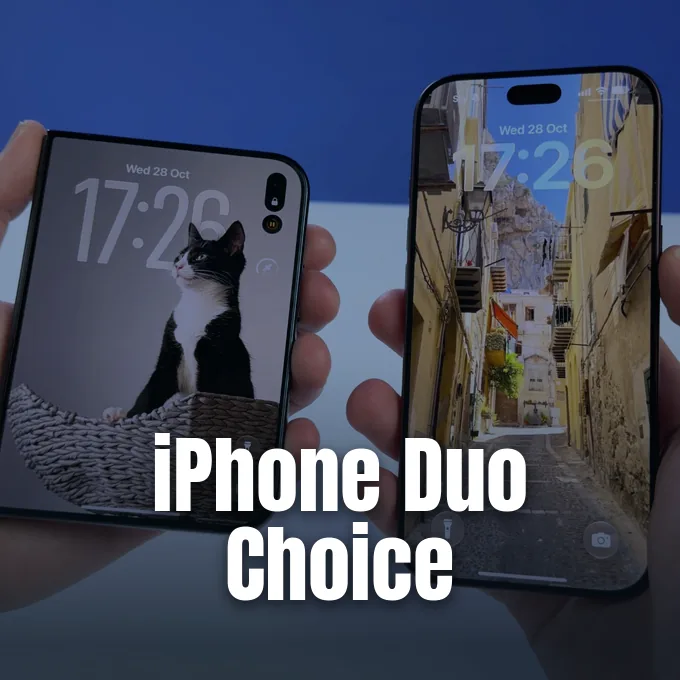
Apple released the foldable Apple iPhone Duo in retail stores on October 23. The launch provides a direct alternative to the iPhone 18 Pro that arrived in September. The two flagships take opposite paths to high-end mobile computing, with the Duo adding an inner tablet display and Apple Pencil support while the iPhone 18 Pro offers camera versatility and familiar ergonomics. Both devices run on the A20 Pro chip with 12GB of RAM, but they target different budgets and daily habits [1].
The Price Gap
The pricing gap between the two devices starts at $800 and stays wide at every storage tier. Apple set the base 256GB iPhone Duo at $1,999 in the United States, £1,999 in the United Kingdom, and AU$3,499 in Australia. In contrast, the entry 256GB iPhone 18 Pro sells for $1,199, £1,199, or AU$2,099. That $800 difference alone equals the cost of an iPad mini. Upgrading storage pushes prices up at matching intervals, with the 512GB Duo reaching $2,199 and the 512GB iPhone 18 Pro selling for $1,399 [1].
At the top storage tiers, the cost reaches levels rarely seen in consumer phones. The 1TB iPhone Duo costs $2,599, and the 2TB model climbs to $3,199, £3,199, or AU$5,899, whereas the iPhone 18 Pro caps out at $1,799 for 1TB and $2,399 for 2TB [1]. Buyers choosing the largest Duo spend enough to buy both a base iPhone 18 Pro and an entry laptop. Apple introduced both smartphones in September 2026 before staggering their retail rollout through autumn as part of four straight Friday product releases. On the AppleInsider Podcast, host Wes pointed out that shoppers must use calculator apps to weigh these prices against Apple’s latest hardware waves, including the new iMac and touch-screen MacBook Pro models [2].
Availability also separated the two lines at retail. The iPhone 18 Pro reached customers shortly after its September reveal. But the Duo arrived in stores later on October 23, trailing the initial launch window by several weeks while Apple prepared its folding display inventory [1]. Community discussions on the AppleInsider Forums showed that shoppers faced an immediate choice between a classic phone and a dual-screen device [2].
Apple iPhone Duo Form Factor
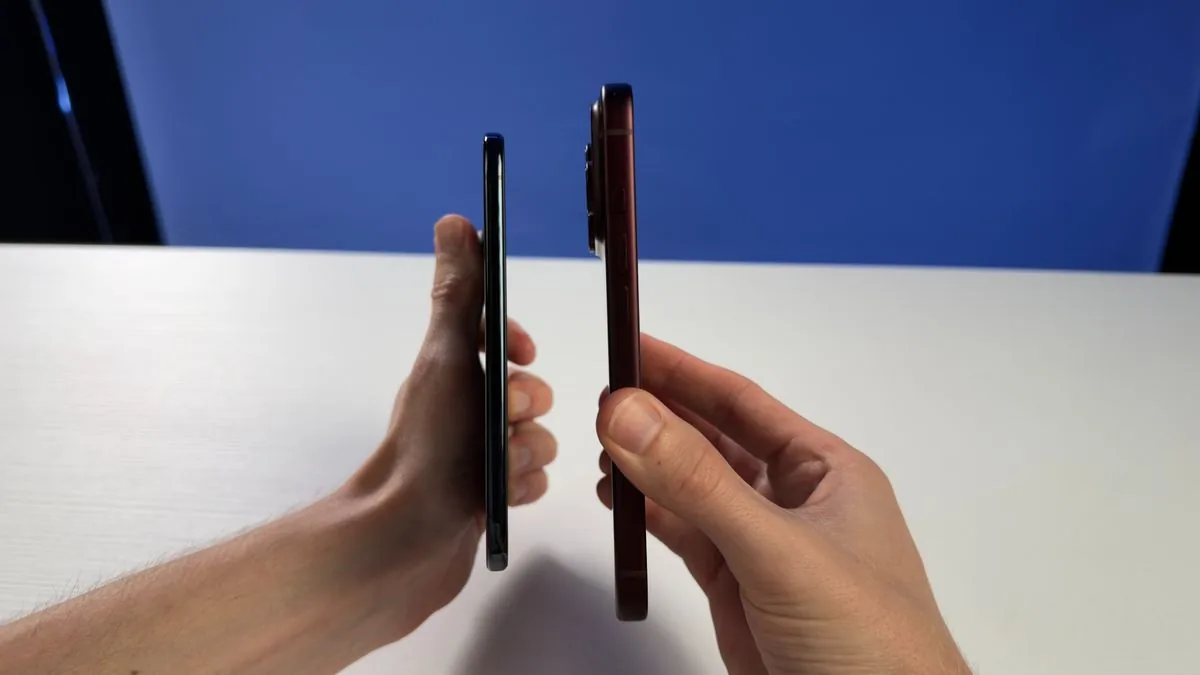
The outer build of the Apple iPhone Duo looks unlike any previous smartphone from Apple. When folded shut, the device measures 117.8 by 84.1 by 11.3 millimeters. That footprint resembles a pocket passport. In contrast, the iPhone 18 Pro measures 150 by 71.9 by 8.8 millimeters, retaining the tall chassis familiar to iOS users. The Duo weighs 254 grams. The iPhone 18 Pro weighs 211 grams [1].
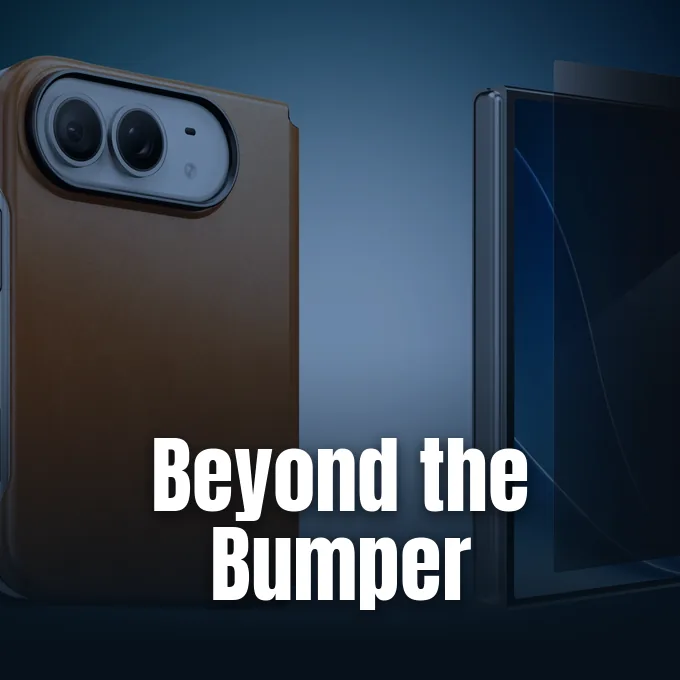
Frame materials and button layouts also set the two devices apart. The Duo uses a titanium frame with a glass back. The iPhone 18 Pro pairs an aluminum frame with a blend of glass and metal on the rear. Apple placed the Duo volume buttons on the top edge instead of the side. That unusual placement requires an adjustment for users who expect side controls. Both phones earn an IP68 rating for water and dust resistance, with Ceramic Shield 2 protecting the front glass and original Ceramic Shield covering the back [1]. Because the folded body is wider than normal phones, makers built tailored accessories where camera stands join the new iPhone cases lineup to keep the device upright on flat surfaces.
Color options and surface durability provide further contrast between the two lines. Apple sells the Duo in Night Sky and Star White, while the iPhone 18 Pro comes in Black, Silver, Glacier, and Burgundy options. Reviewers Axel Metz and James Rogerson at TechRadar described the Duo as “beautifully designed and engineered” during hands-on testing. When asked about early reports of screen cracks, Apple said the issue affected only a “small number of units” at launch [1]. On the AppleInsider Podcast, host Wes said a week of intensive real-world testing showed the hinge felt solid during day-to-day use [2].

Dual Screens on the Apple iPhone Duo
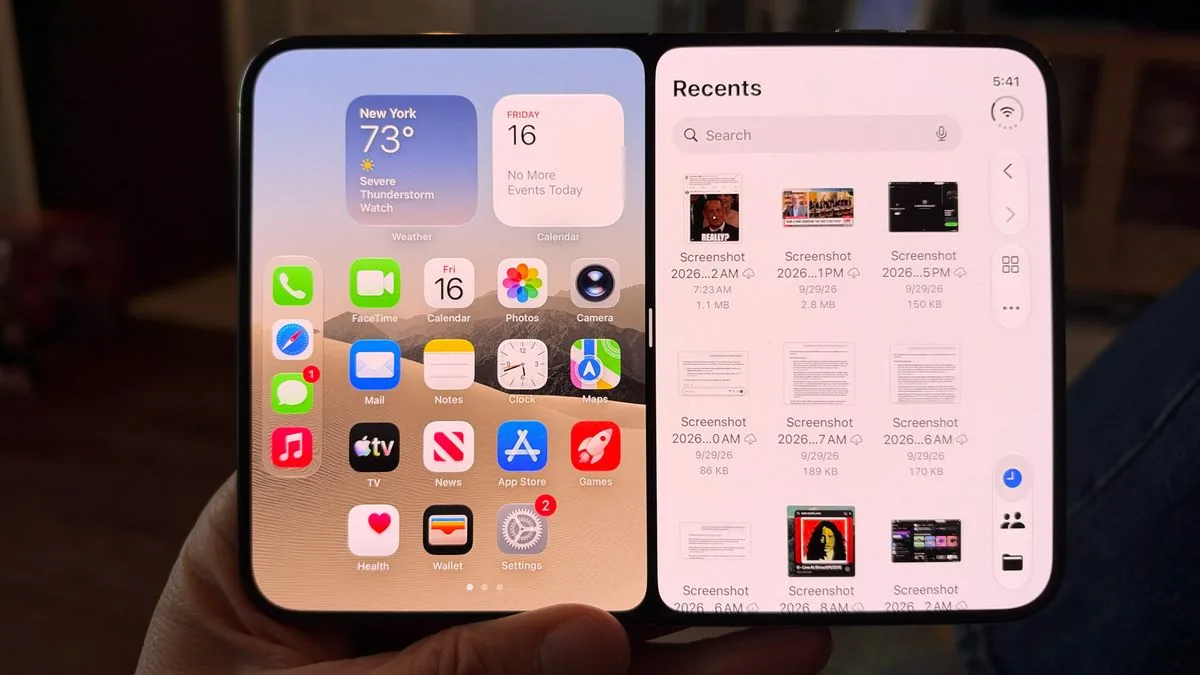
The main draw of the Apple iPhone Duo comes from its inner display. Unfolding the device reveals a 7.6-inch LTPO Super Retina XDR OLED panel running at a resolution of 1878 by 2670 pixels with 430 pixels per inch. It supports a 120Hz refresh rate and reaches peak brightness of 3,000 nits. The 1.4:1 aspect ratio provides ample canvas space to run two apps side by side, read books, or work on spreadsheets. Apple added a nano-texture coating to this inner panel, which cuts glare and makes the folding crease hard to see from head-on viewing angles [1].
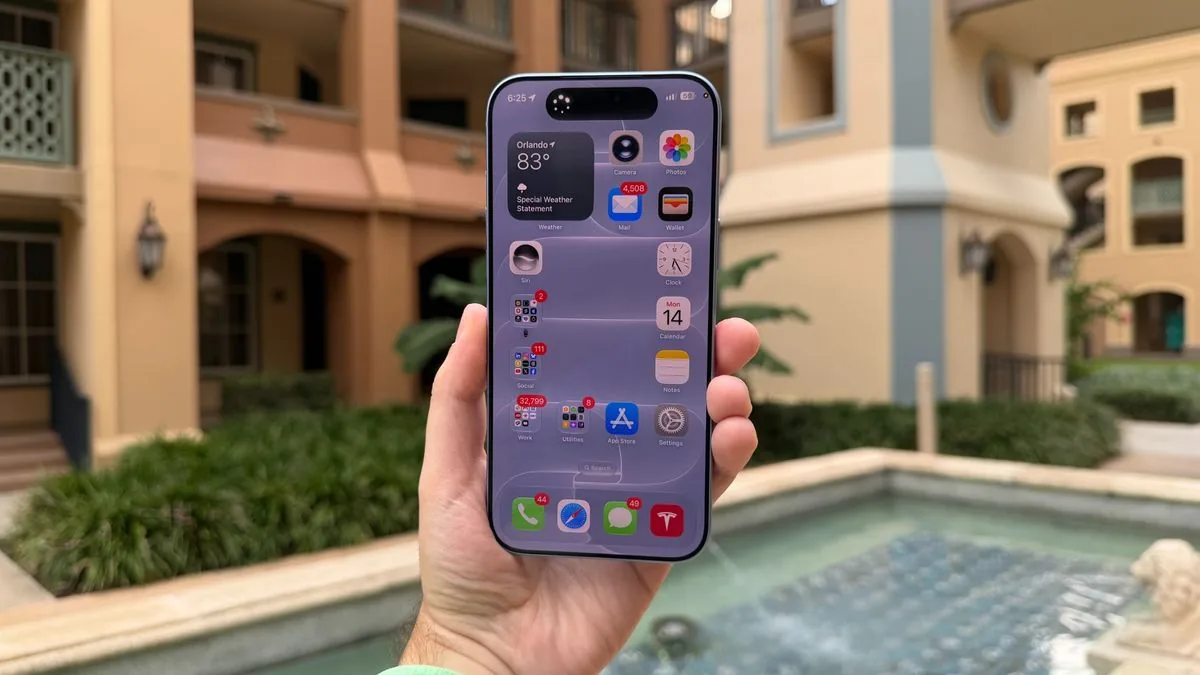
When closed, the Duo relies on a 5.4-inch cover screen with a resolution of 1398 by 2034 pixels and a density of 460 pixels per inch. Like the inner screen, this outer panel hits 3,000 nits and supports 120Hz refresh rates. The iPhone 18 Pro takes a simpler path with a single 6.3-inch LTPO Super Retina XDR OLED display. Running at 1206 by 2622 pixels at 460 pixels per inch, the Pro screen matches the Duo with 3,000 nits of peak brightness and smooth 1Hz to 120Hz scrolling [1].

Input tools and front sensor layouts divide the daily experience between the screens. The Duo inner display supports the Apple Pencil, letting users sketch and take handwritten notes just as they might on an iPad mini. On the AppleInsider Podcast, host Wes noted that drawing on the folding canvas feels natural, but users miss having the larger palm rest found on a touch-screen MacBook Pro [2]. The iPhone 18 Pro lacks stylus support. But the 18 Pro keeps the Dynamic Island and full Face ID sensors, which the Duo drops in favor of a punch-hole selfie camera on the cover and an under-display sensor inside [1].
Camera Hardware Differences
Photography is where the iPhone 18 Pro pulls ahead of its foldable sibling. The 18 Pro carries a rear triple-lens array on what Apple terms the “camera plateau”. Its standout feature is a 48MP main camera with a variable aperture that shifts smoothly between f/1.5 and f/4.0 to control light and depth of field. A 48MP ultra-wide lens and a 48MP telephoto lens with 4x optical zoom complete the rear module, giving photographers clear framing options for both close and distant subjects [1].
The Duo adopts a simpler camera setup to fit inside its slim folding panels. Its back holds a dual-lens system made up of a 48MP f/1.6 main camera and a 48MP f/2.2 ultra-wide sensor with a 120-degree field of view. It lacks a telephoto lens altogether. Zoom shots rely on digital cropping. For video calls, the Duo pairs a 12MP f/2.2 camera on the cover screen with a 4MP f/1.8 under-display lens on the folding panel [1].
Front-facing camera quality also favors the traditional flagship. The iPhone 18 Pro includes an 18MP f/1.9 camera tucked inside the Dynamic Island, delivering sharper selfies and cleaner video calls than the Duo cover camera. Reviewers Axel Metz and James Rogerson at TechRadar praised the Duo for having “two strong 48MP lenses and an above-average Center Stage selfie camera,” but they concluded that it can’t match the versatility of the 18 Pro. Buyers who prioritize concert photos, portrait flexibility, and zoom reach will find the 18 Pro far more capable [1].
Battery Capacity and Charging
Power needs differ between the two phones because the Duo must light two separate OLED panels. Apple equipped the Duo with a 4,883mAh battery, split across its two halves to balance weight. The iPhone 18 Pro carries a smaller 4,288mAh cell in eSIM-only regions, while models with a SIM tray drop to 4,056mAh. Even with the larger battery pack, powering a 7.6-inch 120Hz display means the Duo draws more energy during heavy browsing and split-screen multitasking [1].
Charging speeds give a time advantage to the single-screen phone. The iPhone 18 Pro recharges to 50% in 15 minutes with a fast charger, while the Duo reaches 50% in 20 minutes. Both smartphones run on Apple’s A20 Pro processor and include 12GB of RAM. That silicon delivers matching speed when launching games, editing video clips, or processing on-device tasks [1].

Choosing between these flagships comes down to whether an expansive folding screen outweighs camera versatility and cost. The iPhone Duo provides a tablet experience that slips into a jacket pocket. That larger canvas benefits digital artists and users who read documents on the go. But it asks buyers to accept a higher starting price, a heavier chassis, and the absence of Face ID. The iPhone 18 Pro remains the safer, more practical choice for most people, offering superior photography, faster charging, and proven durability at a much lower entry cost [1]. On the AppleInsider Podcast, host Wes and community members on the AppleInsider Forums concluded that while the Duo is an intriguing glimpse of hardware, the 18 Pro delivers the more balanced daily experience alongside Apple’s broader ecosystem of iMac and MacBook Pro computers [2].
- ONLINE NEWS Metz, A., & Rogerson, J. (2026). Is the iPhone 18 Pro better than the iPhone Duo? The answer is complicated. TechRadar. [Article Link]
- ONLINE NEWS AppleInsider. (2026). iPhone Duo, iPad mini, and MacBook Pro on the AppleInsider Podcast. AppleInsider. [Article Link]


