





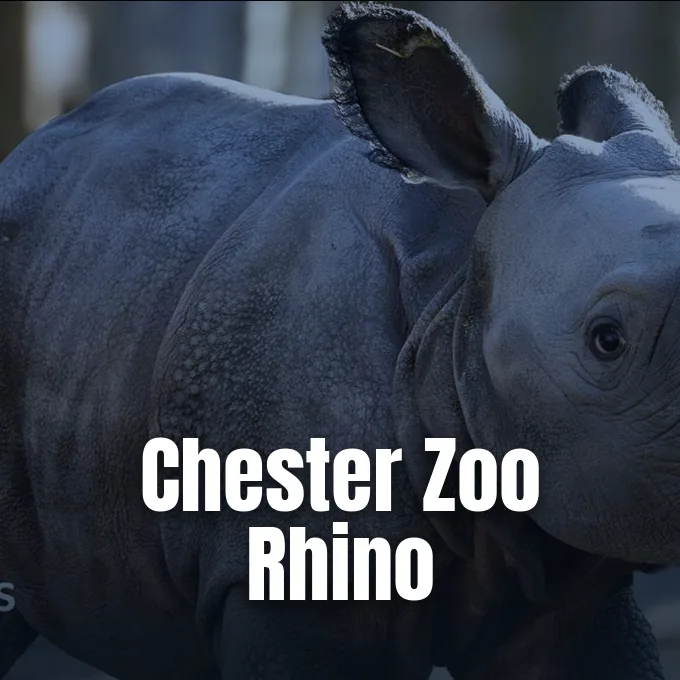
Keepers at Chester Zoo in Cheshire recorded the moment a newborn greater one-horned rhinoceros calf stood on uneven ground and took its first unsteady steps inside the family enclosure. The birth followed a gestation period of 15 months for 19-year-old mother Asha after months of patient monitoring by Chester Zoo care teams. Video cameras documented the young animal finding its balance beside Asha only hours after delivery. The arrival of the young Chester Zoo rhino adds a healthy individual to European breeding efforts that seek to preserve a species facing habitat pressures in India and Nepal [1].
Chester Zoo Rhino Calf Footage
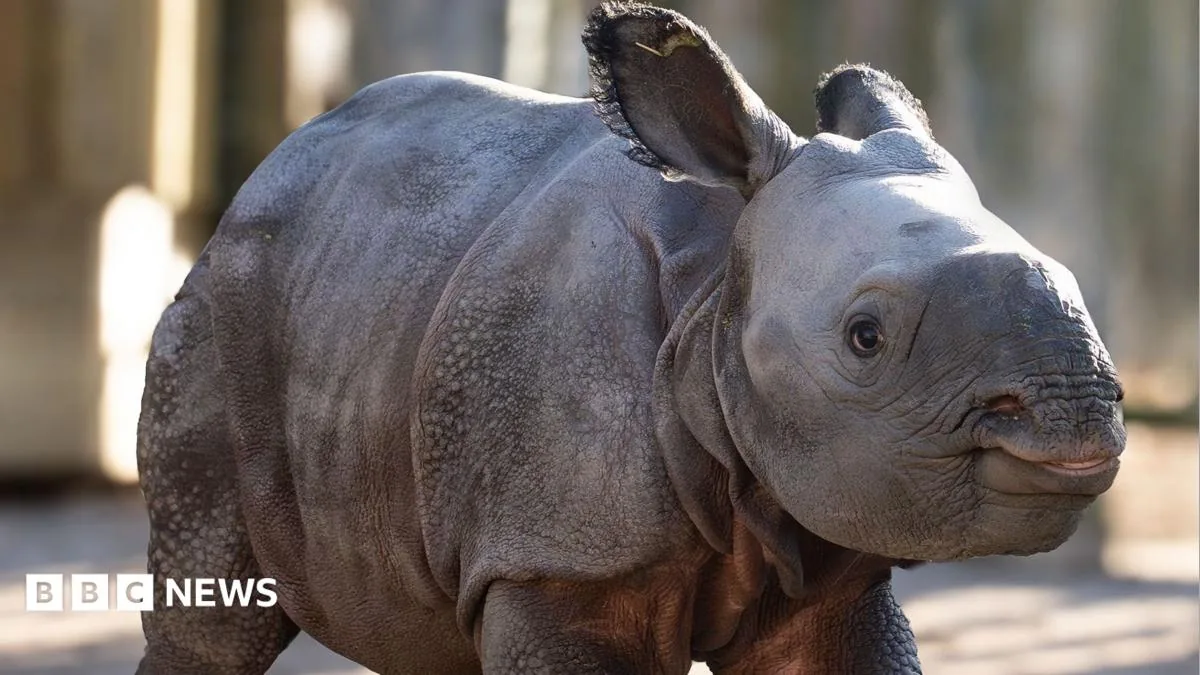
The newborn calf emerged into the indoor habitat at Chester Zoo earlier this week, where surveillance cameras captured it rising to its feet next to Asha. Keepers in Cheshire observed the young animal testing its footing on straw bedding, leaning against Asha before pushing upward on all four legs. Both rhinos were in good health. Keepers reported that Asha stayed close to nudge the young rhino as it adjusted to the indoor stall. Footage broadcast by BBC News showed the calf wobbling over the straw before steadying its balance. The video recording gave observers a direct view of the first hours of a species that seldom breeds in zoological collections. The calf took several hesitant steps over the bedding, paused to rest against Asha, and then walked steadily toward the feeding area while Chester Zoo staff watched through remote monitors [1].
Tom Garland celebrated the arrival. The calf was the fourth born to Asha and Beni at Chester Zoo in Cheshire. “It’s always exciting to welcome a new calf and Asha has been a brilliant mum to all her youngsters,” he said. “Every birth is important for the future of this species and it’s wonderful to see another healthy arrival.” Care teams at the Chester Zoo rhino house watched Asha and her newborn remotely to let them bond naturally [1].
Asha’s 15-Month Pregnancy
The pregnancy lasted 15 months. Because greater one-horned rhinos have prolonged reproductive intervals that demand substantial physiological resources, veterinary staff monitored Asha’s hormone indicators, food intake and weight changes through non-invasive techniques to ensure that both mother and growing calf remained healthy throughout the entire gestation period. Asha had carried three previous calves to term at Chester Zoo. Her calm temperament helped guide veterinary protocols during the process. Keepers checked her condition multiple times daily during the final weeks of gestation, recording behavioural shifts to detect the earliest signs of labour. That careful oversight helped staff at Chester Zoo prepare a quiet birth stall with deep straw and regulated temperatures well before the delivery began [1].
Conservation scientist John O’Hanlan said supporting Asha’s 15-month pregnancy had been “really exciting” for everyone involved in her care. O’Hanlan said that long intervals between births mean each successful pregnancy involves months of patient focus from zoological teams. Asha rested quietly in her indoor stall at Chester Zoo during her final days of pregnancy, showing normal signs of comfort before labour began [1].
Beni’s Final Offspring
Beni died earlier this year. The birth carries added significance for Chester Zoo because the newborn calf is the fourth offspring born to Asha and father Beni, who died following a short illness. Beni had lived as the resident breeding male at Chester Zoo in Cheshire, pairing with Asha during multiple reproductive cycles to produce three earlier youngsters that joined wider European conservation networks. Reporting by BBC News noted that Beni’s passing left a gap in the herd, an outcome that saddened keepers who had cared for him over many years. Because greater one-horned rhinos reproduce slowly, losing an established breeding bull creates a challenge for conservation teams. The arrival of his final calf means that his genetic lineage continues. The young animal provides a direct connection to Beni, whose presence shaped the Chester Zoo herd for over a decade [1].
Garland praised Asha’s steady maternal instincts. “Asha has been a brilliant mum to all her youngsters,” he said, pointing to her attentive behaviour after every previous delivery. Her experience allowed her to nurse the new calf without hesitation. A steady feeding routine developed during its first forty-eight hours of life at Chester Zoo [1].
Chester Zoo Rhino Breeding Goals
The newborn calf is part of a coordinated Europe-wide conservation breeding programme created to maintain a healthy and genetically diverse population of greater one-horned rhinos under human care. Zoos participating in this network exchange pedigree data, veterinary records and demographic projections to formulate breeding plans that prevent the risks of inbreeding. Conservation scientist John O’Hanlan said that the captive population in Europe contains only a small number of females that reproduce regularly. “She’s one of relatively few greater one-horned rhinos in Europe actively breeding, so every successful birth is important in maintaining a healthy and genetically diverse population,” he said. By adding a healthy calf to the regional studbook, the Chester Zoo team helps keep genetic diversity high within European institutions while wild populations face environmental uncertainties [1].
Genetic diversity protects managed herds. The birth of this Chester Zoo rhino calf expands the gene pool of Europe’s captive herd, offering another animal that can contribute to conservation goals. Controlled environments at Chester Zoo also let veterinary teams study maternal behaviour and calf growth under peaceful conditions [1].
Wild Herds in India and Nepal
Hunting caused historical collapses. Greater one-horned rhinos were driven to near-extinction in the early 1900s by habitat loss and trophy hunting, leaving tiny survivor groups clinging to isolated river valleys in Asia. Decades of habitat protection and anti-poaching measures helped numbers recover across protected areas. Wildlife surveys record around 4,000 individuals surviving across riverine forests and grasslands in India and Nepal, though habitat pressures keep the species classified as vulnerable to extinction. While legal protections have stabilized total numbers compared to a century ago, human settlement and farming expansion continue to fragment suitable riverine habitats in India and Nepal. The surviving animals depend on protected corridors to move between feeding areas. Seasonal floods and shifting river channels shape their daily movements. Conservationists monitor these wild herds closely, but disease outbreaks and poaching pressure pose ongoing threats that can quickly diminish small local populations [1].
Mark Brayshaw said wild rhinos face serious geographic concentration risks. “Greater one-horned rhinos are much better protected in the wild than they once were, but many of them are concentrated within one national park in India, which makes them vulnerable to illness and environmental changes,” he said. Having thousands of animals in a single location leaves the species exposed to unforeseen ecological disruptions [1].
Public Awareness and Conservation
In addition to safeguarding the genetics of the species, Asha and her calf play an educational role when zoo visitors explore the real-world value of wildlife conservation. Mark Brayshaw said that seeing a mother and newborn up close helps millions of Chester Zoo guests build a personal appreciation for animals living thousands of miles away. “They still need people to love and protect them,” Brayshaw said. He called for ongoing international support for conservation programmes that protect rhinos in India and Nepal. Visitors who watch the calf take its first steps can grasp the slow pace of rhino reproduction and understand why single births matter so much for global survival counts. Connecting zoo audiences with threatened animals helps generate the funding and public interest needed to maintain anti-poaching teams and protect wetlands in India and Nepal [1].
Video clips circulated by BBC News captured the young calf finding its feet on the straw, offering the public an early look at its healthy progress. As Asha nurses her fourth youngster over the coming months, keepers at Chester Zoo in Cheshire will watch its growth closely to track its developmental milestones. The strong public interest in the Chester Zoo rhino calf helps keep global attention focused on the fragile future of greater one-horned rhinos [1].
- ONLINE NEWS Coleman, J. (2026, November 19). Rare rhino’s first steps at Chester Zoo captured on video. BBC News. [Article Link]
APA 7: PerEXP Teamworks. (2026, November 20). Chester Zoo Rhino Calf Takes First Steps After 15-Month Pregnancy. PerEXP Teamworks. https://perexpteamworks.com/en/chester-zoo-rhino-first-steps/


