






A content delivery network architecture uses a global grid of proxy servers to bring digital assets closer to the people who read them. Instead of routing every request back to a single central machine, edge facilities cache images, scripts, and video files near local Internet exchange points. Edge servers cut round-trip times and protect central web hosts from heavy traffic surges during peak hours. When visitor numbers rise, these edge points absorb the load and keep page delivery steady [9].
- How Edge Servers Cache Web Content
- Content Delivery Network Architecture Layers
- Request Routing and Load Balancing
- Why Websites Adopt Multi-CDN Architecture
- Image Optimization at the Network Edge
- Interconnection Protocols for Edge Networks
- Open Source CDNs and Public Libraries
- Content Delivery Network Architecture Security Risks
How Edge Servers Cache Web Content
Web platforms rely on edge caching methods to store static files on server nodes in major cities around the globe. In this framework, an origin server hosted by providers like Amazon Web Services or Google Cloud holds the master copy of all website data, including database records, media archives, and application code. When a visitor opens a webpage, the nearest point of presence intercepts the incoming network call and checks whether an unexpired copy of the requested asset already sits in local solid-state storage. If the file is missing from local memory, the edge node fetches it from the origin and stores a fresh copy so that future visitors from the same region download it without delay. That local copy stays valid until its cache header expires [9].
Static files stay identical for every visitor, which makes them ideal for caching. Video streams, product photos, stylesheet rules, and JavaScript bundles do not change between individual page views. Gerald Rubant explained in Computerwoche that dynamic content behaves differently because servers generate personalized data at the exact second a request arrives [7].
Central origin hosts struggle when traffic surges hit without warning. To prevent server failure, network providers position an origin shield between the edge tier and the central database host. The shield functions as a centralized cache layer that consolidates duplicate requests coming from dozens of local edge points. It queries the master host once [9].
Content Delivery Network Architecture Layers
Content delivery network architecture combines hardware locations, routing software, and cache synchronization into a multi-tiered topology. Commercial operators such as Akamai Technologies, Cloudflare, Fastly, Limelight Networks, and Alibaba Cloud set up points of presence in carrier data centers close to major internet service providers. These edge facilities keep open peering links to Internet exchange hubs, which lets them bypass congested public transit pathways and hand data straight to consumer access networks. Content flows through predefined distribution paths that keep transit expenses low while maintaining fast response speeds for distant audiences. Short geographic delivery paths also prevent packet loss during heavy evening streaming hours. Distributed storage clusters in multiple continents protect global websites from localized equipment failures [9].
Replica placement algorithms decide where copies of digital assets should reside to maximize performance. In a survey published in IEEE Communications Surveys & Tutorials, J. Sahoo, M. A. Salahuddin, R. Glitho, H. Elbiaze, and W. Ajib classified replica placement models into cost and quality categories. Edge nodes balance storage hardware costs against bandwidth consumption, because storing every single file on thousands of edge servers becomes expensive [13].
Telecommunications operators build telco CDNs to manage bandwidth consumption within private fiber backbones. Broadband providers own the final mile. Cache appliances positioned at the boundary of local access networks give carriers direct control over media streams [9]. John Welborn noted that this infrastructure differs from software platforms like Disqus and Intense Debate, which rely on embedded widgets for blog comments [11].
Request Routing and Load Balancing
Edge software directs user requests to the best server node based on geographic distance, link health, and available machine capacity. Many edge networks deploy Anycast routing. In this scheme, multiple server racks across different data centers share a single IP address, and standard BGP routing protocols guide incoming packets along the shortest path to the closest healthy point of presence. Neighboring centers absorb traffic during maintenance [9].
Other systems use DNS-based routing to evaluate user locations before delivering a specific server IP address. When a browser resolves a website domain name, a global server load balancing system inspects the resolver address and returns the IP of the nearest healthy edge machine. Once traffic reaches the local cluster, Layer 4 and Layer 7 switches distribute requests among server nodes. These multilayer switches run regular health checks and steer traffic away from lagging units to keep response times fast [9].

Network conditions change from hour to hour, which calls for adaptive path selection for dynamic traffic. Gerald Rubant said that standard Transmission Control Protocol connections prioritize packet safety and congestion avoidance rather than raw transit velocity. Edge networks circumvent standard Internet bottlenecks by monitoring routes in real time and funneling data packets through less crowded peering channels. Shorter network hops cut latency and prevent video buffering during peak online hours [7].
Why Websites Adopt Multi-CDN Architecture
Single edge providers create a point of failure that can take down entire web platforms during an outage. When a major cloud network suffers a configuration error or a fiber cut, websites hosted only on that provider become unreachable in broad geographic zones. To eliminate this vulnerability, high-traffic enterprises deploy a Multi-CDN architecture that routes traffic among several independent providers. Industry reports show that media platforms like Netflix, Zoom, and MS Teams use three separate CDN providers simultaneously to guarantee uninterrupted streaming around the clock. If one vendor experiences an outage or a cyberattack, others take over right away so that end users notice no disruption. Traffic distribution among multiple suppliers also gives corporate buyers leverage to negotiate lower bandwidth pricing with infrastructure vendors [8].
Traffic distribution among multiple vendors happens through either DNS load balancers or dedicated management aggregators. Cloud routing services such as Amazon Route 53, Azure Traffic Manager, and Google Cloud DNS evaluate vendor performance and steer user queries to the best network endpoint. For example, requests originating in France route to European nodes, while American users receive files from domestic edge clusters [8].
Multi-vendor routing also introduces operational hurdles that engineering teams must navigate with care. Can engineering teams switch between disparate edge vendors without encountering broken assets or caching mismatches? In practice, proprietary edge features do not translate cleanly between cloud APIs, and cache purge commands take different lengths of time. Inconsistencies between providers lead to broken pages [8].



Image Optimization at the Network Edge
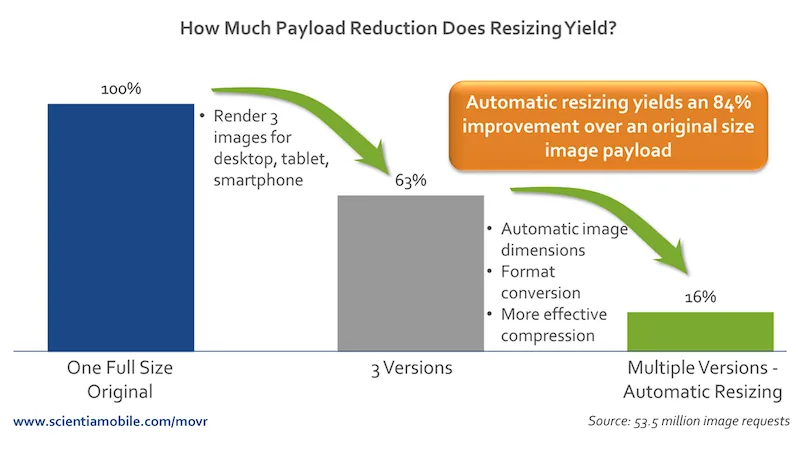
Images account for the largest share of transmitted bytes on the web, which makes them the main target for edge optimization. Research conducted by Radware indicated that an average e-commerce webpage exceeds 1.3 MB in total size, with 64% of that payload coming from image files. Slow-loading media files frustrate online shoppers and drive abandonment rates higher if pages take longer than three seconds to display. Edge image processing removes compression work from the origin server and speeds up visual rendering for mobile clients. Faster media delivery protects checkout revenue. Online retailers rely on automated image scaling to keep product catalogs lightweight on every mobile device. ScientiaMobile benchmarks confirm that optimized image payloads reduce cellular data consumption for smartphone users [3].
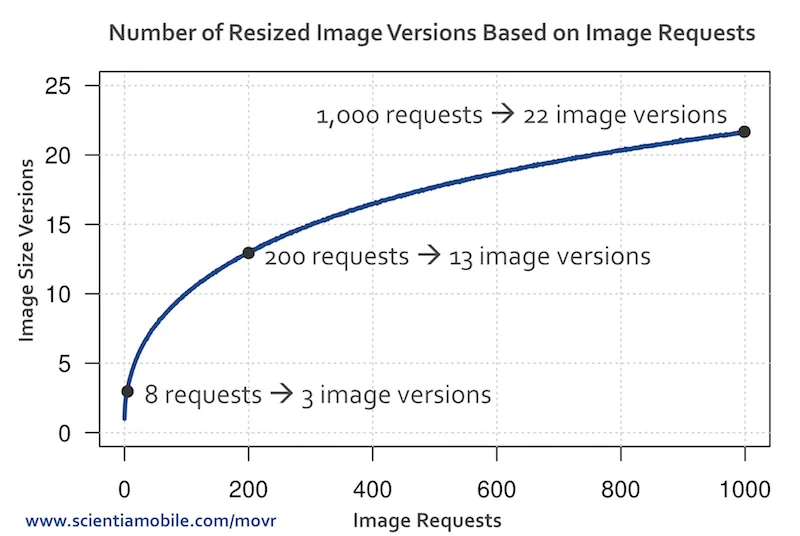
Standard responsive web design relied on static breakpoints that served predefined image sizes to smartphones, tablets, and desktop computers. However, an experiment by ScientiaMobile showed that eight requests for a given image URL are enough to surpass three breakpoints, leading to oversized downloads on fragmented mobile screens. Image processing pipelines at the edge apply lossless vs lossy compression to shrink file weights before sending them to mobile browsers. Jon Arne Sæterås reported in Smashing Magazine that “using a content delivery network — in this case, ImageEngine — can reduce the payload by 84%.” [3]
Smart image networks read HTTP Client Hints, user-agent data, and network headers to deliver modern file formats like WebP and AVIF automatically. Developer guides on web.dev by Jeremy Wagner, Katie Hempenius, and Barry Pollard show that switching to an image CDN can yield a 40% to 80% reduction in image file size. Platforms like Cloudinary, imgix, and Thumbor provide on-the-fly resizing [4].
Interconnection Protocols for Edge Networks
As internet traffic expanded beyond national borders, standalone delivery networks found that their geographic reach had natural limits. To serve global audiences without deploying physical server racks in every country, providers formed interconnection agreements that allow one network to distribute content on behalf of another. In this collaborative arrangement, an upstream CDN contracts with content publishers while delegating local delivery tasks to a cooperating downstream network closer to the end user. This cooperation gives local carriers an opportunity to monetize ingress traffic and reduces transit costs for publishers. Interconnection expands the footprint of local providers while maintaining quality of service in different territories without requiring heavy capital investments in hardware facilities [10].
Interconnecting separate networks requires strict standards to avoid breaking client sessions. In RFC 7337, editors K. Leung from Cisco and Y. Lee from Comcast laid down the architectural baseline for the Content Distribution Network Interconnection working group within the Internet Engineering Task Force. The specification defined clear binding rules, mandating that CDN interconnection must not require browser upgrades, changes to client software, or modifications to content publishers [1].
The CDNI architecture divides cross-network communication into five functional interfaces that coordinate traffic routing and policy enforcement. The Control Interface manages lifecycle triggers, while the Request Routing interface pairs synchronous redirection tools with an asynchronous Footprint and Capabilities Advertisement interface. These standardized protocols ensure that content delivery network architecture scales smoothly [1].
Open Source CDNs and Public Libraries
Website creators often rely on open-source content delivery networks to host popular JavaScript libraries, web fonts, and CSS styling frameworks. Instead of hosting common dependencies like jQuery or Bootstrap on origin servers, developers embed links that pull these public assets from high-speed edge networks free of charge. Cody Arsenault pointed out on Opensource.com that these shared services improve redundancy and reduce server bandwidth bills for community projects and small businesses that lack commercial delivery budgets [5].
Usage data collected by W3Techs reveals the vast scale and market distribution of public script networks. According to survey benchmarks, 77.4% of surveyed websites use none of the monitored public script networks, preferring to self-host their dependencies. Among sites that utilize external script delivery, cdnjs commands the largest share, serving 10.8% of all monitored websites and securing a 47.6% market share within the JavaScript CDN sector. These figures show how centralized asset distribution channels support millions of live internet domains [6].
Alternative open-source providers also maintain massive server footprints to keep dependencies accessible worldwide. The jsDelivr platform delivers assets from over 2,100 libraries across 110 points of presence by leveraging underlying capacity from KeyCDN, Stackpath, and Cloudflare [5]. W3Techs measurements show that jsDelivr captures a 9.0% absolute site share and a 39.7% market share, while Google Hosted Libraries accounts for 6.5% of websites and a 28.9% market share. Microsoft Ajax CDN holds a smaller footprint, serving 0.2% of websites, alongside niche providers like unpkg and Baidu Resource Library [6].
Content Delivery Network Architecture Security Risks
Third-party asset distribution introduces security risks that malicious actors can exploit. If an attacker breaches an edge provider or compromises a public script repository, they can alter shared JavaScript files to execute arbitrary code in thousands of client browsers. This threat acts as a classic digital supply chain attack, where web developers unknowingly import tampered dependencies onto their own platforms. To counter script tampering, browser vendors established Subresource Integrity as a core web security defense. Browsers halt modified code before execution. Cryptographic hash validation at download time protects websites against compromised edge nodes and modified distribution packages. Organizations like Mozilla and the World Wide Web Consortium advocate hash verification across all third-party scripts [2].
Subresource Integrity enables client browsers to verify that downloaded files match an exact cryptographic fingerprint. Documentation from MDN Web Docs explains that developers include an integrity attribute containing base64 hashes generated with sha256, sha384, or sha512 algorithms using tools like OpenSSL. Furthermore, browsers enforce Cross-Origin Resource Sharing headers, requiring edge servers to supply valid access control flags before scripts can run [2].
Regulatory privacy requirements also impact how content delivery network architecture handles client data. In 2021, a German court ruled against a university website because loading assets from an external delivery network caused user IP addresses to transmit to third-party servers without consent, violating General Data Protection Regulation guidelines [9]. In IEEE surveys, M. Ghaznavi cautioned that edge caches must also repel Distributed Denial of Service attacks [12].
- REPORT Leung, K., & Lee, Y. (Eds.). (2014). Content Distribution Network Interconnection (CDNI) Requirements. IETF RFC 7337. [Article Link]
- WEBSITE MDN Web Docs. (2026). Subresource Integrity. Mozilla. [Article Link]
- ONLINE NEWS Sæterås, J. A. (2017). Let the Content Delivery Network Optimize Your Images. Smashing Magazine. [Article Link]
- WEBSITE Wagner, J., Hempenius, K., & Pollard, B. (2013). Use Image CDNs to Optimize Images. web.dev. [Article Link]
- ONLINE NEWS Arsenault, C. (2017). Top 4 CDN Services for Hosting Open Source Libraries. Opensource.com. [Article Link]
- REPORT W3Techs. (2026). Usage Statistics and Market Shares of JavaScript Content Delivery Networks. W3Techs. [Article Link]
- ONLINE NEWS Rubant, G. (2017). CDN: Was Sie über Content Delivery Networks wissen müssen. Computerwoche. [Article Link]
- WEBSITE Nitrogen Platform. (2026). What is Multi-CDN?. N7 Insights. [Article Link]
- WEBSITE Wikipedia contributors. (2026). Content Delivery Network. Wikipedia, The Free Encyclopedia. [Article Link]
- WEBSITE Wikipedia contributors. (2026). Content Delivery Network Interconnection. Wikipedia, The Free Encyclopedia. [Article Link]
- WEBSITE Wikipedia contributors. (2026). Content Delivery Platform. Wikipedia, The Free Encyclopedia. [Article Link]
- ACADEMIC JOURNAL Ghaznavi, M., Jalalpour, E., Salahuddin, M. A., Boutaba, R., Migault, D., & Preda, S. (2021). Content Delivery Network Security: A Survey. IEEE Communications Surveys & Tutorials, 23(4), 2166-2190. [Article Link]
- ACADEMIC JOURNAL Sahoo, J., Salahuddin, M. A., Glitho, R., Elbiaze, H., & Ajib, W. (2016). A Survey on Replica Server Placement Algorithms for Content Delivery Networks. IEEE Communications Surveys & Tutorials, 19(2), 1002-1026. [Article Link]


