






OpenAI Chief Executive Officer Sam Altman argued during a recent podcast appearance that consumer desktop and laptop computers hold memory that would serve greater utility inside cloud data centers. His comments regarding Sam Altman RAM allocation framed personal computer hardware as an inefficient use of scarce silicon when contrasted with round-the-clock artificial intelligence clusters, drawing criticism from PC builders [1].
Podcast Remarks on Consumer Memory
Altman presented his view while drinking beers on the Cheeky Pint podcast with host John Collison, discussing artificial intelligence models, recent PHP security vulnerabilities, and mathematical research. When the conversation turned to local inference, Altman rejected personal hardware as an answer. Distributing limited dynamic random-access memory across private machines leaves silicon idle most of the day, he told Collison [3].
Addressing the topic at the 29-minute mark of the interview, Altman defended cloud concentration over home setups: “From a global allocation perspective, actually, it’s quite terrible to have everybody have a bunch of the world’s limited supply of DRAM sitting in their own computer and being used 5% of the time.” He argued that cloud operators offer far higher utilization: “You want maximum utilization in the cloud if you’re trying to deal with this very supply-constrained environment. And somehow many people’s intuition is the opposite of that.” Cloud facilities deliver continuous throughput rather than leaving chips dormant on consumer desks [3].
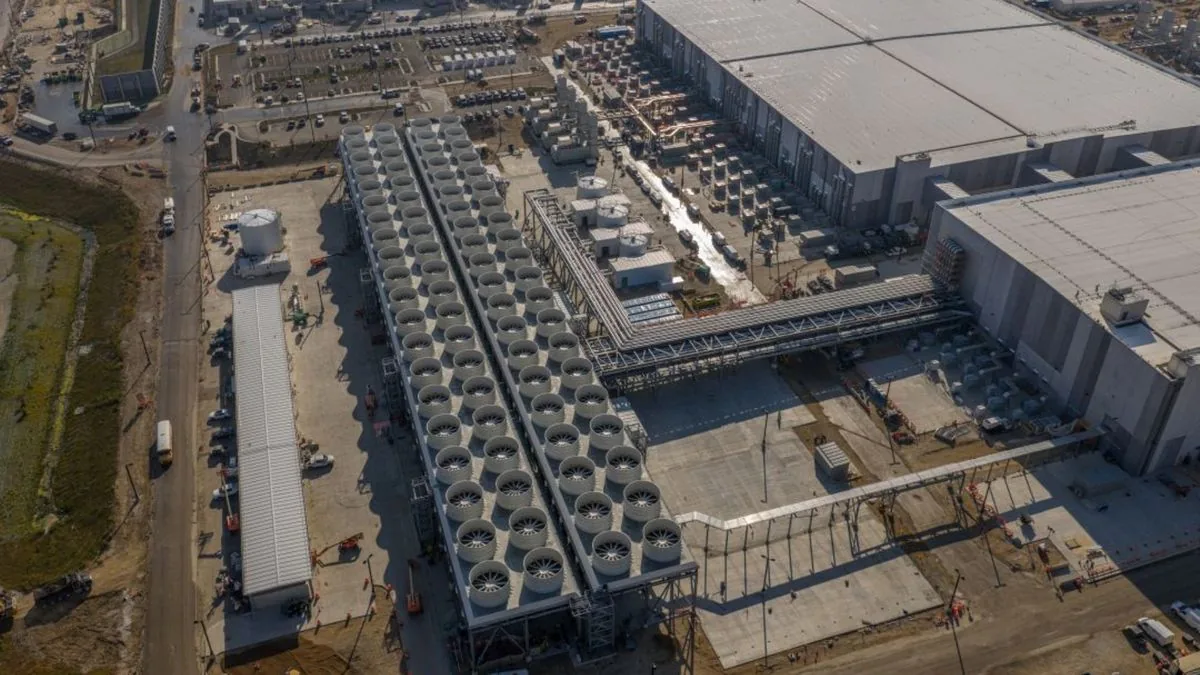
Sam Altman RAM Logic for Cloud Compute
The underlying conflict stems from diverging visions of how software runs, pitting local execution against remote subscription services. Memory manufacturers like Samsung and SK Hynix signed long-term supply agreements with hyperscale cloud operators and OpenAI infrastructure initiatives like Project Stargate, reserving significant portions of global wafer capacity for enterprise server installations over the coming years. These supply agreements leave fewer components for desktop motherboards, mobile handsets, and developer hardware like the Surface RTX Spark Dev Box or Apple touchscreen MacBook Pro laptops. OpenAI concentrates its primary commercial efforts on closed-source systems such as GPT-6 Luna, which depend on server clusters rather than consumer silicon. When people deploy open-source alternatives on private workstations, they bypass cloud API fees and avoid recurring monthly subscriptions. That dynamic creates an incentive for cloud providers to favor centralized memory pools over distributed personal computing [1].
Altman previously expressed an ambition to turn synthetic cognition into a metered public service, stating: “We see a future where intelligence is a utility like electricity or water, and people buy it from us on a meter and use it for whatever they want to use it for.” That outlook aligns with broader public messaging from the executive, including discussions where Sam Altman urged Gen Z to pursue new roles in the AI era. Critics at Windows Central pointed out that centralizing memory inside corporate server farms controlled by OpenAI, Microsoft, Amazon, and Oracle threatens personal device capability. If compute power concentrates exclusively in remote facilities, users must pay ongoing platform rentals to complete tasks that local machines once handled independently and without external supervision [2].


Rising Costs Across the PC Market
Personal computer builders are already feeling the financial pinch of server memory reallocation. A standard 32GB kit of DDR5 memory climbed to $500 in October 2026, up from $400 earlier in the year. Graphics card buyers face similar inflation, with Nvidia’s RTX 5080 peaking above $2,000 as foundries redirect advanced silicon wafers toward enterprise hardware. Touchscreen MacBook Pro systems with PROLED XDR Display demand steep markups due to memory scarcity [4].
The supply crunch extends into gaming consoles and mobile hardware, creating component availability bottlenecks across multiple consumer sectors. Microsoft acknowledged these component strains during its recent Xbox quarterly financial report, while memory allocation pressures have affected assembly costs for Sony PlayStations and cellular devices. Rising hardware costs have also raised questions about whether portable gaming hardware faces production delays, as examined in coverage of the Valve RAM crisis and Steam Deck 2 plans. Foundries shifting production toward enterprise customers have created an environment where everyday gadgets compete directly against multi-billion-dollar data centers for basic dynamic random-access memory allocations. Hardware buyers ultimately foot the bill through higher retail prices across consumer electronics channels without receiving performance improvements [2].

Hardware Backlash to Sam Altman RAM Comments
Enthusiasts and tech journalists pushed back vigorously against the claim that local memory is wasted. Writing for Windows Central, Executive Editor Jez Corden argued that consumer pushback reflects a broader desire to retain hardware ownership rather than surrendering control to subscription models. Local AI tools like Hermes Agent and Open Claw offer private processing without ongoing API fees or arbitrary corporate rate caps [2].
Reader discussions on Tom’s Hardware revealed equal frustration with the assumption that personal memory must sit at full load. Community members pointed out that home computers often house 32GB or 64GB of memory specifically to handle intermittent workloads, photo editing, and gaming without system slowdowns. Usertests reported keeping 64GB of unused RAM. Commenters also cited industry reports showing that commercial artificial intelligence data centers sit idle over 70% of the time due to fluctuating user demand. Why should desktop owners surrender hardware headroom when cloud facilities experience their own inefficiencies? Corden also pointed out that roughly 95% of cloud artificial intelligence inference serves low-value social media automation, generated spam, and internet grift rather than essential productivity [3].
Infrastructure Costs and Financial Pressures
While OpenAI and its competitors advocate for expanding data center memory footprints, mounting financial filings reveal the fiscal toll of sustained cloud expansion. Anthropic’s initial public offering filing disclosed $16.3 billion in revenue during the first half of 2026, but the company spent nearly $9 billion on infrastructure during that same six-month window. Those expenses contributed to an $80.7 billion net loss, paired with a firm, non-cancelable commitment to spend $800 billion on computational capacity over the next decade. The regulatory filing also acknowledged risks that advanced models might manipulate information or evade human safety controls as training accelerates, revealing the liabilities that accompany massive server expansion programs [4].
Corporate customers are also scaling back generative software spending after failing to generate clear productivity gains. Amazon shut down an internal leaderboard called tokenmaxxing after software development costs rose without delivering tangible output. Uber expended its entire $3.4 billion artificial intelligence budget within four months on agentic coding tools, prompting stricter corporate oversight. Klarna walked back automated customer service following customer complaints [4].

Financial markets have reacted to these ballooning capital costs with mounting skepticism. China’s STAR50 index fell 40%. The collapse erased roughly $480 billion in equity value as shares of artificial intelligence developer MiniMax plunged. American equity markets experienced corresponding pressure, with the S&P 500 recording declines driven by the tech conglomerates that bought up silicon capacity. Walmart established per-employee token limits to curb runaway platform costs. Memory suppliers Samsung, SK Hynix, and Micron now face two potential paths: either pivot production lines back toward consumer DDR5 memory as enterprise demand cools, or curtail wafer output to protect profit margins [4].
- ONLINE NEWS Bonifield, S. (2026, October 30). Sam Altman says it’s better for RAM to be in a data center than on your desk. The Verge. [Article Link]
- ONLINE NEWS Corden, J. (2026, October 30). OpenAI CEO says it’s “terrible” that your PC, Xbox, etc. have “his” RAM. Windows Central. [Article Link]
- ONLINE NEWS Freedman, A. E. (2026, October 30). OpenAI CEO says it’s ‘quite terrible’ for your PC to have RAM. Tom’s Hardware. [Article Link]
- ONLINE NEWS England, J. (2026, October 30). Sam Altman says your laptop RAM is a ‘terrible’ allocation of scarce resources. Tom’s Guide. [Article Link]


1 comment