




For over a decade after their initial identification from a small finger bone in Siberia, Denisovans remained invisible in the fossil record. Genetic tests proved that they interbred with Neanderthals and modern humans, yet researchers possessed no verified skull to match those genetic sequences. New laboratory analyses of Denisovan fossils from northern China have now resolved that disconnect by extracting ancient collagen proteins from cranial fragments [1, 2, 6].
The Xujiayao Bone Cache
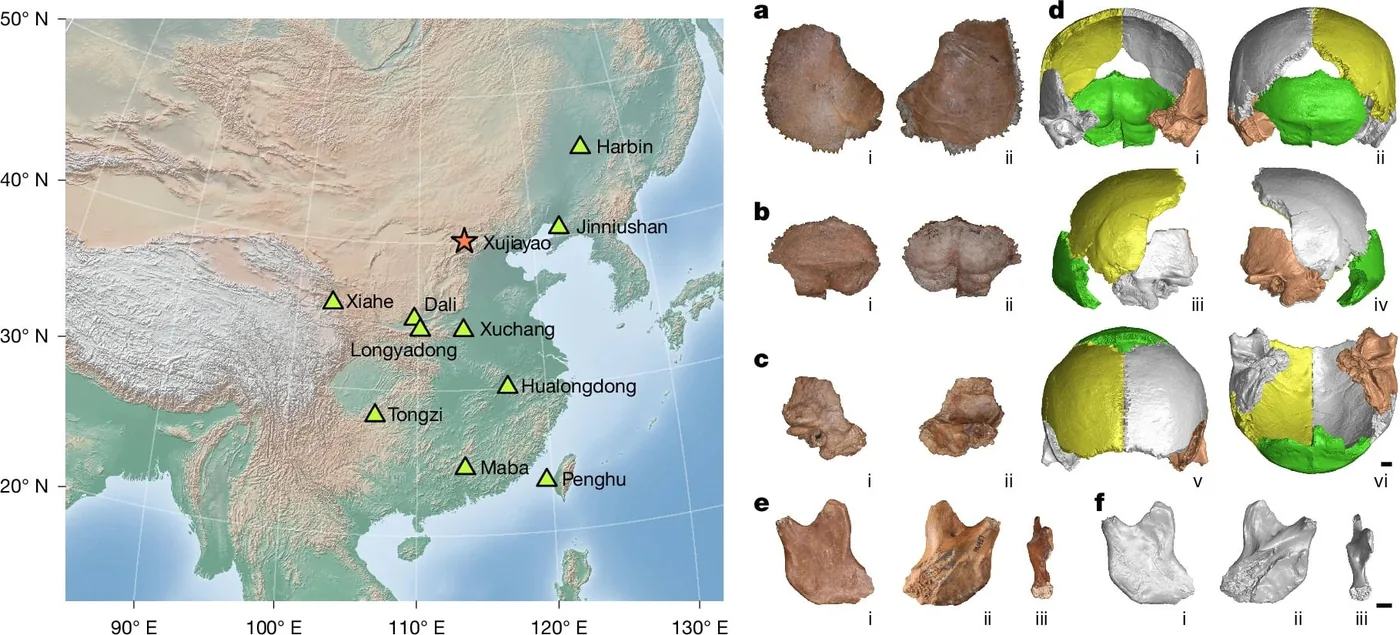
Fieldwork at the Xujiayao site in northern China between 1976 and 1979 yielded twenty hominin bones found with stone tools and animal remains [1, 2]. The sediment layer dates to between 138,000 and 199,000 years ago during the late Middle Pleistocene [4, 6]. Without readable DNA preserved in the weathered bone fragments, taxonomic classification stalled for decades while scholars debated how these Denisovan fossils fit into human evolution [1, 3].
Recent biochemical methods broke that impasse by shifting attention from fragile nucleic acids to durable peptide chains. Paleogeneticist Sally Wasef at the Queensland University of Technology in Brisbane explained to Nature News that ancient proteins survive far longer than ancient DNA in harsh burial environments. While heat and groundwater degrade DNA strands over tens of thousands of years, collagen retains identifiable amino acid sequences. The research team examined both a skull fragment and a jaw fragment, measuring bone thickness and comparing microscopic structures against specimens stored in museum archives across China [1, 4]. That chemical stability allowed researchers to test the fragmentary Xujiayao cranium directly and determine which branch of early humans inhabited the river valley [1, 6]. Their work shows how paleoproteomics can recover critical biological records from weathered fossils that lack organic genetic material entirely [1, 4].
Collagen Proteins That Identify Denisovan Fossils
A research team led by paleogeneticist Qiaomei Fu at the Institute of Vertebrate Paleontology and Paleoanthropology in Beijing extracted eighteen ancient proteins from the Xujiayao specimens. Their biochemical sequencing revealed a specific amino acid variant, COL1A2-996K, where lysine replaces arginine at position 996 [1, 6]. This molecular signature occurs in Denisovan samples but is absent in Neanderthals and modern Homo sapiens, confirming their evolutionary line [1, 4].
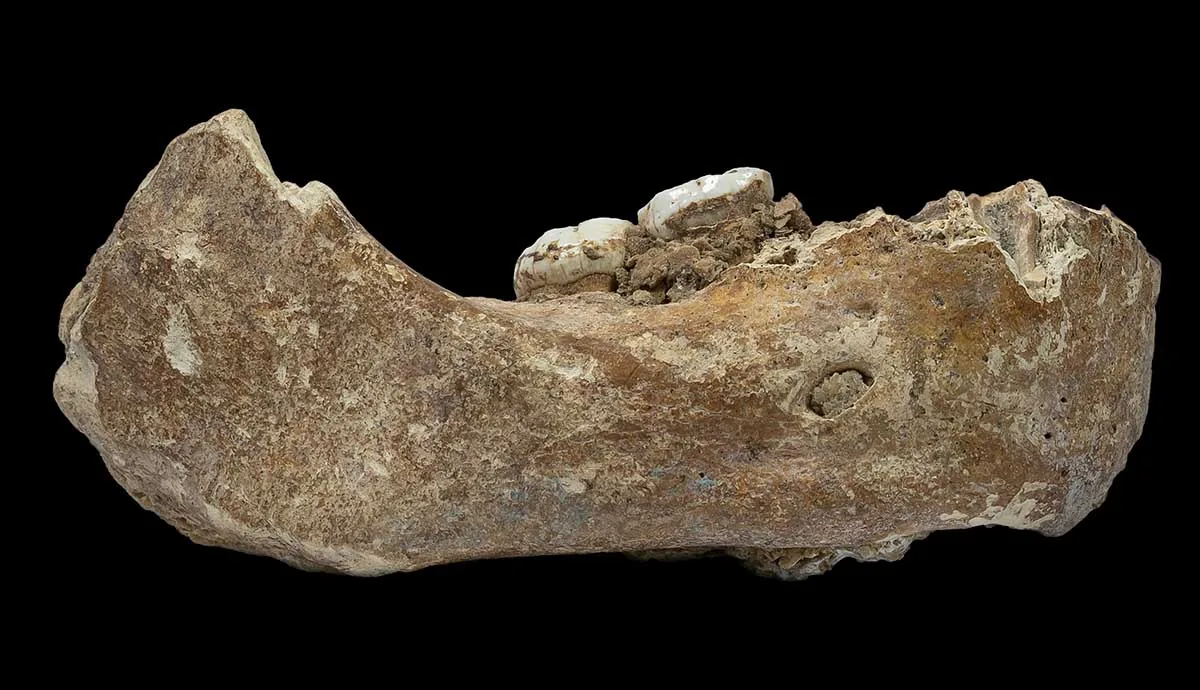
These amino acid signatures confirm that the Xujiayao specimens are genuine Denisovan fossils rather than an unrelated regional variant of early humans [1, 6]. Similar paleoproteomic tests had already matched hominin remains from Bianfu Cave, as well as the Xiahe jawbone from Baishiya Karst Cave on the Tibetan Plateau, which dates to at least 160,000 years ago [4, 5]. In April, researchers also matched the Penghu 1 mandible, dredged from the seabed off Taiwan and tentatively dated to 100,000 years ago, to the same lineage using preserved proteins [3, 5]. Together, these biochemical findings prove that Denisovans inhabited diverse Asian ecosystems over hundreds of millennia, leaving identifiable molecular footprints in caves, riverbeds, and coastal channels across the continent, long before our own species arrived in the region [4, 5].
Facial Reconstruction and Anatomy
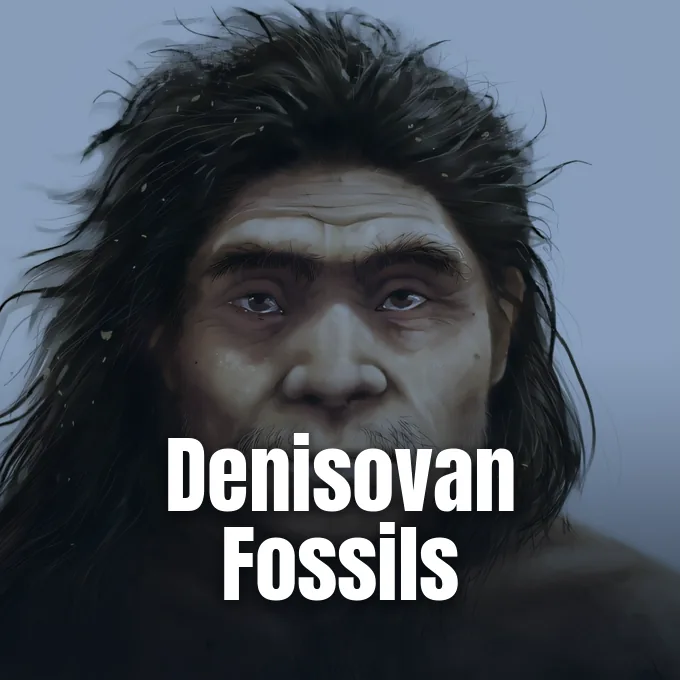
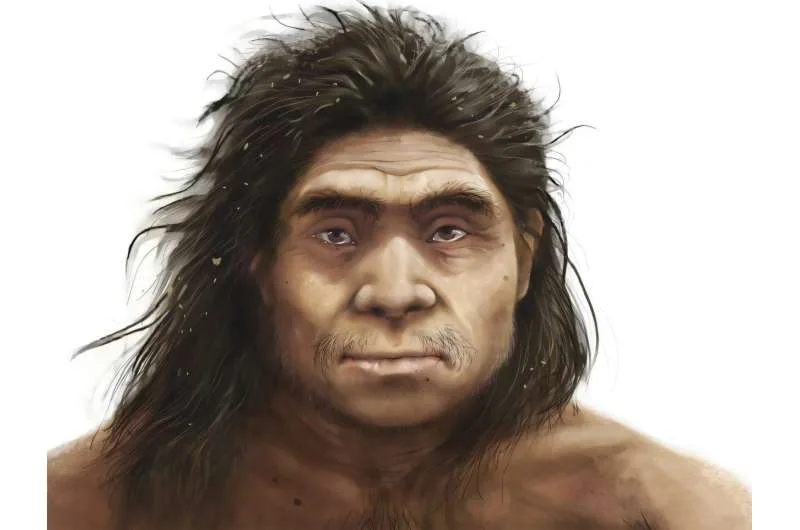
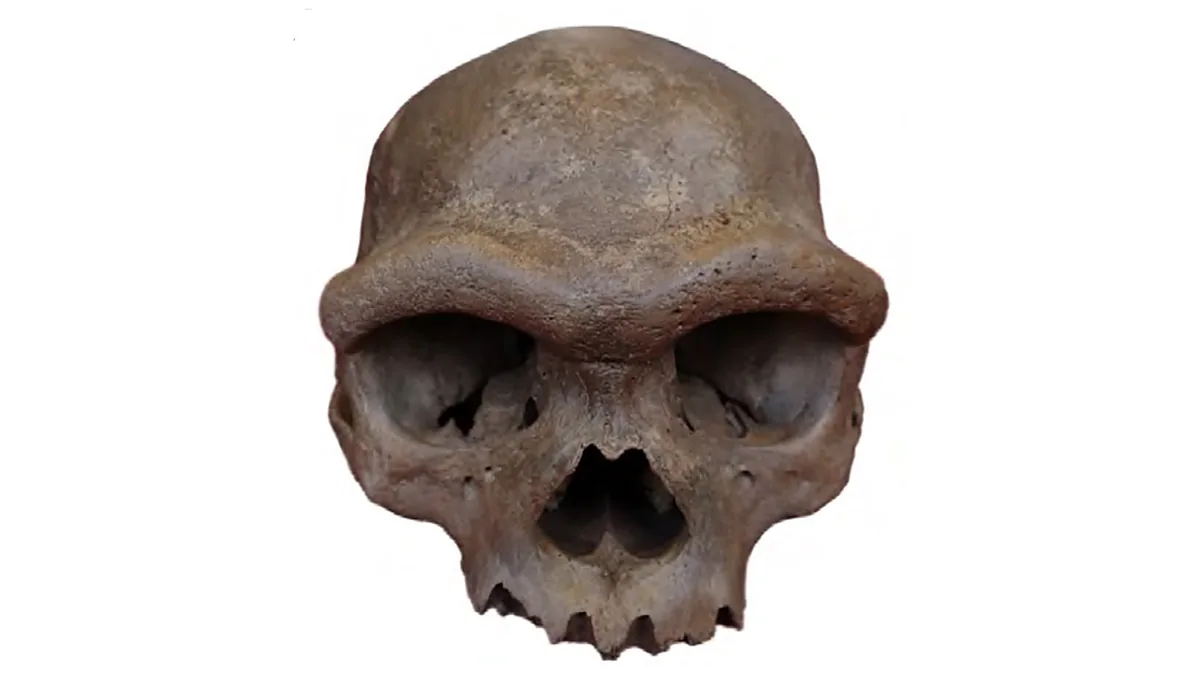
With the Xujiayao fragments securely classified, researchers measured the bones and built three-dimensional digital models to reconstruct their appearance. The analysis reveals that Denisovans had low, flat skull vaults, massive brow ridges, rectangular eye sockets, and flat cheekbones. Their skull walls were exceptionally thick, while their jaws protruded slightly without a prominent modern chin [1, 4]. The inner ear cavity resembled the ear structure of Neanderthals, whereas the high sides of their vaulted temporal squama looked more like the cranial shape of modern humans [2, 6]. Computer reconstructions showed a wide cranial base and heavy facial architecture that set these people apart from both Neanderthals and early Homo sapiens, providing the first comprehensive visual model of their physical form based directly on verified skeletal remains [1, 4].
These anatomical traits show that Denisovans combined primitive features inherited from Homo erectus with specialized characteristics shared with later hominin groups [2, 6]. Two crushed crania found at Yunxian in Hubei province, redescribed in 2025 as likely ancestors of Denisovans, demonstrate how early forms of this cranial morphology developed in East Asia [5]. Rather than displaying an unpredictable mix of forms, these Asian fossils reflect a coherent lineage [4, 6].


Why Denisovan Fossils Include Dragon Man
The clearest confirmation of Denisovan facial structure came from connecting Xujiayao to a massive skull found in Harbin in northeast China. Discovered during bridge construction and kept hidden for decades until its formal description in 2021, the Harbin cranium was originally classified under the species name Homo longi, or Dragon Man. It preserves a nearly complete face with huge brow ridges, wide eye sockets, and large molar teeth. The skull is at least 146,000 years old and has a brain capacity matching modern humans. Chinese researchers and Chris Stringer of the Natural History Museum in London had recognized its unique morphology, suspecting that this robust cranium might represent the missing face of Denisovans, who had previously been known almost exclusively from microscopic genetic fragments [3, 5].
Attempts to extract ancient DNA from the Harbin bone failed, but Fu and her colleagues recovered 95 endogenous proteins with three Denisovan-derived amino acid variants [3, 7]. To confirm the molecular classification, the team tested dental calculus scraped from the fossil teeth and successfully retrieved traces of maternal mitochondrial DNA. Samantha Brown, a researcher at the National Research Center for Human Evolution in Burgos, Spain, praised the technique: “That’s an incredible result, and fantastic that they even tried” [3].
The connection between Harbin and other Denisovan fossils proves that these ancient hominins possessed robust builds and heavy bodies. Bence Viola, a paleoanthropologist at the University of Toronto who was not involved in the study, said: “I think we’re looking at individuals that are all [around] 100 kilos [of] lean body mass: enormous, enormous individuals”. Brown said: “We thought Neanderthals were the stocky ancestor, but actually it might be Denisovans that really were the big boys of the palaeontological record” [3].
Genetic Footprints in Living Populations
Long before skulls revealed their faces, Denisovans were recognized only through genetic traces recovered in 2010 from a juvenile finger bone in Denisova Cave in Siberia [3, 5]. Archaeological strata show that humans inhabited the cave repeatedly over 200,000 years. In 2018, geneticists identified Denisova 11, nicknamed Denny, a 90,000-year-old teenage girl who had a Neanderthal mother and a Denisovan father. This direct hybrid fossil proved that archaic groups mated when their geographic ranges overlapped in Eurasia [5].
Modern human genomes preserve clear evidence of these ancient encounters. Indigenous populations in Island Southeast Asia, including communities in the Philippines, Papua New Guinea, and Australia, carry between 4 and 5 percent Denisovan DNA in addition to their shared Neanderthal ancestry. Because these genetic segments remain relatively long and unfragmented, geneticists estimate that interbreeding took place as recently as 30,000 years ago. This timeline shows that Denisovans persisted while early modern human groups expanded into eastern Asia. Did these populations live side by side with modern humans? Fossil dates suggest they shared Asian landscapes for thousands of years, exchanging genes and survival strategies across diverse geographic regions [4, 5]. These genetic exchanges demonstrate that human evolution involved repeated contact between distinct populations rather than isolated evolutionary branches [5].
Some of these ancient genes provided distinct physiological advantages that help modern populations survive in challenging environments. Sherpas and other Tibetan populations inherited a specific variant of the EPAS1 gene from Denisovans around 40,000 years ago, allowing them to process oxygen efficiently at high mountain altitudes. Similarly, Denisovan genetic contributions helped strengthen immune defenses in ancestral populations settling Papua New Guinea. While research continues into Neanderthal extinction, genetic legacy shows that Denisovans shaped modern human biology long after their physical populations vanished [5].
Survival Across Changing Ice Age Climates
Fossil sites prove that Denisovans adapted to a vast geographical expanse that stretched far beyond the cold Altai Mountains [1, 5]. Their remains span from the frigid Siberian caves and the high elevations of the Tibetan Plateau down to subtropical environments, including the Tam Ngu Hao 2 cave in Laos where a Denisovan molar dates to between 164,000 and 131,000 years ago. This ecological range exceeded the environmental tolerances observed during the evolutionary decline of Neanderthals in western Eurasia. Archaeological evidence indicates that Denisovans developed flexible foraging behaviors, using varied stone toolkits and hunting local game across temperate forests, cold plateaus, and tropical lowlands throughout the late Middle Pleistocene [1, 5].
Fossil fragments from Denisova Cave fall into two distinct chronological groups: an earlier lineage living from 217,000 to 106,000 years ago, and a younger group from 84,000 to 52,000 years ago [3]. Chris Stringer of the Natural History Museum in London explained that genetic patterns in modern populations suggest evolutionary divergences of up to 400,000 years among separate Denisovan groups. Stringer said: “If that’s correct, the Denisovans were quite diverse. More so than Neanderthals” [5].
Fabrice Demeter, a paleoanthropologist at the University of Copenhagen, said that Denisovans lived over hundreds of thousands of years, making regional variations in morphology likely [4]. The Dali skull, discovered in 1978 in Shaanxi province, and the Jinniushan cranium share the heavy brow ridges and broad facial dimensions identified in the new study [5, 6]. As new paleoproteomic testing reclassifies more museum collections, the full anatomical portrait of these Denisovan fossils continues to come into clear focus [1, 4].
- ONLINE NEWS Arnold, P. (2026, October 23). Rare fossils reveal what ancient Denisovans may have looked like. Phys.org. [Article Link]
- ONLINE NEWS Currie, J. (2026, October 22). We Now Know What Denisovans Looked Like. Nautilus. [Article Link]
- ONLINE NEWS Marshall, M. (2025, June 18). We finally know what the face of a Denisovan looked like. New Scientist. [Article Link]
- ONLINE NEWS Lee, G. (2026, October 23). This Is What Our Mysterious Denisovan Cousins Probably Looked Like. Gizmodo. [Article Link]
- WEBSITE Natural History Museum. (2026, March 20). Denisovans: The enigmatic ancient humans who finally have a face. Natural History Museum. [Article Link]
- ACADEMIC JOURNAL Xing, S., Wu, Z., Shao, Q., Ge, J., Bennett, E. A., Rao, H., Lin, S., Zhao, Y., Liu, F., Liu, Y., Zhou, K., Feng, X., Jiangzuo, Q., & Fu, Q. (2026). The proteome of Middle Pleistocene Xujiayao and common Denisovan morphology. Nature. [Article Link]
- ACADEMIC JOURNAL Fu, Q., Bai, F., Rao, H., Chen, S., Ji, Y., Liu, A., Bennett, E. A., Liu, F., & Ji, Q. (2025). The proteome of the late Middle Pleistocene Harbin individual. Science, 389(6761), 704-707. [Article Link]
APA 7: PerEXP Teamworks. (2026, October 24). Denisovan Fossils Reveal Physical Appearance of Ancient Humans. PerEXP Teamworks. https://perexpteamworks.com/en/denisovan-fossils-reveal-ancient-face/


