




Esketamine is a prescription nasal spray designed to help adults with treatment-resistant depression when standard pills fail to lift severe symptoms. Instead of targeting serotonin systems, this medicine alters glutamate pathways to prompt quick changes in brain circuits. Learning how esketamine works shows why its clinical benefits appear within hours rather than taking many weeks to develop. By blocking specific ion channels, the spray triggers fresh cellular activity that helps damaged brain networks reconnect and communicate [1].
- How Esketamine Works on NMDA Receptors
- The Chemical Profile of S-Ketamine
- Glutamate Transmission: How Esketamine Works
- Rebuilding Synapses: How Esketamine Works in the Cortex
- Clinical Trial Outcomes for Major Depression
- Dosing Protocols in Healthcare Clinics
- Side Effects and Blood Pressure Monitoring
- Global Regulatory Approvals and Treatment Costs
How Esketamine Works on NMDA Receptors
The core action of esketamine centers on its direct binding to N-methyl-D-aspartate sites in the cerebral cortex. Formally categorized as a non-competitive NMDA receptor antagonist, the drug sits inside open channel pores to stop calcium ions from flowing into postsynaptic nerve cells. It blocks calcium entry. While standard oral pills like selective serotonin reuptake inhibitors try to lift mood by boosting monoamines over two months of daily use, esketamine targets glutamate to prompt fast cellular changes within hours of administration [1].
Glutamate acts as the main excitatory chemical messenger in human brain circuits. Dr Medhat Elsabbahy at Sheikh Khalifa Medical City in Abu Dhabi said that common psychiatric pills work on serotonin, while this nasal spray addresses glutamate to bring mental relief within a single day. When severe mood illness persists, synaptic links wither and brain regions fail to share signals. By describing how esketamine works to balance glutamate signaling, clinicians show how targeted receptor blockade helps restore healthy circuit communication [14].
Mental health specialists have long sought alternatives to older oral drugs that leave one in three patients without relief. Marjorie Wallace, chief executive of the charity Sane in England, said that older pills fail many people and cause difficult side effects. The nasal compound takes a distinct biological path. By acting on glutamate receptors, it offers a fresh way to treat major depressive episodes when other drugs have failed [13].
The Chemical Profile of S-Ketamine
Ketamine exists as a chiral mixture of two distinct optical isomers known as enantiomers. Esketamine is the dextrorotatory S(+) enantiomer, carrying the chemical formula C13H16ClNO and a monoisotopic mass of 237.09204 daltons. Its registered chemical structure is known to chemists as (2S)-2-(2-chlorophenyl)-2-(methylamino)cyclohexan-1-one, which mirrors its partner arketamine. When prepared as a hydrochloride salt (esketamine hydrochloride), its average molecular weight reaches 274.191 daltons, producing a stable crystalline powder dissolved into an intranasal mist. Chemist Calvin Stevens first synthesized racemic ketamine in 1962 before researchers isolated pure enantiomers [15].
In an anesthesia review published in Anesthesia & Analgesia, researchers G. Mion and S. Himmelseher showed that dextrorotatory S-ketamine binds to NMDA targets with four times higher affinity than levorotatory arketamine. This strong binding explains why the S-form provides double the anesthetic potency of racemic ketamine at equivalent doses. The drug needs lower amounts to produce desired clinical outcomes. Mion and Himmelseher said that pure esketamine causes less cholinergic inhibition, which reduces mental confusion as patients wake up after treatment [6].

Human metabolic trials demonstrate that the body clears esketamine faster than arketamine. The elimination half-life of the S-enantiomer is roughly five hours, with intranasal delivery yielding thirty to fifty percent bioavailability. It clears quickly. This fast clearance helps patients regain clear thinking soon after their clinic session ends [11].
Glutamate Transmission: How Esketamine Works
Why does shifting receptor activity produce such prompt behavioral changes? The answer lies in how NMDA blockade alters glutamatergic neurotransmission across local cortical circuits. When esketamine binds to NMDA receptors on inhibitory GABAergic interneurons in the prefrontal cortex, it blocks the normal flow of calcium ions, which promptly disinhibits large excitatory pyramidal neurons and causes a surge of glutamate to flood the synaptic gap. This surge stimulates adjacent AMPA receptors. In an analysis in the New England Journal of Medicine, Dr J. Kim said that this rapid onset of action sets esketamine apart from older antidepressant drug classes that take weeks to alter mood [8].
Cellular metabolic pathways process the drug through several liver enzymes. According to records in the KEGG DRUG database, esketamine acts as a substrate for CYP2B6, CYP2C9, CYP2C19, and CYP3A4, as well as glucuronosyltransferase systems. As the compound metabolizes, the glutamate wave activates postsynaptic AMPA channels, letting calcium enter nerve cells to trigger intracellular protein cascades. These signals prompt cells to make brain-derived neurotrophic factor [16].
European Medicines Agency reports explain that esketamine modulates NMDA targets to manage signal flow between brain cells in areas that govern mood. Rather than acting as a simple tranquilizer, the drug sparks active molecular signaling that helps dormant brain pathways restart signal exchange. It awakens stalled networks. Understanding how esketamine works on cortical circuits clarifies how this chemical burst lifts deep depressive despair [3].

Rebuilding Synapses: How Esketamine Works in the Cortex
Prolonged emotional stress and unyielding depression inflict visible physical damage on brain cells, shrinking dendritic branches and stripping synaptic spines in the prefrontal cortex and hippocampus. When chronic stress degrades these microscopic structures, brain circuits lose their normal synaptic plasticity, leaving people trapped in dark mood states. Explaining how esketamine works to spark synaptogenesis, neuroscientists trace how AMPA activation turns on the mammalian target of rapamycin pathway, driving protein synthesis to sprout new dendritic spines within twenty-four hours of a clinic dose. Brain scans show that it also raises glucose metabolism in the frontal cortex [11].
Repairing physical links between nerve cells offers a clear biological reason for swift clinical recovery. Dr Tarek Darwish at the Behavioural Sciences Pavilion in Abu Dhabi said that modern psychiatry is moving toward medicines that produce lasting circuit repairs. Patients with severe mood conditions often find daily pill schedules difficult to maintain over many months. The nasal therapy builds new synaptic bridges that help brain networks process emotions normally [14].
Medical anthropologist Lee Hoffer said during FDA advisory reviews that ketamine derivatives produce brief, pronounced effects on the central nervous system that peak and clear within two to four hours. Unlike street drugs that foster physical dependence, esketamine carries low addiction risk and does not cause a physical withdrawal syndrome when discontinued. It does not cause withdrawal. This biological profile gives patients a safer way to reset damaged brain connections [12].
Clinical Trial Outcomes for Major Depression
Global health agencies approved esketamine after examining extensive clinical trial data in adult patients with treatment-resistant depression (TRD). In an evaluative report in the Annals of Pharmacotherapy, Dr K. M. Bozymski and colleagues reviewed phase three studies that tested flexible doses of 56 mg and 84 mg alongside an oral antidepressant. Patients given esketamine experienced statistically significant drops in their Montgomery-Åsberg Depression Rating Scale (MADRS) scores by day twenty-eight compared to those taking an oral pill with a placebo spray. The flexible-dose trials showed clear clinical value for adults who had found no relief from standard medications [10].
Scientific assessments by the European Medicines Agency evaluated evidence from roughly 1,800 patients across international clinical sites. In a four-week study, MADRS ratings dropped by 3.5 points more among patients given the spray plus an oral pill than among those given a placebo spray. In a randomized withdrawal study, only 27% of patients continuing esketamine experienced a depressive relapse, compared with 45% of patients in the placebo group. Long-term follow-up showed that these mood gains lasted over twelve months of maintenance therapy [3].

In an active-controlled trial published in 2023, Dr A. Reif and coauthors compared esketamine nasal spray with extended-release quetiapine in adults with treatment-resistant depression. Both trial groups continued taking their baseline SSRI or SNRI oral pills. Patients taking esketamine achieved superior remission rates on the MADRS scale at week eight. The trial confirmed that the nasal spray outperforms standard atypical antipsychotic augmentation strategies [7].
Dosing Protocols in Healthcare Clinics
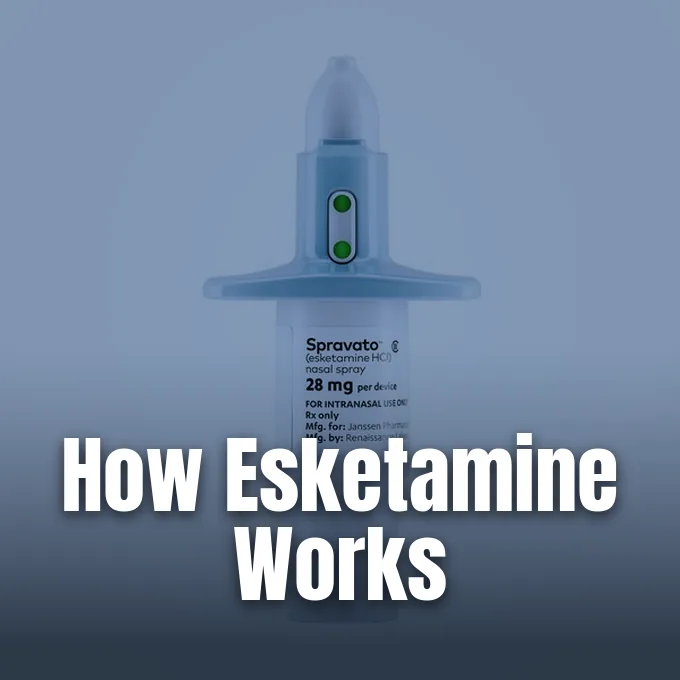
Administering esketamine requires structured clinical routines to protect patient health and prevent misuse. Each single-use plastic device contains 28 milligrams of drug solution dispensed in two sprays, with one spray delivered into each nostril. Two green indicator dots show that a device is full, one dot shows one spray was used, and no dots mean both sprays were delivered. Patients receive 56 mg using two devices or 84 mg using three devices, resting five minutes between devices so nasal tissue absorbs the liquid properly [1].
Patients follow explicit pre-treatment guidelines before arriving for care. MedlinePlus instructions state that individuals must avoid food for at least two hours and liquids for thirty minutes before taking their dose. Anyone using a nasal steroid or decongestant must take it at least one hour before the clinic session. These simple dietary measures help prevent nausea and vomiting during the appointment [2].
Health Canada authorized Spravato under a Controlled Distribution Program after examining records from 1,601 patients with major depressive disorder (MDD), including 479 treated for six months and 178 treated for a full year. Because the drug can’t be taken at home, all patients self-administer the spray under direct healthcare supervision. Clinic staff oversee each step [4].
Side Effects and Blood Pressure Monitoring
Because esketamine alters central neurotransmission within minutes, patients encounter short-lived physical and perceptual sensations. Under the official Spravato REMS program, certified clinics keep patients under observation for at least two hours after administration. Common adverse events include dissociation, dizziness, nausea, sedation, vertigo, hypoesthesia, anxiety, feeling drunk, headache, and elevated blood pressure. Dissociation involves feeling detached from one’s body, thoughts, and surroundings, reaching peak intensity around forty minutes (Cmax) post-dose. Healthcare workers check blood pressure before dosing and reassess it forty minutes later. If adverse events occur, patients or doctors contact Janssen Pharmaceuticals at 1-800-JANSSEN or report to the FDA at 1-800-FDA-1088 [1].
Long-term clinical safety reviews differentiate harmless transient effects from chronic medical complications. In an evaluation in Expert Opinion on Drug Safety, Dr S. Nikayin and colleagues found that side effects from esketamine are mild, temporary, and self-limiting. While heavy recreational ketamine abuse can damage the urinary bladder, depression clinical trials identified no severe bladder pathology, though some patients reported minor urinary urgency. Careful clinical monitoring ensures that urinary symptoms remain mild and manageable [9].
Patients must arrange for a driver to take them home from the clinic. MedlinePlus emphasizes that patients can’t drive a car, operate heavy tools, or do hazardous work until they wake up following a full night of rest. Residual sleepiness makes driving dangerous on the day of treatment. Normal alertness returns the following morning [2].
Global Regulatory Approvals and Treatment Costs
Regulatory approvals for esketamine opened a new chapter in psychiatric medicine while sparking sharp debates about healthcare costs. On March 5, 2019, the United States Food and Drug Administration (FDA) approved Spravato for treatment-resistant depression (TRD) in adult patients who had failed two or more antidepressants during their current episode of major depressive disorder (MDD). The decision followed a 14 to 2 endorsement vote from the FDA Drug Safety and Risk Management Advisory Committee. American annual costs reached $32,400. Because this price tag was steep, the Institute for Clinical and Economic Review questioned its cost-effectiveness, while the European Medicines Agency (EMA) and Health Canada approved the medicine under tightly controlled distribution frameworks [8].
In the United Kingdom, the National Institute for Health and Care Excellence issued guidance TA854 rejecting esketamine for routine National Health Service funding. NICE concluded that clinical uncertainties and economic modeling made the spray an unacceptable use of NHS resources. Janssen positioned the drug for patients who had failed three or more prior medications, but public health officials deemed the £10,000 cost per patient too high. Clinical trials had also excluded patients with active psychosis or imminent suicidal intent [5].
British medical experts voiced contrasting reactions to the NICE decision. Dr Sameer Jauhar at King’s College London said that regulators needed stronger long-term evidence, while Dr Paul Keedwell at Cardiff University expressed disappointment that cost rather than clinical efficacy drove the rejection. Despite economic barriers, esketamine remains the first glutamate-targeting antidepressant approved for clinical use since racemic ketamine received its initial US approval in 1970 [13].
- WEBSITE DailyMed. (2026). Spravato (esketamine hydrochloride) nasal spray prescribing information. National Library of Medicine. [Article Link]
- WEBSITE MedlinePlus. (2026). Esketamine nasal spray drug information. National Library of Medicine. [Article Link]
- REPORT European Medicines Agency. (2019). Spravato (esketamine): European public assessment report. [Article Link]
- REPORT Health Canada. (2020). Regulatory decision summary for Spravato. Health Products and Food Branch. [Article Link]
- REPORT National Institute for Health and Care Excellence. (2022). Esketamine nasal spray for treatment-resistant depression (Technology appraisal guidance TA854). [Article Link]
- ACADEMIC JOURNAL Mion, G., & Himmelseher, S. (2024). Esketamine: Less drowsiness, more analgesia. Anesthesia & Analgesia, 139(1), 78-91. [Article Link]
- ACADEMIC JOURNAL Reif, A., Bitter, I., Buyze, J., Cebulla, K., Frey, R., Fu, D., Ito, T., Kambarov, Y., Llorca, P., Oliveira-Maia, A. J., Messer, T., Mulhern-Haughey, S., Rive, B., Holt, C. v., Young, A. H., & Godinov, Y. (2023). Esketamine nasal spray versus quetiapine for treatment-resistant depression. New England Journal of Medicine, 389(14), 1298-1309. [Article Link]
- ACADEMIC JOURNAL Kim, J., Farchione, T. R., Potter, A. J., Chen, Q., & Temple, R. (2019). Esketamine for treatment-resistant depression — first FDA-approved antidepressant in a new class. New England Journal of Medicine, 381(1), 1-4. [Article Link]
- ACADEMIC JOURNAL Nikayin, S., Murphy, E., Krystal, J. H., & Wilkinson, S. T. (2022). Long-term safety of ketamine and esketamine in treatment of depression. Expert Opinion on Drug Safety, 21(6), 777-787. [Article Link]
- ACADEMIC JOURNAL Bozymski, K. M., Crouse, E. L. B., Titus-Lay, E. N., Ott, C. A., Nofziger, J. L., & Kirkwood, C. K. (2019). Esketamine: A novel option for treatment-resistant depression. Annals of Pharmacotherapy, 54(6), 567-576. [Article Link]
- WEBSITE Wikipedia contributors. (2026). Esketamine. Wikipedia, The Free Encyclopedia. [Article Link]
- ONLINE NEWS Hoffer, L. (2019). The FDA approved a ketamine-like nasal spray for hard-to-treat depression. VICE. [Article Link]
- ONLINE NEWS BBC News. (2020). Anti-depressant spray not recommended on NHS. [Article Link]
- ONLINE NEWS Al Nowais, S. (2019). ‘Breakthrough’ nasal spray to treat depression coming to UAE. The National. [Article Link]
- WEBSITE European Bioinformatics Institute. (2017). Esketamine (CHEBI:60799). Chemical Entities of Biological Interest. [Article Link]
- WEBSITE Kanehisa Laboratories. (2026). Esketamine (KEGG DRUG: D07283). Kyoto Encyclopedia of Genes and Genomes. [Article Link]


