





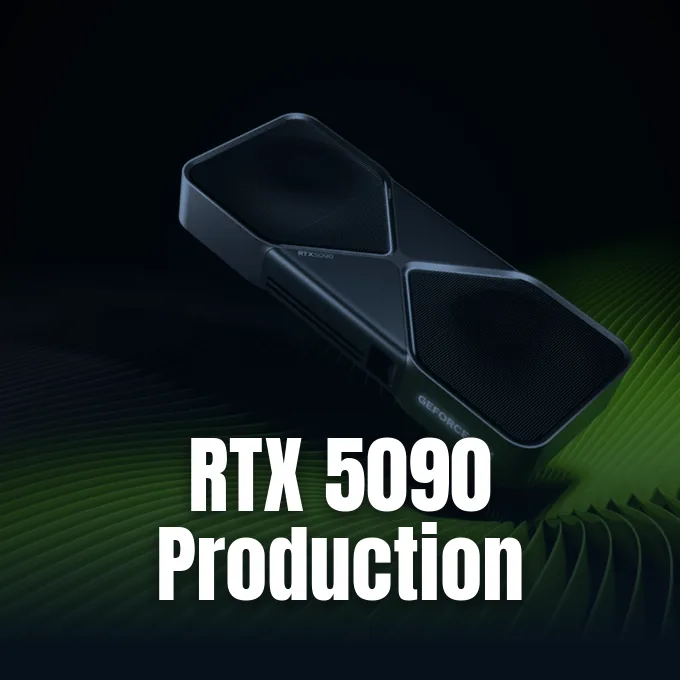
Nvidia issued an out-of-band software update, driver version 621.35, to address reports of excessive data writes to solid state drives. The issue surfaced after users installed driver version 621.24, which triggered background write activity that reached tens of gigabytes per hour on host systems. The company deployed the Nvidia hotfix driver as an optional download while examining how earlier code caused storage hardware to process continuous file cycles [1].
Forum Reports of Heavy Drive Writes
Late last week, PC owners on Nvidia community forums reported heavy background storage activity that began shortly after updating their graphics software. Users documented “Continuous writing of gigabytes to SSD over a short period of time from an Nvidia-related service to the nvtopps file.” In several documented cases, the background process was writing as much as 30GB of data in a single hour [1].
Unchecked write cycles represent a genuine risk for flash storage because solid state drives rely on memory cells that endure only a limited number of program and erase operations over their working life. When graphics software writes gigabytes of junk data to an SSD every hour, it consumes write endurance that owners expect to preserve for games and core operating system tasks. In severe cases, constant drive thrashing shortens overall component longevity and risks forcing owners into buying costly replacement drives ahead of schedule. Community members who monitored storage input and output observed their drives running under sustained load even while their computers sat idle on desktop screens. These ongoing disk writes raised alarm among enthusiasts who worried that unaddressed software bugs could cause early drive failures [1].
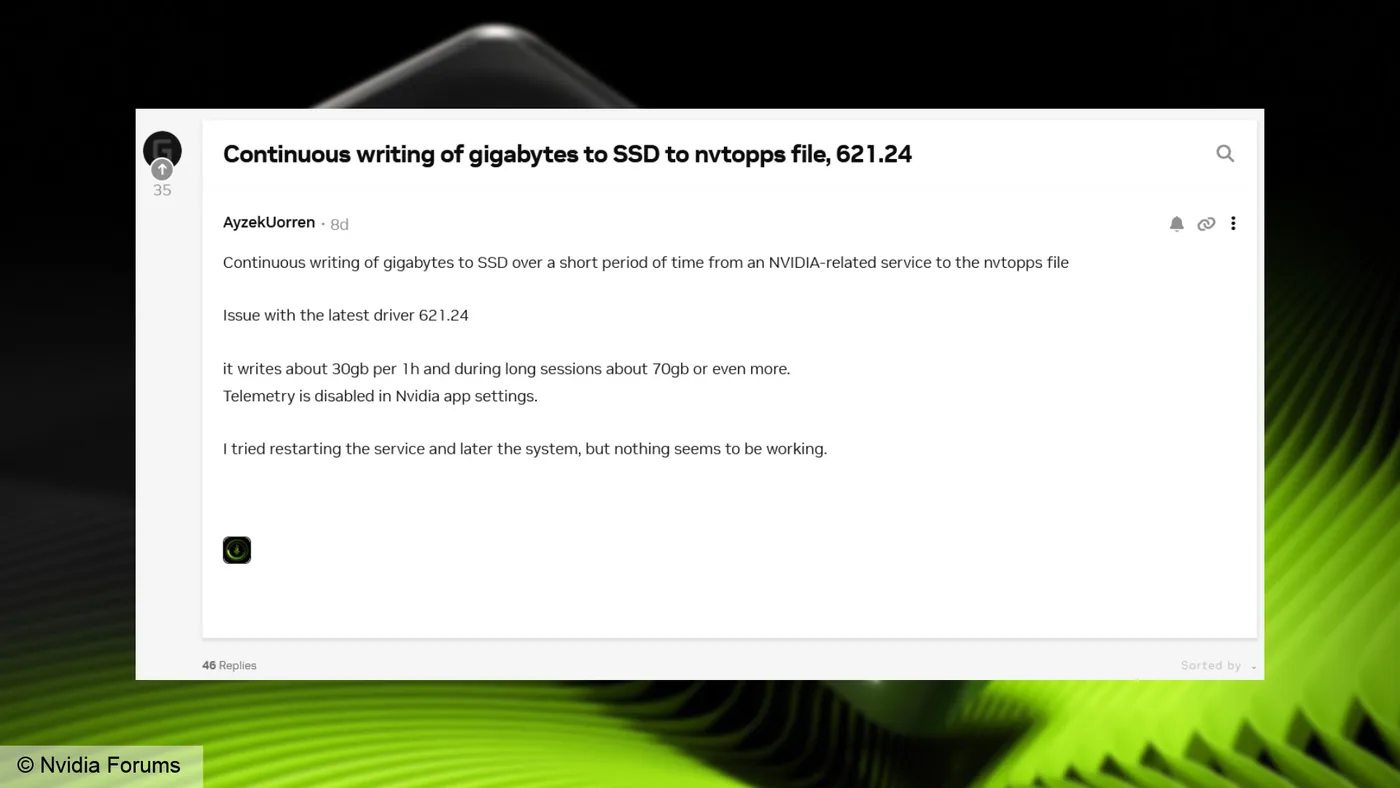
The excessive disk activity began after users updated to Nvidia GeForce driver 621.24, an update that arrived through regular software channels. While driver rollouts typically focus on game optimizations, this package introduced a background loop tied to the nvtopps service file. Players who kept their systems running noticed drive temperature increases and rising host write tallies [1].
Nvidia Hotfix Driver Release Context
Nvidia addressed the community reports by pushing the Nvidia hotfix driver out outside its standard schedule. An Nvidia staff member said on the official forums that “a GeForce driver is an incredibly complex piece of software” that requires extensive code check-ins and quality testing before release. Under normal operating procedure, the GPU manufacturer aligns major driver releases with prominent PC game launches or major product rollouts [1].
The staff member explained why the company felt compelled to step outside that schedule to release the emergency patch. “This process has served us pretty well over the years but it has one significant weakness,” the employee said. “Sometimes a change that is important to many users might end up sitting and waiting until we are able to release the driver.” Because excessive SSD writing threatened drive hardware, Nvidia pushed driver version 621.35 out to users as quickly as possible [1].
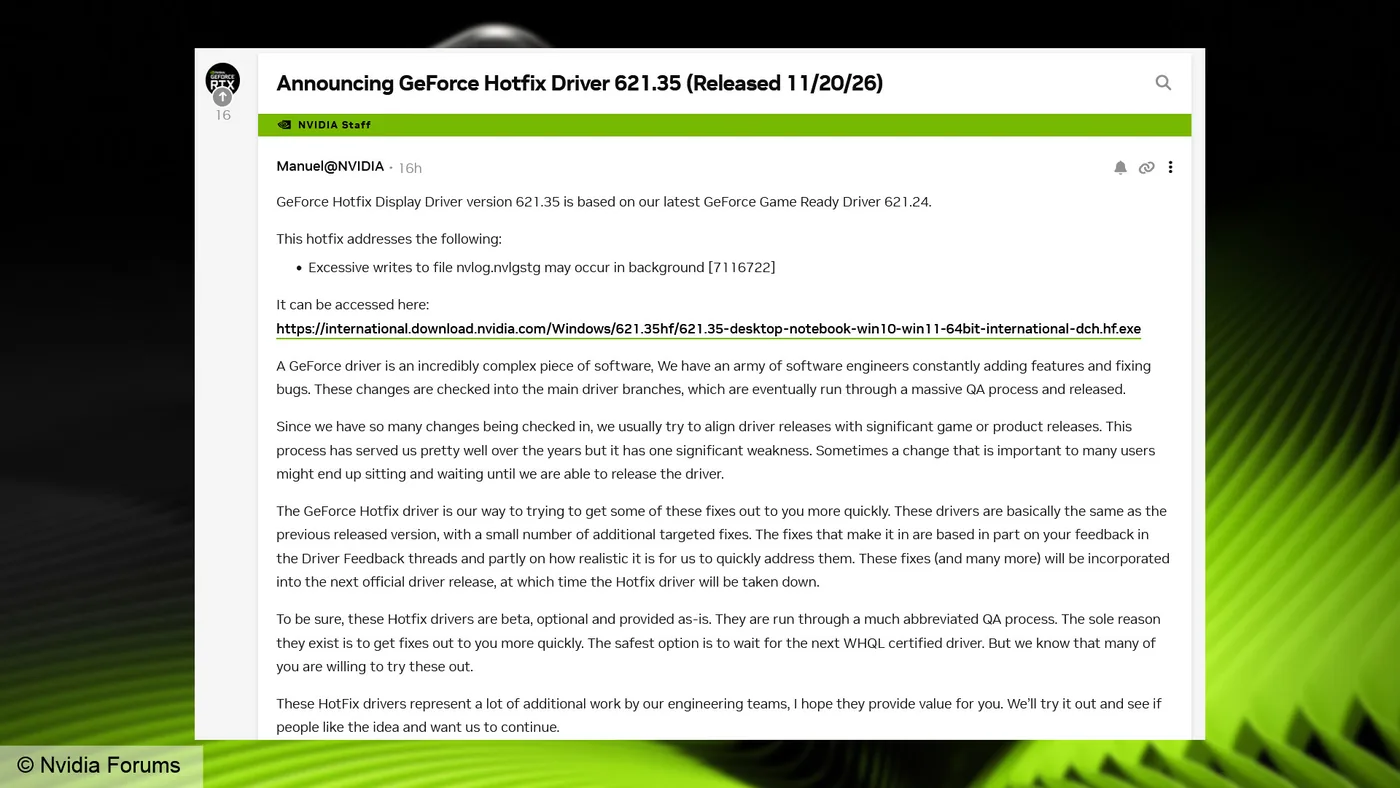
The company noted that the patch is “basically the same as the new version, with a small number of additional targeted fixes.” Nvidia cautioned that these emergency releases bypass regular quality checks, stating that “these hotfix drivers are beta, optional, and provided as-is. They are run through a much abbreviated QA process. The sole reason they exist is to get fixes out to you more quickly.” Releasing the build still required “a lot of additional work by our engineering teams,” and the company plans to remove the hotfix once the next full driver release arrives [1].
Independent Benchmarks on Idle Hardware
Independent hardware testing soon examined whether hotfix 621.35 succeeded in eliminating the unwanted storage writes. On Reddit, a user named “robbiekhan” conducted an independent hardware benchmark using a Windows 11 26H2 desktop system equipped with an RTX 4090 graphics card and a Samsung 990 PRO solid state drive. The drive carried 2TB of capacity. The test monitored NVDisplay.Container.exe input and output activity and HWiNFO64 S.M.A.R.T. host write metrics to determine if background write loops persisted after boot [2].
During the first post-install hour on hotfix 621.35, the NVDisplay.Container.exe process recorded only 90.8KB of writes, suggesting that the initial patch stopped the issue upon startup. But over a subsequent 9-hour overnight test window where the PC sat idle with the display on standby, the background process triggered again and accumulated 40.85GB of writes at an average rate of 1.26MB/s. That sustained loop generated 36GB of total host writes to the primary NVMe SSD by morning. The persistent writes occurred despite the system performing no active foreground tasks or software installations. While this rate was lower than the peaks seen on earlier driver builds, the findings revealed that background write activity could re-trigger without user awareness during extended uptime [2].
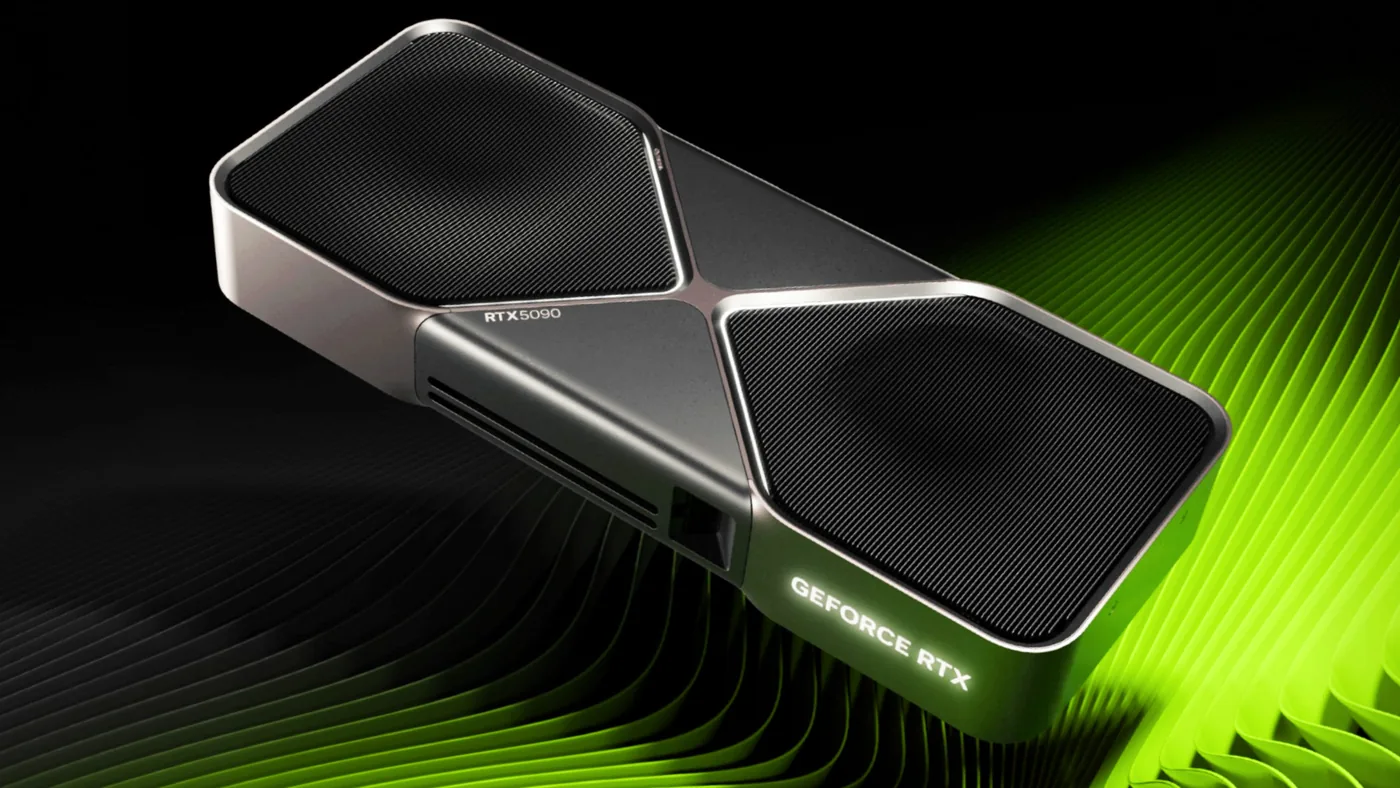
Wccftech noted that robbiekhan’s overnight test represents an isolated incident on a single high-end setup rather than an outcome confirmed across every configuration. Even so, the test showed that the underlying trigger in the display container process remained active under specific idle conditions. Users who leave their PCs powered on overnight may still see drive writes accumulate if the software enters an idle loop [2].
Evaluating Nvidia Hotfix Driver Performance
Evaluating the Nvidia hotfix driver against older releases shows how write volumes fluctuated between different driver revisions. Driver 621.24 had accumulated 1.18TB of input and output writes over five days of normal system uptime, with write speeds spiking to 9.15MB/s during active web browsing. Hotfix 621.35 lowered those figures and logged fewer total writes than both version 621.24 and the earlier 621.14 update [2].
The cleanest write metrics came from Game Ready Driver 621.01, a build published before the write loop appeared in the GeForce branch. In testing, driver 621.01 kept NVDisplay.Container.exe write volume down to 12.55MB over an initial 55-minute test window. A subsequent test logged 9.47MB over 93 minutes. Those numbers illustrate that normal driver operation produces negligible background disk traffic under ordinary desktop conditions [2].
For gamers who prefer to stay on older software versions until driver issues are resolved, older packages still retain modern features. DLSS Frame Generation Preset C and related interface additions remain built into the Nvidia App with driver updates as old as version 617.42 [2]. Community members exploring custom settings and PC modders injecting NVIDIA DLSS tools into unsupported titles can keep using those earlier releases without losing access to key image generation controls.
Driver Options for GeForce Owners
PC owners assessing the Nvidia hotfix driver have two distinct paths depending on the games they run. PCGamesN recommends installing hotfix 621.35 for players actively running newly released titles that require recent game profiles, because the hotfix reduces write rates compared to build 621.24. For users who play established titles, rolling back to a previous package like 621.01 or 617.42 avoids background write loops while Nvidia works on a permanent fix [1].
Because hotfix drivers are optional beta builds, Nvidia makes version 621.35 available through direct download links on its customer support portals rather than through automated GeForce Experience notifications. The package will remain online until the company folds these targeted bug fixes into its next WHQL-certified driver release [1]. Wccftech pointed out that waiting for that next polished release is a sensible approach for cautious users, but moving away from driver 621.24 remains the main step to preserve drive health [2].
- ONLINE NEWS Allsop, K. (2026, November 21). Nvidia pushes new GeForce driver hotfix amid fears of SSD burnout. PCGamesN. [Article Link]
- ONLINE NEWS Sohail, O. (2026, November 22). NVIDIA’s 621.35 Hotfix Driver Still Writes Excessively To The SSD. Wccftech. [Article Link]


