





What happens when thousands of defunct rocket stages, derelict satellites, and hypervelocity debris clusters cross orbital tracks with active scientific spacecraft and astronaut crews? The National Aeronautics and Space Administration addresses this growing collision hazard through specialized orbital safety analysis services that screen trajectory corridors throughout low Earth orbit. NASA selected Omitron Inc. to direct these mission-critical surveillance capabilities under an indefinite-delivery contract valued at approximately $23.5 million [1].
- What Is Orbital Safety Analysis?
- Scope of the Omitron Support Services Contract
- How Conjunction Assessment Screening Protects Active Spacecraft
- Interagency Operations Across Military and Civil Tracking Centers
- Comparing Orbital Safety Services With Institutional Mission Assurance
- Daily Monitoring Protocols and Space Traffic Management Support
What Is Orbital Safety Analysis?
Orbital safety analysis is the engineering and operational discipline of tracking orbiting objects, evaluating flight trajectories, and calculating collision probabilities to safeguard active spacecraft across all mission phases. Thousands of tracked artificial objects circle Earth at orbital velocities exceeding seven kilometers per second, where even millimeter-sized metal fragments possess sufficient kinetic energy to rupture pressurized modules or disable scientific instruments. Through continuous conjunction assessment, mission analysts evaluate close approaches, model spatial uncertainty volumes, and design avoidance maneuvers before converging orbital trajectories can intersect in flight [5].
The institutional foundation for these safety operations is NASA’s Conjunction Assessment Risk Analysis (CARA) program, based at Goddard Space Flight Center in Greenbelt, Maryland. The program coordinates daily orbital safety analysis workflows for dozens of robotic science missions. CARA specialists interface directly with mission flight dynamics teams to analyze high-precision tracking measurements against the Department of Defense (DoD) space catalog [5]. Consolidating these screening pipelines ensures consistent tracking protocols across federal space assets [1].
Scope of the Omitron Support Services Contract
NASA Goddard Space Flight Center awarded the contract to Omitron Inc. to provide advanced orbital safety services protecting high-value civil spaceflight missions. The procurement provides comprehensive conjunction assessment screening services for all NASA uncrewed spacecraft. It also includes extensive technical support for human spaceflight activities. The award utilizes an indefinite-delivery contract structure valued at approximately $23.5 million. The contract spans five years [1].
Omitron operates from Beltsville, Maryland. The aerospace engineering firm stations specialized personnel near Goddard Space Flight Center [1].
In addition to protecting NASA scientific platforms, the contract delivers dedicated orbital safety support to the National Oceanic and Atmospheric Administration’s (NOAA) Office of Space Commerce [1]. This interagency partnership assists the federal transition of civil space traffic management to commercial and international stakeholders [3]. Federal procurement records indicate that Goddard Space Flight Center previously initiated this requirement under Presolicitation 80GSFC24R0003 using NAICS code 541330 and product service code R425. The solicitation organized procurement administration under federal organization code 8000-GSFC0. The SBA standard is $25.5 million [4].

How Conjunction Assessment Screening Protects Active Spacecraft
Conjunction assessment screening protects operational satellites by systematically comparing projected spacecraft trajectories against the high-accuracy space catalog maintained by military surveillance sensors. Safety analysts review geometric miss distances, trajectory covariance ellipsoids, and calculated probability thresholds to determine whether incoming space objects pose immediate collision hazards. When encounter risks violate established safety thresholds, flight dynamics engineers calculate burn vectors for avoidance maneuvers that alter satellite orbits while preserving primary science mission objectives [5].
Daily technical screenings utilize specialized astrodynamics software tools, most notably the Astrodynamics Support Workstation (ASW) and evolving military tracking frameworks including the ATLAS software system. Personnel conduct routine screenings using operator-provided ephemeris files while executing manual orbit determination updates and differential corrections for critical space objects. All close approach summaries and conjunction products are prepared in accordance with CARA operational standards, with designated data files posted directly to Space-Track.org for broader operational awareness [5].
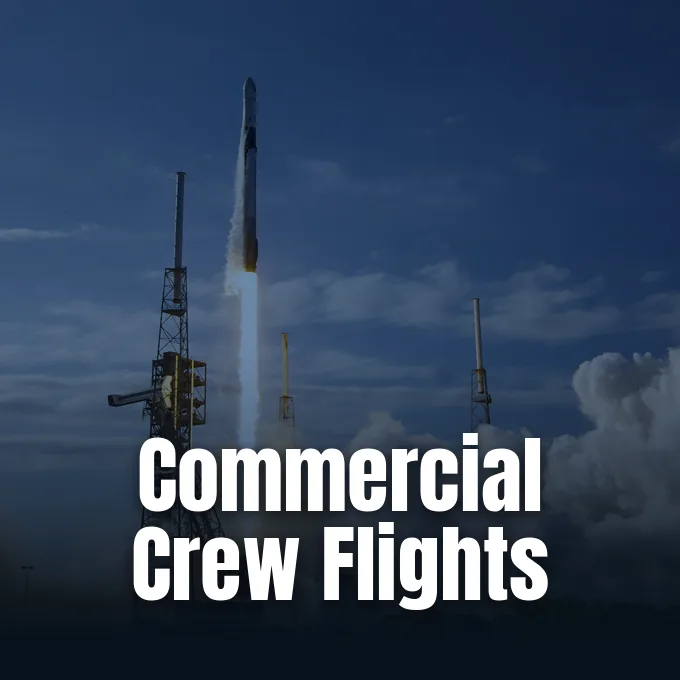
Protecting uncrewed robotic missions demands automated screening routines that process recurring conjunction warnings without inducing analyst fatigue during high-volume orbital passes [5]. Similar operational rigor governs commercial crew transportation flights to the space station, where tight rendezvous trajectories leave zero margin for unpredicted conjunctions [1]. When sudden spacecraft anomalies, fragmentations, or electromagnetic interference events happen, analysts log reports in the JSIRO database and immediately inform CARA leadership [5].

Interagency Operations Across Military and Civil Tracking Centers
Executing orbital safety analysis requires close operational integration across civil, commercial, and defense tracking centers. The prime contractor performs work across five primary installations: Beltsville, Maryland; Goddard Space Flight Center in Greenbelt, Maryland; Johnson Space Center in Houston, Texas; Naval Surface Warfare Center Dahlgren in Virginia; and Peterson Space Force Base in Colorado Springs, Colorado. Distributing personnel across these sites ensures direct access to defense tracking data and NASA mission control rooms for in situ operational analysis [1].
Dedicated orbital safety analysts maintain an embedded operational presence at the 18th Space Defense Squadron operations center at Vandenberg Space Force Base in California, with secondary operational support stationed at the 19th Space Defense Squadron at Dahlgren Naval Air Station in Virginia. Working in cooperation with the Commercial Integration Cell, these embedded specialists review sensor tasking levels, calibrate observation data, and test next-generation tracking software to ensure that civilian space assets remain protected against catastrophic collision risks. By integrating defense space surveillance feeds with mission ephemeris data, analysts generate precise orbital trajectory vectors that allow flight directors to monitor close approaches across highly populated orbital inclinations. The team maintains continuous operational liaison with military track coordinators to verify radar signatures and improve orbit determination accuracy across complex orbits [5].
Close technical coordination with the Johnson Space Center Flight Operations Directorate safeguards crewed spaceflight missions. Flight dynamics analysts deliver specialized orbital state vectors and customized screening files directly to flight controllers in Houston [5]. This rigorous operational tracking dovetails with ongoing research into physiological and environmental operational risks during crewed missions, demonstrating that space safety demands continuous technical diligence both inside the cabin and across the orbital flight path [1].
Comparing Orbital Safety Services With Institutional Mission Assurance
While the Omitron contract focuses on orbital flight dynamics and active conjunction screening, NASA maintains distinct institutional safety contracts to ensure overall mission success across its ground facilities. In a separate institutional procurement, the agency awarded the Safety and Mission Assurance II (SMAS II) contract to Bastion Technologies Inc. of Houston. The maximum potential reaches $400 million. That performance-based agreement contrasts with the targeted $23.5 million scope of Omitron’s orbital safety analysis contract [1, 2].
The SMAS II contract spans a four-year base ordering period to deliver comprehensive institutional safety support. Options extend through March 2034. The agreement operates as a small business set-aside. Under its provisions, Bastion delivers institutional safety, reliability engineering, maintainability analysis, software assurance, and pressure systems quality oversight. Bastion supports work at Marshall Space Flight Center in Huntsville, Alabama, the Michoud Assembly Facility in New Orleans, and Stennis Space Center in Bay St. Louis, Mississippi [2].
Additional task orders under the SMAS II program support operations at Kennedy Space Center in Florida and various contractor facilities. Comparing these two awards highlights the clear division between structural hardware certification and live orbital flight safety. While institutional safety contracts verify that spaceflight hardware meets exacting construction tolerances prior to launch, active orbital safety support protects operational satellites after they reach orbit [1, 2].
Daily Monitoring Protocols and Space Traffic Management Support
Conducting orbital safety analysis demands dedicated console staffing to identify conjunctions and communicate collision alerts in real time. Early procurement documents outline an intensive operational schedule with on-console coverage running from 0600 to 0200 Pacific Time daily, seven days per week. Qualified specialists remain reachable on call during non-duty hours to coordinate off-nominal contingency responses and emergency collision avoidance actions with CARA flight directors. This persistent surveillance guarantees rapid evaluation of close approach warnings, ensuring spacecraft safety across critical orbital crossing windows [5].
Beyond live monitoring duties, technical personnel execute rigorous training protocols and software evaluation cycles. Analysts test forthcoming astrodynamics software builds in simulation environments, update historical records of maneuverable spacecraft, and support monthly meetings of the NASA-DoD Human Spaceflight Interagency Working Group. Personnel coordinate necessary security credentials through L3Harris Corp under the MOSAIC contract, ensuring analysts hold appropriate credentials to access high-accuracy defense orbital catalogs [5].
Civilian space traffic coordination is expanding as the Office of Space Commerce assumes greater responsibility for commercial space situational awareness data [1, 5]. Technical teams under the Omitron contract assist this federal transition by evaluating commercial tracking data and managing surveillance data exports for civil space traffic management architectures. Ongoing orbital safety analysis ensures that expanding commercial constellations do not jeopardize scientific exploration platforms [1, 5]. As orbital traffic intensifies around Earth, these disciplined analysis protocols provide the essential operational foundation for sustainable space operations [1].
- PRESS RELEASE Garner, R. (2026, September 29). NASA Awards Orbital Safety Analysis Support Services Contract. National Aeronautics and Space Administration. [Article Link]
- PRESS RELEASE Doyle, T. P. (2025, September 15). NASA Awards Safety, Mission Assurance Services Contract. National Aeronautics and Space Administration. [Article Link]
- ONLINE NEWS PressBee. (2026, September 30). NASA Awards Orbital Safety Analysis Support Services Contract. PressBee News. [Article Link]
- REPORT HigherGov. (2023, November 17). Orbital Safety Analysis (OSA) Support – Synopsis 3 (Solicitation No. 80GSFC24R0003). HigherGov Intelligence. [Article Link]
- REPORT HigherGov. (2023, January 17). Orbital Safety Analysis (OSA) Support – RFI 3 (Reference OSA-RFI). HigherGov Intelligence. [Article Link]
APA 7: PerEXP Teamworks. (2026, September 30). NASA Awards Orbital Safety Analysis Contract to Omitron. PerEXP Teamworks. https://perexpteamworks.com/en/orbital-safety-analysis-contract-omitron/


