






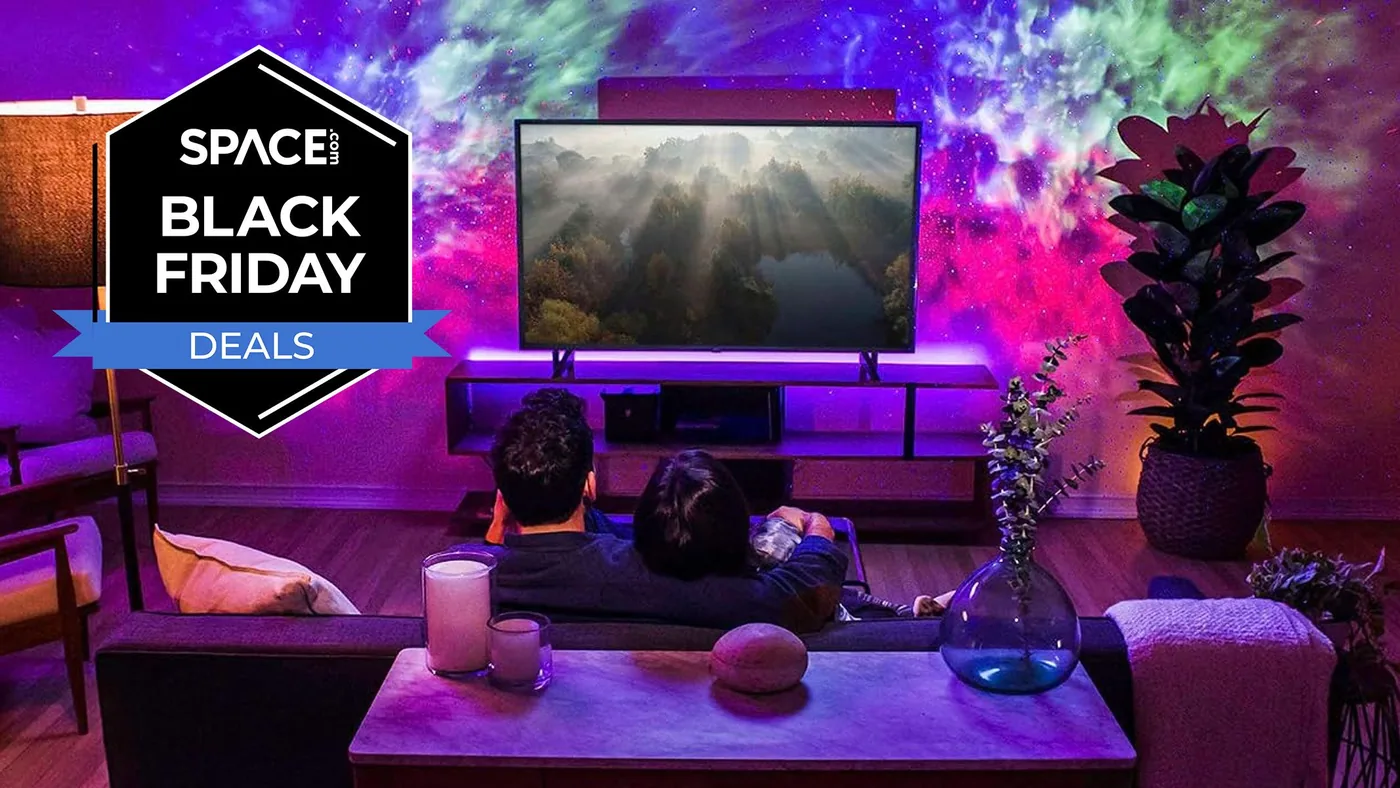
Storm systems and heavy rain in the eastern United States threatened to spoil night skies during the holiday week, prompting amateur skywatchers to search for indoor planetarium gear. Holiday retail discounts lowered the cost of digital and optical projectors designed to show constellations on living room ceilings. These star projector deals gave families a practical way to view stars from home while outdoor skies stayed overcast [1].
Early Holiday Weather and Shopping Trends
Holiday travelers and backyard astronomers met poor viewing conditions as winter storms brought heavy rainfall and cloud cover over the East Coast of the United States. Writing for Space.com, journalist Chris McMullen reported that these overcast skies ruined outdoor Thanksgiving skywatching in many areas. Retailers launched seasonal promotions before the official shopping calendar. While Black Friday falls on November 27, promotional pricing began days earlier and ran through November 30 before leading to Cyber Monday [1].
Discounts spread into consumer tech on major retail websites. Space.com reported that Amazon posted site-wide markdowns on binoculars and computerized telescopes, while camera retailer Adorama dropped digital camera bodies and glass lenses by hundreds of dollars. Walmart opened early promotions, and B&H Photo Video reduced costs on tripods, drones, camera accessories, and lenses. At Best Buy, sale prices covered quadcopters and Lego kits. Toy manufacturer Lego lowered prices by up to 40% on branded sets, including space models from Star Wars, Star Trek, and Marvel lines to give holiday shoppers alternative indoor options when rain made outdoor astronomy impossible [1].
How Star Projector Deals Address Cloudy Skies
City light pollution and thick cloud cover often prevent skywatchers from seeing dim stars with simple optics. McMullen said that indoor planetariums solve this problem by casting starry scenes onto ceilings without needing clear skies. He spoke about his own gear, saying, “I can’t get enough of star projectors, so much so that I think I may have a problem.” For buyers facing stormy weather, star projector deals offered price drops on models showing realistic star maps [1].
The Rossetta 3D Galaxy Star Projector received a $35 discount off its regular price tag. Instead of using simple laser dots or fixed slides, this Rossetta unit projects animated video footage of planetary flybys, black holes, spacewalks, and seasonal cosmic backgrounds that rotate smoothly over a room ceiling. McMullen reported that its rotating moon sequence matches the real Moon, though several planetary vistas rely on digital art. He praised the moving video clips. For families kept inside by winter rain, this animated display creates an engaging cosmic environment that helps children and adults study space science without stepping into the cold [1].
Viewers who want real astronomical accuracy can choose the POCOCO Galaxy Star Projector, which uses swappable optical discs to show photos of the actual night sky. The manufacturer made the device for learning and quiet relaxation, adding a rechargeable battery so users can place it anywhere without loose cords. Owners can buy extra discs to grow their library of nebulae and star fields. McMullen ranked this unit as the best value rechargeable star projector for real sky viewing [1].
Feature Differences in Popular Home Planetariums
Choosing a star projector means balancing realism against decorative lighting. The Govee Star Light Projector gave buyers the largest markdown among major units, dropping by 38% to cut $24 off its standard cost and land below the $100 ceiling for holiday gifts. A companion phone app lets owners customize colors and nebula effects, while a built-in speaker plays audio accompaniment. McMullen called it a cosmic playground. Even though its nebula visuals do not depict authentic stellar formations, the bright colors, built-in sound system, and simple mobile controls make this Govee model an attractive present for family playrooms [1].
Optical methods differ among home planetarium designs. Laser projectors use diffraction beams to scatter bright dots over a dark room, creating dazzling visuals that do not match true star placements or galactic coordinates. In contrast, optical disc systems like the POCOCO unit project real space photography gathered by space probes and orbital telescopes. McMullen said that while laser devices look impressive, learners who want true sky geography need disc models instead of decorative lasers [1].

Budget Star Projector Deals and Compact Models
Bargain hunters found small hardware marked down to low prices. The Dinosaur Egg Star Projector dropped to just $8 for Amazon Prime members, delivering a price cut of more than 50% from its standard retail price below $10. The small shell holds useful features. It includes a built-in Bluetooth speaker that plays music or soothing sleep sounds, with an automatic shut-off timer offering settings for 1, 2, or 4 hours of operation. McMullen said that these features make the unit a practical stocking filler for Christmas or a helpful bedtime night light for children who love dinosaurs and space. The small projector delivers fun celestial lighting without a heavy financial commitment [1].
Strong shopper interest often causes fast inventory shortages for popular electronics during late November. McMullen reported that certain smart telescopes sold out before the main shopping day, showing how fast astronomy items disappear from warehouse shelves. Stormy forecasts accelerate these sales. Shoppers looking for star projector deals face real supply limits as official Black Friday discounts close on November 30 before shifting to Cyber Monday [1].
Historical Roots of Thanksgiving Gatherings
The custom of meeting for autumn harvest meals predates modern shopping events by hundreds of years, growing from farming traditions into official national holidays. Today, Thanksgiving is celebrated on various dates in the United States, Canada, Saint Lucia, Liberia, and Norfolk Island. The holiday has English roots. During the Protestant Reformation under King Henry VIII, the liturgical calendar required 95 church holidays in addition to regular Sundays, forcing citizens to stop field work and attend church services before the reforms of 1536 [3].
Reformation laws in 1536 cut the calendar to 27 holy days, leading Puritan reformers to replace church holidays with special Days of Fasting and Days of Thanksgiving. Communities held Days of Fasting during disasters, including plague outbreaks in 1604 and 1622, drought in 1611, and floods in 1613. Days of Thanksgiving marked special blessings, such as the naval victory over the Spanish Armada in 1588 and the rescue of King James I from the Gunpowder Plot in 1605, which created an annual holiday in 1606 that became Guy Fawkes Day. English settlers carried these thanksgiving customs to North America, holding recorded prayers upon landing at Berkeley Hundred in Virginia in 1619. In Canada, celebrations began with Martin Frobisher’s 1578 voyage and 17th-century French harvest feasts in New France, where settlers shared winter food with indigenous neighbors before loyalists introduced roast turkey traditions [3].
Retail Evolution from Panic to Holiday Sales
The commercial side of Thanksgiving took shape during the twentieth century, turning the following Friday into the busiest shopping date in the United States. The name Black Friday originally carried negative associations. In the Panic of 1869, financiers Jay Gould and James Fisk attempted to corner the national gold market, prompting President Ulysses S. Grant to release federal gold reserves to break their scheme. The gold release caused market prices to drop by 18%, bankrupting many investors including Abel Corbin. Retail usage emerged when the trade journal Factory Management and Maintenance described factory workers calling in sick in November 1951 and 1952 to secure a four-day weekend, after which police in Philadelphia and Rochester adopted the label for traffic gridlock [2].
Philadelphia merchants tried to rebrand the date as “Big Friday” in 1961, but the name did not stick. The New York Times printed the phrase on November 29, 1975, to report Philadelphia traffic. In the 1980s, store owners recast the name to signify moving from financial loss (in red ink) to profit (in black ink). The Philadelphia Inquirer reported in 1985 that retailers in Cincinnati and Los Angeles still did not know the term. Today, digital sales stretch into Cyber Week, letting families use star projector deals to enjoy indoor astronomy when storms ruin holiday stargazing [2].
- ONLINE NEWS McMullen, C. (2026). Stargaze at home this Thanksgiving — the best offers around. Space.com. [Article Link]
- WEBSITE Wikipedia. (2026). Black Friday (shopping). [Article Link]
- WEBSITE Wikipedia. (2026). Thanksgiving. [Article Link]
Cover image: Alexey laa / Wikimedia Commons, CC BY-SA 4.0
APA 7: PerEXP Teamworks. (2026, November 27). Stargazers Turn to Star Projector Deals Amid Holiday Clouds. PerEXP Teamworks. https://perexpteamworks.com/en/star-projector-deals-black-friday/


