






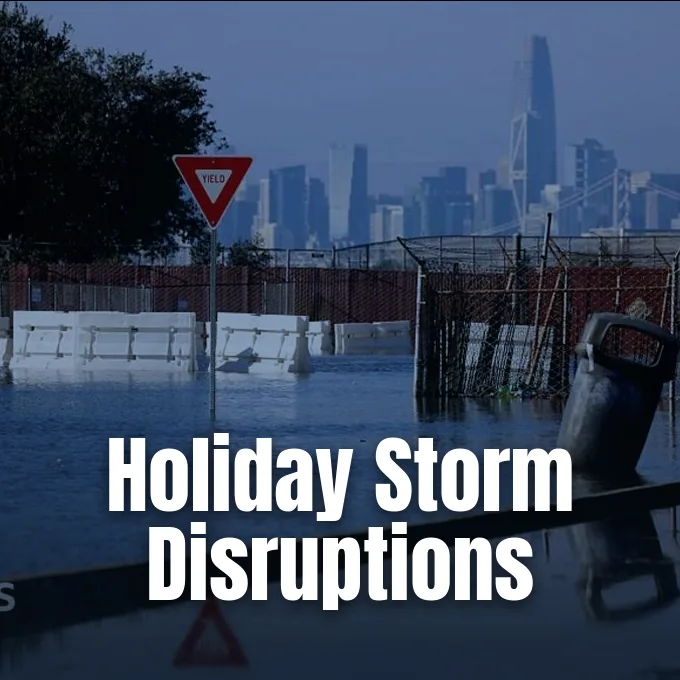
Heavy rain and high wind gusts from Thanksgiving storms knocked out electrical power to hundreds of thousands of people, flooded highway corridors, and damaged transit infrastructure along both American coasts [3]. The severe autumn weather forced emergency declarations in New Jersey, prompted coastal evacuation advisories, and left utility crews working overnight to clear fallen trees from roads [2]. As coastal conditions began to clear heading into Friday, transportation networks faced lingering disruptions and hundreds of delayed flights [3].
Power Outages from Thanksgiving Storms
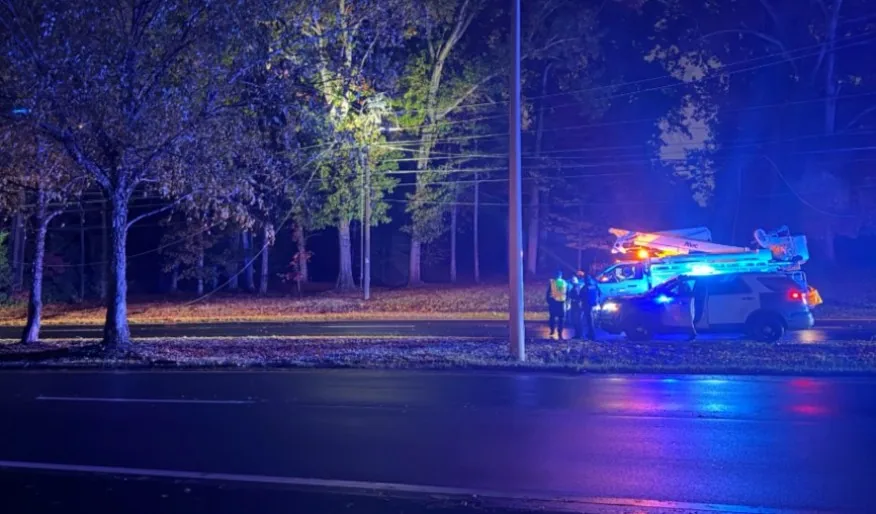
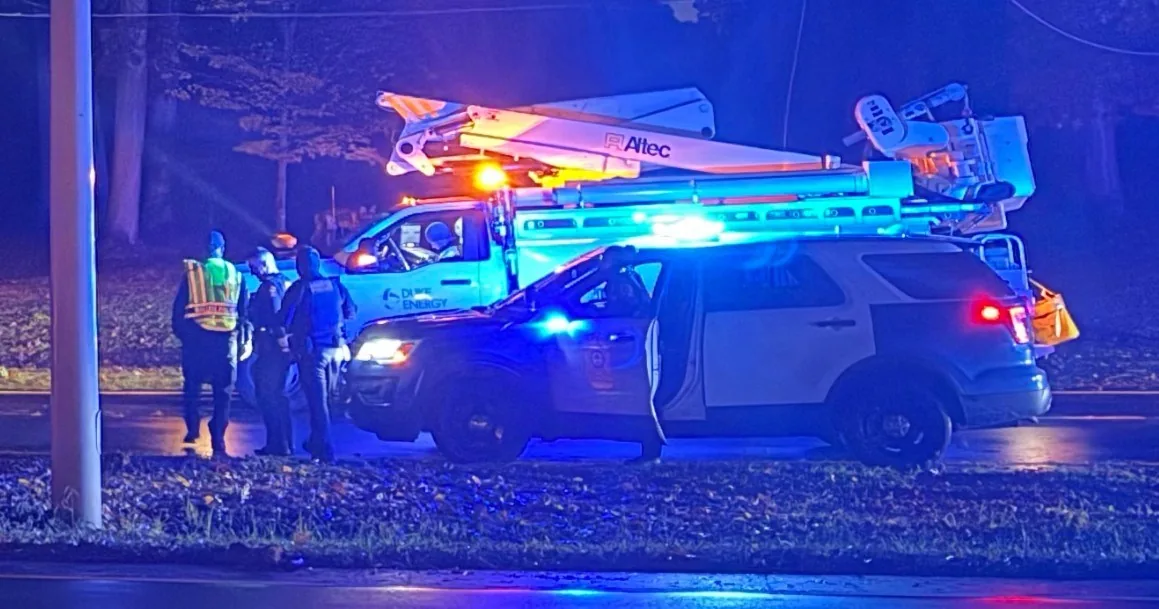
Thunderstorms brought torrential rain to central North Carolina starting at 4:40 a.m. on Thanksgiving morning. Radar showed between two and four inches of rain falling across the area before 10 a.m., prompting forecasters to warn that flash flooding had already started along several major road arteries. Duke Energy reported that line crews restored over 100,000 customer outages overnight, but roughly 45,000 homes remained without power by Thursday morning. Outages in Wake County exceeded 4,000 customers before utility workers cut central state totals below 3,000 by 2:30 p.m.. “So it’s been a productive day, and we’ve poured additional resources from areas that were not impacted into the hardest hit areas to help the local crews restore power,” Duke Energy spokesman Jeff Brooks said in a statement [1].
Strong wind gusts near 50 mph knocked down mature trees. On Pine Ridge Road near Zebulon, a falling tree struck a residence on Thanksgiving morning, displacing two people according to Franklin County Emergency Management. In Raleigh, a downed tree snapped electrical lines near Glen Eden Drive, closing northbound Glenwood Avenue near Vick Avenue at 9:35 p.m. and leaving about 270 customers without power late into the night. Jeff Brooks said slick pavement also led several motorists to crash into utility poles [1].
Coastal Floods in the Mid-Atlantic
Thanksgiving storms brought coastal surges and wind gusts near 50 mph to eastern Pennsylvania and southern New Jersey. The entire Delaware Valley remained under a High Wind Warning and a Coastal Flood Warning on Thursday. High winds damaged suspended work platforms on the Commodore Barry Bridge, forcing officials to shut down the river crossing completely until maintenance crews could begin nighttime repairs on Friday. Thousands of Philadelphia households were placed under a precautionary boil water advisory as municipal utility teams monitored water quality after the storm [2].
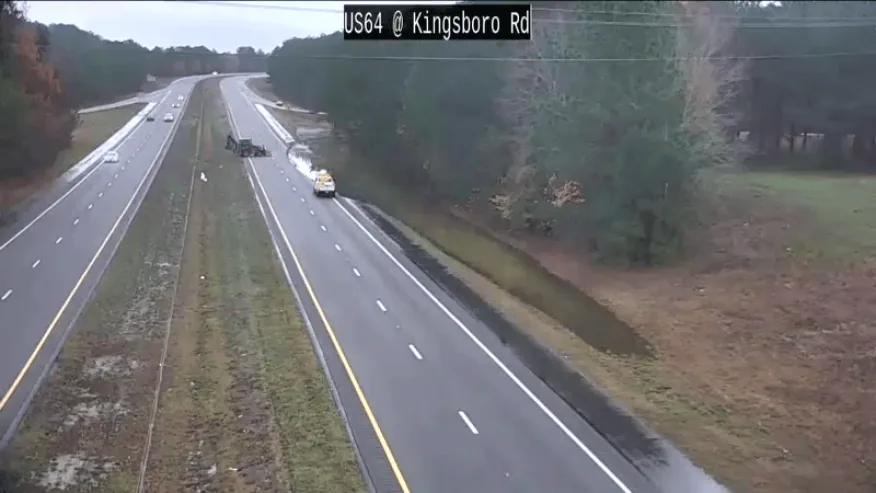
New Jersey declared a state of emergency as officials urged Atlantic City residents to evacuate coastal neighborhoods before high tide arrived [2]. The rising tide swamped low roads much like a nor’easter storm coastal flooding emergency. In North Carolina, floodwaters closed Old Route 22, NC 222, and Rains Crossroads Road in Johnston County, as well as Holland Road and Town Creek Road in Wilson County. Transportation officials cautioned that driving through water causes flood fatalities, noting that morning accidents shut down lanes on Interstate 95 in Robeson County and Interstate 40 in Wake County [1].
Flight Delays and Federal Aid
The severe weather system disrupted national transit links between the Atlantic and Pacific coasts. Federal aviation reports showed that hundreds of scheduled passenger flights faced delays or outright cancellations going into Friday, leaving thousands of holiday travelers stranded in busy airport concourses as airlines struggled to position aircraft and flight crews. President Donald Trump said he would consider releasing federal emergency funds to help states pay for cleanup efforts. Business owners across coastal districts pumped out flooded storefronts as cleanup costs mounted [3].
Holiday travelers experienced extended delays as airports in Philadelphia, New York, and Charlotte dealt with cascading scheduling backlogs [3]. The ripple effects showed how holiday schedules become vulnerable when severe coastal storm disruptions ground regional aircraft and trap travelers far from home. Road crews also worked to clear local bottlenecks, such as Ray Road in Wake County, which closed both lanes between Norwood Road and Strickland Road until late Thursday afternoon [1].

Why Thanksgiving Storms Threaten Travel
Late November weather in eastern North America often produces severe Thanksgiving storms because cold Canadian air masses push south to meet warm, moisture-laden air moving north from the Gulf of Mexico. At 4:40 a.m., radar confirmed that heavy rain bands had already dropped four inches of water across central North Carolina. When runoff hits ground that cannot absorb more moisture, low-lying highways submerge within minutes. Flash flood warnings expired at 10 a.m. after downpours dumped two to four inches of rain, but forecasters noted that an additional two to three inches remained possible throughout Thanksgiving Day [1].
Gale winds worsen structural damage once water softens the soil around root systems. Wind gusts between 30 mph and 50 mph easily topple tall trees, bringing down power lines and breaking wooden utility poles. In Nash County, water covered Winters Road north of Bailey and shut down Seven Paths Road near Spring Hill, showing how quickly autumn gales isolate communities when overland water covers transit routes [1].
English Roots of Harvest Prayers
Modern Americans associate Thanksgiving with family travel and holiday feasts, but the observance has roots in English religious history during the Protestant Reformation, when the Church of England under King Henry VIII enforced 95 mandatory church holidays alongside every Sunday. In 1536, church reforms reduced that total to 27 holidays. Puritan reformers pushed to abolish the remaining feast days, including Christmas and Easter, arguing that the liturgical calendar should instead rely on occasional Days of Fasting and Days of Thanksgiving [4].
Puritans viewed disasters as divine warnings that demanded Days of Fasting, but they celebrated unexpected blessings with Days of Thanksgiving. Officials called days of fasting during plagues in 1604 and 1622, a drought in 1611, and floods in 1613. By contrast, English congregations celebrated thanksgiving days after defeating the Spanish Armada in 1588, after the safe deliverance of Queen Anne in 1605, and following the discovery of the Gunpowder Plot that prompted Parliament to institute an annual holiday in 1606. That 1606 observance eventually became Guy Fawkes Day on November 5 [4].
Colonial Origins in North America
English settlers brought harvest traditions to North America during seventeenth-century colonization. In Virginia, settlers landing at Berkeley Hundred in 1619 established an official charter that mandated an annual thanksgiving prayer to mark their arrival. In Canada, some historians trace harvest celebrations back to the 1578 Arctic voyage of Martin Frobisher, who held a religious ceremony during his search for the Northwest Passage. French settlers in New France later held regular autumn harvest feasts with indigenous neighbors throughout the winter [4].
New immigrants arriving in Nova Scotia after 1700, including Scottish, Irish, and German families, added their own harvest customs to regional observances. United Empire Loyalists fleeing the United States during the American Revolution brought American traditions, like roast turkey, into Canada. Thanksgiving eventually evolved into a secular national holiday celebrated in the United States, Canada, Saint Lucia, Liberia, and Norfolk Island [4]. Today, families still travel to celebrate the season, but Thanksgiving storms frequently disrupt modern travel corridors, reminding travelers how vulnerable transit remains to late autumn weather [1].
- ONLINE NEWS Casey, J., Overton, R., & Kennedy, H. (2026, November 26). Thanksgiving storm brings central NC flash flooding, fallen trees, and power outages. CBS17.com. [Article Link]
- ONLINE NEWS Camargo, M., Gomez, M., Steinberg, D., Grassi, E. R., Godynick, J., Associated Press, Charns, D., & Greenberg, T. (2026, November 27). Live updates as neighbors clean up after powerful Thanksgiving storm. NBC 10 Philadelphia. [Article Link]
- ONLINE NEWS BBC News. (2026, November 27). Severe Thanksgiving storms leave roads flooded and trees fallen. [Article Link]
- WEBSITE Wikipedia. (n.d.). Thanksgiving. [Article Link]
APA 7: PerEXP Teamworks. (2026, November 28). Thanksgiving Storms Knock Down Trees and Flood Coastal Roads. PerEXP Teamworks. https://perexpteamworks.com/en/thanksgiving-storms-flood-roads-power/


