






Every single day, working skeletal muscles break down microscopic protein structures and release a steady stream of chemical waste into the bloodstream. Doctors evaluate what is creatinine to assess how well the renal system filters bodily waste, because this small molecule is cleared almost fully by healthy kidneys [1]. Derived from the Ancient Greek word kréas, meaning flesh, creatinine is an organic compound that forms at a constant rate in healthy individuals [11]. The waste enters blood circulation and travels to the kidneys without binding to carrier proteins [7]. Because healthy kidneys filter creatinine continuously and reabsorb almost none of it back into circulation, blood levels serve as a practical indicator of kidney function [1]. When renal filtration slows down, blood levels rise [8].
What Is Creatinine and Why Does It Matter?
Creatinine carries out no bodily tasks. Unlike peptide hormones or circulating enzymes, human physiology treats this molecule solely as an end product destined for excretion through the urinary system [1]. Daily output depends on total skeletal muscle mass rather than brief workout spikes [11]. Men generate more of the compound than women because men hold greater muscle volume, and because muscle turnover stays steady, daily release stays predictable [8], [11].
The diagnostic value of creatinine stems from this predictable release combined with constant renal clearance. When healthy kidneys operate normally, the rate of creatinine excretion matches the rate of muscle production, keeping blood levels within a narrow window [1]. If kidney filters suffer injury or disease, filtration efficiency drops and creatinine accumulates in the blood [8]. Doctors use this buildup to evaluate renal filtration capacity [11].
Routine clinical blood panels measure creatinine to detect impaired kidney filtration before obvious symptoms appear. Nephrons can sustain progressive injury before nitrogenous waste builds up to noticeable levels in blood circulation, which makes creatinine a late marker of renal decline [11]. Doctors track small shifts over months to learn whether chronic illnesses damage filtration beds, whereas a sharp rise warrants quick checks for acute injury, dehydration, or drug interference [8]. Baseline levels stay steady from day to day under normal living conditions [11].
Chemical Structure from Muscle Breakdown
At the molecular level, creatinine has the chemical formula C4H7N3O and an average molecular mass of 113.120 daltons. It is small. The European Bioinformatics Institute catalogs it in the ChEBI database under accession 16737 as 2-imino-1-methylimidazolidin-4-one, while KEGG COMPOUND lists it as C00791 and KEGG DRUG indexes it under D03600 [7], [9]. Along with ChEBI and KEGG, the Human Metabolome Database indexes creatinine under HMDB0000562 while MetaCyc records the entry [7]. Chemists classify creatinine as both a lactam and an imidazolidinone ring structure [11]. The molecule has an exact mass of 113.0589 daltons and decomposes upon heating to 300 degrees Celsius [9].
Creatine synthesis starts in the liver, pancreas, and kidneys through the transamination of arginine, glycine, and methionine [1]. Blood carries creatine to muscles [11]. Once inside muscle cells, the enzyme creatine kinase adds a phosphate group to form phosphocreatine, a high-energy reservoir that rapidly replenishes adenosine triphosphate during quick muscle contractions [1], [11]. Cells rely on this energy buffer during heavy work [1]. Muscle tissue maintains a steady balance between creatine and phosphocreatine [11].
Creatinine forms on its own from the slow, non-enzymatic breakdown of creatine and phosphocreatine at a regular rate of roughly one to two percent each day in living muscle tissue [1]. No enzyme drives this reaction within muscle cells [11]. The resulting waste product diffuses easily through cell membranes into blood capillaries [7].
Renal Handling of Serum Creatinine
Blood carrying serum creatinine enters the kidneys through the renal arteries, which branch into millions of microscopic filtering units called nephrons distributed in the renal cortex. Within each nephron, blood flows through high-pressure capillary bundles known as glomeruli [11]. Creatinine molecules are small enough to pass freely through the glomerular basement membrane into Bowman’s capsule [12]. The main elimination route is glomerular filtration, which separates small waste molecules from blood cells and large proteins [11]. Normal kidneys clear this metabolic byproduct without losing needed blood proteins [10].
As filtrate flows through the proximal convoluted tubules, renal cells actively secrete an additional 10 to 15 percent of creatinine into the tubular fluid [11]. Unlike water, sodium, and urea, creatinine undergoes little to no reabsorption along the renal tubules [12]. Proximal secretion causes clearance formulas to slightly overestimate true filtration [11].
Glomerular filtration rate, known as GFR, tracks how much fluid filters through nephrons each minute [11]. As Delanaye reported in the journal Nephron, the link between serum creatinine and GFR follows a hyperbolic curve where small creatinine shifts at low ranges mask substantial filtration loss. A patient can lose half of normal filtration capacity before blood creatinine climbs past the upper laboratory limit. When kidney function drops low, small nephron losses trigger steep blood spikes [3]. Certain common drugs, like trimethoprim in Bactrim and cimetidine sold as Tagamet, block tubular secretion without changing filtration, causing falsely high test readings that mislead doctors [2], [8]. Clinicians who identify this drug interaction avoid misdiagnosing kidney failure [2].
Normal Reference Ranges by Age and Sex
Clinical laboratories establish reference intervals based on population studies and standard assay technologies. According to MedicineNet data, normal blood levels range between 0.7 and 1.3 mg/dL in adult men and 0.6 to 1.1 mg/dL in adult women, matching roughly 60 to 110 micromoles per liter for men and 45 to 90 micromoles per liter for women under international reporting rules [8],. The American Diabetes Association recommends evaluating these values alongside sex and age parameters [11]. Reference boundaries fluctuate slightly between laboratories based on local instruments [8].
Adult males produce about 150 to 200 micromoles of creatinine per kilogram of body weight daily, while females generate about 100 to 150 micromoles per kilogram [11]. Newborn infants show levels near 0.2 mg/dL because muscle bulk is low, and baseline concentrations climb steadily as children grow toward adult maturity [8]. Frail elderly adults often show low blood readings due to muscle loss, even when renal clearance has dropped [3], [8].
A person with a single kidney often maintains a baseline serum creatinine between 1.8 and 1.9 mg/dL without ongoing disease [8]. Clinical labs now align tests to an isotope dilution mass spectrometry reference standard. Because this method yields lower values at normal ranges, Food and Drug Administration guidelines cap carboplatin chemotherapy dosing to prevent toxicity [11].


Why Serum Creatinine Levels Rise
A rise in serum creatinine signals that filtration has slowed or muscle breakdown has accelerated. Chronic kidney disease caused by longstanding hypertension or diabetes is the leading cause of persistent elevations in adult patients. Acute kidney injury from severe infections, glomerulonephritis, or urinary blockages can trigger quick increases over a few days. When blood levels reach 5.0 mg/dL or higher in adult patients, doctors recognize severe renal impairment that often needs emergency dialysis to prevent life-threatening metabolic complications. In pediatric patients, values exceeding 2.0 mg/dL indicate critical renal damage [8].
Not all creatinine spikes originate from structural kidney damage. Heavy meals of cooked red meat can cause a temporary rise because culinary heat converts muscle creatine into creatinine. Dehydration also concentrates blood components, reducing blood flow to the kidneys and elevating test results. Restoring normal hydration with water corrects this rise [8].
Cardiovascular medications can cause expected shifts in blood readings that clinicians must interpret with care. Patients taking angiotensin-converting enzyme inhibitors for heart failure or chronic kidney disease often experience an initial rise in serum creatinine. An increase not exceeding 30 percent is clinically normal because these medications alter renal capillary pressures, providing survival benefits for patients with heart failure and slowing disease progression in kidney patients. Physicians avoid stopping the medication unless the rise exceeds 30 percent or hyperkalemia develops [11]. A comparison between blood urea nitrogen, commonly abbreviated as BUN, and creatinine clarifies whether volume depletion or intrinsic renal damage caused the rise. Urea is just over twice BUN by molecular mass, and a disproportionate BUN-to-creatinine ratio above twenty to one signals volume depletion from dehydration [12].
Causes of Abnormally Low Values
While high readings dominate clinical concerns, abnormally low blood creatinine levels also provide valuable diagnostic clues. Low values usually indicate reduced muscle mass rather than exceptional kidney health. Elderly patients with sarcopenia, individuals recovering from deep malnutrition, and people experiencing cachexia from long-term illness often show readings below normal laboratory thresholds due to depleted muscle mass. Severe weight loss diminishes the pool of muscle tissue available to produce creatinine [8]. In these situations, low blood values can mask underlying kidney dysfunction by creating artificially optimistic filtration estimates [3].
Pregnancy introduces profound physiological changes that naturally lower maternal creatinine concentrations during gestation. Expanded blood volume and increased renal blood flow accelerate glomerular filtration, driving serum creatinine and BUN downward during the second and third trimesters of an otherwise healthy pregnancy. A serum creatinine level that appears normal in a non-pregnant adult may indicate renal impairment in a pregnant patient [12]. Beyond human physiology, laboratory research shows that creatinine exerts curious biological actions, including bacterial-killing activity against both Gram-positive and Gram-negative bacteria. Curiously, the molecule does not kill fungi or yeasts, allowing laboratory technicians to isolate slower-growing fungi from environmental bacterial populations. Some reports also suggest potential immunosuppressive properties [11].
To overcome limitations of invasive blood collection, clinical researchers evaluated salivary creatinine in the International Journal of Nephrology, finding that salivary levels correlate closely with blood measurements [5]. In intensive care units, clinicians adjust baseline definitions as published in Critical Care because intravenous fluids dilute blood concentrations [6]. These diagnostic nuances show that interpreting creatinine requires evaluating the whole patient [3].
Clearance Formulas for Filtration Rates
To translate raw blood values into actionable filtration data, clinicians calculate creatinine clearance to estimate glomerular filtration rate. One known method is the Cockcroft-Gault equation, which estimates clearance using patient age, weight, and serum creatinine. The formula multiplies 140 minus the patient’s age by body weight in kilograms, adjusts by 0.85 for women, and divides by 72 times serum creatinine. This calculation approximates how many milliliters of blood the kidneys cleanse per minute per standard body surface area [8].
Normal creatinine clearance rates decline steadily with advancing age as nephrons undergo natural senescence. Healthy adults aged 18 to 29 years exhibit clearance values between 78 and 161 mL/min/BSA. By age 40 to 49, normal ranges shift to 67 to 146 mL/min/BSA, dropping further to 56 to 131 mL/min/BSA for individuals aged 60 to 72. Instead of mathematical estimations, clearance can also be measured through a 24-hour urine collection paired with a blood sample drawn during the same period. Male urine creatinine typically totals 995 to 2936 mg daily, while female output ranges from 601 to 1689 mg. Laboratories compare urine excretion against serum concentrations to quantify clearance [8].
Standard clearance formulas assume that serum creatinine stays stable, an assumption that fails during acute kidney injury. When filtration drops quickly, blood levels lag behind real-time damage. In a study published in the Journal of the American Society of Nephrology, Chen (2013) developed a kinetic estimated clearance formula that incorporates serial blood tests, volume of distribution, and production rates to evaluate acute shifts at the bedside [4].
Urine Protein Ratios in Routine Care
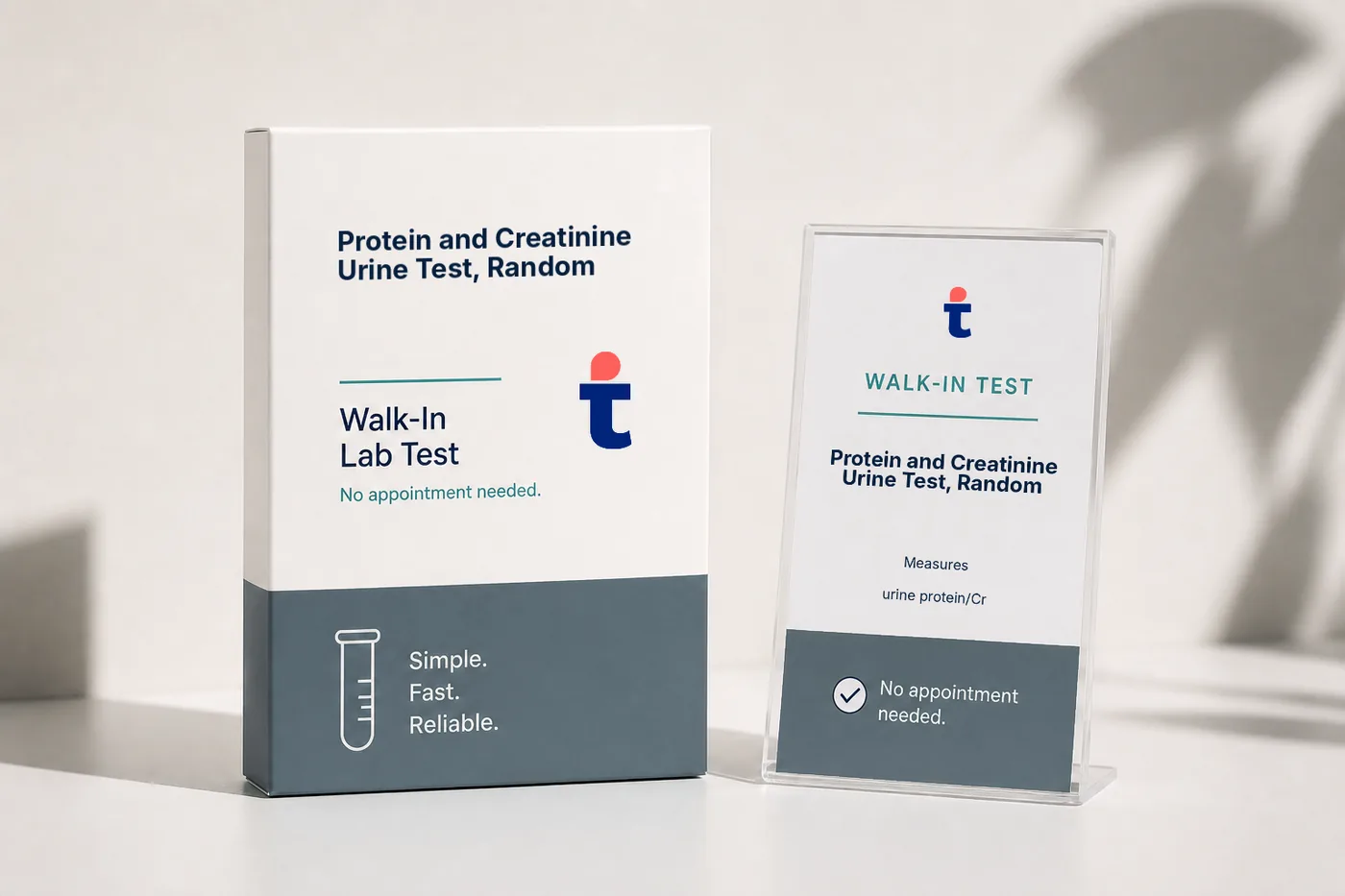
While 24-hour urine collections provide thorough data, collecting every drop of urine for a full day is cumbersome and prone to timing errors. To solve this clinical challenge, laboratories developed the random urine protein-to-creatinine ratio [10]. Because creatinine is released into urine at a steady rate during the day, it serves as an internal reference standard for evaluating renal excretion [13]. Laboratories measure total protein and creatinine in a single random urine sample so doctors can calculate the diagnostic ratio. This calculation corrects for urine concentration differences without requiring timed collections [10].
In routine medical evaluation, a normal urine protein-to-creatinine ratio stays below 200 mg/g [13]. Higher ratios indicate proteinuria, which can signal diabetic nephropathy, hypertensive kidney damage, or primary glomerular disease. According to MedlinePlus guidelines, random urine tests processed in Clinical Laboratory Improvement Amendments certified facilities track kidney risk without requiring insurance claims. Physicians often prefer the albumin-to-creatinine ratio when screening for early diabetic kidney damage because albumin testing detects much lower protein thresholds than routine total protein assays. Temporary factors such as strenuous exercise, pregnancy, dehydration, or high fever can raise urine protein without indicating permanent kidney disease. If initial findings are high, providers usually repeat testing to confirm accuracy before making a diagnosis [10].
Analytical methods evolved significantly over the past century. Max Jaffé introduced the classic colorimetric test in 1886, mixing creatinine with alkaline picrate to yield a red complex. Alternative clinical procedures later adapted the Fearon reaction and the Astra modular analyzer, though glucose, ascorbic acid, pyruvate, and cephalosporin antibiotics often skew manual Jaffé readings by forming non-creatinine chromogens. Modern clinical laboratories now rely on automated dry-slide enzymatic methods using creatinine iminohydrolase, which avoid interference from non-creatinine compounds and provide fast, dependable measurements at the clinical bench [12].
- ACADEMIC JOURNAL Salazar, J. H. (2014). Overview of Urea and Creatinine. Laboratory Medicine, 45(1), e19-e20. [Article Link]
- ACADEMIC JOURNAL Delanaye, P., Mariat, C., Cavalier, E., Maillard, N., Krzesinski, J., & White, C. A. (2011). Trimethoprim, Creatinine and Creatinine-Based Equations. Nephron Clinical Practice, 119(3), c187-c194. [Article Link]
- ACADEMIC JOURNAL Delanaye, P., Cavalier, E., & Pottel, H. (2017). Serum Creatinine: Not So Simple!. Nephron, 136(4), 302-308. [Article Link]
- ACADEMIC JOURNAL Chen, S. (2013). Retooling the Creatinine Clearance Equation to Estimate Kinetic GFR when the Plasma Creatinine Is Changing Acutely. Journal of the American Society of Nephrology, 24(6), 877-888. [Article Link]
- ACADEMIC JOURNAL Ramesh, V., Govindarajan, V., Oza, N., Parameswaran, S., Dhanasekaran, B. P., & Prashad, K. V. (2014). Salivary Creatinine Estimation as an Alternative to Serum Creatinine in Chronic Kidney Disease Patients. International Journal of Nephrology, 2014, 1-6. [Article Link]
- ACADEMIC JOURNAL Rosa, S. D., Samoni, S., & Ronco, C. (2016). Creatinine-based definitions: from baseline creatinine to serum creatinine adjustment in intensive care. Critical Care, 20(1), 69-69. [Article Link]
- WEBSITE European Bioinformatics Institute. (2015). Creatinine (CHEBI:16737). Chemical Entities of Biological Interest (ChEBI). [Article Link]
- WEBSITE Stöppler, M. C. (2024). Creatinine Blood Test: Levels and Normal Range. MedicineNet. [Article Link]
- WEBSITE Kyoto Encyclopedia of Genes and Genomes. Creatinine (D03600). KEGG DRUG Database. [Article Link]
- WEBSITE Testing.com. (2026). Protein and Creatinine Urine Test, Random: Order and Results. Testing.com. [Article Link]
- WEBSITE Wikipedia contributors. Creatinine. Wikipedia, The Free Encyclopedia. [Article Link]
- WEBSITE Wikipedia contributors. Urea-to-creatinine ratio. Wikipedia, The Free Encyclopedia. [Article Link]
- WEBSITE Wikipedia contributors. Urine protein/creatinine ratio. Wikipedia, The Free Encyclopedia. [Article Link]


