






Preeclampsia is a multisystem pregnancy disorder where an expectant mother develops high blood pressure with clinical damage to kidney or liver tissues after twenty weeks of pregnancy [10]. Expectant mothers often ask what is preeclampsia when routine prenatal tests show blood pressure spikes or excess protein leaking into urine. Globally, the condition affects between 2% and 8% of all pregnancies and causes about 46,000 maternal deaths and 500,000 fetal or infant deaths each year [2]. It restricts fetal growth, forces early delivery, and creates long-term vascular hazards for mother and child.
- What Is Preeclampsia?
- Clinical Criteria and Diagnostic Thresholds
- Underlying Biological Causes of Preeclampsia
- Genetic Markers Across Chromosomes
- Why Does Danger Persist After Delivery?
- Current Management and Preventive Care
- Long-Term Cardiovascular Risks After Preeclampsia
- Cross-Species Evidence in Nonhuman Primates
What Is Preeclampsia?
Physicians described pregnancy convulsions thousands of years ago. In the fifth century BC, Greek physician Hippocrates recorded clinical observations of pregnancy seizures, noting that severe headaches and visual disturbances signaled imminent convulsions that threatened the lives of both mother and child. For centuries, Western physicians called the dangerous disorder toxemia of pregnancy, suspecting that unidentified metabolic toxins in blood caused organ failure. The Greek root is éklampsis, which means violent brightness or sudden flare. Scientific studies discarded the toxemia theory after showing that defective placental blood vessels cause the illness [10].
Global records show deep disparities in maternal survival across different regions. In Latin America and the Caribbean, blood pressure disorders cause almost 26% of maternal deaths, whereas in Africa and Asia they cause roughly 9% of pregnancy fatalities. In affluent nations with modern hospital systems, about 16% of maternal deaths stem directly from high blood pressure complications. Between 1987 and 2004, preeclampsia rates in the United States rose by 25%, while women giving birth in 2003 faced a 6.7-fold higher risk of severe preeclampsia than those delivering in 1980. In 2012, preeclampsia cost the American health care system $2.18 billion within the first twelve months after delivery [3].
Public interest surged when singer Beyoncé discussed her encounter with preeclampsia in a Vogue cover story. She described severe swelling and emergency caesarean delivery for her twins. High-profile stories help families discuss warning signs with doctors [8].
Clinical Criteria and Diagnostic Thresholds
Doctors diagnose high blood pressure in pregnancy when systolic readings reach greater than 140 mmHg or diastolic readings hit 90 mmHg on two checks taken four hours apart after twenty weeks of pregnancy. For decades, clinical rules also required laboratory proof of excess protein in urine, termed proteinuria [10]. Modern practice bulletins from the American College of Obstetricians and Gynecologists permit a diagnosis without proteinuria if patients show other signs of organ damage, such as low blood platelets, impaired liver enzymes, pulmonary fluid buildup, or vision changes [3].
Early signs often mimic ordinary late pregnancy aches. Mild swelling is common, but pitting edema that leaves an indentation when pressed signals vascular leakage. Upper belly pain and frontal headaches require prompt clinical checks [10].
Novel urine tests evaluated at major medical centers may identify early kidney damage before blood pressure spikes. At the Mayo Clinic, Dr Vesna Garovic presented clinical data to the American Society of Nephrology showing that shedding renal cells called podocytes in urine predicts preeclampsia. All 15 preeclamptic women shed podocytes. In a prospective trial of 300 pregnant women, none of the 44 healthy control patients shed podocytes, while Ann Marie Barnard of Action on Pre-Eclampsia and Professor Andrew Shennan of St Thomas Hospital in London said predictive urine testing could transform early maternal surveillance [9].
Underlying Biological Causes of Preeclampsia
Preeclampsia starts early in pregnancy. In healthy pregnancy, fetal extravillous trophoblast cells invade maternal decidual tissue and remodel uterine spiral arteries into broad, low-resistance conduits capable of supplying abundant blood, whereas shallow trophoblast invasion leaves the spiral arteries narrow, muscular, and stiff [1]. Constricted vessels starve the placenta of oxygen. This restricted blood flow creates severe hypoxia and oxidative stress within placental cells, causing the stressed placenta to shed syncytiotrophoblast microparticles and inflammatory debris directly into maternal blood [10].
Placental hypoxia drives excess production of antiangiogenic molecules, most notably soluble fms-like tyrosine kinase 1, abbreviated as sFLT1 [1]. By blocking vascular endothelial growth factor and placental growth factor, sFLT1 damages endothelial cell linings and causes high blood pressure [10].
Endothelial injury across the maternal vascular tree triggers blood vessels to constrict and leak fluid into peripheral tissues. Damaged capillaries in maternal kidneys impair waste filtration and permit protein to spill into urine, producing proteinuria [1]. In the liver, poor blood supply causes tissue swelling, elevated enzymes, and low platelet counts. Leaking capillary beds in lungs produce shortness of breath [10]. The maternal heart pumps against narrow arteries to force blood through the damaged placenta, compounding cardiovascular strain [1].
Genetic Markers Across Chromosomes
Inherited traits influence preeclampsia risk. A 2005 study showed that women whose mothers or sisters suffered from preeclampsia face double the risk of developing the disorder themselves, while men born from preeclamptic pregnancies also carry a higher likelihood of fathering an affected pregnancy. Because preeclampsia occurs more often in first pregnancies and twin gestations, researchers recognize that maternal immune adaptation and placental mass interact with inherited genes. Researchers use genome scans to find key risk loci [10].
Fetal genes regulating placental blood vessels directly affect maternal blood pressure. The fetal FLT1 locus on chromosome 13q12 codes for Fms-like tyrosine kinase 1, and genetic variations here control sFLT1 production. Single-nucleotide polymorphisms such as rs12050029 and rs4769613 correlate with lower maternal red blood cell counts and late-onset disease. Clinical observations of Trisomy 13 provide clear proof for this pathway, as fetuses with an extra thirteenth chromosome produce excess sFLT1 that restricts placental blood vessel growth [10].
Maternal and paternal chromosomes carry additional risk markers. Maternal variant rs1421085 on chromosome 16q12 increases preeclampsia risk and body mass index, while maternal gene ZNF831 on chromosome 20q13 links chronic high blood pressure to pregnancy risks via variant rs259983. Paternally inherited DLX5 on chromosome 7q21 and microRNAs like miR-16, miR-29, and C19MC regulate spiral artery remodeling [10].



Why Does Danger Persist After Delivery?
Delivery does not instantly cure preeclampsia. While delivery of the baby and placenta removes the underlying source of antiangiogenic factors, circulating inflammatory proteins take several days or weeks to clear from maternal organs, meaning that mothers remain vulnerable to fatal complications well into the postpartum period. Eleni Tsigas warned against false reassurance. According to reports from the Centers for Disease Control and Prevention (CDC) and the CDC Foundation, preeclampsia accounts for 7.4 percent of maternal deaths in the United States, killing over 50 mothers each year, predominantly from postpartum hypertensive strokes [8].
Postpartum preeclampsia can strike women who experienced normal blood pressure during labor. In 2011, neonatal intensive care nurse Lauren Bloomstein died from a stroke twenty hours after delivery in New Jersey, an event documented by NPR and ProPublica in their Lost Mothers investigation. Postpartum blood pressure spikes occur abruptly [8].
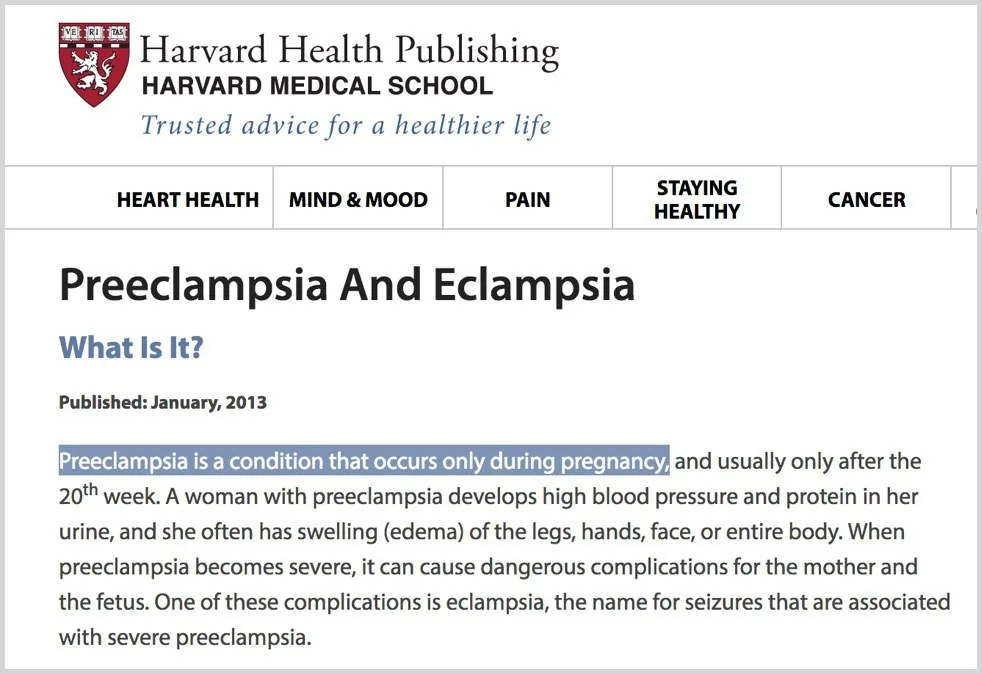
Dr Cynthia Gyamfi-Bannerman of the Columbia University Preterm Birth Prevention Center in New York observed that tired mothers often mistake postpartum high blood pressure for normal recovery pains. Investigative reporting by Nina Martin revealed that consumer health websites often publish obsolete medical advice. Portals including MedlinePlus from the US National Library of Medicine, Harvard Health Publishing led by Dr Howard LeWine, and the Cleveland Clinic represented by Victoria Vinci promoted bed rest and salt restriction. Eleni Tsigas explained that bed rest lacks scientific proof and raises blood clot risks [8].
Current Management and Preventive Care
Clinical care balances maternal health against the growth of the unborn child. When clinical signs appear before 37 weeks of gestation, obstetricians evaluate whether the baby can safely gain more time in the womb [8]. If maternal blood pressure and laboratory panels remain stable, patients undergo inpatient monitoring with fetal heart checks and blood tests. Antihypertensive drugs including labetalol and methyldopa reduce maternal blood pressure without cutting uterine blood flow [10]. When pregnancy reaches 37 weeks, delivery of the baby and placenta becomes the main treatment to resolve the disorder [2].
When serious disease features develop, intravenous magnesium sulfate serves as the gold-standard drug to prevent eclamptic seizures during labor and delivery [2]. Magnesium infusions continue for twenty-four hours after delivery while doctors track maternal reflexes and urine output. Blood pressure drugs stay necessary until blood vessels relax [8]. Fluid intake needs careful tracking to prevent lung fluid buildup while kidneys heal [10].
Evidence-based preventive steps help mothers with high baseline risks. The US Preventive Services Task Force (USPSTF) recommends initiating low-dose aspirin after twelve weeks of pregnancy for women with chronic high blood pressure, diabetes, or prior preeclampsia [5]. Daily aspirin helps balance vascular compounds in the placenta. In regions with deficient dietary calcium intake, calcium supplements lower preeclampsia rates [10]. Professor Monica McLemore of the University of California, San Francisco (UCSF) showed that African American women experience three times higher preeclampsia fatality rates, demanding equal access to early prenatal screening [8].

Long-Term Cardiovascular Risks After Preeclampsia
Preeclampsia causes lasting vascular consequences long after delivery. A comprehensive systematic review and meta-analysis published in Circulation: Cardiovascular Quality and Outcomes evaluated studies encompassing over 6.4 million women across multiple healthcare registries, finding that preeclampsia independently increases the future risk of congestive heart failure by more than fourfold. The heart failure risk ratio was 4.19. Affected women also face a 2.50 times higher risk of coronary heart disease compared to mothers who experienced normotensive pregnancies, proving that pregnancy operates as a natural cardiovascular stress test that reveals latent vascular vulnerabilities [4].
Vascular injury from preeclampsia leaves lasting marks on the maternal arterial tree. Lead investigator Dr P. Wu reported that preeclampsia carries a 2.21 risk ratio for cardiovascular death and a 1.81 risk ratio for future stroke [4]. Persistent endothelial damage, arterial stiffness, and metabolic strain unmasked by pregnancy high blood pressure speed up vascular aging [1]. Major cardiology societies recognize preeclampsia as an independent risk factor for heart disease. Women with prior preeclampsia require annual blood pressure checks and lipid screenings to safeguard long-term vascular health [4].
Medical literature also documents unexpected biological trade-offs following preeclamptic pregnancies. Studies indicate that women who had preeclampsia have a reduced lifetime risk of developing breast cancer. Reduced angiogenic exposure during pregnancy may alter breast tissue biology, though cardiovascular threats remain the primary long-term hazard [10].
Cross-Species Evidence in Nonhuman Primates
Comparative biology and veterinary medicine confirm that preeclampsia is not uniquely confined to humans. In February 2024, veterinary specialists at the Fort Worth Zoo in Texas documented the birth of an infant gorilla named Jameela delivered via emergency caesarean section. The baby’s mother, a 33-year-old western lowland gorilla named Sekani, was carrying her fourth pregnancy when zookeepers sensed classic signs of preeclampsia. Recognizing that preeclampsia occurs in nonhuman primates, zoo staff consulted with human obstetricians to evaluate Sekani’s blood pressure and organ risks. This cross-species collaboration saved both mother and infant [7].
The operation was the first caesarean section in the Fort Worth Zoo’s 115-year history. Obstetrician Dr Jamie Erwin delivered Jameela four weeks early, while neonatologist Dr Robert Ursprung assisted with resuscitation. Sekani recovered fully while surrogate gorilla Gracie fostered Jameela [7].
Comparative physiology illustrates why humans and great apes share vulnerabilities to pregnancy blood pressure disorders. Western lowland gorillas are critically endangered according to the International Union for Conservation of Nature (IUCN) and the World Wildlife Fund (WWF), making Jameela’s survival a notable conservation triumph [7]. Higher primates possess deep hemochorial placentas where fetal trophoblasts invade maternal spiral arteries to secure fetal blood flow. Defective arterial remodeling in primates produces the identical angiogenic imbalances observed in human hospital wards [1]. Studying preeclampsia across primate species provides valuable insights into the evolutionary origin of placental vascular disease.
- ACADEMIC JOURNAL Rana, S., Lemoine, E. R., Granger, J. P., & Karumanchi, S. A. (2019). Preeclampsia. Circulation Research, 124(7), 1094–1112. [Article Link]
- ACADEMIC JOURNAL Magee, L. A., Nicolaides, K. H., & Dadelszen, P. v. (2022). Preeclampsia. New England Journal of Medicine, 386(19), 1817–1832. [Article Link]
- ACADEMIC JOURNAL American College of Obstetricians and Gynecologists. (2020). Gestational Hypertension and Preeclampsia. Obstetrics and Gynecology, 135(6), e237–e260. [Article Link]
- ACADEMIC JOURNAL Wu, P., Haththotuwa, R., Kwok, C. S., Babu, A., Kotronias, R. A., Rushton, C. A., Zaman, A., Fryer, A. A., Kadam, U. T., Chew-Graham, C. A., & Mamas, M. A. (2017). Preeclampsia and Future Cardiovascular Health. Circulation: Cardiovascular Quality and Outcomes, 10(2). [Article Link]
- ACADEMIC JOURNAL US Preventive Services Task Force, Bibbins-Domingo, K. B., Grossman, D. C., Curry, S. J., Barry, M. J., Davidson, K. W., Doubeni, C. A., Epling, J. W., Kemper, A. R., Krist, A. H., Kurth, A., Landefeld, C. S., Mangione, C. M., Phillips, W. R., Phipps, M. G., Silverstein, M., Simon, M. A., & Tseng, C. (2017). Screening for Preeclampsia. JAMA, 317(16), 1661–1661. [Article Link]
- ACADEMIC JOURNAL American College of Obstetricians and Gynecologists. (2020). Gestational Hypertension and Preeclampsia. Obstetrics and Gynecology, 135(6), 1492–1495. [Article Link]
- ONLINE NEWS Yousif, N. (2024, February 17). Texas zoo delivers baby gorilla via caesarean section. BBC News. [Article Link]
- ONLINE NEWS Martin, N. (2018, August 14). Trusted Health Sites Spread Myths About a Deadly Pregnancy Complication. ProPublica. [Article Link]
- ONLINE NEWS BBC News. (2011, November 12). Pre-eclampsia predicted using test during pregnancy. [Article Link]
- WEBSITE Wikipedia contributors. (n.d.). Pre-eclampsia. Wikipedia. [Article Link]


