





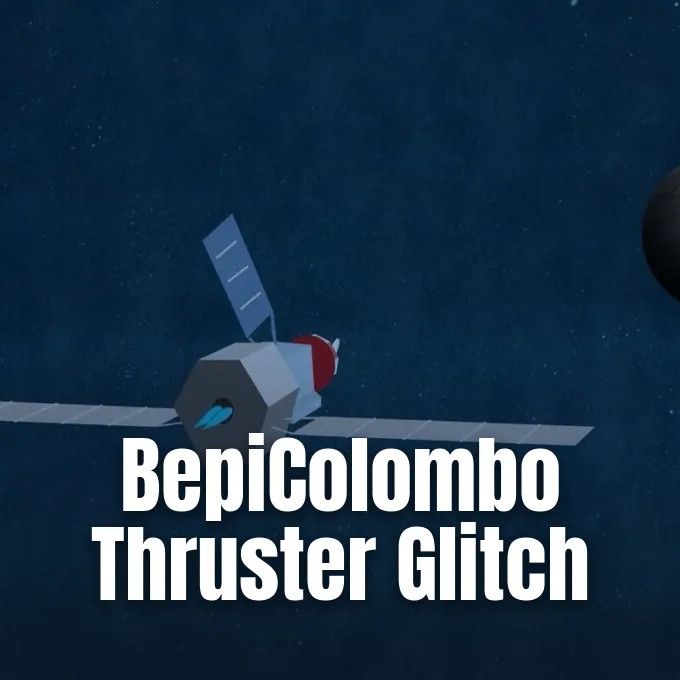
The European Space Agency announced on November 22, 2026, that the BepiColombo probe reached Mercury orbit after an eight-year flight, but a BepiColombo thruster glitch shut its engines down before the burn finished. The craft is safe. Yet the early cutoff left the probe with only 77% of its planned velocity change, prompting flight teams at the European Space Operations Centre (ESOC) in Germany to investigate why the burn stopped short [1]. The drive fault struck just weeks before two conjoined probes must separate to begin science flights.
How the BepiColombo Thruster Glitch Unfolded
The arrival burn took place on Saturday, November 21, 2026, as BepiColombo fired its thrusters to brake into Mercury orbit. Thrusters on the Mercury Planet Orbiter (MPO) shut down early due to an unexpected software fault. On Sunday, ESA reported the incident on social channels, posting: “During the manoeuvre, the thruster burn was shorter than planned due to a software issue. The spacecraft is safe & teams at ESOC are working to understand what happened” [1].
The cutoff limited velocity change to 77% of target values [3]. Because the burn ended early, the paired stack drifted into a higher, less stable orbit where solar gravity pulls harder against the craft [1]. Engineers at the European Space Operations Centre in Darmstadt are examining flight telemetry to see whether the BepiColombo thruster glitch originated in guidance code, engine hardware, or sensor timing [2]. The probe can’t drop into its planned science path until ground teams fix the software and verify engine controls. Staging burns start in two weeks.
Mission managers felt relief that gravity captured the craft. Antennas track steady signals from BepiColombo, confirming that onboard power stays stable. Flight teams now face a tight calendar to patch guidance code before complex separation maneuvers begin in December, when both orbiters must execute separate burns to reach their science stations [1].
Upcoming Orbiter Separation Schedule
BepiColombo carries two distinct orbiters stacked together [3]. ESA built the Mercury Planet Orbiter (MPO) to map surface geology, while the JAXA Mercury Magnetosphere Orbiter (Mio) will probe magnetic fields. The paired probes traveled across the solar system bolted together inside a cruise assembly, but their science goals require them to split apart into two distinct paths around the planet [1].
Separation begins between December 9 and December 10, 2026, when MPO steers the joint stack into Mio’s elliptical polar orbit and ejects the Japanese craft [1]. Six days later, on December 16, MPO drops Mio’s sunshield, known as the Magnetospheric Orbiter Sunshield and Interface (MOSIF) [3]. That shield protected Mio from harsh solar radiation during the eight-year cruise.
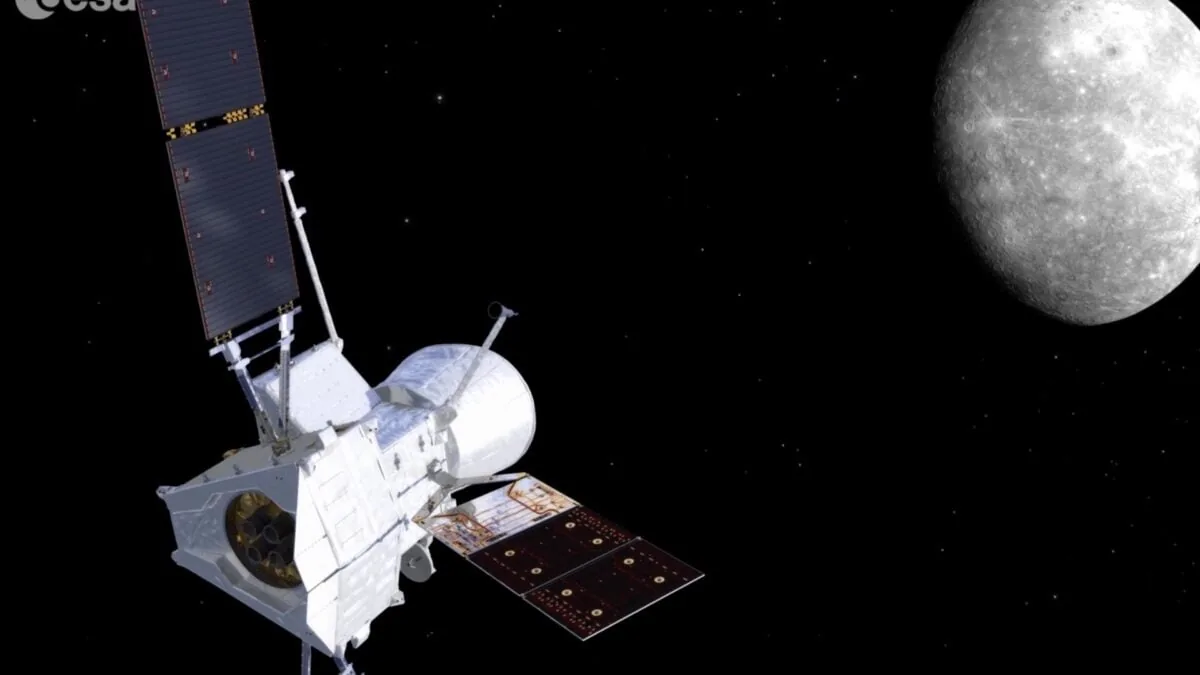
After ejecting Mio and dropping the shield, MPO must burn its thrusters across nearly three months to spiral down to a circular mapping path [1]. That long descent ends around March 10, 2027. Formal science work by ESA and JAXA is slated to open in April 2027, but any new misfire during December staging burns could strand either probe in an unusable drift [3].


Electrical Faults During the Cruise Phase
Drive faults have struck the mission before [1]. During the cruise phase, drive power came from the ESA Mercury Transfer Module (MTM), which carried ion thrusters for deep-space flight [3]. In April 2024, the transfer module failed to supply sufficient electrical power to thrusters before a planned course adjustment [1].
Engineers at ESOC restored 90% of its thrust capacity by May 7, 2024, but the loss of full power slowed the cruise [1]. Because thrust dropped, flight controllers had to redesign the path before the fourth Mercury flyby in September 2024, postponing arrival from December 2025 to November 2026 [3]. Power faults had already cost the mission a year of flight.
Nine planetary gravity assists helped the stack reach the inner solar system, swinging past Earth in April 2020, Venus in 2020 and 2021, and Mercury six times between 2021 and 2025 [3]. On September 3, 2026, controllers jettisoned the MTM module, handing steering to MPO’s smaller thrusters [1]. When BepiColombo entered Mercury orbit after eight years of flight, the team expected smooth sailing. The new BepiColombo thruster glitch proved that software bugs can still disrupt the craft.
Giuseppe Colombo and Mission Origins
Decades of joint planning between ESA and JAXA produced BepiColombo [3]. The project honors Giuseppe “Bepi” Colombo, an Italian mathematician and engineer at the University of Padua who lived from 1920 to 1984. Colombo calculated the interplanetary gravity assist trajectory that allowed NASA’s Mariner 10 probe to complete three Mercury flybys in 1974, proving that planetary gravity fields could bend flight paths without burning costly fuel. Padua gave the math; Europe and Japan built the craft. In 2017, planners projected that the joint endeavor would cost €1.65 billion, equal to around $1.86 billion at the time.
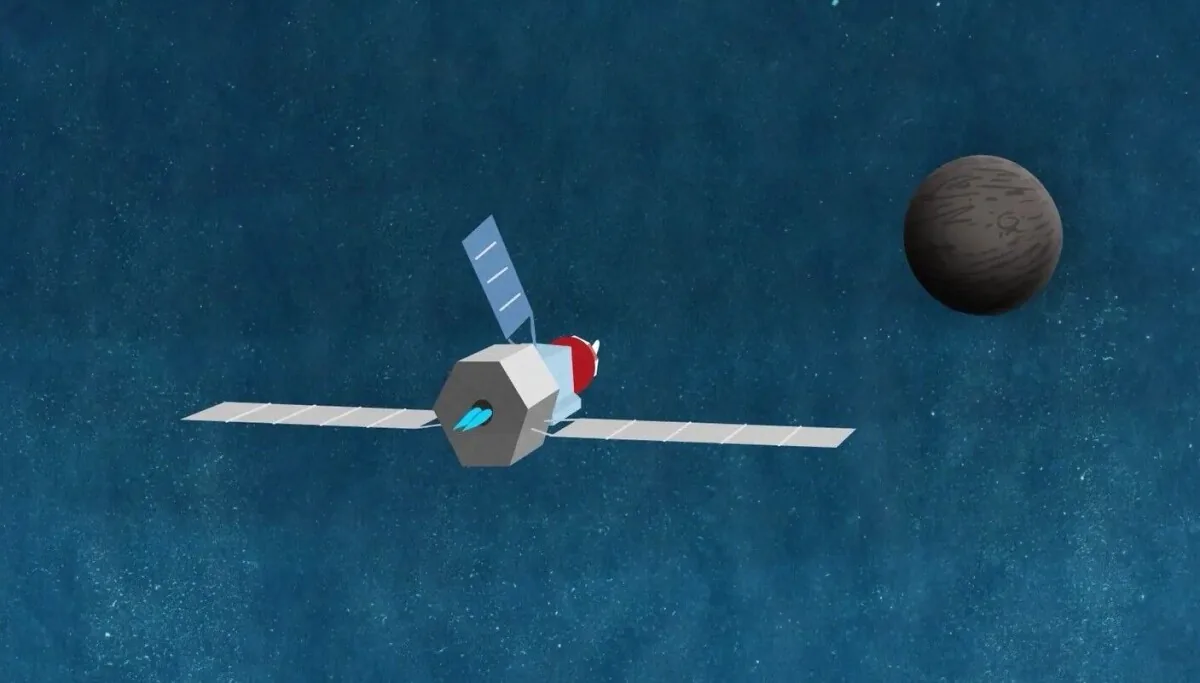
The mission launched on an Ariane 5 rocket on October 20, 2018. Four components formed the Mercury Composite Spacecraft during transit: the ESA Mercury Transfer Module (MTM), the Mercury Planet Orbiter (MPO), JAXA’s Mio orbiter, and the MOSIF shield [3]. Stacked together, the assembly flew past Earth and Venus before beginning its Mercury encounters.
The name for the Japanese orbiter, Mio, came from public suggestions in Japan, where the word means waterway. JAXA selected it to symbolize research milestones and wish the craft safe travel through the solar wind, like a ship sailing open seas. Mio and MPO will observe Mercury together for one year, with a possible one-year extension if hardware stays sound [3].
Resolving the BepiColombo Software Glitch
Controllers at ESOC in Darmstadt, Germany direct all flight tasks for the mission. The team saw several leadership changes during transit: Elsa Montagnon served as initial spacecraft operations manager until her promotion to mission manager in June 2022, Emanuela Bordoni then acted as operations manager, and Ignacio Clerigo assumed the post by June 20, 2023 [3]. These specialists now lead the software review to fix thruster code before December [1].
Deep-space communications flow through ESA’s Cebreros ground station in Spain, which uses a 35-metre (115 ft) antenna for all flight phases [3]. Signals sent through Cebreros show probe systems are healthy [1].
Only two missions in history have entered Mercury orbit, making BepiColombo’s arrival a rare achievement after eight years of interplanetary transit [1]. If ground teams resolve the BepiColombo software glitch in code, the twin orbiters can separate in December and start their joint science campaign in April 2027 [3]. ESA said it will post updates as engineers at ESOC identify why the thrusters shut down early [1].
- ONLINE NEWS Lapointe, E. (2026, November 23). BepiColombo Reaches Mercury, Suffers Thruster Glitch. Gizmodo. [Article Link]
- ONLINE NEWS Sharwood, S. (2026, November 23). Software issues have even reached Mercury as BepiColombo probe arrives in uncertain state. The Register. [Article Link]
- WEBSITE Wikipedia contributors. (2026). BepiColombo. Wikipedia, The Free Encyclopedia. [Article Link]


