






Apple built the HomePod mini around a compact spherical enclosure that stands just 3.3 inches tall, designing the hardware to project balanced acoustic energy evenly into any living space. The sphere avoids the narrow sound cones typical of small desktop speakers by combining an inverted neodymium driver, a downward acoustic waveguide, and dual passive radiators within an acoustically transparent fabric mesh [1, 12]. An Apple S5 processor borrowed from the Apple Watch powers these acoustic components, executing computational audio routines to tune driver excursion in real time [12, 14]. Beyond music playback, the speaker serves as a smart home hub with Thread networking and built-in climate sensors, giving households a unified controller for local connected accessories [14].
HomePod Mini Acoustic Waveguide Design
A single full-range driver sits near the top dome [1, 12]. Apple engineered this acoustic transducer with an exceptionally strong neodymium magnet, driving the speaker diaphragm through long excursion strokes to generate clean low bass notes and crisp treble frequencies in every musical genre. The downward driver anchors the core acoustic output inside the spherical enclosure [1, 12].
Because firing acoustic waves straight down at a hard table would muffle higher musical details and create muddy reflections, Apple positioned a cone-shaped acoustic waveguide right beneath the downward driver [12]. This custom cone bends vertical sound waves outward in a full 360-degree circle through the base [1, 14]. Standard desktop speakers usually create narrow listening sweet spots. By dispersing energy evenly across all angles, the acoustic waveguide ensures that vocal tracks, podcast dialogue, and instrument layers sound balanced regardless of where a listener sits in the surrounding room [1, 12].
A two-tone mesh fabric covers the acoustic assembly and lets acoustic waves pass through cleanly without causing phase distortion [1, 12]. As Brian Heater observed in TechCrunch after testing the hardware, the spherical cabinet produces remarkably big sound for its compact footprint and launch price. That projection depends on guiding high-velocity air through the perimeter opening without creating whistling noises, allowing the speaker to fill bedrooms and office spaces without demanding the bulky footprint of standard bookshelf monitors [10, 14].
Dual Passive Radiators for Bass Extension
Deep bass reproduction in an enclosure measuring only 3.3 inches tall presents clear acoustic hurdles. Deep frequencies demand moving large volumes of air. Standard vented ports can whistle at high volume, so Apple mounted two passive radiators on opposite sides of the central frame to reinforce low frequencies without port turbulence [1, 12].
These passive radiators do not consume electrical current or rely on heavy copper voice coils; instead, they harness air pressure changes inside the sealed acoustic chamber to move their weighted suspensions. When the main neodymium driver moves downward, it compresses the air sealed inside the middle section of the speaker. That air pressure forces the two radiator diaphragms outward at the same moment, effectively enlarging the acoustic radiating surface to project deeper low frequencies (bass notes) into the surrounding space. By positioning the radiators in a force-cancelling configuration, the opposing mechanical vibrations cancel each other out, keeping the spherical body steady on flat wooden desks even during bass-heavy tracks, outperforming standalone designs like the Amazon Echo Studio noted by Omdia market trackers [1, 9, 12].
An L-shaped aluminum heat sink flanks the two radiators. This metal structure pulls thermal energy away from the upper amplifier circuitry and vents it into the acoustic air stream, cooling internal components while keeping the acoustic chamber airtight. Bass response benefits immediately. The resulting acoustic balance allows the tiny cabinet to reproduce low drum beats and deep bass guitar notes that typically demand far bulkier wooden bookshelf enclosures developed in Cupertino acoustic test facilities [1, 10, 12].
Computational Audio on S5 Silicon
Loud volumes quickly push small speaker cones toward distortion [10, 12]. Rather than simply capping output volume at an artificially low ceiling, Apple embedded an Apple S5 processor to analyze incoming audio waveforms in real time and optimize acoustic output dynamically [1, 12, 14]. This custom silicon controls frequency output before signal distortion can degrade sound clarity [1, 12].
Originally developed for the Apple Watch Series 5, the S5 chip executes advanced tuning models that monitor acoustic conditions hundreds of times per second. The processor calculates the mechanical excursion of the neodymium driver before sound waves ever leave the cabinet, adjusting dynamic range and frequency balance in real time [1, 12]. At low volumes, the processor boosts bass and treble frequencies so music sounds warm and full even during late-night listening. When the volume approaches maximum, the algorithm tightens bass excursion and smooths high peaks, preventing cabinet buzz while keeping human vocals crisp and distinct, as Matthew Panzarino documented in TechCrunch about Apple’s Cupertino acoustic testing chambers [1, 10].
Apple spent years developing this computational acoustic pipeline inside custom audio labs, using anechoic test chambers suspended on isolated concrete pads to measure sound purity [10]. The S5 processor executes these acoustic models steadily in the background [12]. This automated processing allows the speaker to match the acoustic balance of larger tabletop sound systems without requiring manual equalizer adjustments from the user during Apple Music playback [1, 10].
HomePod Mini Internal Hardware Components
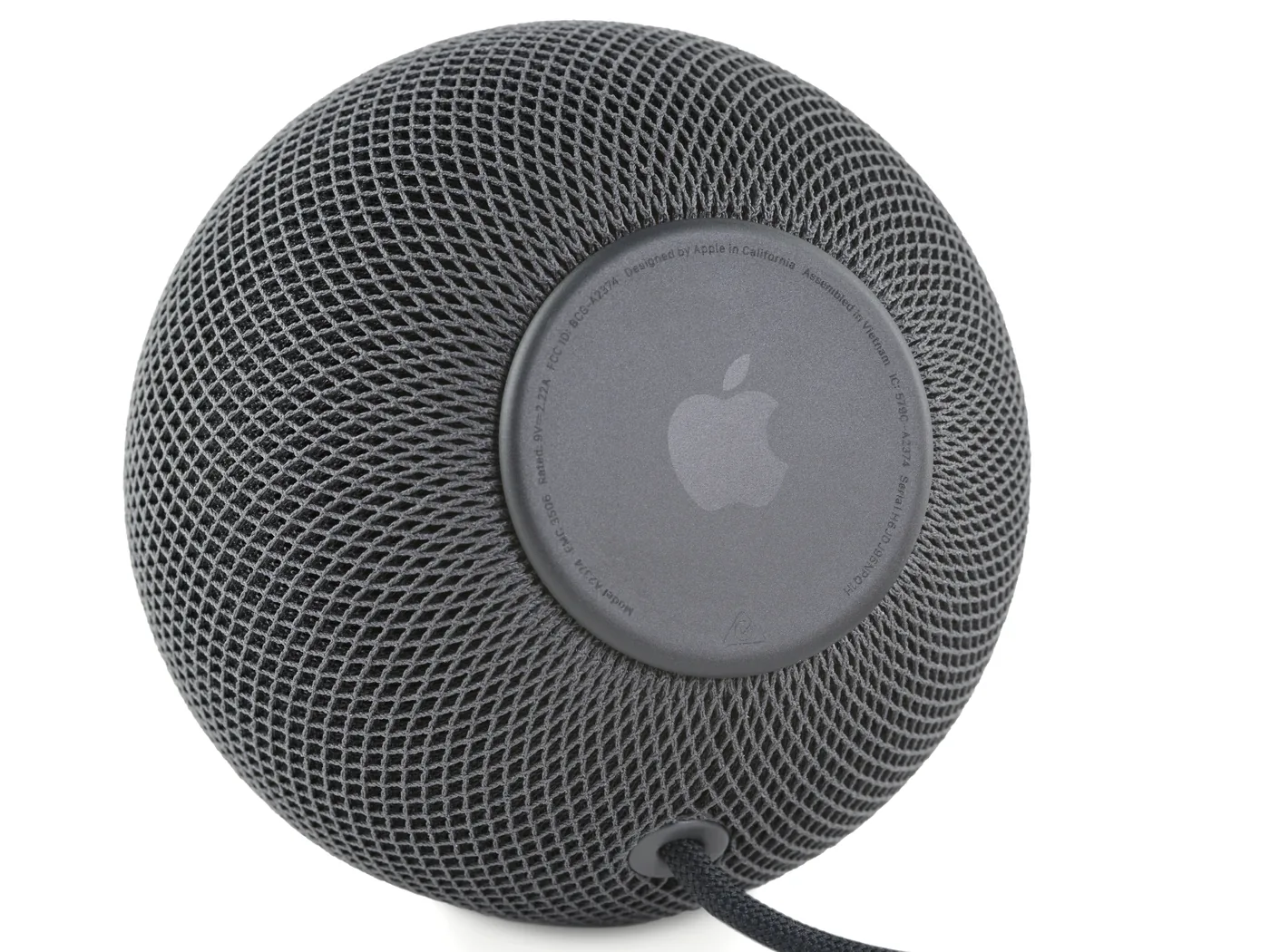
Taylor Dixon disassembled the speaker for iFixit. His teardown revealed that Apple departed from the glue-heavy construction of the original full-size HomePod, securing the three-piece modular chassis with eight standard Torx screws hidden beneath a glued rubber base foot. This modular assembly simplifies opening the outer enclosure [12].
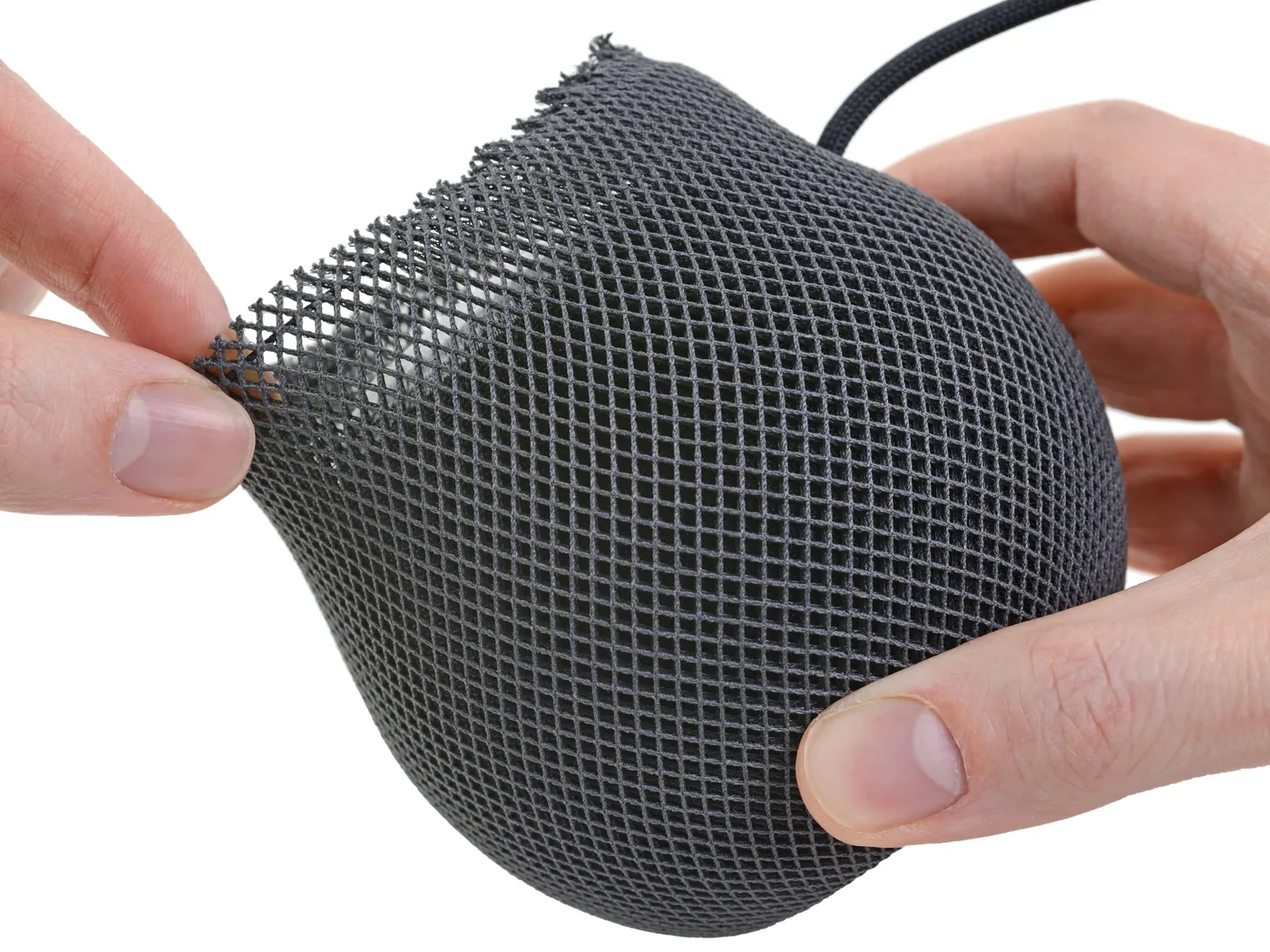
Technicians peel back the lower rubber foot to reveal access screws that release the outer mesh, allowing the fabric sleeve to slide upward over the orb like an acoustic sweater. Beneath the top light diffuser sits a circular logic board equipped with 19 RGB LEDs that produce animated swirling colors whenever Siri listens or speaks to users. Texas Instruments LED drivers control these light diodes with a tiny ambient light sensor that adjusts panel brightness to match ambient room illumination. Apple separated the core computing silicon onto a separate daughterboard soldered with a ball grid array to the main board, placing the S5 processor right alongside its power management chips, as documented in iFixit hardware teardown logs examined by MacRumors contributor ouimetnick and Qucox researchers [12].
Four tall capacitors sit prominently on the inward-facing board surface to supply quick electrical current when bass-heavy tracks demand power spikes. The central ring provides open clearance for the downward driver and heat sink, while the lower third houses the acoustic cone guide. Creative Electron provided X-ray imaging for the teardown, revealing dense metal castings in the driver frame [12].


Hidden Climate Sensors
Teardown technicians at iFixit spotted an unannounced silicon chip. Measuring just 1.5 by 1.5 millimeters near the power cable entry, the component was identified as an HDC2010 sensor manufactured by Texas Instruments to capture temperature and relative humidity metrics. Apple integrated this hardware component quietly during production [12].
The sensor’s placement was deliberate: Apple positioned the chip as far as possible from heat-producing processors, capacitors, and amplifier circuitry, routing it near a tiny vent in the outer shell so it could sample ambient room conditions rather than cabinet warmth [12]. Although the sensor sat inside every HomePod mini shipped since November 2020, Apple kept the component dormant in software for more than two years. In January 2023, Apple released HomePod Software 16.3 with the second-generation full-size HomePod, turning on temperature and humidity tracking on all existing units [6, 14]. The hardware operates safely in ambient temperatures from 32° to 95° Fahrenheit (0° to 35° Celsius) and relative humidity between 5% and 90% noncondensing [14].
Tim Hardwick detailed on MacRumors how the 16.3 update lets users view live indoor climate metrics through the Home app on an iPhone or iPad [6]. The unit stays calibrated for altitudes reaching up to 10,000 feet. Homeowners can integrate these environmental metrics into Apple Home automations to trigger smart fans, space heaters, or window blinds automatically whenever a bedroom gets too warm or humid, providing automated climate feedback comparable to standalone Nest or EcoBee accessories [6, 12, 14].

Power Delivery Profiles with Thread Networking
The speaker connects to power through an integrated woven USB-C cord. Apple includes a 20-watt power adapter in the retail box, but early owners who plugged the speaker into older 18-watt chargers (like RAVPower units or standard iPhone 11 Pro and iPad Pro plugs) discovered an orange light glowing on the top display to indicate insufficient power delivery [5, 14].
Chance Miller reported for 9to5Mac that Apple resolved this power restriction with the HomePod Software 14.3 update, which added support for 18-watt power adapters and portable USB-C battery packs [5, 14]. The update followed user experiments discussed across Reddit and The 8-Bit. Testers verified that third-party charging bricks could power the speaker without triggering the orange warning ring on the top display surface. While the unit still needs Wi-Fi connectivity for voice commands and music streaming, this updated power profile allows users to carry the speaker to backyard patios or outdoor tables using portable power banks [5].
Wireless connectivity inside the speaker includes 802.11n Wi-Fi, Bluetooth 5, an Ultra-Wideband chip for iPhone music handoff, and Thread mesh routing. The Ultra-Wideband radio detects nearby iPhones, triggering haptic pulses and lock-screen media controls whenever someone walks into the room with audio playing [1, 14]. Thread protocol support allows the speaker to serve as a low-power mesh border router. This architecture routes signals for smart bulbs and door locks without cluttering the local home Wi-Fi network with individual accessory traffic [14].
HomePod Mini Device Setup
The speaker setup process needs an iPhone or iPad running iOS 14 or iPadOS 14 or later, because Apple’s setup process cannot be completed from a Mac [2, 14]. Official support guidelines instruct users to place the speaker on a solid surface with at least six inches of clearance around its perimeter. This placement maintains open reflection pathways for the acoustic waveguide [2].
Holding an unlocked iPhone near the speaker triggers an instant setup prompt. The user taps Set Up on the mobile screen, which opens a circular camera viewfinder instructing them to center the glowing touch panel inside the pairing ring to establish wireless communication. If camera scanning fails, the user selects Enter Passcode Manually (or four-digit passcode). Siri immediately speaks a four-digit numeric passcode aloud through the downward driver cone, which the user types into their iOS screen to finish secure network authentication without physical cables [2].

Once authenticated, the speaker imports Wi-Fi settings, iCloud credentials, and Apple Account profiles from the host iPhone. Configuration continues in the background within the Home app, allowing users to enable Siri voice recognition for up to six household members [2, 14]. Joseph Keller explained in iMore that software updates can be managed through Home Settings, where automatic downloads can be toggled to ensure all household units update together [13].
Smart Home Automation with Multiroom Audio
As a central smart home hub, the speaker coordinates connected accessories through Apple HomeKit and the cross-platform Matter standard [1, 14]. Household members can use hands-free Siri commands to lock doors, adjust thermostat levels, or close garage doors from anywhere in the home, maintaining private local control over home smart hardware. An integrated Sound Recognition feature listens for the specific alarm frequencies of smoke and carbon monoxide detectors, sending an alert notification to family iPhones, iPads, and Apple Watches when an alarm sounds [1].
Audio capabilities reach multiple rooms through AirPlay 2 synchronization, allowing several speakers in different rooms to play the same track in lockstep [1, 14]. Two units placed in the same room can be paired as a stereo setup to split left and right audio channels for a wider soundstage, an arrangement tested by Jacob Krol at TechRadar [4, 14]. With the release of tvOS 15, users can pair two units as default audio outputs for an Apple TV 4K, routing television dialogue and movie sound effects straight into the room [14].
Apple updated this hardware lineup when Apple refreshes HomePod Mini 2 with S10 chip and Sound Glow to introduce modern wireless radios, while industry attention focused on software roadmaps after reporting on HomePod Mini Siri AI support clarified platform capabilities. Supply chain analysts tracked related hardware timelines when Apple hardware leaks reveal iPad mini 8 and HomePod mini 2 ahead of public product events. The original smart speaker sustained Apple’s living room presence through six years of software updates (including Apple TV 4K integration) before new models arrived on retail shelves, with Tim Cook noting global memory supply pressures during executive interviews [3, 4, 8].
- WEBSITE Apple. (2026, July 16). HomePod mini 2. Apple. [Article Link]
- WEBSITE Apple Support. (2026, April 27). Set up HomePod or HomePod mini. Apple Support. [Article Link]
- ONLINE NEWS Charlton, H. (2026, June 25). Apple Just Increased Prices on MacBooks, iPads, and More. MacRumors. [Article Link]
- ONLINE NEWS Krol, J. (2026, October 13). I saw the HomePod mini 2 in action, and the coolest upgrade is actually to its glowing LEDs. TechRadar. [Article Link]
- ONLINE NEWS Miller, C. (2020, December 28). HomePod mini adds support for 18W power adapters with 14.3 software update. 9to5Mac. [Article Link]
- ONLINE NEWS Hardwick, T. (2023, January 25). How to Use the Temperature and Humidity Sensors on HomePod and HomePod Mini. MacRumors. [Article Link]
- ONLINE NEWS Lacoma, T., & Kumar, A. (2026, October 13). Apple HomePod Mini 2: Hands-On Impressions, Siri AI and More. CNET. [Article Link]
- ONLINE NEWS Tuohy, J. P. (2026, October 13). Apple announces the HomePod Mini 2, but it isn’t ready for Siri AI at launch. The Verge. [Article Link]
- ONLINE NEWS Lovejoy, B. (2021, July 29). HomePod sales get 180% boost, but new model may be needed. 9to5Mac. [Article Link]
- ONLINE NEWS Panzarino, M. (2021, March 12). Apple discontinues original HomePod, will focus on mini. TechCrunch. [Article Link]
- ONLINE NEWS Stolyar, B. (2023, January 18). Apple Tries Again With a Second-Gen $299 HomePod. WIRED. [Article Link]
- ONLINE NEWS Dixon, T. (2026, October 25). HomePod Mini: Round, Full of Sound, and Now Torn Down. iFixit. [Article Link]
- ONLINE NEWS Keller, J. (2022, March 14). How to install software updates for your HomePod or HomePod mini. iMore. [Article Link]
- WEBSITE Wikipedia. (n.d.). HomePod Mini. Wikipedia. [Article Link]
- WEBSITE Wikipedia. (n.d.). HomePod. Wikipedia. [Article Link]


1 comment