





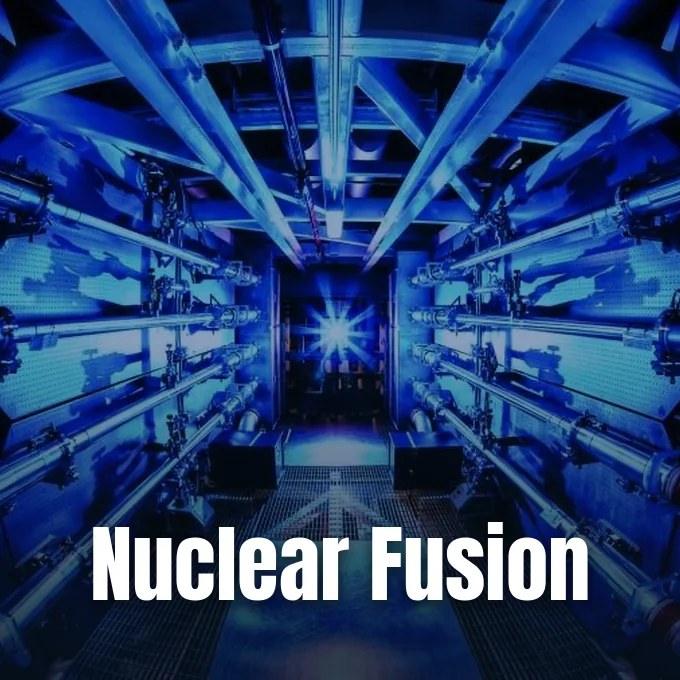
Nuclear fusion is the fundamental nuclear process that powers active stars throughout the universe by merging light atomic nuclei into heavier elements. Analyzing how nuclear fusion works reveals that when light nuclei combine, the resulting nucleus weighs slightly less than the sum of the original particles. This missing mass converts directly into kinetic energy and heat according to Einstein’s mass-energy equivalence equation. Because light nuclei release large amounts of energy when binding together, a single kilogram of fusion fuel can produce nearly four million times more energy than a kilogram of coal or oil without generating long-lived radioactive waste. While the underlying physics has been well understood since the early twentieth century, recreating sustained stellar conditions on Earth presents profound scientific and engineering challenges [9].
How Nuclear Fusion Works at the Atomic Level
At the nuclear scale, how nuclear fusion works depends on the balance between electrostatic forces and the strong nuclear force. Protons carry positive charges that repel each other. This repulsion creates an energy threshold known as the Coulomb barrier. Positively charged nuclei naturally push away from one another across distances far greater than the range of the strong force, which only binds nucleons within roughly one femtometer [10].
To fuse, nuclei must possess enough kinetic energy to collide with high velocity and approach within range of the strong force. In classical physics, particles lacking sufficient thermal energy cannot cross the barrier. Quantum mechanics, however, reveals that particles also behave like waves. This wave property allows nuclei to tunnel through the electrostatic barrier even when their thermal energy falls below the classical peak. George Gamow first applied quantum mechanical tunneling to atomic nuclei in 1928, and Robert Atkinson and Fritz Houtermans used his insights in 1929 to calculate the first theoretical fusion rates in stars [9].
Nuclear energy release depends on the nuclear binding energy curve per nucleon. For nuclei lighter than iron-56 or nickel-62, combining lighter nuclei into a heavier nucleus produces a tighter bound system, meaning the reaction is exothermic and releases net energy. The opposite occurs for elements heavier than iron, where fusion absorbs energy and fission releases it. Because hydrogen nuclei contain single protons, they experience the weakest electrostatic repulsion among all elements. For this reason, hydrogen isotopes serve as the most fusible fuel [10].
Stellar Cores Under Extreme Gravity
Stars produce fusion energy by using their vast gravitational mass to compress matter. At nearly 1.4 million kilometers in diameter, the solar core reaches a density 150 times that of liquid water and sustains temperatures of 15 million degrees Celsius. Electrons separate from atomic nuclei into an electrically conducting plasma of bare protons and free electrons where continuous collisions occur [3].
Decades of astrophysical discoveries unraveled how stars maintain this burning state. In 1915, American chemist William Draper Harkins first proposed the concept of nuclear fusion. British physicist Francis William Aston proved in 1919 that four hydrogen atoms weigh more than one helium atom using his new mass spectrometer. Based on Aston’s mass measurements, Arthur Eddington proposed in 1920 that hydrogen fusion into helium serves as the main energy source powering stars. Later in 1938, Hans Bethe worked with Charles Critchfield to calculate the proton-proton chain reaction that drives Sun-like stars, and Bethe published the carbon-nitrogen-oxygen cycle in 1939 for more massive stars [9]. Enormous gravity balances outward thermal pressure, keeping stellar fuel compressed for billions of years.
Replicating stellar gravitational confinement on Earth is impossible because laboratory experiments lack planetary mass. Instead, human-built reactors must heat fuel to temperatures exceeding 50 million degrees Celsius, far hotter than the center of the Sun, to achieve meaningful reaction rates. At these temperatures, matter expands violently, which forces engineers to use artificial magnetic fields or laser pulses to confine the plasma [5].
Deuterium and Tritium Fuel Cycles
Because fusing plain protons occurs very slowly, terrestrial reactors rely on heavier hydrogen isotopes that react far more readily. The primary fuel mixture pairs deuterium, which contains one proton and one neutron, with tritium, which contains one proton and two neutrons. When a deuteron and a triton fuse, they produce an alpha particle, which is a helium-4 nucleus, and a free neutron. The process releases 17.6 MeV of total energy. The alpha particle carries 3.5 MeV, while the energetic neutron carries 14 MeV [1].
The deuterium-tritium reaction cross section is exceptionally high due to a nuclear resonance discovered during early atomic research. In 1938 at the University of Michigan, Arthur Ruhlig observed secondary 14 MeV neutrons from deuterium reactions. Enrico Fermi and Edward Teller discussed thermonuclear reactions at Columbia University in 1941, and Emil Konopinski suggested investigating tritium at the 1942 Berkeley conference, an insight Teller later highlighted in a 1955 Science article titled The Work of Many People. Experiments at Purdue University in 1943 and Los Alamos in 1945-1946 and 1951-1952 measured these cross sections. In 1946 at Los Alamos, Egon Bretscher identified a 3/2+ resonance at 16.84 MeV, very close to the 16.792 MeV separation energy. This resonance increases the fusion probability by one hundred times compared to deuterium-deuterium reactions at plasma temperatures around 10 keV. In 1934, Mark Oliphant, Paul Harteck, and Ernest Rutherford at Cambridge had first observed deuterium fusion, discovering tritium and helium-3 [1].
Fuel availability presents distinct challenges for each isotope. Deuterium is naturally abundant in ocean water, where it can be distilled cheaply. Tritium, however, is radioactive and decays with a half-life of 12.3 years, making natural deposits virtually nonexistent on Earth. Future commercial reactors plan to breed tritium inside lithium blankets surrounding the reaction chamber. When escaping 14 MeV neutrons hit lithium-6 atoms, the resulting reaction splits lithium into helium and fresh tritium to sustain a closed fuel cycle [10].
Plasma Control in Tokamak Thermonuclear Fusion
Examining how nuclear fusion works inside magnetic confinement devices highlights the need for continuous stabilization. Hot plasma consists of charged ions and electrons that follow magnetic field lines. In 1950, Soviet physicists Andrei Sakharov and Igor Tamm developed the concept of the tokamak, a toroidal chamber that uses magnetic coils to confine plasma into a donut shape [8],. Lev Artsimovich and Mikhail Leontovich subsequently led experimental efforts in the USSR to build practical toroidal reactors, establishing the magnetic approach that dominates global fusion research today [9].
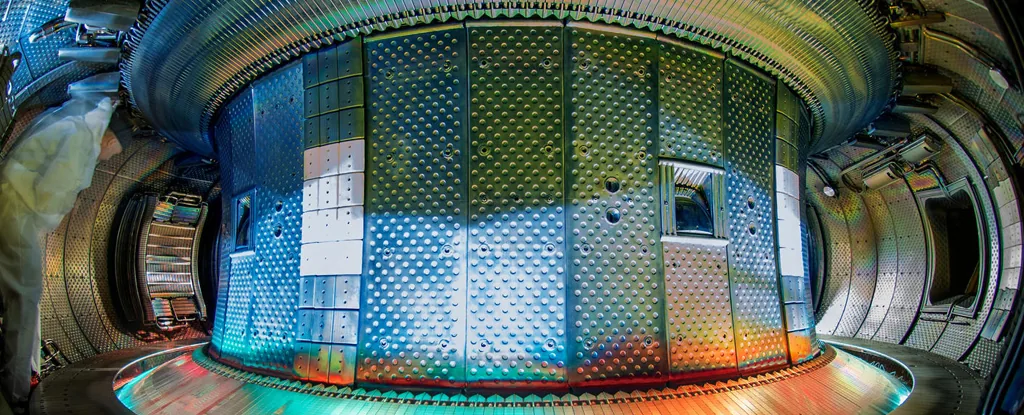
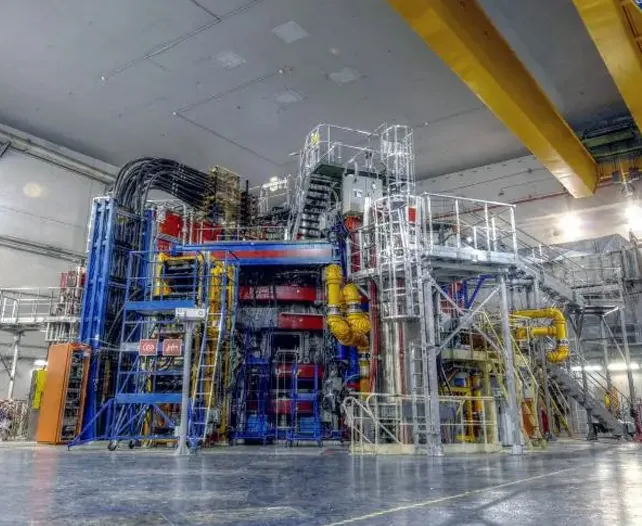
Tokamak experiments have achieved steady progress over several decades. Between 1993 and 1996, the Tokamak Fusion Test Reactor at Princeton University generated 10.3 megawatts of peak fusion power. In Culham, the Joint European Torus produced 16 megawatts in 1997, 59 megajoules in 2021, and set a record by producing 69 megajoules of fusion energy in 2023 using 0.2 milligrams of deuterium and tritium [9]. In southern France, the WEST tokamak sustained a 50-million-degree Celsius plasma for six minutes, while KSTAR in South Korea demonstrated extended high-temperature pulses, proving that magnetic vessels can maintain hot fuel during extended runs [5].
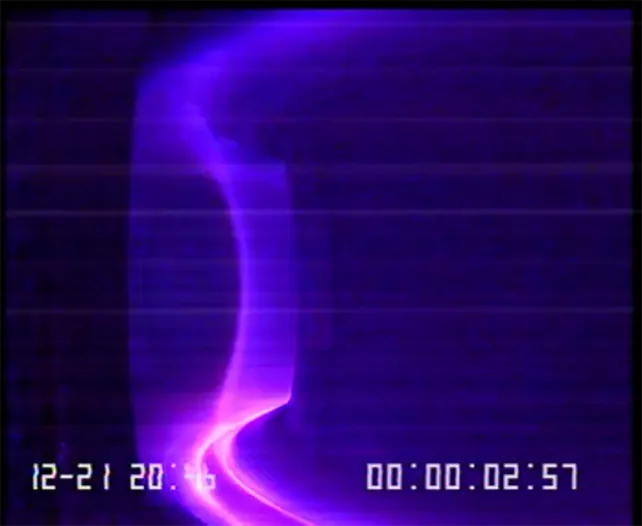
Controlling turbulent plasma inside a magnetic bottle remains difficult because small instabilities can vent heat and extinguish the burn. To tackle this, researchers at the Swiss Plasma Center teamed up with DeepMind computer scientists to control the TCV tokamak using deep reinforcement learning. DeepMind team lead Martin Riedmiller and roboticist Jonas Buchli trained neural networks to coordinate 19 magnetic control coils in real time. Swiss Plasma Center director Ambrogio Fasoli said the automated system successfully sculpted plasma into complex cross sections, including snowflake shapes that distribute exhaust heat more evenly [8].

Laser-Driven Inertial Confinement
Laser compression demonstrates how nuclear fusion works when fuel is imploded rapidly before expanding. In the 1960s, Lawrence Livermore National Laboratory physicist John Nuckolls, who later served as laboratory director from 1988 to 1994, proposed using intense laser pulses to compress small spherical capsules of deuterium and tritium. Laser ablation drives an inward implosion that compresses fuel to stellar densities in nanoseconds [2].
This concept achieved a major scientific turning point at Livermore’s National Ignition Facility on December 5, 2022. The stadium-sized facility focused powerful laser beams onto a tiny target, delivering 2.05 megajoules of laser energy and generating 3.15 megajoules of fusion output. This result marked the first demonstration of laboratory fusion ignition, also known as scientific energy breakeven, where fusion output exceeded the drive energy delivered to the fuel capsule. U.S. Secretary of Energy Jennifer Granholm, NNSA Administrator Jill Hruby, and laboratory director Dr. Kim Budil praised the breakthrough, which supports the Stockpile Stewardship Program [2]. Livermore scientists repeated the feat on July 30, 2023 with an even higher yield [6].
Scientific breakeven does not yet equal commercial power generation. The electrical power supplied to the experimental facility was hundreds of times larger than the energy delivered to the target capsule. Developing a practical power plant based on inertial confinement will require lasers capable of firing several times per second, as well as automated systems that manufacture and inject thousands of precision fuel pellets every hour [2].

First Wall Material Limits
Containing a burning plasma exposes reactor walls to extreme operating conditions. In an analysis of plasma-facing components, J. Linke and colleagues explained that the first wall must withstand steady thermal loads of up to several tens of megawatts per square meter. Furthermore, the wall endures continuous bombardment by neutral particles, helium ions, and 14 MeV neutrons that degrade metal lattices and displace atoms over time [12].
Material selection determines whether a tokamak can operate cleanly. Early fusion reactors often used carbon tiles because carbon resists high heat without melting. However, carbon absorbs tritium like a sponge, locking away valuable fuel and posing safety problems. To overcome this issue, scientists at the WEST tokamak replaced carbon with tungsten in 2012, matching the material plan adopted by the international ITER reactor. Luis Delgado-Aparicio of the Princeton Plasma Physics Laboratory noted that tungsten withstands high heat without trapping tritium, making it a leading wall candidate [5].
Tungsten also introduces operational hazards that require active monitoring. If intense heat causes tungsten atoms to erode and enter the plasma, the heavy impurities radiate energy away quickly and quench the reaction. To diagnose plasma-wall interactions, researchers employ laser-induced breakdown spectroscopy to track wall erosion and fuel retention in situ. Understanding how metal impurities disperse helps operators keep the core hot [5].
Alternative Pathways in the Nuclear Fusion Process
Beyond conventional magnetic and laser implosion, physicists explore whether external fields can lower the temperature required for fusion. In a theoretical study published in 2026, researchers Jin-Tao Qi, Zhao-Yan Zhou, and Xu Wang analyzed how strong laser fields assist nuclear tunneling [4],. They found that low-frequency lasers, such as near-infrared solid-state beams at 1.55 electron volts, are unexpectedly more effective than high-frequency X-ray lasers because multi-photon interactions broaden the collision energy distribution. At an intensity of 5×10²¹ W/cm², the laser field boosts 1 keV deuterium-tritium fusion probability by nine orders of magnitude [7].
Other experimental groups investigate solid-state confinement mechanisms. At NASA Glenn Research Center in Cleveland, Bruce Steinetz, Theresa Benyo, Bayarbadrakh Baramsai, and Lawrence Forsley demonstrated lattice confinement fusion. By loading deuterium into metals such as titanium and erbium and triggering reactions with gamma rays, dense conduction electrons screen the positive charges of deuterons, increasing tunneling probability without requiring hot plasma [3]. In 2005, B. Naranjo, J. Gimzewski, and S. Putterman at UCLA similarly produced deuterium fusion by heating a pyroelectric lithium tantalate crystal to generate a focused ion beam [11].

Alternative fuel ideas also examine non-plasma reaction networks. In an arXiv preprint that has not undergone peer review, Lorenzo Fortunato and colleagues modeled burning solid lithium-6 deuteride at room temperature using neutron-driven Jetter and Post cycles [13]. Other researchers have explored hypothetical nuclear interactions in dark matter composites, a topic connecting with broader physics inquiries discussed in Radio 4 explores fusion and dark matter broadcasts. While 1989 tabletop claims by Stanley Pons and Martin Fleischmann at the University of Utah failed replication at Caltech under Charles Barnes, Nathan Lewis, and Steven Koonin, scientists such as Carl Gotzmer and Oliver Barham at the Naval Surface Warfare Center Indian Head Division continue evaluating solid-state mechanisms [3], [14].
The Road to Commercial Power
Evaluating how nuclear fusion works for utility power generation shows that scientific ignition is only the first hurdle. To supply usable electricity to a power grid, a reactor must satisfy the Lawson criterion, formulated by British physicist John Lawson, which balances fusion energy output against heat lost to the environment [3],. This requires meeting specific targets across fuel density, core temperature, and confinement time. Beyond scientific gain, an operational plant must reach engineering breakeven, where gross electrical output exceeds all internal heating and cooling loads, as well as economic breakeven [10].
Commercial enthusiasm has spurred private investment at large scale in recent years. In 2021, private fusion startups raised over $2.6 billion, backing ventures including Commonwealth Fusion Systems, Helion Energy, General Fusion, TAE Technologies, and Zap Energy [9]. Companies such as Commonwealth Fusion Systems are constructing the SPARC demonstration tokamak, aiming to combine high-temperature superconducting magnets with compact reactors [5], [9]. Advances in precision laser drivers and optical control, which also share principles with thorium nuclear clock trials, are helping accelerate engineering timelines.
Fusion offers clear advantages over current fission technology if these engineering hurdles are solved. Worldwide, roughly 440 commercial fission reactors produce 400 gigawatts of electricity, but they generate long-lived radioactive waste and rely on secure supplies of uranium [3]. Fusion produces only non-toxic helium and short-lived activated structural materials, with no risk of runaway chain reactions. While commercial fusion power plants remain years away, ongoing experiments at facilities like ITER, NIF, and WEST continue to bring controlled stellar energy closer to reality [5], [9].
- REPORT Ar5Iv. (2022). The earliest DT nuclear fusion discoveries. Los Alamos National Laboratory. [Article Link]
- PRESS RELEASE U.S. Department of Energy. (2022). DOE National Laboratory makes history by achieving fusion ignition. [Article Link]
- ONLINE NEWS Baramsai, B., Benyo, T., Forsley, L., & Steinetz, B. (2022). NASA’s new shortcut to fusion power. IEEE Spectrum. [Article Link]
- ACADEMIC JOURNAL Qi, J.-T., Zhou, Z.-Y., & Wang, X. (2026). Theory of laser-assisted nuclear fusion. Nuclear Science and Techniques, 37(53). [Article Link]
- ONLINE NEWS ScienceAlert & Business Insider. (2024). Fusion breakthrough: 6 minutes of plasma sets new reactor record. [Article Link]
- ONLINE NEWS The Guardian. (2023). US scientists achieve net energy gain for second time in a fusion reaction. [Article Link]
- ONLINE NEWS Tripathi, A. (2026). Billion-times more efficient fusion unlocked with low-frequency laser. Interesting Engineering. [Article Link]
- ONLINE NEWS Katwala, A. (2022). DeepMind has trained an AI to control nuclear fusion. WIRED. [Article Link]
- WEBSITE Wikipedia. (2026). Nuclear fusion. [Article Link]
- WEBSITE Wikipedia. (2026). Fusion power. [Article Link]
- ACADEMIC JOURNAL Naranjo, B., Gimzewski, J. K., & Putterman, S. (2005). Observation of nuclear fusion driven by a pyroelectric crystal. Nature, 434(7037), 1115-1117. [Article Link]
- ACADEMIC JOURNAL Linke, J., Du, J., Loewenhoff, T., Pintsuk, G., Spilker, B., Steudel, I., & Wirtz, M. (2019). Challenges for plasma-facing components in nuclear fusion. Matter and Radiation at Extremes, 4(5), 056201. [Article Link]
- PREPRINT Fortunato, L., Loaiza, A. F. L., Albertin, G., & Fragiacomo, E. (2024). Jetter and Post nuclear fusion cycles: New fire to an old idea. arXiv. [Article Link]
- WEBSITE Wikipedia. (2026). Cold fusion. [Article Link]


