




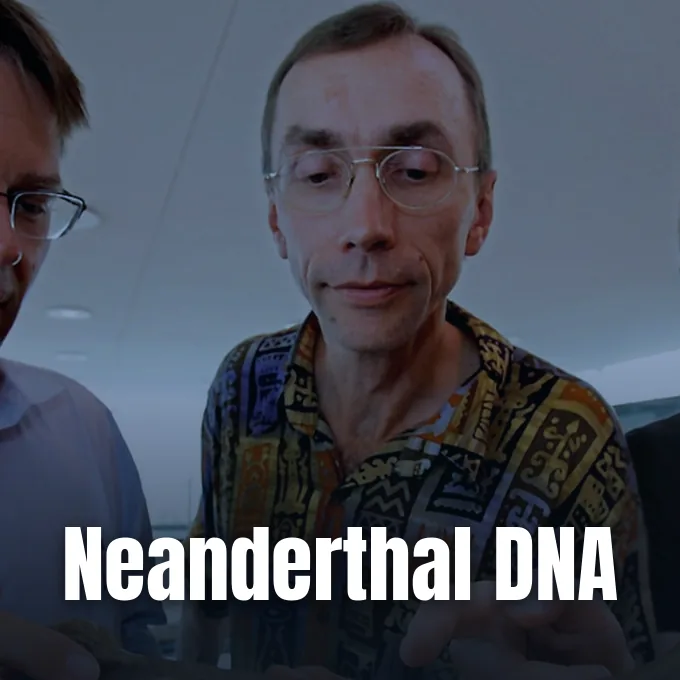
Living people carry small pieces of Neanderthal DNA that entered human genomes through ancient interbreeding tens of thousands of years ago. Such archaic segments account for about one to two percent of the genome in present-day non-African groups [5]. Rather than being inert leftovers, these variants continue to shape human biology today, affecting how cells respond to viruses, process fats, and handle environmental stress. Genetic surveys show that individual people carry small proportions of this ancient code, but different human groups carry different surviving fragments. Over twenty percent of the original Neanderthal genome still circulates in living humanity [4].
Origins of Neanderthal DNA
The evolutionary split between the ancestors of Homo sapiens and Neanderthals occurred roughly 500,000 to 700,000 years ago. After this deep division, early hominin groups spread into Eurasia, where Neanderthals occupied Europe and western Asia and Denisovans settled in eastern regions [5]. For decades, scholars viewed human origins through a model of complete replacement, assuming that early humans spread out from Africa and displaced other hominins without gene flow. But fossil finds from Sima de los Huesos in Atapuerca, Spain, and Denisova Cave in the Altai Mountains of Siberia have overturned that view. In an analysis of Late Pleistocene hominins, researchers Harvati and Ackermann showed that human origins followed partial replacement with reticulation, where separate lineages met and repeatedly exchanged genes [1].
One early pulse of admixture happened roughly 250,000 years ago in Eurasia, leaving faint genetic traces in ancestral groups. A second major wave occurred between 47,000 and 65,000 years ago in southwest Asia as human hunter-gatherers expanded outward, producing fertile hybrid offspring who integrated into human bands [4].
Geneticist Svante Pääbo said that the total absence of Neanderthal mitochondrial DNA in living humans points to sex-biased mating patterns, where successful unions occurred primarily between Neanderthal males and human females [4]. Furthermore, human X chromosomes carry far less Neanderthal ancestry than non-sex chromosomes, pointing to both sex-biased mating and strong natural selection against incompatible archaic genes [1].
Fossil Sequences from Vindija Cave
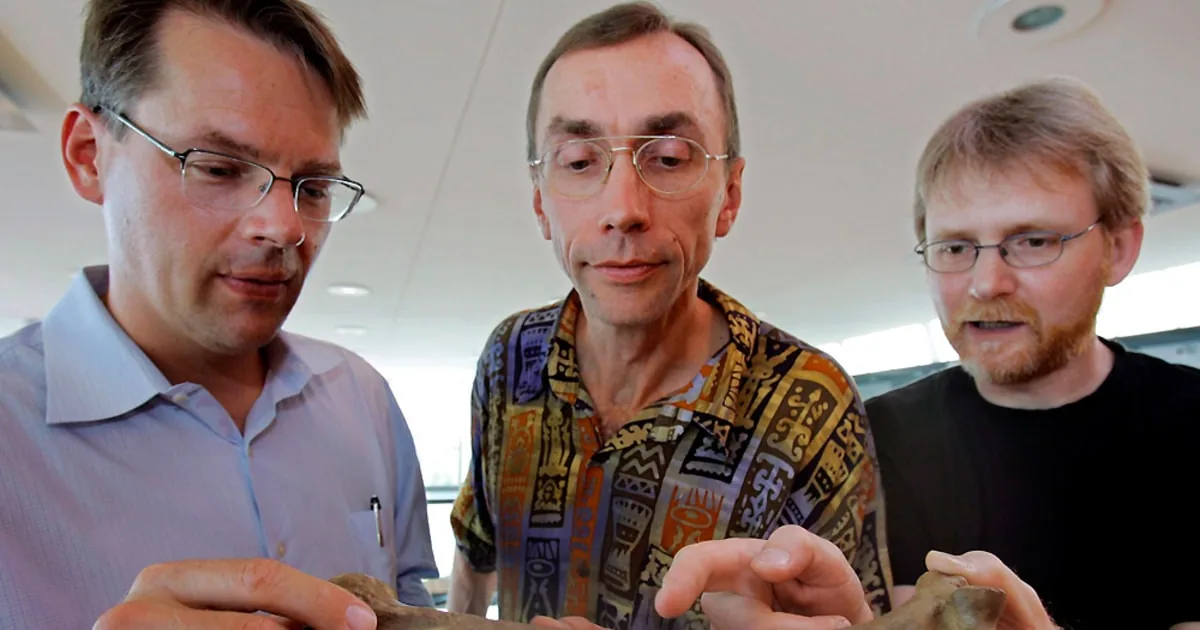
In July 2006, the Max Planck Institute for Evolutionary Anthropology in Leipzig, Germany joined Branford, Connecticut firm 454 Life Sciences to sequence the Neanderthal genome. The team worked with 40,000-year-old fossil bones that carried heavy microbial contamination from cave soil. Michael Egholm, vice president of molecular biology at 454 Life Sciences, said that only about 5 percent of the DNA extracted from their fossil bones was genuinely Neanderthal. Company chairman Jonathan Rothberg said comparing human and Neanderthal sequences would help scientists locate mutations behind higher cognitive abilities, narrowing down the 35 million base differences separating humans from chimpanzees. Over two years, the team aimed to reconstruct a draft of the three billion base pairs using fossil samples from multiple individuals [3].
When publishing the Neanderthal mitochondrial genome in 2008, Pääbo said that 11 percent of the sample was modern human contamination. To protect future work, technicians began working in sterilized clean rooms and adding four-base-pair tags to ancient fragments promptly upon extraction [4].
The first draft sequence of the Neanderthal genome appeared in 2010, based on three fossil specimens excavated from Vindija Cave in Croatia that contained almost 4 percent archaic DNA. Although the initial Vindija data had an error rate of about one per 200 base pairs, a high-quality genome sequenced in 2013 from a 50,000-year-old toe bone in Denisova Cave in Siberia confirmed the findings and resolved doubts raised by geneticist Graham Coop [4].
How Much Neanderthal DNA Survives Today?
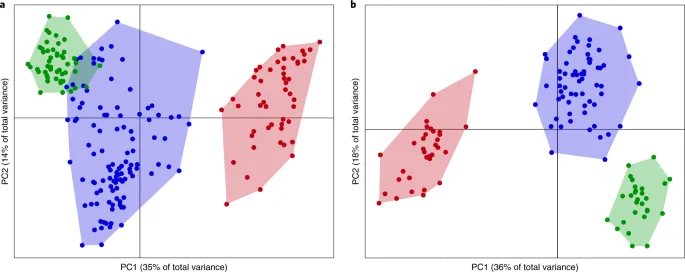
In human populations outside sub-Saharan Africa, Neanderthal ancestry averages between 1 and 2 percent of total genetic code. Present-day Europeans carry between 1.8 and 2.4 percent archaic DNA, and East Asian groups harbor higher proportions, ranging from 2.3 and 2.6 percent. Early European hunter-gatherers carried percentages similar to East Asians before farming expansions diluted those ancestral fractions. Why do East Asian groups retain more Neanderthal DNA than Europeans? Scholars suggest that ancestral East Asians experienced extra pulses of mixture or that natural selection preserved beneficial archaic alleles more effectively under regional environmental conditions [4].
For decades, scholars assumed African groups carried zero Neanderthal ancestry because Neanderthals never lived in Africa, but a 2020 study detected 0.3 to 0.5 percent archaic DNA in five African sample populations. This archaic code entered Africa through back-migration when ancestral Eurasians returned to the continent thousands of years ago, introducing Neanderthal DNA into indigenous African gene pools [4].
Each living person carries only a small fraction of archaic ancestry, but different lineages kept different chromosomal pieces [2]. When scientists combine surviving fragments from global groups, approximately 20 percent of the Neanderthal genome remains in living humanity. Most of this DNA sits in non-coding regions where changes do not alter protein synthesis, but thousands of functional archaic gene variants also survived into our era, continuing to influence human biology, cellular traits, and disease risk today [4].
Neanderthal DNA in Global Populations
South Asia holds a broad reservoir of archaic genetic material that exceeds earlier European counts [2]. In 2024, an international research team led by Elise Kerdoncuff and Laurits Skov analyzed 2,762 whole-genome sequences from individuals in 23 states in India, capturing speakers of 26 languages from varied groups. The study appeared as a preprint on bioRxiv, meaning its findings have not undergone formal peer review. The authors discovered that Indian participants carry between 1 and 2 percent archaic ancestry, yet their genomes contain an unusually wide catalog of Neanderthal DNA variants, with 1,524 million base pairs of introgressing Neanderthal sequence identified [7].
The Indian cohort preserved over 90 percent of known Neanderthal gene sequences, with nearly 12 percent of these archaic variants absent from any other studied population. By comparison, a previous genomic survey of 27,566 people in Iceland led by deCODE genetics recovered only 41 percent of the Neanderthal genome [2].
Researchers assembled roughly sixty-four percent of the Neanderthal code and nearly twenty-five percent of Denisovan sequence from the Indian dataset. Geneticist Laurits Skov from the University of California, Berkeley, said that South Asia holds abundant archaic puzzle pieces. Hardip Patel at the Australian National University in Canberra said the study added over 26 million new genetic variations to global catalogs, showing that people have lived in India for around 54,000 years [2].


Immune System Variants and Viral Protection
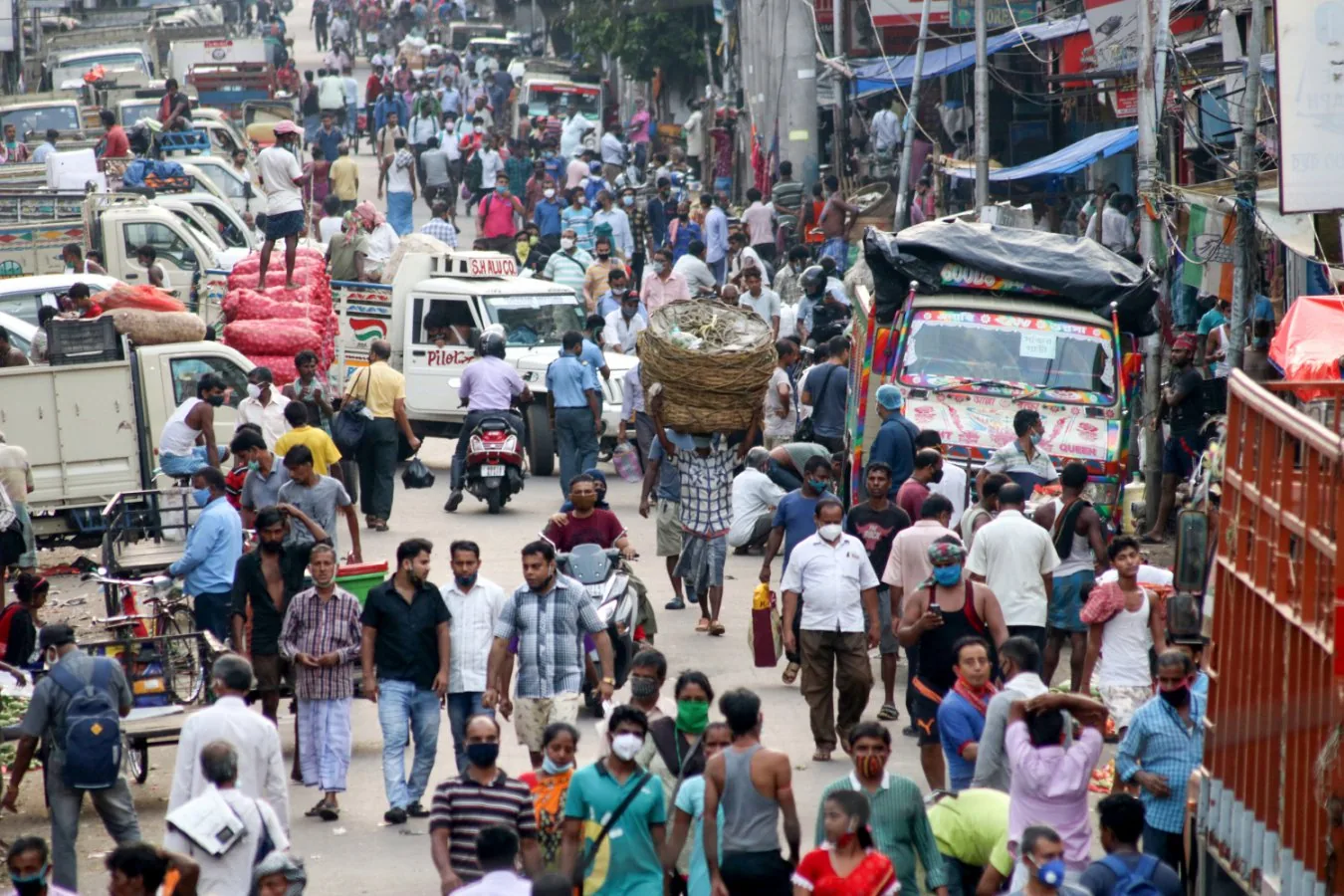
When expanding Homo sapiens bands entered northern Eurasia tens of thousands of years ago, they encountered unfamiliar landscapes teeming with endemic viruses and bacteria to which they possessed no natural biological defenses. Neanderthals had survived in Europe and western Asia for hundreds of thousands of years, evolving defenses against these local pathogens. Through adaptive introgression from mating with established Neanderthal groups, incoming human bands promptly acquired functional immune alleles, with surveys showing that 25 percent of the surviving Neanderthal genome in Europeans and 32 percent in East Asians relates directly to viral immunity [4]. This inherited Neanderthal DNA provided defense mechanisms that helped human groups survive and spread into new environments [1].
Several immune loci trace their origin to Neanderthal introgression, including toll-like receptor genes, specifically TLR1, TLR6, and TLR10, which help human white blood cells detect microbial pathogens. Another archaic legacy includes the antiviral gene cluster OAS1 and the immune regulator STAT2, which helped ancestral populations fight off Eurasian RNA viruses [4].
In European groups, Neanderthal alleles cluster in pathways governing lipid catabolism and fat breakdown, reflecting adaptations to cold northern climates. In East Asian groups, archaic alleles cluster around complement activation and blood-cell development [4]. Archaic variants also influenced health during recent viral outbreaks, as research revealed that a Neanderthal gene cluster on chromosome 3 raised the risk of severe respiratory illness, whereas a separate Neanderthal haplotype on chromosome 12 reduced the risk of severe symptoms [1].
Skeletal Morphology and Body Proportions
Neanderthal skeletal anatomy reflected functional adaptations to cold Pleistocene climates and strenuous hunting lifestyles. Adult males averaged 165 cm in height and weighed about 78 kg, and females averaged 155 cm and weighed 66 kg. Their compact limbs minimized heat loss in accordance with Allen’s rule, providing biomechanical efficiency for sprinting in rugged woodland terrain across Europe. Fossil skull measurements indicate that Neanderthals possessed an average brain size of 1,640 cubic centimeters in males and 1,460 cubic centimeters in females, exceeding the average cranial capacity of living humans. But their brains were organized differently, dedicating more neural tissue to visual processing and body movement [6].
Fossil crania exhibited prominent rounded brow ridges above high eye sockets, a notably broad nasal aperture, mid-facial prognathism projecting forward from the cranial base, and a posterior cranial bulge known as an occipital bun or chignon. Influential specimens like La Chapelle-aux-Saints 1 described by French paleontologist Marcellin Boule and Neanderthal 1 discovered in 1856 in Germany showed large front teeth with an enlarged pulp cavity termed taurodontism, which supported heavy anterior dental loading because individuals regularly used their mouths as a third hand [6].
Popular culture long depicted Neanderthals with bright red hair, but fossil genomic analyses show that red hair was unusual, whereas the introgressed Val92Met variant in the MC1R gene influenced skin pigmentation and ultraviolet radiation sensitivity in East Asian groups. In living humans, introgressed alleles continue to exert subtle influences on keratin filament structures, muscle contraction pathways, and skull shapes across diverse populations [4].
The Genetic Burden of Ancient Mutations
Certain introgressed alleles provided early survival benefits, but most archaic genetic material was evolutionary baggage [8]. Throughout their history, Homo neanderthalensis kept a very small effective population of about 3,000 to 12,000 breeding individuals, whereas expanding modern human bands were roughly ten times larger. In tiny, isolated groups, natural selection works poorly, allowing weakly harmful changes to accumulate over thousands of years and causing chronic inbreeding depression [4]. Examining fossil specimens from Forbes’ Quarry and Devil’s Tower in Gibraltar, geneticists Harris and Nielsen calculated that Neanderthals had at least 40 percent lower average fitness than early humans because of this heavy mutational load [8].
When interbreeding occurred, harmful variants entered the human gene pool, reducing hybrid fitness by up to 94 percent [4]. Over subsequent generations, natural selection acted to remove these damaging mutations, which explains why functional genomic regions and protein-coding sequences are strongly depleted of Neanderthal DNA today [8].
This mutational burden may have directly hastened the demographic collapse that led to Neanderthal extinction roughly 40,000 years ago, as small isolated foraging bands struggled against shifting glacial climates and resource competition across Europe and Asia [4]. Scholars studying the fall of the Neanderthal lineage suggest that mutational meltdown restricted adaptability, but natural selection in hybrid descendants preserved useful immune genes and cast off most deleterious variants [8].
Genomic Clues from Living Donors
Ancient DNA from fossil bones is degraded, broken into short fragments, and contaminated by bacteria. Paleogeneticists have built three high-coverage Neanderthal genomes from fossils, but each genome reaches only about 70 percent completeness. In contrast, the Neanderthal DNA segments that survive inside living cells have replicated for tens of thousands of years, protected from the post-mortem decay that destroys buried bones. This preservation has prompted geneticists to ask whether a complete Neanderthal genome could be reconstructed from living human donors. Researchers surveying global groups find that living people preserve vast stretches of archaic sequence that remain missing from fossils discovered in caves like Mezmaiskaya Cave in Russia or El Sidrón in Spain [2].
In the landmark Indian genome study, researchers assembled 1,524 million base pairs of introgressing Neanderthal sequence, representing nearly two thirds of the entire archaic genome recovered from a single modern cohort [4]. “Probably not, but we can for sure reconstruct more,” Skov said when asked if a full Neanderthal genome could eventually be assembled from living people [2].
As global sequencing projects expand into new communities, our understanding of archaic inheritance grows deeper [2]. Each newly mapped population contributes unique pieces to the human evolutionary story, showing that living genomes are rich mosaics of ancestral encounters [7]. Neanderthal DNA is not an extinct relic confined to museum display cases [3]. It represents an active component of human biology, documenting ancient Pleistocene unions that permanently shaped the genetic heritage of our species [1].
- ACADEMIC JOURNAL Harvati, K., & Ackermann, R. R. (2022). Merging morphological and genetic evidence to assess hybridization in Western Eurasian late Pleistocene hominins. Nature Ecology & Evolution. [Article Link]
- ONLINE NEWS Woodford, J. (2024). Genomes of modern Indian people include wide range of Neanderthal DNA. New Scientist. [Article Link]
- ONLINE NEWS Moulson, G. (2006). Neanderthal genome project launches. NBC News. [Article Link]
- WEBSITE Wikipedia contributors. Neanderthal genetics. Wikipedia, The Free Encyclopedia. [Article Link]
- WEBSITE Wikipedia contributors. Genetic history of Pleistocene humans. Wikipedia, The Free Encyclopedia. [Article Link]
- WEBSITE Wikipedia contributors. Neanderthal anatomy. Wikipedia, The Free Encyclopedia. [Article Link]
- PREPRINT Kerdoncuff, E., Skov, L., Patterson, N., Zhao, W., Lueng, Y. Y., Schellenberg, G. D., Smith, J. A., Dey, S., Ganna, A., Dey, A., Kardia, S. L., Lee, J., & Moorjani, P. (2024). 50,000 years of Evolutionary History of India: Insights from ~2,700 Whole Genome Sequences. bioRxiv. [Article Link]
- ACADEMIC JOURNAL Harris, K., & Nielsen, R. (2016). The Genetic Cost of Neanderthal Introgression. Genetics, 203(2), 881-891. [Article Link]
- ACADEMIC JOURNAL Gokcumen, O. (2020). Archaic hominin introgression into modern human genomes. American Journal of Physical Anthropology, 171(S70), 60-73. [Article Link]
- ACADEMIC JOURNAL Koller, D., Wendt, F. R., Pathak, G. A., Lillo, A. D., Angelis, F. D., Cabrera‐Mendoza, B., Tucci, S., & Polimanti, R. A. (2022). Denisovan and Neanderthal archaic introgression differentially impacted the genetics of complex traits in modern populations. BMC Biology, 20(1), 249. [Article Link]
- ACADEMIC JOURNAL Bokelmann, L., Hajdinjak, M., Peyrégne, S., Brace, S., Essel, E., Filippo, C. d., Glocke, I., Grote, S., Mafessoni, F., Nagel, S., Kelso, J. F., Prüfer, K., Vernot, B., Barnes, I., Pääbo, S., Meyer, M., & Stringer, C. B. (2019). A genetic analysis of the Gibraltar Neanderthals. Proceedings of the National Academy of Sciences, 116(31), 15610-15615. [Article Link]


