



GKIDS announced on October 27, 2026, that the animated feature film cocoon – One Summer of Girlhood is out now on North American digital storefronts, with a packaged Blu-ray release scheduled to follow on January 19, 2027. Viewers can rent or purchase the film digitally on Apple TV and Prime Video while pre-orders for the home video disc open on Amazon and the GKIDS Store [1].
Digital Rollout and Physical Pre-Orders
Shout! Studios partnered with GKIDS to manage consumer distribution over digital platforms and retail disc outlets. Under this joint distribution arrangement, viewers who want instant access to the wartime drama can buy or rent the movie on Apple TV and Prime Video right away, while collectors seeking the boxed disc edition can place advance orders through Amazon or the GKIDS online storefront. Shout! Studios operates as a distribution division of Radial Entertainment, an enterprise backed by investment funds under Oaktree Capital Management that oversees a catalog spanning more than 75,000 movie titles and television episodes [1]. The partnership secures North American retail access.
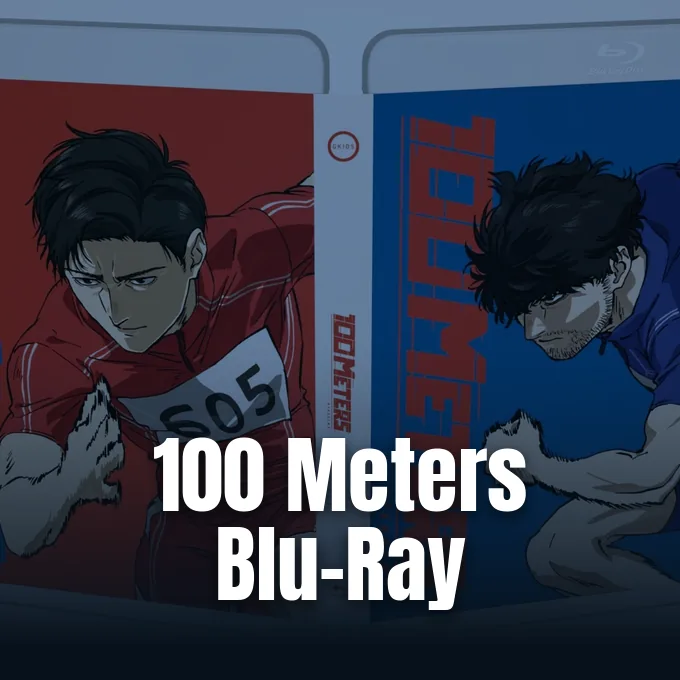
The distributor previously scheduled its 100 Meters Blu-ray release for December. Expanding its anime catalog with independent releases lets GKIDS serve collectors who want permanent copies of festival titles on disc. Providing digital options with store pre-orders gives buyers flexibility in how they choose to watch the story [1].
The distribution plan deliberately separates the digital premiere from the boxed disc arrival by nearly three months. This schedule gives the animated drama time to build an audience through online recommendations while disc replication plants complete specialty packaging, disc menus, and subtitle quality checks before shipping physical copies to retail shelves. It’s a standard pattern for independent animation distributors balancing fast digital delivery with slower home video manufacturing cycles [1]. Shipments start on January 19, 2027.
One Summer of Girlhood Production Team
The film serves as the feature directorial debut for Yukimitsu Ina, who previously directed television episodes for Keep Your Hands Off Eizouken! and worked on Star Wars: Visions – Tatooine Rhapsody [1]. Ina also wrote the adapted screenplay with Taku Kishimoto, known for writing on Haikyu!! and Sakamoto Days [2]. The production pairs Ina’s visual direction with Kishimoto’s script.
Animation studio Sasayuri handled production under the leadership of studio founder Hitomi Tateno, a former Studio Ghibli staff member who worked on classic anime films including My Neighbor Totoro and Howl’s Moving Castle. The studio paired industry veterans with younger artists. Key animators include Akihiko Yamashita, known for his work on Spirited Away and The Boy and the Heron, as well as veteran animator Shinji Ōtsuka, whose extensive credits include Princess Mononoke and Kiki’s Delivery Service [1]. Their involvement gives the film delicate hand-drawn textures rarely seen in digital television productions.
Hikari Mitsushima leads the voice cast as Mayu, and Marika Ito plays San. Supporting cast members include Yoko Hikasa as Tamaki, Rena Motomura as Hina, Chinatsu Akasaki as Mari, Aoi Koga as Yuri, Yume Miyamoto as Kaede, and Miyuki Sawashiro as Kaho. Umeka Shoji voices the Teacher, while Izumi Aoyagi portrays Shiho [2].
Wartime Setting of the Adaptation
The story centers on San and Mayu, two schoolgirls attending class on a sunny, tranquil island. Their peaceful school routine abruptly shatters when military conflict reaches the island’s shores, prompting commanders to conscript the entire student body into emergency medical service inside a dark cave complex converted into an underground field hospital for wounded combatants. Medical supplies quickly run out. Surrounded by bleeding soldiers, amputations, and mounting deaths in the dark cave wards, the frightened young students must clean wounds and comfort dying troops while struggling to hold onto their friendship amidst overwhelming grief [1].
The film adapts the original manga created by Machiko Kyō, which ran in Akita Shoten’s magazine Elegance Eve from March 26, 2009, until May 27, 2010. Akita Shoten collected the series into a single volume in August 2010 before releasing an updated tankobon edition with a bonus side story in April 2015 [2].
Kyō’s manga won the award for Best One-Shot Manga at the third American Manga Awards held in August 2026, confirming its lasting appeal among international graphic novel readers. VIZ Media licensed the manga for English publication, giving readers abroad access to the original print source material [2]. The animated adaptation of One Summer of Girlhood honors that source material by focusing closely on the emotional bonds of the young students rather than military tactics or battlefield politics. It can’t shield the viewer from the tragedy of war, but it shows how compassion persists even in the darkest underground shelters.
One Summer of Girlhood Music and Bonus Features
Composer kensuke ushio wrote the original musical score for the animated film [1]. Ushio previously composed soundtracks for anime hits like A Silent Voice and Chainsaw Man, and recently scored Chainsaw Man – The Movie: Reze Arc, crafting minimalist instrumental soundscapes that emphasize subtle emotional pauses instead of heavy orchestral fanfare [2].
The disc release includes exclusive bonus features that explore the production’s musical philosophy. The main featurette is an excerpt from an NHK television documentary called “kensuke ushio: Letting the Music Just Be There,” which follows the composer during the film’s scoring sessions [1]. In that program, Ushio details how he wrote gentle piano and electronic soundscapes to capture the quiet inner thoughts of the student nurses. The disc also includes official promotional teasers and trailers produced for Japanese and international film presentations [2]. These bonus materials provide context on how Sasayuri built the movie’s acoustic world to match its delicate line art.
Anime Trending revealed packaging preview graphics showing the disc case design, which includes an illustrated outer slipcover credited to Machiko Kyō, Akita Shoten, NHK, and NEP [2]. Fans can pre-order the disc on Amazon or the GKIDS Store to secure their copy before warehouse shipments begin in January [1].
Japanese Broadcasts Preceding the Theatrical Run
The anime feature followed an unusual release path in Japan before arriving on North American home video. The production made its Japanese television debut on March 30, 2025, before holding a prominent broadcast on NHK General TV on August 25, 2025. Presenting the film on public television during the late summer allowed families in Japan to reflect on wartime history through the eyes of island schoolgirls. The television showings drew broad praise from viewers who admired the movie’s sensitive handling of wartime sorrow. That broadcast success paved the way for international curators to bring the movie overseas for film festival showcases [2].
The film made its North American festival debut on July 10, 2026, at the Japan Society’s JAPAN CUTS festival in New York. Strong audience reactions at the festival convinced GKIDS to give the anime a broader theatrical run in North American cinemas starting on September 4, 2026 [2]. Theatrical screenings opened nationwide.
Theatrical screenings offered viewers a choice between original Japanese audio with English subtitles and a newly produced English dub [2]. The theatrical run continued GKIDS’ long commitment to independent Japanese cinema, following earlier theatrical projects like 5 Centimeters per Second to theaters that gave North American audiences access to distinctive animated dramas on the big screen. Digital editions are live now. Home audiences can stream the movie on Apple TV and Prime Video before disc shipments arrive on January 19, 2027 [1].
- PRESS RELEASE Anime News Network. (2026, October 27). GKIDS Presents cocoon – One Summer of Girlhood. [Article Link]
- ONLINE NEWS Moo, W. (2026, October 27). Cocoon – One Summer of Girlhood Blu-ray Arrives in January 2027. Anime Trending. [Article Link]
Cover image: Daniel Case / Wikimedia Commons, CC BY-SA 4.0


