






The Federal Communications Commission granted conditional approval for SpaceX to launch one million Starmind satellites to establish orbital computing centers. Known as the Starmind constellation, the network would operate between 500 and 2,000 kilometers above Earth to run artificial intelligence workloads in space. While moving data infrastructure off the ground avoids strained regional power grids, the unprecedented scale of the deployment has alarmed atmospheric researchers and observational astronomers. The authorization multiplies the current operational satellite population by roughly fifty times [2, 3].
FCC Approval for One Million Orbiting Nodes
Tech companies face steep local hurdles as terrestrial data facilities consume vast amounts of electrical power and cooling water. An October poll by The Washington Post, ABC News, and Ipsos found that seven in ten Americans oppose new data centers in their neighborhoods. Local resistance delayed or derailed at least 120 domestic center projects worth a combined $198 billion during the first half of 2026, according to tracking data from Data Center Watch [2].
The regulatory clearance arrived on the eve of the Thanksgiving holiday, setting mandatory milestones for deployment. Under the conditional authorization terms, SpaceX must launch its first satellite by November 2033, deploy 100,000 units by 2035, reach 500,000 by 2038, and finish the entire constellation by 2040 [2]. SpaceX hopes to send an initial test craft into orbit as early as 2027. Regulators granted the approval even though low Earth orbit held only about 12,000 functioning satellites at the end of 2025 [1]. The regulatory decision follows growing commercial interest in orbital data centers to bypass terrestrial grid limits. Other technology companies are actively pursuing similar ideas, with Google testing orbital computing through Project Suncatcher and Jeff Bezos’ Blue Origin studying related space architectures [2].
Cooling Processors in Low Earth Orbit
Operating computing hardware in space presents severe thermal difficulties that do not exist on the ground. Because orbital space lacks air to carry heat away, computers cannot rely on regular convection fans. In direct sunlight, an unshielded satellite can reach temperatures of roughly 120°C (250°F), while falling to -160°C (-250°F) in Earth’s shadow. Dissipating processor heat in a vacuum requires massive radiator surfaces to slowly release thermal energy through radiation [2, 3].
Data transmission bottlenecks and intermittent cooling constraints further complicate orbital computing. Google recently launched an experimental computing satellite into orbit, but engineers had to enforce downtime between computational cycles to allow accumulated processor heat to escape into space [3]. Moving data across orbit also demands complex communications links. Starmind satellites would exchange information through laser links with the existing Starlink satellites network, which would then relay processed data down to ground stations. “That has not yet been perfected to the level at which it would be able to support the huge amounts of data that are likely to be transferred backwards and forwards,” said Sir Martin Sweeting, founder of Surrey Satellite Technology, during a BBC Radio 4 broadcast. Even SpaceX acknowledged in a regulatory filing ahead of its June initial public offering that orbital computing “may not achieve commercial viability” [2].
Launch Demands for Starmind Satellites
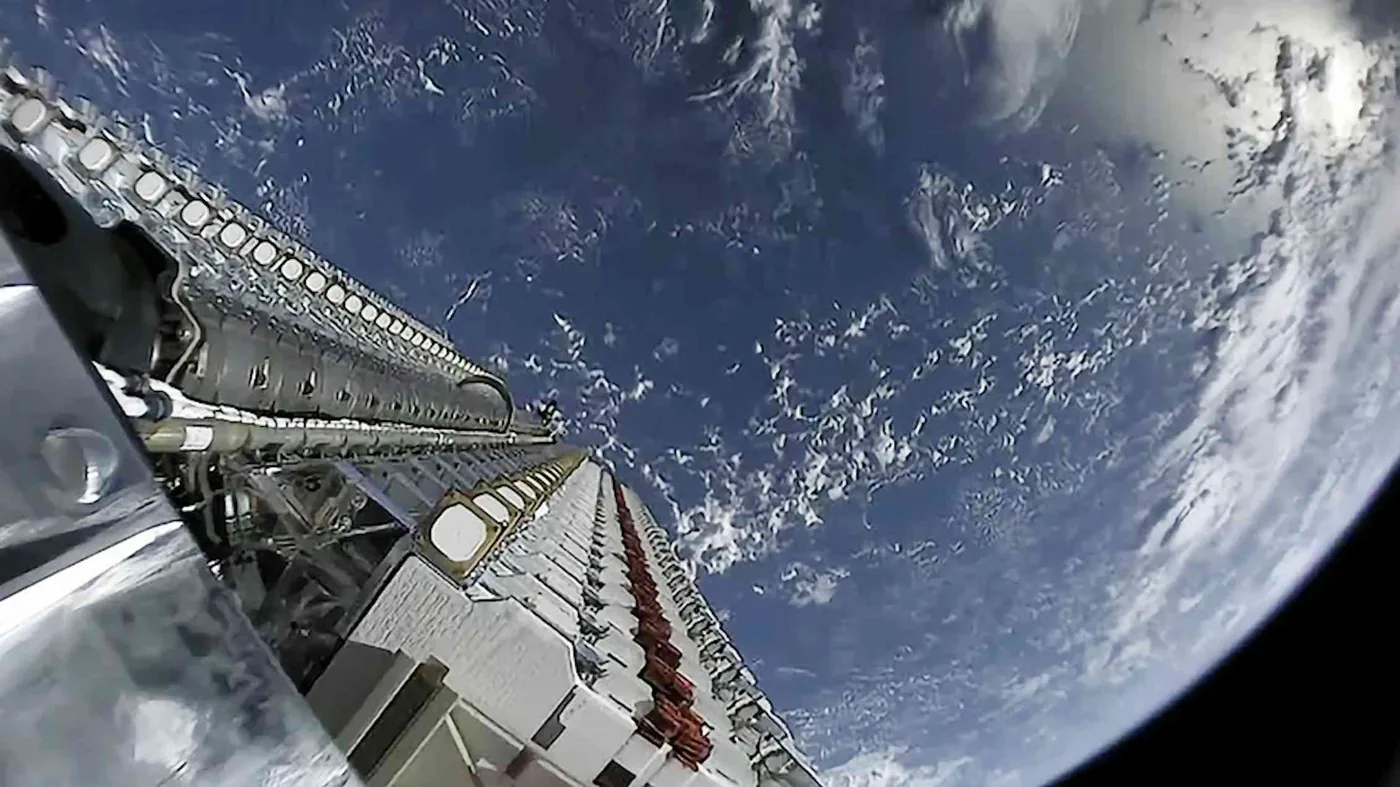
Maintaining a constellation of one million operational nodes requires a massive launch schedule. Satellites in low Earth orbit remain functional for only three to five years before their orbits decay or their hardware degrades [1, 3]. Replacing one million satellites across a five-year lifecycle means deploying roughly 500 new units every single day [3]. Meeting that replacement schedule would force rocket flight rates to surge from nearly one launch per day to between 10 and 20 rocket launches daily [1].
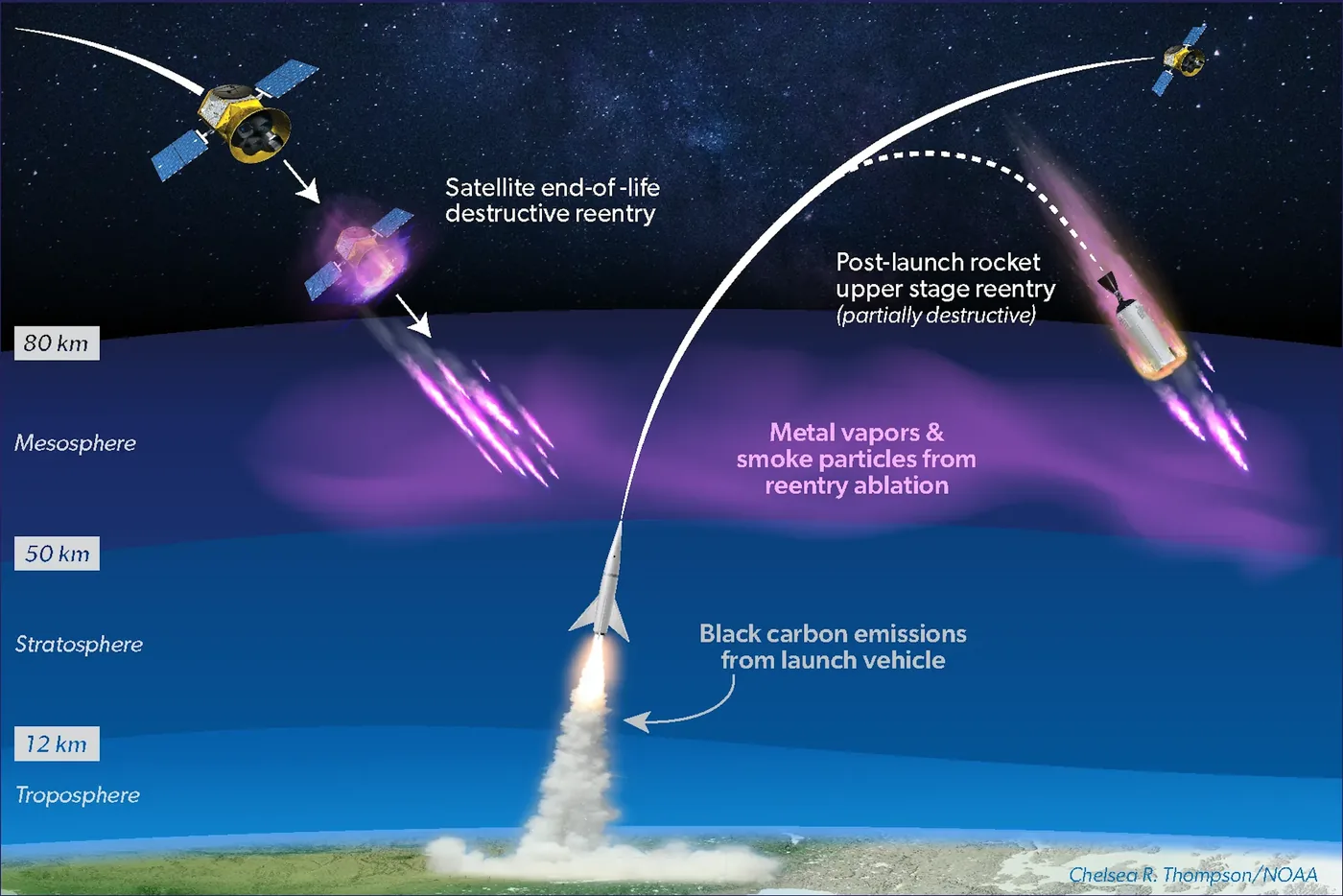
The heavy rockets needed to carry these payloads introduce major emissions into the atmosphere. The Starship rockets designed to deploy orbital computing centers use liquid methane fuel, which escapes into the air during fueling operations and when reusable stages return with unburned propellant. Atmospheric chemist Eloise Marais noted that methane leaks from thousands of flights could rival emissions from major oil and gas extraction basins in the United States [1]. Rocket launches also release black carbon particles that accumulate in the stratosphere and absorb solar radiation [5, 6]. A study by Maloney and colleagues in the Journal of Geophysical Research: Atmospheres calculated that elevated rocket soot emissions could increase stratospheric temperatures by 1.5 K and slow subtropical jet winds by 5 m/s [6]. If SpaceX establishes a dedicated launch base in Louisiana, local air pollution could worsen existing environmental disparities for nearby communities [1].

Chemical Changes in the Upper Atmosphere
Atmospheric disposal represents another major source of chemical alteration. To prevent dead satellites from accumulating as orbital space debris, operators send decommissioned hardware back into the atmosphere to incinerate [1]. Each satellite measures 75 meters wide, meaning 500 satellites burning up daily would vaporize vast amounts of metal alloys into the mesosphere [3]. Vaporized spacecraft matter condenses into tiny aerosol particles, producing chemical compounds that do not occur naturally in those altitudes [1].
The chemical remnants of incinerated satellites directly threaten the protective ozone layer. Vaporized aluminum forms alumina particles that trigger catalytic chemical reactions destroying stratospheric ozone molecules [3]. While the 1987 Montreal Protocol successfully phased out ground chlorofluorocarbons, rocket and re-entry emissions remain completely exempt from international treaties [1]. In a modeling paper in Earth’s Future, Connor Barker and Eloise Marais showed that while kerosene rockets omit chlorine, their soot alters radiative forcing, and rising re-entry metal loads create lasting atmospheric chemical perturbations [5]. Degradation of the ozone layer would allow higher amounts of ultraviolet radiation to reach the surface, increasing the global risk of skin cancers [3].
Metallic pollutants deposited in the upper atmosphere gradually travel toward Earth’s polar zones. Global circulation patterns carry these aerosols to polar regions within two to three years, where descending air currents deposit them across Arctic and Antarctic environments during local winters [1]. Direct atmospheric samplings by David Murphy and colleagues in the Proceedings of the National Academy of Sciences confirmed that 10% of stratospheric sulfuric acid particles larger than 120 nanometers contain metals derived from spacecraft re-entries [7]. A preprint study led by Leonard Schulz, which has not yet undergone peer review, tracked space waste across 43 chemical elements and concluded that anthropogenic metal injections now exceed natural meteoric influx [9]. These human-made deposits introduce toxic heavy metals such as arsenic, lead, cadmium, and chromium into previously pristine atmospheric reservoirs [1].
Astronomical Observations and Starmind Satellites
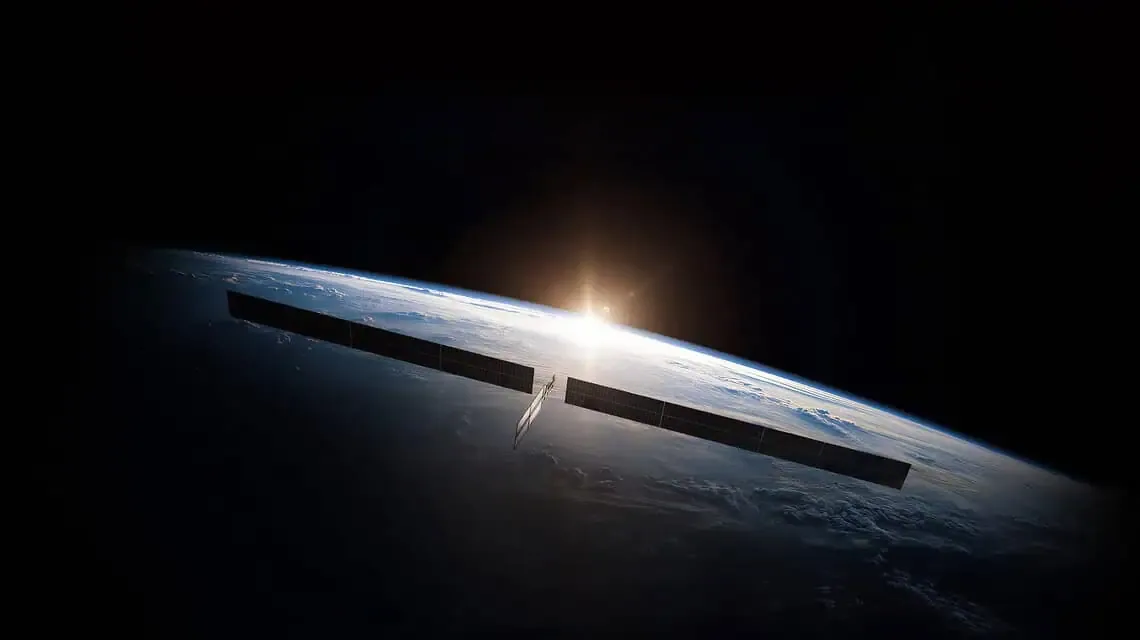
The planned deployment of one million Starmind satellites also poses severe threats to optical and radio astronomy. Reflective solar arrays on each 75-meter craft will shine brightly in early evening skies, creating streaks across telescope exposures [3]. In a study published in Astronomy & Astrophysics, European Southern Observatory astronomer Olivier Hainaut simulated mega-constellations of this scale. He found that Starmind satellites would create persistent streaks across telescope sensors, leaving hundreds of moving craft visible to the naked eye at any time [2, 8]. At ESO’s Very Large Telescope in Chile, satellite tracks could obscure up to 28% of celestial image area captured two hours after sunset. Hainaut recommended capping global satellite populations at roughly 100,000 sufficiently dim units to safeguard astronomical research [2, 8].
Scientific organizations warn that light contamination represents only one dimension of orbital clutter. “As approved, this project would not only have profound consequences for astronomy, but also fundamentally alter the night sky for everyone on the planet,” said Andreas Kaufer, director general at the European Southern Observatory. The American Astronomical Society warned that radio transmissions and thermal infrared radiation from onboard processors will disrupt sensitive scientific instruments [2]. Traveling at seven kilometers per second, uncontrolled satellites also multiply collision risks that could trigger a runaway cascade of space debris [3]. Similar concerns regarding low orbit crowding have emerged during the rapid expansion of Leo space internet services.
The Debate Over Environmental Oversight
The regulatory approval process has drawn criticism from scientists and legal specialists concerned about environmental protections. In September, the FCC adopted procedural rules exempting commercial space operations from environmental assessments under the National Environmental Policy Act. In approving SpaceX’s filing, the commission stated that atmospheric impact concerns “remain speculative” and declined to demand further environmental studies [1, 3]. Regulators even asserted that the constellation “promises to bring the human race closer to a Kardashev II civilization – one that can harness the full power of the sun”. Astronomers dismissed that statement as fantasy, noting that harnessing solar energy at that scale requires vast planetary structures like a Dyson sphere rather than low-orbit computing nodes [3].
SpaceX previously indicated that it takes environmental concerns seriously and can analyze atmospheric consequences as satellites deploy over time. However, atmospheric researchers contend that retrospective studies will come too late to prevent lasting chemical changes in upper atmospheric layers. European Southern Observatory leadership and independent atmospheric physicists are now calling for binding international oversight to evaluate environmental risks before mega-constellations launch into orbit [1, 2]. While an American agency authorized the deployment of one million satellites, the environmental impacts will touch every ecosystem and night sky across the globe [2].
- ONLINE NEWS Marais, E. (2026, November 28). SpaceX plans to launch a million new satellites – but their environmental impact has barely been assessed. The Conversation. [Article Link]
- ONLINE NEWS Puiu, T. (2026, November 26). SpaceX Just Got Approval to Launch One Million AI Satellites. Astronomers Are Horrified. ZME Science. [Article Link]
- ONLINE NEWS Brown, M. J. I. (2026, November 26). Elon Musk has approval to launch 1 million satellites. An astronomer explains how this would impact the sky. The Conversation. [Article Link]
- ONLINE NEWS Pant, S. (2026, November 28). SpaceX’s million-satellite plan faces questions over pollution, safety and feasibility. OnlineKhabar English News. [Article Link]
- ACADEMIC JOURNAL Barker, C. R., Marais, E. A., Tan, E. Y. P., Eastham, S. D., Diskin, G. S., DiGangi, J. P., Choi, Y., Rollins, A. W., Waxman, E., Bui, T. P., Gatebe, C. K., Dean‐Day, J., & Poudyal, R. (2026). Radiative Forcing and Ozone Depletion of a Decade of Satellite Megaconstellation Missions. Earth’s Future, 14(5). [Article Link]
- ACADEMIC JOURNAL Maloney, C. M., Portmann, R. W., Ross, M. N., & Rosenlof, K. H. (2022). The Climate and Ozone Impacts of Black Carbon Emissions From Global Rocket Launches. Journal of Geophysical Research: Atmospheres, 127(12). [Article Link]
- ACADEMIC JOURNAL Murphy, D. M., Abou-Ghanem, M., Cziczo, D. J., Froyd, K. D., Jacquot, J., Lawler, M. J., Maloney, C., Plane, J. M. C., Ross, M. N., Schill, G. P., & Shen, X. (2023). Metals from spacecraft reentry in stratospheric aerosol particles. Proceedings of the National Academy of Sciences, 120(43). [Article Link]
- ACADEMIC JOURNAL Hainaut, O. R. (2026). Large or bright satellite constellations. Astronomy & Astrophysics, 712, A241. [Article Link]
- PREPRINT Schulz, L., Glassmeier, K., Herberhold, M., Mitchell, A., Murphy, D. M., Plane, J. M. C., & Plaschke, F. (2025). Space waste: An update of the anthropogenic matter injection into Earth atmosphere. arXiv:2510.21328. [Article Link]
APA 7: PerEXP Teamworks. (2026, November 29). SpaceX Starmind Satellites Pose Heavy Atmospheric Risks. PerEXP Teamworks. https://perexpteamworks.com/en/starmind-satellites-environmental-impact/


