






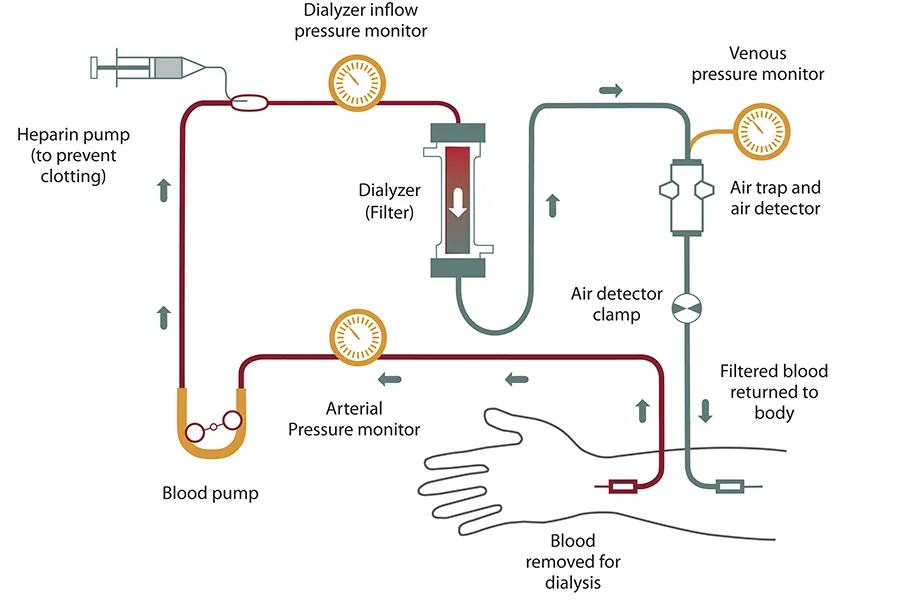
Healthy human kidneys filter body waste and fluid day and night, making urine while balancing minerals like sodium and potassium. As documented by the Cleveland Clinic, healthy kidneys filter about 150 quarts of blood daily, but advanced disease can reduce function below fifteen percent [2]. Learning how hemodialysis works explains how medical technology steps in when native clearance stops. Circulating blood leaves the arm through flexible plastic tubing, enters an external cylinder called a dialyzer, and passes thousands of tiny hollow fibers bathed in a specialized cleansing fluid. This artificial kidney strips away waste particles and pulls off extra water before pumping the cleaned blood safely back into the body [1].
- How Hemodialysis Works Inside the Dialyzer
- Vascular Access Types in Clinical Care
- How Hemodialysis Works to Remove Metabolic Wastes
- The Role of Dialysate Fluid
- How Home Hemodialysis Works on Flexible Schedules
- Water Purity Standards in Clinical Units
- Managing Cardiovascular Risks and Uremic Symptoms
- Membrane Biocompatibility in Artificial Kidneys
How Hemodialysis Works Inside the Dialyzer
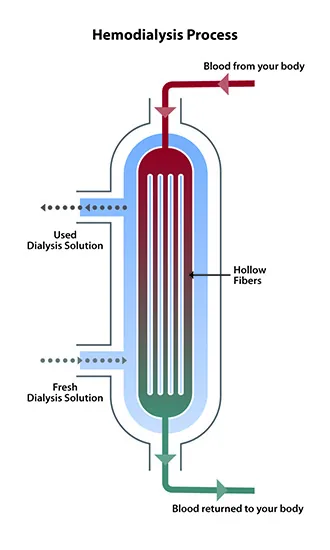
Examining how hemodialysis works inside the dialyzer shows how the artificial filter replaces natural organ function, as outlined by DaVita Kidney Care. Built as a clear plastic cylinder about a foot long and three inches wide, it houses thousands of tiny hollow fiber membranes that separate blood from cleansing fluid. Blood pumps into the top of the cylinder and flows through the interior of these narrow tubes. The human body holds about ten to twelve pints of blood, but only one pint (about two cups) circulates through the external circuit at any single moment [4].
Educational materials from the NIDDK explain that cleansing fluid moves through the plastic cylinder in the opposite direction of blood flow, producing what engineers describe as countercurrent flow [1]. Because both fluid streams travel against each other, the concentration difference between blood and fresh bath stays high along the full length of each hollow fiber [5]. If both fluids flowed in the same direction, solute clearing would drop off once concentrations balanced halfway through the cylinder. Small waste particles like urea and creatinine pass through tiny pores in the membrane wall into the drain. As clinical specialists at Acibadem Hospitals Group note, red blood cells and large proteins like albumin cannot fit through these narrow pores, staying safely inside circulation [3].
Fluid removal depends on a controlled pressure difference across the hollow fibers. The machine lowers pressure on the fluid side, pulling surplus water through ultrafiltration [4]. A doctor sets the exact fluid target based on weight gained before each visit. Pressure sensors trigger automatic shutoffs if tubing pressures shift unexpectedly [1].
Vascular Access Types in Clinical Care
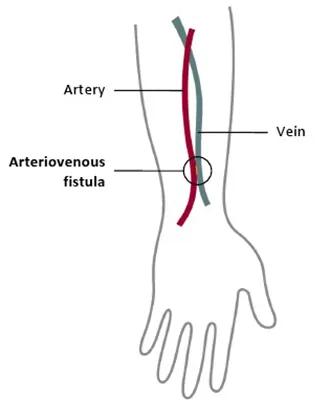
Nephrology researcher D. Santoro noted that clinicians must prepare a reliable vascular entry point before routine treatment can begin. A standard arm vein cannot provide the high blood flow rate of several hundred milliliters per minute needed to supply the dialyzer. Surgeons create an arteriovenous fistula (AVF), first described by Brescia and Cimino, by connecting an artery directly to a nearby vein in the forearm [6]. Over several weeks, arterial blood pressure widens and thickens the vein wall until it can handle repeated needle insertions [1].
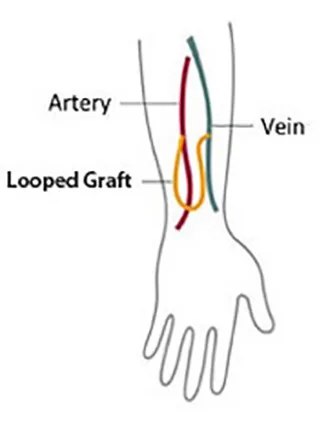
According to clinical perspectives published in the International Journal of Nephrology and Renovascular Disease, surgeons place an arteriovenous graft when native blood vessels cannot support a fistula [6]. This surgical option uses a synthetic tube to link an artery and a vein beneath the skin, creating a durable conduit that heals in two to four weeks [1]. When patients develop acute kidney failure and need dialysis immediately, doctors insert a central venous catheter into the internal jugular or femoral vein. Guidelines avoid the subclavian vein because of a high risk of central vein stenosis and thrombosis. Catheter insertion complications range between 5% and 19%, confirming why catheters remain a temporary measure [6].
Connecting a patient to the machine requires two large needles inserted into the mature access. Nurses use 15-gauge needles measuring 1.8 millimeters wide, roughly 2.5 times larger than a ballpoint pen tip, or 16-gauge needles measuring 1.65 millimeters. Patients check access patency daily by feeling for a buzzing thrill [2].
How Hemodialysis Works to Remove Metabolic Wastes
Examining how hemodialysis works to clear toxic solutes shows that waste removal relies primarily on passive diffusion across semipermeable membranes [3]. Protein breakdown generates nitrogenous wastes (such as urea) and creatinine that pool in high quantities in the blood while being absent from fresh dialysate. This sharp concentration difference drives small waste molecules through microscopic pores into the cleansing bath. Electrolytes like potassium and phosphate also diffuse outward whenever their blood levels exceed the minerals blended into the dialysis solution [5].
Dialysis efficiency is governed by three primary physical parameters: blood flow rate (QB), dialysate flow rate (QD), and the dialyzer mass transfer area coefficient, designated as K0A. Nephrology guidelines in Japan and Western countries generally aim for a flow ratio of 1:2 between blood and dialysate. In a clinical trial published in the Journal of Nippon Medical School, Tetsuya Kashiwagi and colleagues evaluated twelve patients to test the impact of reducing dialysate flow from 500 to 400 milliliters per minute. Testing patient groups using 1.3 and 1.6 square meter membranes, the authors determined that raising blood flow to 210 milliliters per minute maintained expected clearance rates while saving fluid, proving valuable during resource shortages [7].
Fluid removal requires ultrafiltration because water does not move effectively through diffusion alone. Failing kidneys stop producing urine, causing water to pool in tissues and lungs. The machine creates negative pressure to pull water toward the patient’s dry weight [14]. Removing fluid too fast triggers muscle cramps and fainting [5].
The Role of Dialysate Fluid
A central part of how hemodialysis works involves using dialysate as a chemical sponge that pulls wastes from the blood while keeping essential mineral salts in balance [4]. The bath combines pure water with exact amounts of sodium, potassium, calcium, magnesium, and chloride. Because failing kidneys cannot clear body acids, clinicians blend sodium bicarbonate into the bath at levels higher than normal blood plasma. This alkaline buffer restores normal blood pH [5].
According to clinical protocols outlined by Acibadem Hospitals Group, nephrologists tailor the mineral formula in the dialysate to match each patient’s monthly lab results and physical symptoms [3]. If tests show elevated potassium that threatens heart rhythm, the doctor lowers potassium in the bath to speed up mineral removal from the blood. When patients suffer from muscle spasms or show low blood calcium, staff raise bath calcium levels to calm nerve and muscle tissue [1]. Small amounts of glucose are also added to stop blood sugar from dropping during long treatments [5]. The machine continuously checks temperature and electrical conductivity to verify that concentrates and water mix accurately before entering the filter [3].
Sodium levels in the bath require careful clinical judgment. High sodium prevents sharp blood pressure drops during fluid removal, but it causes extreme post-treatment thirst and fluid overload. Lower sodium prevents heavy fluid weight gain, but it can trigger painful leg cramps and intradialytic hypotension. Clinical teams balance both risks [5].


How Home Hemodialysis Works on Flexible Schedules
Under rules established by Medicare in the United States, patients can receive standard in-center hemodialysis three days per week for treatments lasting roughly four hours (three to five hours) [1]. While trained nurses and technicians handle machine setup and needle placement, the two-day gap between sessions over the weekend allows water and uremic toxins to pool in the body [10]. This intermittent routine causes sharp metabolic shifts, leaving many patients feeling washed out for hours after each session [1].
Understanding how home hemodialysis works on flexible routines reveals distinct physiological benefits compared to standard three-day clinic visits. Home options include short daily hemodialysis performed five to seven times weekly for two to four hours, as well as nocturnal hemodialysis lasting six to ten hours overnight while sleeping [10]. In a cohort study published in the Journal of the American Society of Nephrology, G. E. Nesrallah and co-investigators compared 338 intensive home dialysis patients from the International Quotidian Dialysis Registry with 1,388 matched in-center patients from DOPPS over 3,008 patient-years. The intensive cohort averaged 4.8 sessions weekly with a mean duration of 7.4 hours, achieving significantly better long-term survival than patients dialyzed on standard three-day schedules [11].
More frequent and slower ultrafiltration schedules reduce physical stress by preventing steep drops in blood pressure and lessening strain on the heart muscle. Frequent sessions avoid large fluid shifts [10]. Nocturnal regimens let individuals eat a more normal diet while taking fewer blood pressure pills. Adopting home care requires three to eight weeks of practical training with a home-training nurse and a care partner to master sterile needle placement, alarm responses, and equipment cleaning [1].
Water Purity Standards in Clinical Units
Water purity serves as a key safety barrier against blood injury in modern hemodialysis facilities. As noted by A. D. Coulliette-Salmond and M. J. Arduino, over 383,900 individuals in the United States undergo maintenance hemodialysis that exposes their bloodstream to massive volumes of water across thin membranes each week. While the human digestive tract acts as a natural shield against impurities in drinking water, hemodialysis bypasses normal intestinal defenses completely. Any dissolved chemical toxin or bacterial fragment present in dialysis water passes straight into the bloodstream [8].
Healthcare regulators enforce firm microbiological and chemical standards to prevent dangerous waterborne outbreaks in dialysis units. In the United States, water and dialysate quality standards developed by the Association for the Advancement of Medical Instrumentation are codified into federal regulations by the Centers for Medicare and Medicaid Services. These rules cap permissible thresholds for bacteria, endotoxins, chloramines, aluminum, and fluoride. A historical review by Coulliette-Salmond and Arduino documented that water distribution contamination since the 1960s resulted in at least 592 cases and 16 deaths among American dialysis patients. Regular monitoring of distribution loops is mandated across all certified facilities to prevent endotoxin exposure [8].
Treatment facilities purify tap water through multi-stage industrial filtration rooms. Water flows through sediment filters, water softeners that extract calcium, and dual carbon beds that absorb harmful chlorine, after which high-pressure pumps drive the fluid through reverse osmosis membranes to strip out dissolved minerals, bacteria, and microscopic endotoxins. Daily chemical tests verify clinical purity [8].
Managing Cardiovascular Risks and Uremic Symptoms
Cardiovascular disease accounts for more than half of all deaths among patients with end-stage renal disease (ESRD). In an academic review published in Seminars in Dialysis, S. Ahmadmehrabi and W. W. Tang explained how hemodialysis works against a backdrop of fluid overload, secondary hyperparathyroidism, altered lipid metabolism, and gut toxins like trimethylamine N-oxide. Rapid fluid removal during conventional sessions can also cause transient myocardial injury and blood pressure instability [12].
Chronic inflammation and oxidative stress compound cardiac risks in patients receiving long-term maintenance dialysis. In an analysis in Oxidative Medicine and Cellular Longevity, V. Liakopoulos and colleagues observed that oxidative stress reflects an imbalance where toxic oxidant products overpower degraded antioxidant defenses. Dialysis patients face heightened oxidative burdens due to toxin retention, poor diet, bioincompatible dialyzers, and the loss of circulating antioxidants during blood filtration [13]. Furthermore, every hemodialysis run removes approximately twelve grams of amino acids through the dialyzer membrane. This continuous nutrient loss contributes to protein-energy wasting, a condition affecting 28% to 54% of dialysis patients that accelerates muscle wasting and mortality [5].

Preventing blood clots in the external tubing requires continuous anticoagulation. Doctors infuse unfractionated heparin, which can be rapidly reversed with protamine sulfate if bleeding occurs. Low-molecular-weight heparin is widely prescribed in Western Europe. A rare complication called heparin-induced thrombocytopenia reduces platelets while paradoxically increasing clotting risks [5]. Clinicians also assess anxiety, as investigated by S. D. Cohen and colleagues, because palpitations and tremors can mimic cardiac distress [14].
Membrane Biocompatibility in Artificial Kidneys
The synthetic materials used in dialyzer hollow fibers determine how immune cells react when blood contacts the artificial kidney. Early dialyzers relied on unmodified cellulose membranes, which frequently triggered complement activation and temporary drops in white blood cells. Manufacturers developed synthetic polymer membranes to improve biocompatibility. A systematic review by MacLeod in the Cochrane Database of Systematic Reviews evaluated thirty-two randomized trials comparing synthetic and cellulose membranes. The Cochrane review concluded that synthetic membranes did not significantly lower all-cause mortality or reduce general treatment symptoms [9].
Despite similar overall survival statistics, high-flux synthetic dialyzers demonstrate clear benefits in clearing larger molecular toxins that cause debilitating illness. MacLeod’s Cochrane review established that high-flux synthetic membranes significantly reduced beta-2 microglobulin levels and lowered the six-year incidence of dialysis-related amyloidosis with a relative risk of 0.03 [9]. Modern dialyzers have also eradicated first-use syndrome, a severe allergic reaction seen in past decades. Earlier filters caused wheezing and back pain when residual sterilants entered the blood, but modern factories use gamma irradiation, electron beams, or steam sterilization to keep membranes chemically inert [5].
Nephrologists assess treatment adequacy using mathematical formulas such as Kt/V, the urea reduction ratio (URR), and the hemodialysis product (HDP), an empirical formula defined by Scribner and Oreopoulos as treatment time multiplied by frequency squared. An Egyptian study noted that HDP provides “a valid test with high sensitivity and specificity for assessment of adequacy of hemodialysis in comparison to KT/V and URR” [15]. Understanding how hemodialysis works highlights why more than 557,000 Americans rely on this therapy to survive kidney failure [14]. For suitable candidates, dialysis serves as a life-preserving bridge to kidney transplantation, while for others it provides sustainable lifelong care [2].
- WEBSITE National Institute of Diabetes and Digestive and Kidney Diseases. (2025). Hemodialysis. [Article Link]
- WEBSITE Cleveland Clinic. (2022). What Is Hemodialysis? [Article Link]
- WEBSITE Acibadem Hospitals Group. (2026). Dialysis Explained: How Hemodialysis Works, Step by Step. [Article Link]
- WEBSITE DaVita Kidney Care. (2026). What Is Hemodialysis? [Article Link]
- WEBSITE Wikipedia. Hemodialysis. [Article Link]
- ACADEMIC JOURNAL Santoro, D., Benedetto, F., Mondello, P., Spinelli, F., Ricciardi, C. A., Cernaro, V., Buemi, M., Pipitò, N., & Barillà, D. (2014). Vascular access for hemodialysis: current perspectives. International Journal of Nephrology and Renovascular Disease, 7, 281-281. [Article Link]
- ACADEMIC JOURNAL Kashiwagi, T., Sato, K., Kawakami, S., Kiyomoto, M., Enomoto, M., Suzuki, T., Genei, H., Nakada, H., Iino, Y., & Katayama, Y. (2013). Effects of Reduced Dialysis Fluid Flow in Hemodialysis. Journal of Nippon Medical School, 80(2), 119-130. [Article Link]
- ACADEMIC JOURNAL Coulliette-Salmond, A. D., & Arduino, M. J. (2013). Hemodialysis and Water Quality. Seminars in Dialysis, 26(4), 427-438. [Article Link]
- ACADEMIC JOURNAL MacLeod. (2005). Not enough evidence to show the effect of synthetic membranes when compared with cellulose membranes for haemodialysis. Cochrane Database of Systematic Reviews. [Article Link]
- WEBSITE Wikipedia. Home hemodialysis. [Article Link]
- ACADEMIC JOURNAL Nesrallah, G. E., Lindsay, R. M., Cuerden, M. S., Garg, A. X., Port, F. K., Austin, P. C., Moist, L. M., Pierratos, A., Chan, C. T., Zimmerman, D. L., Lockridge, R. S., Couchoud, C., Chazot, C., Ofsthun, N. J., Levin, A., Copland, M. A., Courtney, M. J., Steele, A., McFarlane, P. A., & Suri, R. S. (2012). Intensive Hemodialysis Associates with Improved Survival Compared with Conventional Hemodialysis. Journal of the American Society of Nephrology, 23(4), 696-705. [Article Link]
- ACADEMIC JOURNAL Ahmadmehrabi, S., & Tang, W. W. (2018). Hemodialysis‐induced cardiovascular disease. Seminars in Dialysis, 31(3), 258-267. [Article Link]
- ACADEMIC JOURNAL Liakopoulos, V., Roumeliotis, S. K., Gorny, X., Dounousi, E. C., & Mertens, P. R. (2017). Oxidative Stress in Hemodialysis Patients: A Review of the Literature. Oxidative Medicine and Cellular Longevity, 2017(1), 3081856. [Article Link]
- WEBSITE Healthline Media. (2024). Hemodialysis and Kidney Disease. [Article Link]
- WEBSITE Wikipedia. Hemodialysis product. [Article Link]


