





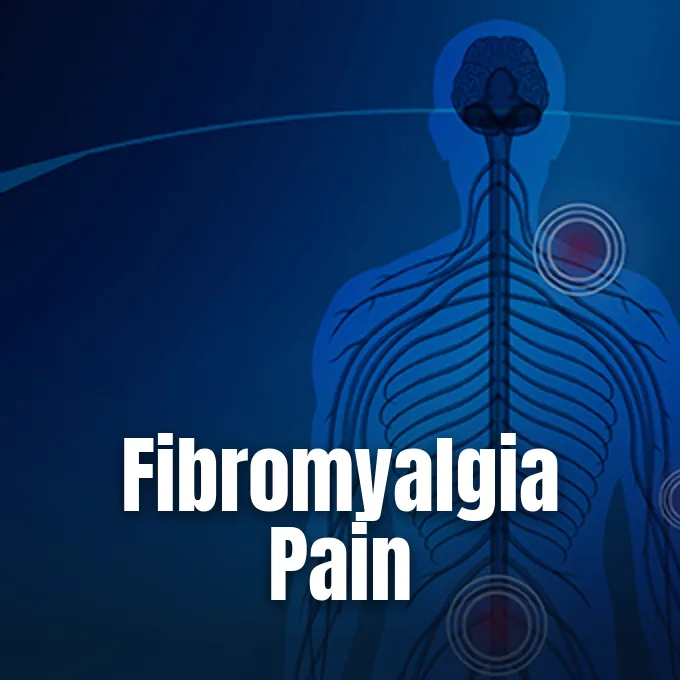
Fibromyalgia is a long-term illness that changes how the brain and spinal cord process pain messages, turning ordinary physical touch into lasting aches and bodywide soreness. People living with this condition face persistent pain, heavy fatigue, broken sleep, and cognitive difficulties that disrupt work and family life. In the past, doctors often blamed muscle swelling or nervous tension, but brain imaging confirms that the trouble stems from altered nerve pathways in the central nervous system. In a 2014 review published in JAMA (volume 311, pages 1547–55), researcher Daniel Clauw explained that these nerve changes amplify incoming sensory signals so that even gentle touch hurts [1, 9].
What Fibromyalgia Does to Pain Signals
The name fibromyalgia comes from Neo-Latin and Greek roots that mean pain in fibrous tissue and muscle, a term first coined in 1976 to replace older labels like tension myalgia and fibrositis [9, 14]. Medical texts tracked these symptoms back to the 1950s, but fixed diagnostic rules took shape in 1990. In the World Health Organization ICD-11 manual, code MG30.01 lists the illness under chronic widespread pain [14]. That code marks a shift away from old ideas of soft-tissue rheumatism to recognize a systemic sensory disturbance [8]. In Current Pain and Headache Reports in 2006, researchers Harris and Clauw demonstrated that functional brain imaging and sensory testing prove this pain is genuine [9].
The illness touches 2 to 4 percent of people worldwide, with women diagnosed most often between ages 40 and 60 [8, 14]. Routine body scans show healthy organs, and lab tests find no markers of joint damage [6, 8]. Patients look healthy on the outside, but they hurt all over [10].
Data from the National Institute of Arthritis and Musculoskeletal and Skin Diseases (NIAMS) show that prior joint illnesses raise personal risk. People with rheumatoid arthritis, lupus, ankylosing spondylitis, or osteoarthritis develop the illness at higher rates. Biological relatives often share this vulnerability, but familial cases point to shared risk traits rather than a single causal gene [1, 6]. At the University of Michigan, genetic research teams led by Daniel Clauw continue to examine how inherited traits influence central sensory processing pathways in families [9].

Nervous System Signaling Mechanisms
At the center of biomedical understanding is central sensitization, a state where the spinal cord and brain lower their normal sensory firing thresholds [6, 11]. Professor Daniel Clauw, Executive Director of the Chronic Pain and Fatigue Research Center at the University of Michigan, describes this functional disturbance as an internal radio volume knob turned up too high. When sensory pathways turn hypersensitive, the central nervous system sends strong pain messages even though bones, tendons, and muscles show no tears, swelling, or structural damage. The brain misreads baseline bodily input, making ordinary sensations register as deep aches or burning heat [9].
Spinal fluid tests show clear chemical changes in patients with the illness [3, 9]. Research teams find high levels of substance P, which speeds pain signals up the spinal cord, along with fewer mu-opioid receptors in brain centers that calm distress. Descending nerve pathways fail to damp sensory input [3].
Bedside sensory testing reveals two key neurological states called hyperalgesia and allodynia [2, 9]. Hyperalgesia makes normal pain feel far worse and last much longer, turning a minor stubbed toe into lasting misery. Allodynia turns harmless contact into pain, so that a light shirt collar or gentle bedsheet can burn like fire [2]. In 1976, researchers H. Moldofsky and P. Scarisbrick reported in volume 38 of Psychosomatic Medicine that disrupting deep sleep induces similar musculoskeletal aching and heightened pain sensitivity in healthy adults [3].
Core Symptoms Across Body and Mind
The main symptom of the illness is lasting, bodywide pain that stays for months. People call it a dull ache with sharp stabbing, throbbing, or burning in the arms, legs, chest, neck, and lower back [1, 2]. Pain shifts without warning based on stress, lack of rest, or cold, damp weather, making it hard to plan daily chores or hold steady work [2, 8].
Heavy fatigue strikes about 76 percent of patients and lingers for years, making simple tasks like walking to the mailbox feel like running the Boston Marathon [9, 14]. People often wake up exhausted after sleeping eight or nine hours, a pattern doctors call non-restorative sleep [2, 14]. Sleep studies show waking alpha waves cutting into slow-wave sleep, which robs the body of deep tissue repair and brain rest [3, 14]. In 2008, researcher S. M. Bigatti and colleagues reported in Arthritis & Rheumatism that sleep disruption directly magnifies both depression and physical pain [3]. On the NHS website, a patient named Suzanne explains in a video story how morning stiffness and exhaustion forced her to rebuild her entire daily routine [2].
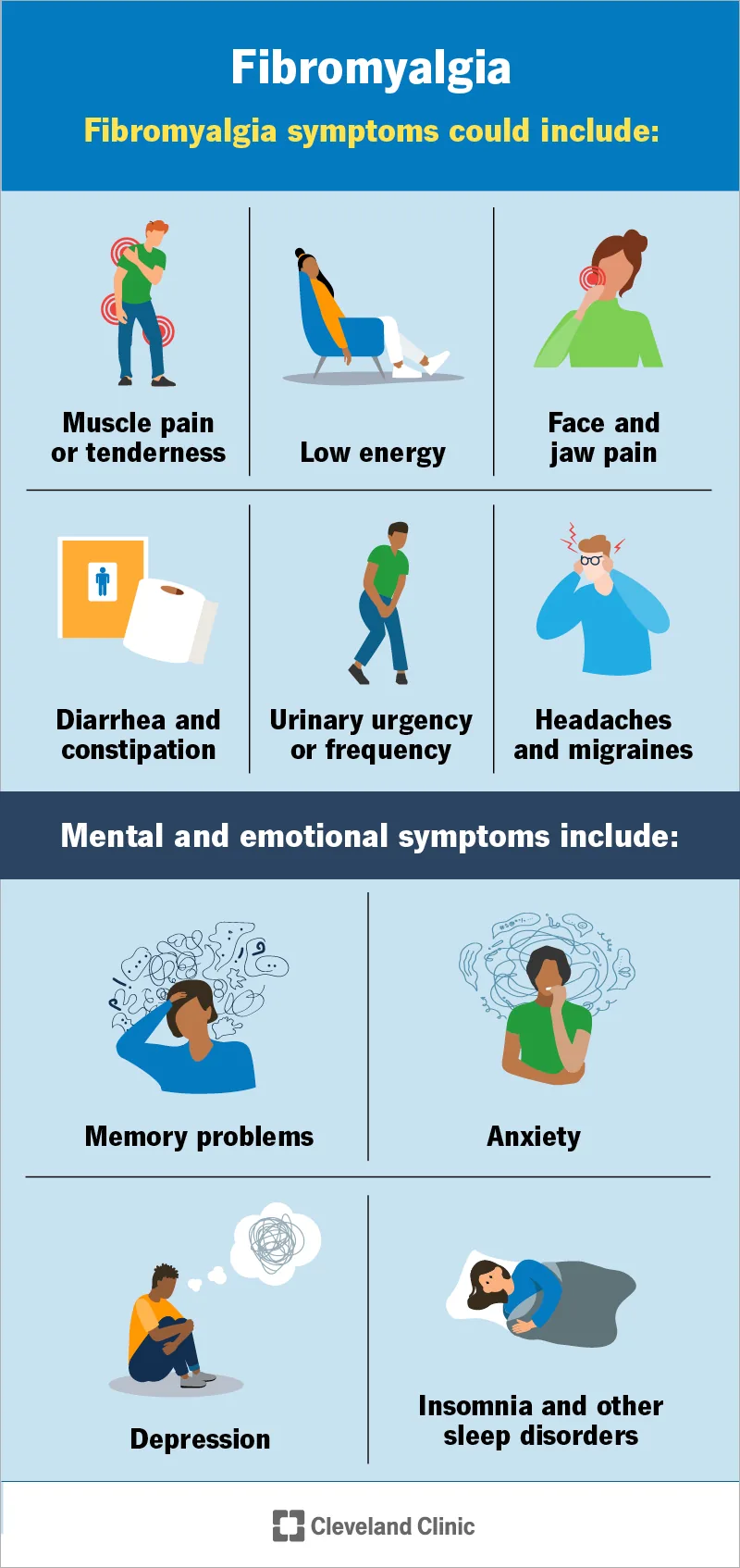
Cognitive trouble, widely known as fibro fog, brings severe mental hurdles. People report noticeable forgetfulness, trouble finding words, and slow thinking when tasks grow busy. Although a 2018 clinical trial in PeerJ showed normal working memory in quiet labs, real-world noise easily overwhelms daily focus [12].
How Doctors Diagnose Fibromyalgia
Because no single blood panel or X-ray confirms the illness, doctors rely on symptom patterns and ruling out other diseases [6, 8]. In 1990, the American College of Rheumatology (ACR) set rules requiring bodywide pain for three months and tenderness at 11 of 18 specific tender points [9, 14]. Doctors pressed four kilograms of thumb pressure onto tendon points on the neck, chest, elbows, hips, and knees. Many clinicians disliked this method, and Professor Daniel Clauw stated that “there is nothing magical about pressing 18 stupid areas of the body” when trying to assess complex human suffering [9].
In 2011, rheumatologist F. Wolfe and colleagues introduced the Widespread Pain Index (WPI) and the Symptom Severity (SS) scale. The WPI counts pain across 19 body zones, and the SS scale rates fatigue, waking tired, brain fog, and belly cramps. A combined fibromyalgia symptom score of 13 or higher confirms the illness, replacing manual tender point checks with direct patient symptom reporting [16].
Guidelines from the Royal College of Physicians (RCP) state that general practitioners and physiotherapists can diagnose the illness in local clinics [5]. Routine blood tests rule out mimic diseases such as underactive thyroid, rheumatoid arthritis, and polymyalgia rheumatica before setting the diagnosis [6, 8].



Diagnostic Barriers for Men
Although old textbooks framed the illness as a woman’s disease, clinical studies show large numbers of men suffer from it too [7, 10]. A report in Arthritis Care & Research found that 20 times more men had qualifying symptoms than had ever received a formal diagnosis. The old 11-point tender exam hid male patients because women naturally show lower pressure pain thresholds on skin tests. Men with equal bodywide pain fell short of the 11 points and left doctor offices without medical validation [7, 10].
Social ideas of manhood make it hard for men to seek medical help for chronic aches [7]. Many fear looking weak and wait six months or longer before seeing a doctor [10]. In Nordic interview studies, male patients noted that male doctors often dismissed their pain, calling them lazy or blaming weight gain instead of listening to their real symptoms [7].
In a nationwide survey by CreakyJoints covering 800 men with the illness, almost all named depression as their top burden. When member Will L. was diagnosed at age 54, he weighed 230 pounds, and he noted that his strong look masked deep pain. Fellow members Carl H., Zane K., and Harold P. also spent years fighting for a diagnosis [10].

Connective Tissue Overlap
The illness rarely strikes alone, often joining with gut and nerve troubles [11, 14]. Up to 70 percent of patients develop irritable bowel syndrome (IBS), facing belly cramps, bloating, constipation, and diarrhea linked to poor serotonin signaling along the gut-brain axis [1, 14]. Tension headaches, temporomandibular joint pain, and bladder trouble also recur with high frequency [6, 11]. In WebMD, Dr. Debra Fulghum Bruce explains that patients are three times more likely to face depression, as chronic pain and poor sleep drain vital brain chemicals [13].
In 2023, researcher Najla Alsiri and a team at Coventry University published a review in Seminars in Arthritis and Rheumatism. Looking at eleven clinical studies, Alsiri found a shared diagnosis rate of 68 to 88.9 percent between chronic pain and hypermobile Ehlers-Danlos syndrome (hEDS) [4].
Patients with both illnesses experience loose joints, muscle weakness, and autonomic nervous system trouble known as dysautonomia. This causes dizziness upon standing, sudden fainting, and rapid heart rates. Shared gene traits involving collagen and nerve receptors like SLC6A4, TRPV2, and 5-HT2A may explain why hypermobility and central pain cluster together in families [4, 14]. Connective tissue laxity keeps sensory nerves in joints on edge, fueling spinal sensitization and amplifying bodywide pain [4].
Prescription Medications Targeting Nerve Pathways
Because the illness stems from central nerve tuning rather than swollen joints, common painkillers like ibuprofen, aspirin, and paracetamol rarely bring relief [8]. The United States Food and Drug Administration (FDA) has approved three drugs for treatment: duloxetine (sold as Cymbalta), milnacipran (Savella), and pregabalin (Lyrica) [11, 14]. Duloxetine and milnacipran boost serotonin and noradrenaline in the brainstem, turning on descending nerve signals that block pain messages in the spine. These drugs also ease fatigue and lift mood [3, 11].
Pregabalin binds to calcium channel gates in nerve cells, dialing down the release of pain transmitters like glutamate and substance P. In Cochrane reviews by W. Häuser and N. Üçeyler, pregabalin cut pain and improved sleep. Low-dose amitriptyline taken at night remains a common first step to deepen sleep [3, 8].
In Pain Practice, researcher R. Halpern reviewed 96,175 newly diagnosed patients and found that 57 percent were given short-acting opioids, despite clinical guidelines warning against them. Opioids fail to fix central sensitization, bring high risks of addiction, and can even worsen pain through opioid-induced hyperalgesia [3]. Rheumatologists like Dr. Nilanjana Bose at the Rheumatology Center of Houston in Texas and Dr. Rajat Bhatt at Prime Rheumatology in Richmond, Texas, emphasize using nerve drugs rather than narcotics [10].
Fibromyalgia Care and Exercise
Non-drug care forms the bedrock of long-term relief, with gentle movement showing the best results in clinical trials [1, 8]. In the Cochrane Database of Systematic Reviews, researcher A. J. Busch showed that aerobic exercise and light weights improve daily function and dull pain. A review by J. Bidonde proved that aquatic exercise in warm pools eases joint load and relaxes tight muscles [3]. Walking, swimming, and stationary cycling let patients build stamina without setting off severe flare-ups [1, 8].
Doctors advise a steady pace: start low and go slow. Doing too much on good days brings heavy crashes, so pacing daily chores keeps pain stable [10]. Mindful movement like qigong or gentle yoga calms the sympathetic nervous system [3, 11]. Cognitive behavioral therapy (CBT) helps patients reframe chronic pain and build coping habits [8, 11].
In 2007, Stephen Eyer and Daneen Akers of Trillusion Media produced the film Living with Fibromyalgia with Cedars-Sinai Medical Center in Los Angeles [15]. Charities like Fibromyalgia Action UK run helplines (0300 999 3333) and local peer groups [2]. Support from peers and family reassures patients that their pain is medically real [10, 15].
- REPORT National Institute of Arthritis and Musculoskeletal and Skin Diseases. (2017). Fibromyalgia. National Institutes of Health. [Article Link]
- WEBSITE National Health Service. (2017). Fibromyalgia: Symptoms and overview. NHS UK. [Article Link]
- ACADEMIC JOURNAL Chinn, S., Caldwell, W., & Gritsenko, K. (2016). Fibromyalgia pathogenesis and treatment options update. Current Pain and Headache Reports, 20(4), 1-13. [Article Link]
- ACADEMIC JOURNAL Alsiri, N., Alhadhoud, M., Alkatefi, T., & Palmer, S. (2023). The concomitant diagnosis of fibromyalgia and connective tissue disorders: A systematic review. Seminars in Arthritis and Rheumatism, 58, 152127. [Article Link]
- REPORT Royal College of Physicians. (2023). The diagnosis of fibromyalgia syndrome. RCP London. [Article Link]
- WEBSITE Cleveland Clinic. (2026). What is fibromyalgia? Symptoms, causes, and treatment. Cleveland Clinic Health Library. [Article Link]
- ONLINE NEWS Gaya-Sancho, B., Romero Bilbao, B., & Sanjuán Sánchez, D. (2024). Fibromyalgia: Why is this common, debilitating condition being ignored in male patients? The Conversation. [Article Link]
- WEBSITE Federal Ministry of Health. (2022). Fibromyalgia. gesund.bund.de. [Article Link]
- WEBSITE Johns Hopkins Arthritis Center. (2008). Finding fibro: Emerging evidence suggests that the pain in fibromyalgia is real. Johns Hopkins Medicine. [Article Link]
- ONLINE NEWS Dumain, T. (2020). Fibromyalgia in men: Important facts about an overlooked and misunderstood condition. CreakyJoints. [Article Link]
- WEBSITE Arthritis Foundation. (2026). Fibromyalgia: Causes, symptoms, and treatments. Arthritis Foundation Disease Center. [Article Link]
- WEBSITE Arthritis Foundation. (2019). Fibro fog: Causes and management. Arthritis Foundation Disease Center. [Article Link]
- ONLINE NEWS Bruce, D. F. (2026). Fibromyalgia and depression: Understanding the link. WebMD. [Article Link]
- WEBSITE Wikipedia contributors. (2026). Fibromyalgia. Wikipedia, The Free Encyclopedia. [Article Link]
- WEBSITE Wikipedia contributors. (2026). Living with Fibromyalgia. Wikipedia, The Free Encyclopedia. [Article Link]
- ACADEMIC JOURNAL Wolfe, F., Clauw, D. J., Fitzcharles, M. A., Goldenberg, D. L., Häuser, W., Katz, R. S., Mease, P. J., Russell, A. S., Russell, I. J., & Winfield, J. B. (2011). Fibromyalgia criteria and severity scales for clinical and epidemiological studies: A modification of the ACR preliminary diagnostic criteria for fibromyalgia. The Journal of Rheumatology, 38(6), 1113-1122. [Article Link]


