





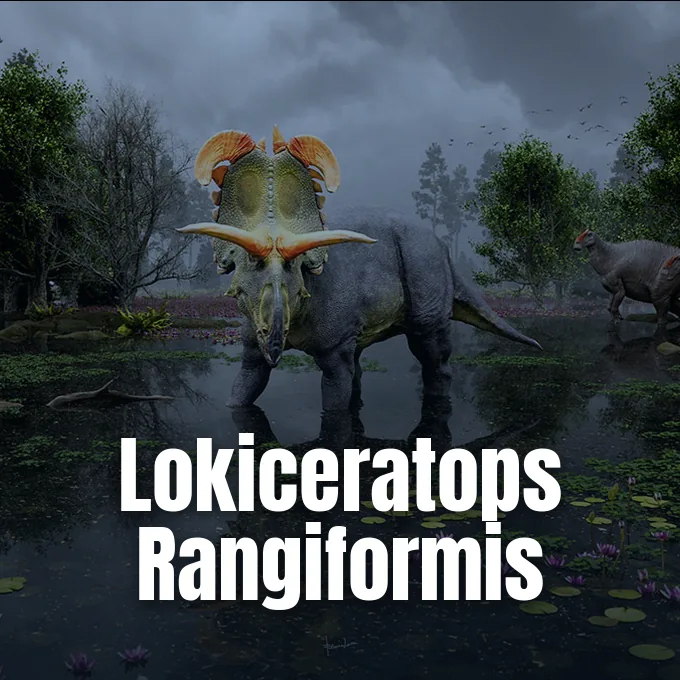
Lokiceratops rangiformis was a massive horned plant-eater that inhabited the lush coastal floodplains of northern Montana approximately 78 million years ago [1]. Unearthed just two miles south of Canada along the Milk River, the fossil lacked any nasal horn while carrying enormous curved blades from its expansive bony neck frill [2]. Mark Loewen of the University of Utah and Joseph Sertich of the Smithsonian Tropical Research Institute reported that the skull reveals how horned dinosaurs evolved isolated visual headgear along the eastern coast of ancient Laramidia [3].
- What Is Lokiceratops Rangiformis?
- Discovery in the Kennedy Coulee Badlands
- How Big Was the Horned Grazer?
- How Lokiceratops Rangiformis Bore Skull Blades
- Why Horns Evolved on Island Landmasses
- Five Ceratopsids in One Ecosystem
- Where Lokiceratops Rangiformis Fits in Evolution
- Debates Surrounding Species Classification
What Is Lokiceratops Rangiformis?
The scientific name Lokiceratops rangiformis translates into English as “Loki’s horned face that looks like a caribou,” honoring the blade-wielding Norse god Loki because giant curved blades jutted outward from the dinosaur’s neck frill [2]. The specific epithet rangiformis refers to the living caribou genus Rangifer, whose antlers grow in asymmetrical patterns similar to the uneven horns observed on this Cretaceous fossil [3]. Mark Loewen of the University of Utah and Joseph Sertich of Colorado State University placed the animal in Centrosaurinae, an ancient subfamily of horned ceratopsids that diversified across North America during the Late Cretaceous Campanian stage. The discovery proved that early centrosaurines experimented with ornate headgear long before the end of the dinosaur age [1].
More than 78 million years ago, this animal lived along the eastern coastline of Laramidia [2]. Warm greenhouse climates sustained dense subtropical swamps and coastal bayous that provided rich vegetation for grazing herds [1]. Rising sea levels cut these coastal plains off from the interior, preventing local groups from breeding with distant populations across North America [4].
How does this animal compare with Triceratops? It walked across Montana at least 12 million years earlier than its three-horned cousin [2]. While Triceratops carried three solid facial horns and a solid neck frill, this newly identified fossil carried curved blades above its eyes and left its snout completely hornless [4]. Extravagant skull horns developed early in the history of horned plant-eaters [1].
Discovery in the Kennedy Coulee Badlands
Commercial fossil hunter Mark Eatman discovered the first bones in 2019 within the badlands of northern Montana. The Loki Quarry excavation site sits inside the McClelland Ferry Member of the Judith River Formation in Hill County. Located near the Milk River and the town of Rudyard, the site lies two miles (3.2 kilometers) south of Canada, where field crews found the holotype specimen, cataloged as EMK 0012 and nicknamed “Frederik”, buried in fine mudstone layers. Mark Eatman and field assistants collected cranial fragments and associated postcranial bones from this single river channel deposit near Havre. Rock pressure caused plastic deformation across the skull bones over millions of years [6].
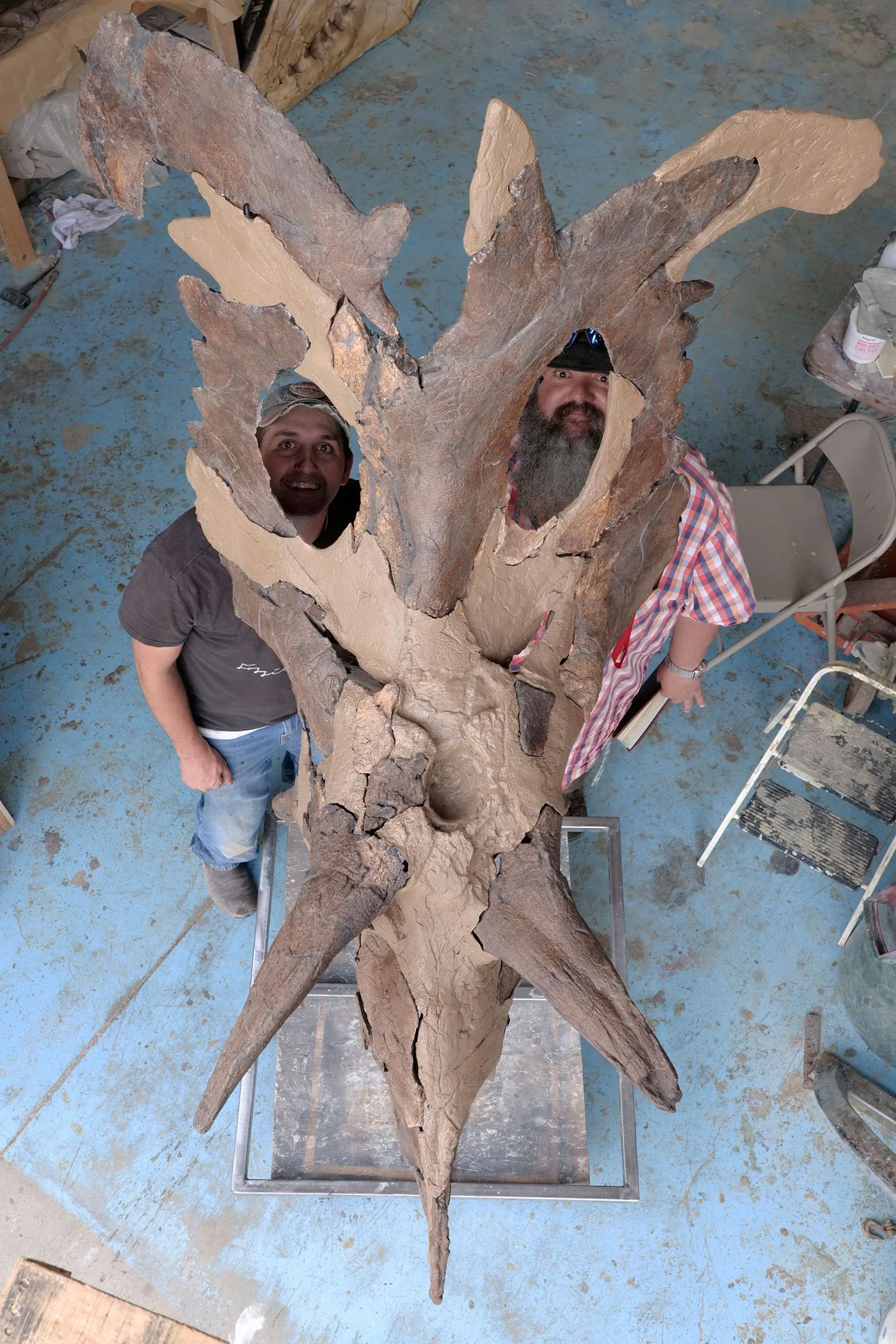
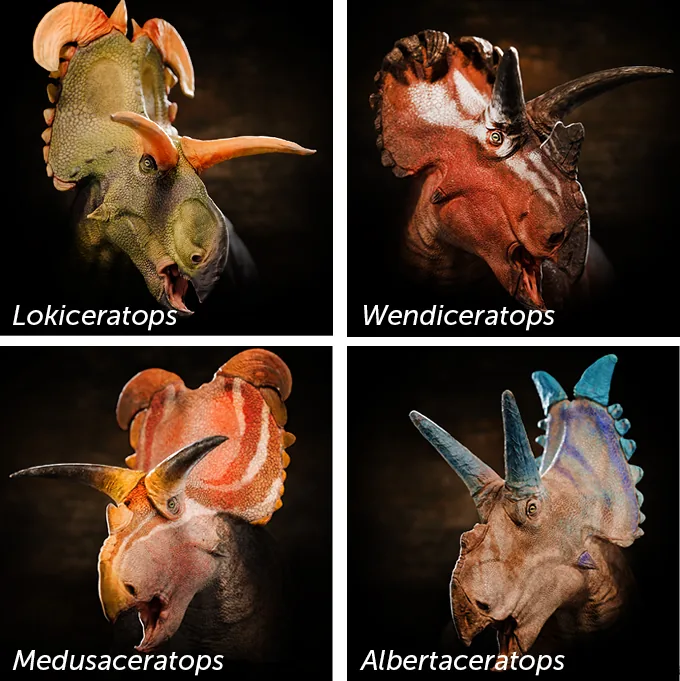
Following field collection, workers sent the fragile skull pieces to Fossilogic, a preparation lab run by Brock Sisson in Pleasant Grove, Utah [6]. Sisson spent months cleaning and gluing crushed skull fragments that had cracked under rock pressure. An earlier report on the newly found horned dinosaur covered the initial announcements surrounding its laboratory reconstruction. Describing the long restoration project, Sisson said, “Reconstructing the skull of Lokiceratops from dozens of pieces was one of the most challenging projects my team and I have ever faced” [2].
The Museum of Evolution at Knuthenborg Safaripark in Maribo, Denmark, bought the original fossil skeleton for exhibition [5]. Researchers then cast replicas for the Natural History Museum of Utah in Salt Lake City and the Royal Ontario Museum in Toronto, Canada [6]. These durable casts allow paleontologists to inspect bone sutures without risking damage to the Danish display [2].
How Big Was the Horned Grazer?
Estimates based on pelvic bones and dorsal vertebrae show that the adult reached a body length of 6.7 meters (22 feet). Mark Loewen and Joseph Sertich calculated its live weight at 5 metric tonnes (11,000 pounds), making it the largest centrosaurine dinosaur yet discovered in North America [3].
With a basal length of 0.95 meters (3.1 feet) and an overall length between 1.92 and 1.99 meters from the beak to the tips of its horns, the massive skull measured roughly 20 percent larger than adult skulls of its close relative Medusaceratops. It was huge [6]. The frill formed an expansive shield behind the eyes [1].
Field collectors working in Montana recovered associated postcranial bones including a cervical vertebra, dorsal and caudal vertebrae, a fused synsacrum, and an isolated tail chevron. The expedition also unearthed shoulder elements including the fused right scapula and coracoid, together with both pelvic ilia and ischia [6]. These bones belonged to a single mature animal [1]. Denver Fowler of the Dickinson Museum Center in North Dakota pointed out that its brow horns had hollowed out with age, matching the structural changes seen in older individuals of Triceratops [4]. Postcranial bones confirmed its true body proportions [1].
How Lokiceratops Rangiformis Bore Skull Blades
The most striking cranial trait of Lokiceratops rangiformis is the total lack of a nose horn [3]. While most centrosaurine dinosaurs carried sharp spikes or blunt bony bosses above their nostrils, this Montana species had an unadorned, smooth snout [1]. Instead, two bladelike brow horns jutted forward and outward above the eyes [4].
The rear edge of the skull carried the largest frill horns ever documented on any horned dinosaur, featuring excessively enlarged second epiparietals that grew into giant curved blades sweeping outward along the same flat plane as the neck shield [1]. At the top midline of the frill, an asymmetric central spike curved unevenly toward one side, resembling the irregular tines of a caribou antler [2]. The frill had a rounded fontanelle [6]. These combined anatomical traits gave the skull an ornate profile unlike any other horned dinosaur discovered in Montana [1].
Why did this plant-eater grow such cumbersome bony blades? Paleontologist Joseph Sertich of Colorado State University explained that these giant frill horns served as visual billboards within prehistoric river valleys, stating, “This new dinosaur pushes the envelope on bizarre ceratopsian headgear, sporting the largest frill horns ever seen in a ceratopsian”. They were display tools [2]. Because the thin bone blades lacked sharp tips, researchers concluded they evolved for courtship displays and species recognition, not for defense against carnivores [3].

Why Horns Evolved on Island Landmasses
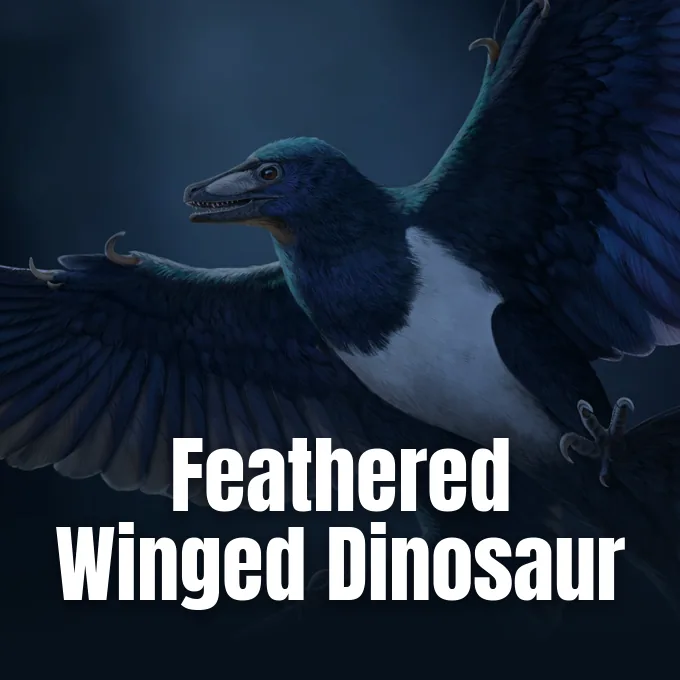
Researchers compared the elaborate skull horns of Cretaceous ceratopsians to the colorful display feathers of living birds. Birds use bright plumage to attract mates and signal identity to rivals, and horned dinosaurs likely relied on distinctive head ornaments for similar social communication [3]. Visual display patterns appear across paleontology, as seen when research on feathered winged dinosaur discoveries revealed complex feather coats among early avians. Joseph Sertich pointed out that sexual selection often accelerates anatomical diversity on isolated landmasses. Study coauthor Jingmai O’Connor of the Field Museum in Chicago suggested that mutations in regulatory genes modified cis-regulatory elements, producing observable variations in horn shape across isolated breeding groups [2].
The narrow coastline of Laramidia acted like an island chain [4]. Geographic barriers such as rivers, mountains, and sea inlets split dinosaur populations into small groups, driving fast evolutionary changes within local river valleys [1]. Savhannah Carpenter of the University of Utah reported that centrosaurines reached higher endemism than almost any other dinosaur lineage [2].
Cretaceous ecosystems from later geological stages showed far less variety among plant-eaters. When Triceratops evolved 12 million years after this creature, the varied local species had vanished. By the latest Cretaceous, two generalist horned dinosaur species roamed the western landmass from Canada to Mexico [3]. Mark Loewen of the Natural History Museum of Utah estimated that during the earlier Campanian stage, fast evolution caused complete species turnover every 100,000 to 200,000 years [2].
Five Ceratopsids in One Ecosystem
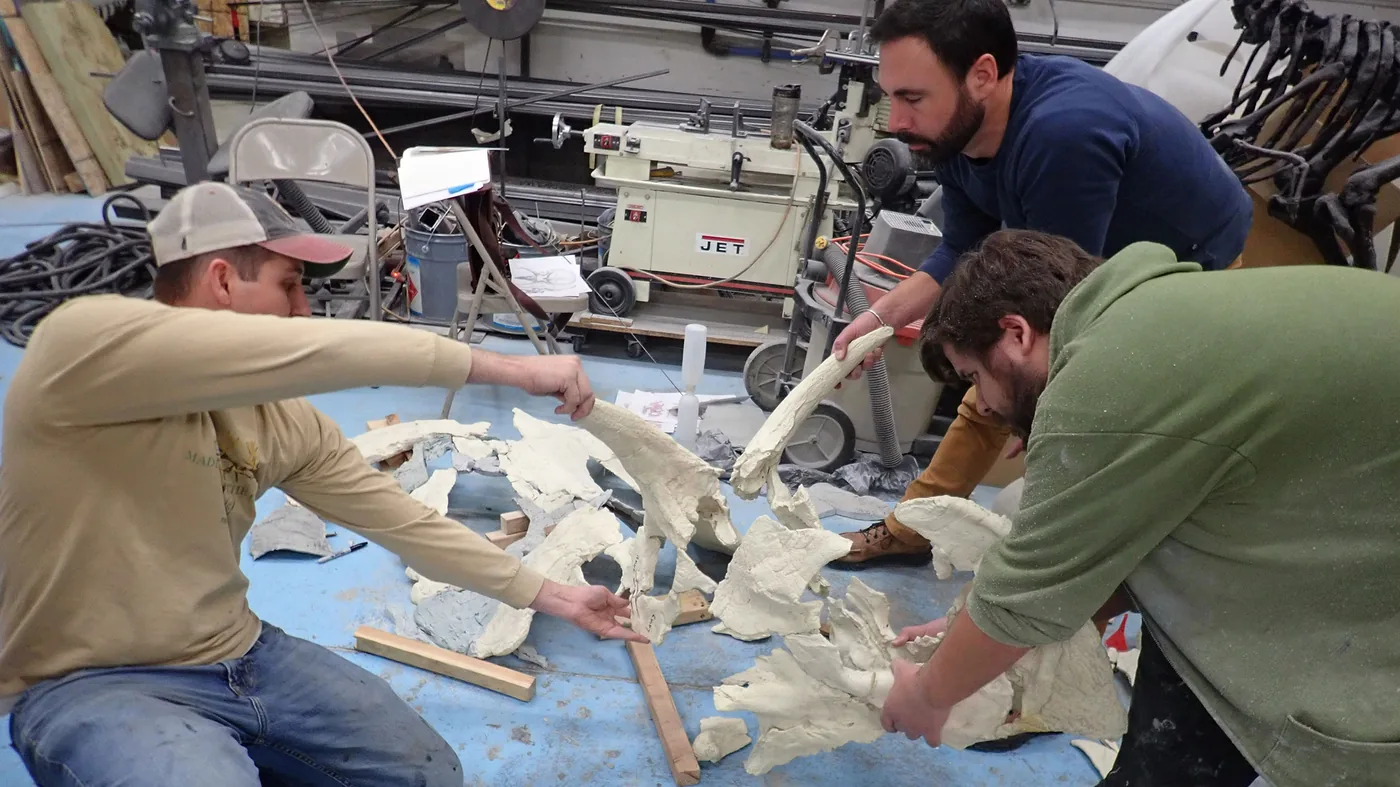
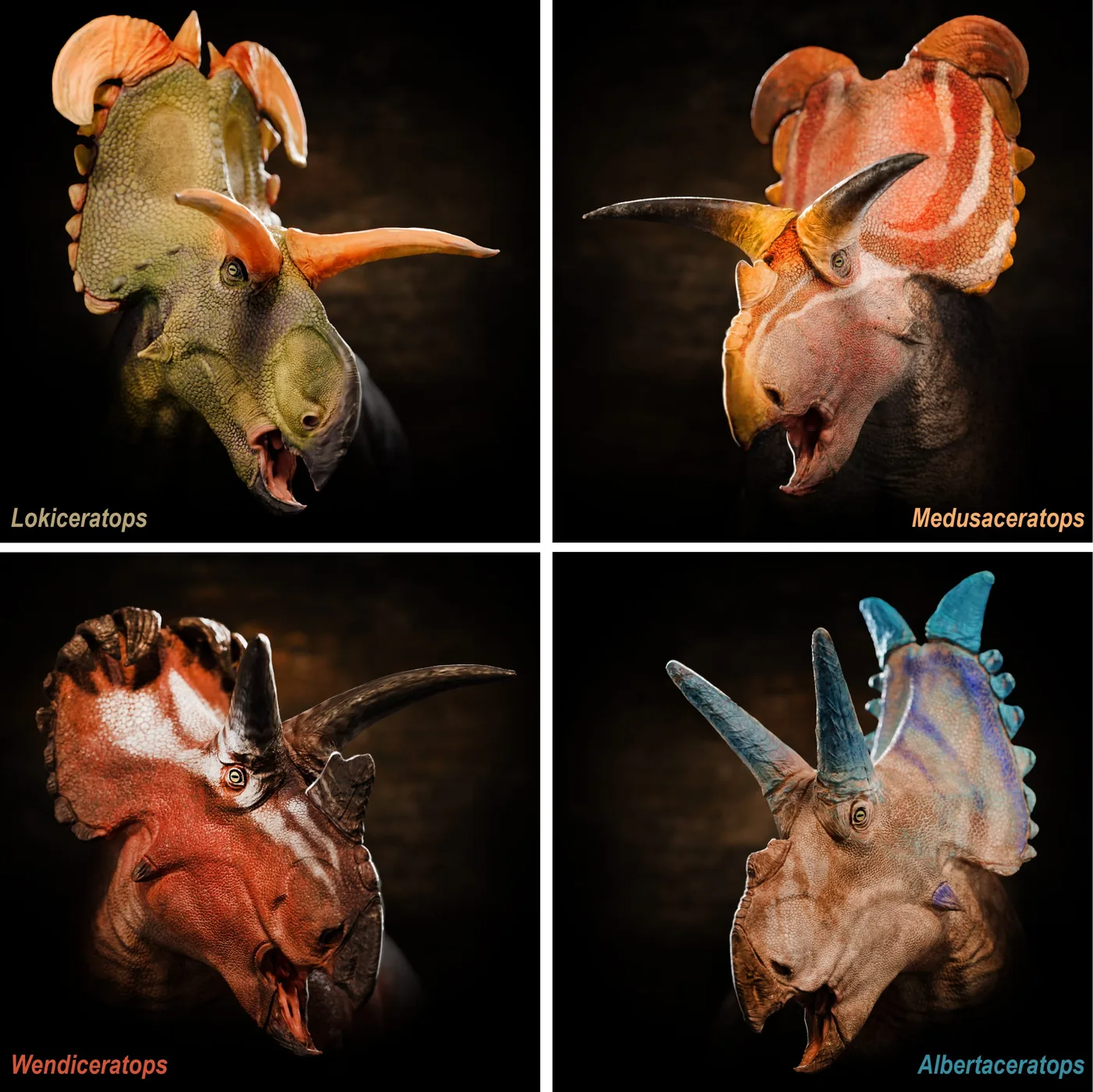
The discovery of this animal set a rare biological record for horned dinosaur variety [1]. Excavations within Kennedy Coulee confirmed that five distinct ceratopsid species lived side by side within the same local ecosystem 78 million years ago [2]. These included four centrosaurine taxa—Lokiceratops rangiformis, Albertaceratops, Medusaceratops, and either Wendiceratops or Avaceratops lammersii—together with a single chasmosaurine herbivore [4]. Never before had paleontologists found so many giant horned herbivores living together within one small area [1].
Before this discovery, paleontologists assumed that no more than two horned dinosaur species could live in the same area at the same time. Mark Loewen and Joseph Sertich showed that multiple large herbivores shared their living space [2]. Sertich compared this ancient assemblage to the savannahs of East Africa today, where horned beasts such as wildebeests, gazelles, and antelopes graze the same plains without wiping one another out [3]. Each ceratopsid species sported different frill horns to identify its own kind [4]. Such visual recognition helped related animals avoid accidental cross-mating while foraging along the crowded river systems of Campanian Montana [2].
Rock studies at Loki Quarry show that the ancient habitat was a poorly drained river floodplain with muddy channels, siltstones, and sandstones. Paleontologists recovered freshwater mollusk shells, gar scales, wood bits, and amber beads from the bone beds. Giant crocodilians like Deinosuchus hunted along the water channels [6].
Where Lokiceratops Rangiformis Fits in Evolution
To trace how this species fit into the horned dinosaur family tree, researchers ran a comprehensive phylogenetic analysis of centrosaurines. The study placed Lokiceratops rangiformis within a northern evolutionary branch named Albertaceratopsini. This branch joined the new species with its closest cousins, Albertaceratops and Medusaceratops [1]. Study coauthor Andrew Farke from the Raymond Alf Museum said that scientists now recognize over thirty valid centrosaurine species, showing that horned dinosaurs were far more varied than older studies suggested [2].
The 97-page monograph in the journal PeerJ showed that dinosaur diversity has been underestimated because of gaps in field collecting [1]. In a press talk about the paper, Mark Loewen said, “Lokiceratops helps us understand that we only are scratching the surface when it comes to the diversity and relationships within the family tree of horned dinosaurs” [3]. Ceratopsians lived in small coastal pockets where unique frill shapes evolved quickly [2]. When scientists examine small geographic zones with high fidelity, they discover dense evolutionary radiations that alter existing models of Cretaceous ecology [1].

Public interest grew after the skull was unveiled at the Natural History Museum of Utah in Salt Lake City [2]. The completed skull reconstruction then traveled to its permanent home at the Museum of Evolution within Knuthenborg Safaripark in Maribo, Denmark. Curators placed the fossil inside an exhibition hall covering over 1,000 square meters to highlight evolutionary history [5].
Debates Surrounding Species Classification
Not all paleontologists agree that the Montana bones belong to a new genus. Paleontologist Denver Fowler of the Dickinson Museum Center in North Dakota suggested that the fossil might be an older, fully grown Medusaceratops. Fowler said that horned dinosaurs changed as they aged, noting that adult skulls of Triceratops grew hollow brow horns like those found on the new fossil. In his view, differences in frill horns might show growth stages instead of separate species [4].
Could five massive plant-eating species truly share such a small geographic territory without intense ecological competition? Canadian paleontologist Jordan Mallon questioned how five giant herbivores could coexist without evolving distinct feeding specializations. Mallon noted that the jaws and teeth of these horned dinosaurs were built the same way, suggesting they ate identical plants [6].
Other scientists defended the new genus using clear anatomical traits. Paleontologist Shawn DeNarie of George Washington University in Washington, D.C., argued that the angles of the frill horns differ enough from related fossils to name a new species [4]. Meanwhile, paleontologist Elizabeth Freedman Fowler raised concerns about field work, saying collectors wrapped several skull bones in foil instead of plaster jackets [6]. Addressing the debate, Denver Fowler said, “When we have opposing views, we have to highlight them. As we get more data, we’ll get closer to the truth” [4]. Further digs in the Judith River Formation may show whether the skull is an independent genus or an adult variant [1].
- ACADEMIC JOURNAL Loewen, M. A., Sertich, J. J. W., Sampson, S., O’Connor, J. K., Carpenter, S., Sisson, B., Øhlenschlæger, A., Farke, A. A., Makovicky, P. J., Longrich, N., & Evans, D. C. (2024). Lokiceratops rangiformis gen. et sp. nov. (Ceratopsidae: Centrosaurinae) from the Campanian Judith River Formation of Montana reveals rapid regional radiations and extreme endemism within centrosaurine dinosaurs. PeerJ, 12, e17224. [Article Link]
- PRESS RELEASE University of Utah. (2024). Loki’s horned dinosaur wielded a pair of giant blades. @theU. [Article Link]
- PRESS RELEASE Colorado State University. (2024). Newly discovered dinosaur boasts big, blade-like horns. EurekAlert!. [Article Link]
- ONLINE NEWS Gramling, C. (2024). Meet Lokiceratops, a newly discovered species of horned dinosaur. Science News Magazine. [Article Link]
- WEBSITE Museum of Evolution. (2024). Real dinosaur fossils at Knuthenborg. Knuthenborg Safaripark. [Article Link]
- WEBSITE Wikipedia contributors. (2024). Lokiceratops. Wikipedia, The Free Encyclopedia. [Article Link]


