





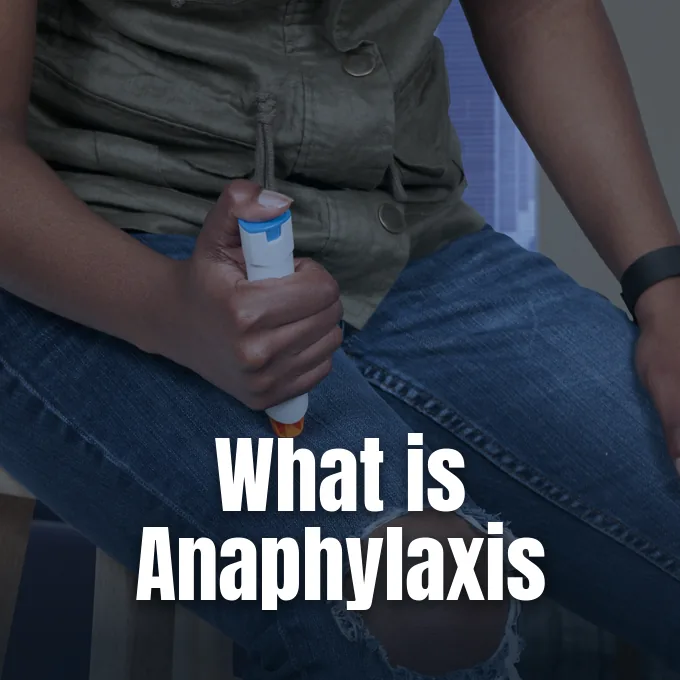
Medical teams at the National Health Service define what is anaphylaxis as an acute systemic allergic reaction that develops within seconds or minutes after someone encounters an otherwise harmless foreign substance [1]. Physiologists Paul Portier and Charles Richet named the condition in 1902. During marine toxin studies on dogs, second doses provoked fatal shock rather than protection, prompting the French researchers to combine Greek terms meaning an absence of guard [2]. In systemic reactions, immune cells flood the bloodstream with chemical messengers that dilate blood vessels and narrow breathing passages [3]. Fast muscle injections of epinephrine halt this life-threatening circulatory collapse [4].
What Is Anaphylaxis?
Anaphylaxis is the most dangerous form of immediate allergic flare-up [3]. While a localized reaction remains confined to isolated nasal congestion or mild hives, systemic attacks mobilize chemical mediators across multiple organ systems at the same time [5]. The European Academy of Allergy and Clinical Immunology, known as EAACI, established clinical criteria for quick diagnosis [1]. Symptoms usually start within thirty minutes of exposure [6].
Medical surveys published in the academic journal Allergy show that between 0.05% and 2% of people worldwide will experience a systemic allergic reaction at some point during their life [6]. In England, researchers led by Turner tracked national hospital databases in partnership with King’s College London and the David Hide Asthma and Allergy Research Centre. Turner and colleagues analyzed hospital admissions and fatalities in England and Wales between 1992 and 2012 to assess patient outcomes. Their team discovered that all-cause hospital admissions rose by 615% over those two decades in the United Kingdom. Annual death rates stayed steady at 0.047 cases per 100,000 people [7].
Systemic allergic flare-ups strike people in every age bracket. Food-triggered episodes appear most often in children and young people, reaching their highest peak in hospital registries among adolescents and young adults between ten and thirty years old. In contrast, episodes provoked by insect stings and pharmaceutical medications occur mainly among older adults aged 60 and above [7]. Prompt clinical care prevents the vast majority of deaths [6].
Biological Triggers and Cellular Pathways
True allergic responses rely on immunoglobulin E antibodies, abbreviated as IgE. During initial priming, the immune system produces allergen-specific IgE that docks securely onto high-affinity FcεRI surface receptors located on tissue mast cells and circulating white blood cells known as basophils [2]. This priming phase produces no noticeable discomfort for the patient [5]. When the allergen enters the body again, it binds adjacent IgE molecules on the cell membrane, sparking mediator release that expels preformed histamine and tryptase into nearby tissue [3].
Degranulating cells manufacture fresh lipid messengers within a few minutes. Enzymes metabolize arachidonic acid to create prostaglandin D2 and cysteinyl leukotrienes LTC4, LTD4, and LTE4, while platelet-activating factor begins loosening tight endothelial junctions that line microscopic blood vessels. Cytokine signaling proteins, including IL-4 and IL-13, activate downstream transcription factors like STAT-6 to sustain the inflammatory cascade. Histamine binds both H1 and H2 receptors, dilating peripheral arterioles while constricting bronchial airways and stimulating nerve endings to cause intense itching and flushing on the skin. These cellular chemicals together trigger multi-system failure [2].

Some dangerous allergic attacks bypass IgE antibodies entirely. Immunologist F. Jönsson and colleagues discovered that immunoglobulin G, or IgG, can spark systemic anaphylaxis in animal models through FcγRIIIA and FcγRIV receptors embedded in circulating neutrophils. Activated neutrophils release copious platelet-activating factor, driving hypothermia and cardiovascular shock without relying on classic mast cell pathways. Human blood cells display comparable non-IgE activation mechanisms [8].
Signs in Major Organ Systems
Acute allergic responses produce distinctive signs in several major organ systems. According to clinical records reviewed by the World Allergy Organization, skin and mucosal surfaces display visible changes in 80% to 90% of all diagnosed patient cases [2]. Patients experience spreading warmth, red hives, and localized soft-tissue swelling around the eyelids, lips, or tongue [5]. Some individuals notice an odd metallic taste on the tongue, while others describe an unsettling sense of impending doom moments before circulatory problems emerge [2]. Digestive signs affect roughly 30% to 45% of patients [6].
Respiratory symptoms develop in about 70% of clinical cases, creating acute airway blockage through laryngeal swelling, painful swallowing, hoarseness, persistent coughing, and narrowing of the bronchial tubes [6]. Pediatric guidance from the American Academy of Pediatrics and the American Academy of Allergy, Asthma, and Immunology notes that infants often present with respiratory distress first [2]. A hoarse whisper signals perilous swelling inside the throat [5].

As arterial pressure plummets during circulatory collapse, reduced blood delivery to the brain triggers dizziness, blurred vision, slurred speech, confusion, and eventual loss of consciousness in vulnerable patients [5]. Hospital statistics cited in Goldman-Cecil Medicine by Elsevier confirm that approximately 0.3% of hospitalized patients die from airway blockage or shock [6]. Medical teams must act fast to halt multiorgan failure [2].
Why Severe Allergic Reactions Disrupt Circulation
Circulatory failure during allergic shock stems from massive fluid loss. Chemical mediators loosen microvascular junctions so fast that up to 35% of intravascular blood volume can shift into surrounding soft tissues within ten minutes of symptom onset. This rapid plasma leakage produces circulatory shock, starving the heart of venous return and collapsing central blood pressure [2]. The patient’s skin turns cool, pale, or blue-gray as peripheral vascular beds clamp down to divert remaining blood toward vital brain and kidney tissues [1]. Cellular hypoxia quickly follows without urgent volume support [2].
Most patients in shock develop a fast heart rate. Why do some people experience paradoxical bradycardia during allergic collapse instead of the rapid pulse rate typically provoked by low blood pressure and elevated adrenal hormones? In about 10% of patients, severe volume depletion triggers the neurogenic Bezold-Jarisch reflex, slowing heart contractions through vagal stimulation [6]. Medscape Reference notes this reflex can confuse emergency examiners [2].
Allergic mediators can also target the coronary arteries directly. Mast cells clustered near atherosclerotic plaques release histamine and leukotrienes that cause coronary vasospasm, precipitating acute myocardial ischemia even in patients without prior histories of cardiovascular illness. Platelet-activating factor further slows electrical conduction through the atrioventricular node and decreases coronary blood flow. While sensory nerve endings release calcitonin gene-related peptide to counteract arterial spasms, severe mediator storms easily overpower this natural cardioprotective defense mechanism and provoke cardiac arrest. Emergency care requires intravenous fluids and cardiac monitoring [2].

Clinicians at the University of Rochester Medical Center and Golisano Children’s Hospital emphasize that early intravenous fluid resuscitation restores effective venous filling pressures when arterial hypotension resists initial care [12]. Without rapid crystalloid fluid replacement, profound capillary leakage starves the coronary circulation and precipitates irreversible cardiac pump failure [2].


First-Line Emergency Care for Anaphylaxis
Medical authorities agree on one primary emergency therapy. International consensus guidelines from the World Allergy Organization identify intramuscular epinephrine as the undisputed first-line drug for systemic allergic emergencies [4]. An epinephrine injection into the outer thigh constricts leaking blood vessels, raises blood pressure, and reduces airway swelling. Beta-2 receptor stimulation relaxes bronchial muscle to ease breathing while halting further mediator release from mast cells [3]. Patients must lie flat on their back with legs raised [4].
Antihistamines cannot replace an epinephrine injection [4]. Common allergy pills like diphenhydramine or hydroxyzine soothe itchy skin and hives, but they cannot reopen a closed windpipe or reverse drops in blood pressure. Systemic corticosteroids like methylprednisolone take four to six hours to provide anti-inflammatory effects [2]. A second epinephrine dose is needed if symptoms persist after five minutes [1].
New delivery technologies expand patient access to epinephrine. The U.S. Food and Drug Administration approved neffy, a single-dose nasal spray developed by ARS Pharmaceuticals for adults and children who weigh at least 30 kilograms. FDA Associate Director Dr. Kelly Stone explained that needle-free options remove barriers for patients who fear injections. Clinical studies in 175 healthy adults confirmed that nasal absorption produces epinephrine blood concentrations and blood pressure improvements comparable to traditional autoinjector devices like the EpiPen [9]. Rigorous federal oversight guides drug safety evaluations, as seen when the FDA sought avacopan withdrawal over safety doubts. Intranasal drug delivery has gained clinical interest in other areas, including trials where a nasal spray relieves depression symptoms in trial protocols. Emergency physicians keep patients under hospital monitoring for two to twelve hours following care to detect biphasic recurrence [1].

True Allergy Versus Pseudoallergy
Doctors divide severe flare-ups into two distinct categories [2]. In medical textbooks such as Rosen’s Emergency Medicine, non-immunologic events that mirror classic allergic shock without involving allergen-specific antibodies are historically classified as anaphylactoid events or non-IgE reactions [5]. Certain intravenous drugs, including morphine, vancomycin, and radiocontrast dye, directly stimulate the MRGPRX2 receptor on mast cells [6]. Patients can develop severe shock during their first lifetime exposure [5].
Emergency bedside care does not change for pseudoallergic reactions [5]. Because direct chemical mediator release drives the identical chain responsible for airway blockage and arterial hypotension, intramuscular epinephrine remains the mandatory life-saving drug regardless of whether antibodies triggered the attack [3]. Refined pharmaceutical manufacturing has lowered danger, with modern low-osmolar imaging dyes provoking adverse events in only 0.04% of cases. Older hyperosmolar radiocontrast formulas triggered adverse events in 1% of patients [6].
Specialized laboratory assays confirm suspected mast cell activation [2]. Researchers at the Mayo Clinic and Cleveland Clinic recommend drawing blood samples between one and three hours following symptom onset to measure total serum tryptase, an enzyme released almost exclusively by degranulating mast cells. Elevated tryptase levels confirm an acute mast cell event, while follow-up tests rule out underlying disorders like mastocytosis [3]. Subsequent evaluation by an allergy specialist uses skin prick testing and specific IgE blood panels to pinpoint whether food proteins, insect venom, or medications caused the crisis. Accurate diagnostic testing guides avoidance plans [2].
Physical Exertion as an Unexpected Trigger
Strenuous exercise can provoke life-threatening allergic shock. Clinical surveys indicate that exercise-induced anaphylaxis, designated as EIA, accounts for approximately 5% to 15% of all severe systemic flare-ups documented in allergy clinic registries [10]. Allergy pioneers A. L. Sheffer and K. Frank Austen at Harvard Medical School first categorized the disorder into four progressive clinical stages in 1980. Attacks begin with prodromal warmth and fatigue, advance to generalized hives, escalate to laryngeal stridor and hypotension, and culminate in frontal headaches that linger for 72 hours [11]. Jogging triggers more attacks than gentle walking [10].
Many patients experience symptoms only after eating specific meals. In food-dependent exercise-induced anaphylaxis, or FDEIA, neither vigorous physical exertion nor the consumption of a trigger food produces any adverse reaction when those two activities occur separately. Clinical researchers including Mariana Castells, P. Lieberman, Perez-Rangel, Morito, and G. Du Toit noted that food-dependent exercise attacks occur when exercise follows trigger food ingestion [12]. A landmark study of 76,229 Japanese junior high students revealed that pure EIA affected 0.031% and FDEIA affected 0.017% [10]. Researchers have identified common dietary culprits, including peanuts, tomatoes, corn, shellfish, and wheat containing omega-5 gliadin, which trigger attacks when followed by exercise within four hours [11]. Physical exertion lowers mast cell activation thresholds by acidifying blood serum. In challenge studies, giving antacid sodium bicarbonate prior to exercise prevented symptoms by counteracting exercise-induced muscle and serum acidosis [10].

Contaminated flour presents another unusual allergic emergency. Known informally as pancake syndrome, oral mite anaphylaxis occurs when susceptible patients ingest cooked foods prepared with wheat or corn flour infested with domestic storage mites like Blomia tropicalis or Suidasia pontifica. Thermostable mite antigens survive skillet baking and trigger systemic IgE reactions in patients sensitized to Dermatophagoides pteronyssinus mites. Flours harboring over 500 mites per gram cause severe reactions [13].
Long-Term Risk Management Strategies
Hospital care does not end after initial resuscitation succeeds. Emergency physicians at King’s College London and University Hospital Southampton recommend observing patients for two to twelve hours to monitor for biphasic anaphylaxis, a recurrence of severe symptoms without fresh allergen exposure [1]. Secondary reactions appear in up to 20% of cases, often emerging eight to ten hours after initial improvement [6]. Before patients leave the emergency department, medical staff must provide a written anaphylaxis action plan alongside prescriptions for two portable epinephrine autoinjector devices. Two portable autoinjectors provide essential protection against delayed reactions [1].
Trigger identification forms the foundation of long-term prevention [1]. For patients suffering from dangerous insect sting allergies, subcutaneous venom immunotherapy provides documented long-term clinical protection, reducing future systemic reaction risks from 60% down to less than 5% [6]. Patients with diagnosed food allergies must inspect ingredient labels and notify restaurant staff before consuming prepared meals [5]. Autoinjectors must be stored safely at steady room temperature [1].
Public education initiatives strengthen safety across schools and communities. In the United Kingdom, charity Allergy UK and Anaphylaxis UK have championed Benedict’s Law, while the Medicines and Healthcare products Regulatory Agency, known as MHRA, consulted on proposals for school adrenaline supplies. Allergy alert networks also monitor food manufacturing errors, tracking recall notices from producers like AG Barr, Rubicon, and Walkers Variety Snacks sold at Iceland Stores. Training for teachers, coworkers, and family members to identify early respiratory distress and administer epinephrine without delay transforms public spaces into safer environments for allergy sufferers [14]. Medical alert jewelry alerts emergency staff to specific food or medication triggers [5].
- ACADEMIC JOURNAL Muraro, A., Roberts, G., Worm, M., Bilò, M. B., Brockow, K., Fernández Rivas, M., Santos, A. F., Zolkipli, Z. Q., Bellou, A., Beyer, K., Bindslev-Jensen, C., Cardona, V., Clark, A. T., Demoly, P., Dubois, A. E. J., DunnGalvin, A., Eigenmann, P., Halken, S., Harada, L.,. Vlieg-Boerstra, B. J. (2014). Anaphylaxis: guidelines from the European Academy of Allergy and Clinical Immunology. Allergy, 69(8), 1026-1045. [Article Link]
- ACADEMIC JOURNAL Simons, F. E. R., Ardusso, L., Bilò, M. B., El‐Gamal, Y., Ledford, D. K., Ring, J., Sánchez‐Borges, M., Senna, G., Sheikh, A., & Thong, B. Y. (2011). World Allergy Organization Guidelines for the Assessment and Management of Anaphylaxis. World Allergy Organization Journal, 4(2), 13-37. [Article Link]
- ONLINE NEWS Phillips, Q. (2019, January 23). Understanding Anaphylaxis: Causes, Symptoms, and Treatment. Everyday Health. [Article Link]
- ACADEMIC JOURNAL Simons, F. E. R., Ardusso, L., Bilò, M. B., Cardona, V., Ebisawa, M., El‐Gamal, Y., Lieberman, P., Lockey, R. F., Muraro, A. M., Roberts, G. C., Sánchez‐Borges, M., Sheikh, A., Shek, L. P., Wallace, D. V., & Worm, M. (2014). International consensus on (ICON) anaphylaxis. World Allergy Organization Journal, 7(1), 9. [Article Link]
- WEBSITE MedlinePlus Medical Encyclopedia. (2026, January 20). Anaphylaxis. National Library of Medicine. [Article Link]
- WEBSITE Wikipedia contributors. Anaphylaxis. Wikipedia, The Free Encyclopedia. [Article Link]
- ACADEMIC JOURNAL Turner, P., Gowland, M. H., Sharma, V., Ierodiakonou, D., Harper, N. J. N., Garcez, T. P., Pumphrey, R. S. H., & Boyle, R. J. (2014). Increase in anaphylaxis-related hospitalizations but no increase in fatalities: An analysis of United Kingdom national anaphylaxis data, 1992-2012. Journal of Allergy and Clinical Immunology, 135(4), 956-963.e1. [Article Link]
- ACADEMIC JOURNAL Jönsson, F., Mancardi, D. A., Kita, Y., Karasuyama, H., Iannascoli, B., Rooijen, N. v., Shimizu, T., Daëron, M., & Bruhns, P. (2011). Mouse and human neutrophils induce anaphylaxis. Journal of Clinical Investigation, 121(4), 1484-1496. [Article Link]
- PRESS RELEASE U.S. Food and Drug Administration. (2024, August 9). FDA Approves First Nasal Spray for Treatment of Anaphylaxis. FDA News Release. [Article Link]
- WEBSITE Wikipedia contributors. Exercise-induced anaphylaxis. Wikipedia, The Free Encyclopedia. [Article Link]
- WEBSITE Medscape. (2025, November 6). Exercise-Induced Anaphylaxis: Background, Epidemiology, Etiology. Medscape Reference. [Article Link]
- WEBSITE University of Rochester Medical Center. (2026, January 1). Exercise-Induced Anaphylaxis (EIA). URMC Golisano Children’s Hospital. [Article Link]
- WEBSITE Wikipedia contributors. Oral mite anaphylaxis. Wikipedia, The Free Encyclopedia. [Article Link]
- WEBSITE Allergy UK incorporating Anaphylaxis UK. (2026, October 19). Living with Serious Allergies and Anaphylaxis. Anaphylaxis UK. [Article Link]


