



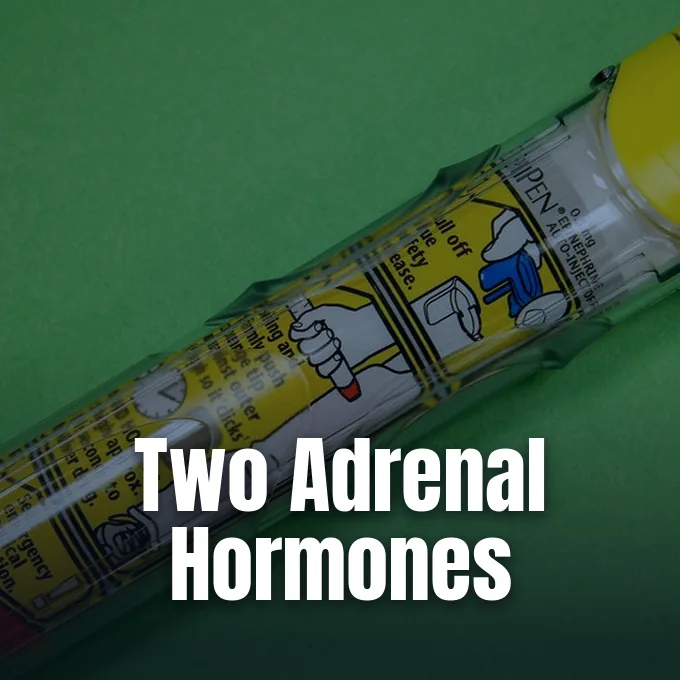
The biological comparison between epinephrine vs norepinephrine explains how two related adrenal hormones shape the autonomic nervous system through distinct receptor pathways across human tissues. Both molecules belong to the catecholamine family derived from the dietary amino acid tyrosine, with norepinephrine acting as the chief neurotransmitter released by sympathetic nerve endings to keep baseline vascular tone steady throughout the body. In contrast, epinephrine functions as an endocrine hormone released from the adrenal medulla to mobilize glucose, open constricted airways, and speed up heart action during emergencies [10, 11].
- How Epinephrine vs Norepinephrine Form in Glands
- Receptor Targets in Human Body Tissues
- Blood Flow and Heart Rate Actions
- Why Epinephrine vs Norepinephrine Differ in Shock Care
- Why Is Epinephrine Used in Anaphylaxis?
- Resuscitation Studies in Cardiac Arrest Patients
- Comparing Adrenaline vs Noradrenaline in Medical History
- Delivery Systems and Safety Guidance Rules
How Epinephrine vs Norepinephrine Form in Glands
Both substances share a common biochemical heritage in human biology, as epinephrine, norepinephrine, and dopamine form through sequential chemical steps that begin with the dietary amino acid tyrosine. Chromaffin cells in the adrenal medulla store both compounds until sympathetic nerves trigger their release, producing over 90% of circulating adrenaline found in human blood plasma [10, 11].
Physiologist Walter Bradford Cannon showed that the adrenal medulla and the sympathetic system work together to drive fight-or-flight reactions, prompting fast hormone release during acute environmental danger to help muscles work. Research proved that the adrenal medulla is not needed for daily human survival. When surgeons remove adrenal tissue during an adrenalectomy, patients still handle physical exercise and low blood sugar normally because postganglionic sympathetic nerves keep releasing norepinephrine locally [11]. Studying epinephrine vs norepinephrine shows how endocrine tissue complements autonomic nerve signaling without duplicating every cellular function across the body.
In 1946, Swedish researcher Ulf von Euler discovered that noradrenaline serves as the genuine neurotransmitter of the sympathetic nervous system. Before Euler made this discovery, scientists believed adrenaline controlled sympathetic nerve impulses. Euler showed that sympathetic postganglionic fibers release norepinephrine at neuroeffector junctions across blood vessels [11]. This finding settled early debates about autonomic regulation, proving that local nerve terminals supply daily vascular control while the adrenal medulla provides emergency reserves for extreme bodily stress.
Receptor Targets in Human Body Tissues
The two catecholamines produce distinct bodily effects because they bind to specific adrenergic receptor types across organ systems, which include alpha-1, alpha-2, beta-1, beta-2, and beta-3 subtypes. Norepinephrine binds strongly to alpha-1 and alpha-2 receptors while stimulating beta-1 receptors in heart tissue, but it shows almost no affinity for beta-2 receptors found in airway smooth muscle [10, 11].
Epinephrine acts as a broad agonist on alpha-1, alpha-2, beta-1, beta-2, and beta-3 receptors. Its high affinity for beta-2 receptors marks the main pharmacological difference between the two compounds. While norepinephrine tightens blood vessels through alpha receptors, epinephrine uses beta-2 pathways to dilate bronchioles in the lungs and relax arteries feeding large skeletal muscles. This dual action lets epinephrine open breathing passages while steering oxygen-rich blood toward running muscles during urgent physical challenges [11, 12]. Comparing epinephrine vs norepinephrine receptor profiles shows why medical teams pick different drugs for different emergencies, selecting norepinephrine to raise blood pressure and epinephrine to reverse acute airway spasms.
Organ response depends entirely on local receptor density across bodily tissues. Alpha-1 receptors dominate blood vessels in the skin, kidneys, and gut, causing marked narrowing when catecholamines arrive. In coronary arteries and deep skeletal muscle, beta-2 receptors dominate, promoting vasodilation under epinephrine stimulation. Epinephrine also activates hepatic beta-2 receptors to break down glycogen, raising glucose levels when body cells need quick fuel [10, 11]. In 1887, Grossman showed that stimulating cardiac accelerator nerves reversed muscarine-induced airway constriction in dogs, confirming early physiological links between autonomic nerves and the lungs [11].
Blood Flow and Heart Rate Actions
Heart actions show how receptor preferences steer blood circulation, as epinephrine acts on the sinoatrial node and ventricular muscle through beta-1 receptors to increase heart rate and boost pumping power. These cardiac actions raise overall cardiac output across vascular networks. Meanwhile, beta-2 activation relaxes resistance vessels in leg and arm muscles, preventing blood pressure from climbing too high [10, 11].
Norepinephrine creates a distinct circulatory pattern because it lacks beta-2 widening effects. When injected into the bloodstream, it stimulates vascular alpha-1 receptors, causing arterial and venous vessels to clamp down firmly. This response drives up total peripheral resistance, raising both systolic and diastolic blood pressure readings. When blood pressure climbs rapidly, carotid baroreceptors detect the change and trigger a vagal reflex that slows down heart rate despite direct beta-1 stimulation [11, 12]. Infusions of norepinephrine produce marked vasoconstriction accompanied by reflex bradycardia, whereas epinephrine increases heart rate and cardiac output without raising mean arterial pressure excessively [11].
Human hemodynamic tests show that epinephrine increases systolic pressure while diastolic pressure stays flat or drops slightly. Widening pulse pressure helps the heart pump blood efficiently without placing an excessive burden on the left ventricle. In contrast, norepinephrine raises mean arterial pressure and cardiac workload together by narrowing resistance beds [11]. Direct hemodynamic comparisons of epinephrine vs norepinephrine show how one agent supports strenuous physical work while the other maintains central vascular pressure across vital organs.
Why Epinephrine vs Norepinephrine Differ in Shock Care
Hospital teams rely on these circulatory traits when managing various kinds of circulatory shock in intensive care units, where blood flow drops so low that vital organs starve of oxygen. In septic shock, bacterial infections cause broad inflammation, open up peripheral blood vessels, and trigger dangerous hypotension that fluids alone cannot correct [7].
Clinical care guidelines recommend norepinephrine as the primary vasopressor to restore vascular tone and raise mean arterial pressure in septic shock. Its alpha-1 actions tighten blood vessels without causing the fast heart rate or metabolic stress seen with epinephrine. Intravenous epinephrine serves as a secondary choice when blood pressure fails to respond to norepinephrine, or when poor heart contraction reduces blood delivery [4, 7]. When weighing epinephrine vs norepinephrine in shock care, doctors choose the drug that stabilizes circulation without wasting myocardial energy, reserving epinephrine infusions for patients with persistent myocardial failure.
Doctors in intensive care units track cellular metabolism closely during vasopressor infusions. High-dose epinephrine stimulates beta-2 receptors in muscle beds, driving glycolysis and raising blood lactate levels that can confuse clinical tests. Norepinephrine boosts arterial pressure without triggering high lactate, making it the safer everyday stabilizer in sepsis [4, 7]. For hospitalized patients with low blood pressure from septic shock, healthcare providers inject epinephrine intravenously under continuous medical supervision [7].

Why Is Epinephrine Used in Anaphylaxis?
Why is epinephrine the preferred drug for anaphylaxis? Emergency protocols name it the only first-line treatment because it reverses airway closure and circulatory collapse simultaneously. Anaphylaxis is an acute type I allergic reaction triggered by insect stings, foods, latex, or prescription medications. When allergens bind to antibodies on mast cells, these cells release histamine and leukotrienes that cause hives, facial swelling, throat tightening, and sudden drops in blood pressure [3, 7].
Epinephrine halts this life-threatening cascade through its dual receptor actions. Alpha-1 stimulation narrows leaking blood vessels, raising blood pressure and shrinking swollen tissues in the throat. At the same time, beta-2 stimulation opens up bronchial smooth muscle, clearing wheezing and helping patients breathe freely. Norepinephrine cannot replace epinephrine during severe allergic attacks because its weak beta-2 activity fails to open tight airways [3, 16]. In pediatric medicine, Hartling and team in the Cochrane Database of Systematic Reviews evaluated epinephrine for acute viral bronchiolitis across clinical trials indexed in MEDLINE, EMBASE, CENTRAL, and PubMed, finding limited evidence for routine bronchiolitis use despite its established role in anaphylaxis [1].

In Pediatrics, Sicherer and team for the American Academy of Pediatrics reported that prompt intramuscular injection in the mid-outer thigh reduces hospital stays and prevents fatal outcomes. Injecting the drug into the vastus lateralis muscle delivers faster and higher blood levels than injecting under the skin. Prince, I. J. Mikhail, and D. R. Stukus showed that delaying epinephrine administration is the main reason patients die from anaphylaxis [3, 16]. For pediatric croup, C. L. Bjornson and team in the Cochrane Database of Systematic Reviews confirmed that nebulized racemic epinephrine reduces subglottic edema and hospital admission rates [5].
Resuscitation Studies in Cardiac Arrest Patients
Emergency medical services have used epinephrine during cardiopulmonary resuscitation for over half a century, intervening when cardiac arrest strikes and brain tissue faces rapid cell death from stopped blood flow. Paramedics inject epinephrine to stimulate alpha-1 receptors and raise aortic pressure during chest compressions, forcing available blood into coronary arteries and the brain to help restart the heart [4].
Medical researchers have studied whether this drug improves meaningful long-term survival. In the PARAMEDIC-2 trial published in the New England Journal of Medicine, Perkins and coauthors evaluated 8014 patients with out-of-hospital cardiac arrest across five National Health Service ambulance trusts in the United Kingdom. Paramedics gave parenteral epinephrine to 4015 patients and saline placebo to 3999 patients alongside standard life support. At 30 days, 130 patients in the epinephrine group survived compared to 94 in the placebo group, yielding an odds ratio of 1.39. Hospital discharge numbers showed no difference in favorable neurological recovery [2]. The International Liaison Committee on Resuscitation had called for this clinical trial to resolve longstanding safety questions regarding resuscitation drugs.
In Current Opinion in Cardiology, Callaway reported that alpha-mediated vessel constriction in small brain capillaries may reduce microvascular blood flow while large-vessel pressure rises. This mismatch explains why epinephrine restarts the heart without improving neurological outcomes. The heart beats again, but injured brain tissue may struggle to recover [2, 4]. Laboratory data suggest that post-resuscitation reductions in microvascular perfusion offset the temporary blood pressure benefits achieved during closed-chest cardiac massage.
Comparing Adrenaline vs Noradrenaline in Medical History
The two names used for these hormones come from nineteenth-century biochemical discoveries and commercial trademark rights, beginning in 1897 when pharmacologist John Abel prepared an adrenal extract and named it epinephrine using Greek roots meaning upon the kidney. In 1901, chemist Jōkichi Takamine isolated pure crystalline adrenaline, which Parke, Davis & Co. patented as a registered trademark [11].
Because Parke, Davis & Co. owned the trademark Adrenaline in the United States, American regulators chose epinephrine as the official generic name under the United States Adopted Name system. Meanwhile, British and European authorities adopted adrenaline and noradrenaline under the British Approved Name standard. Today, both terms describe the same active substances, and receptors worldwide carry the name adrenergic [11, 12]. Takamine’s drug reached clinical use in 1905 and now sits on the World Health Organization Model List of Essential Medicines. Interestingly, researchers also found natural adrenaline in the herb Scoparia dulcis in Northern Vietnam [11]. In 2023, American pharmacies dispensed over one million outpatient prescriptions, ranking the drug 247th in domestic sales [12].
In New Zealand, Brian Wu and Dr Amanda Oakley at the DermNet New Zealand Trust and Keck School of Medicine in Los Angeles documented that adrenaline helps prolong local anesthesia. Adding small doses to lidocaine restricts local blood flow, reducing bleeding during minor surgery and keeping outpatient operative procedures safe and painless [10]. Ophthalmologists also apply it for open-angle glaucoma because enhanced drainage of fluid from ocular chambers eases internal eye pressure through trabecular outflow pathways [11].
Delivery Systems and Safety Guidance Rules
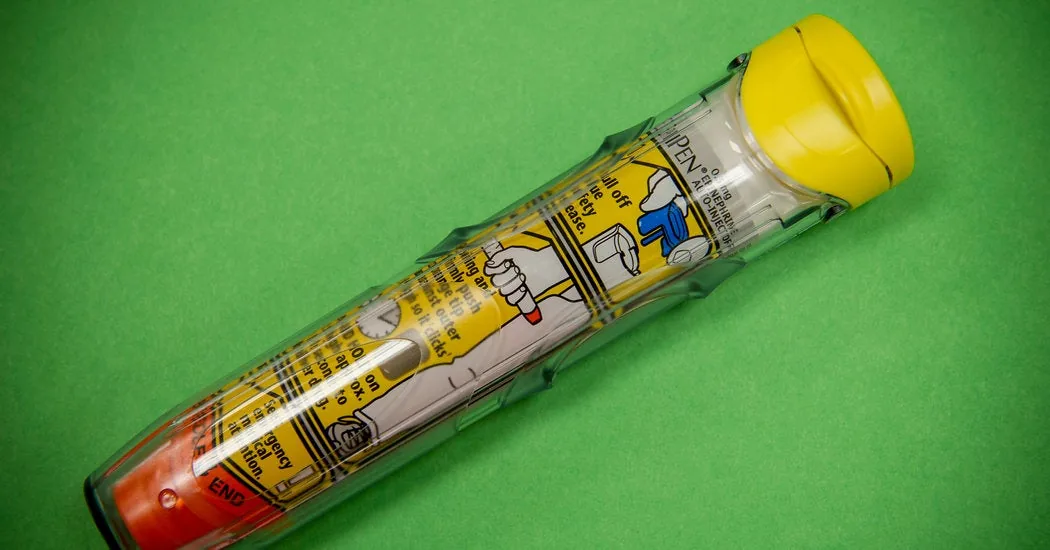
Emergency devices have evolved since Sheldon Kaplan invented the EpiPen auto-injector in the mid-1970s at Survival Technology in Bethesda, Maryland. Richard B. Toren helped develop the product after his daughter suffered bee sting allergies. Survival Technology merged with Brunswick Biomedical to form Meridian Medical Technologies before King Pharmaceuticals bought Meridian. Modern devices deliver 0.3 mg of epinephrine through a spring-loaded needle into the thigh [13, 14].
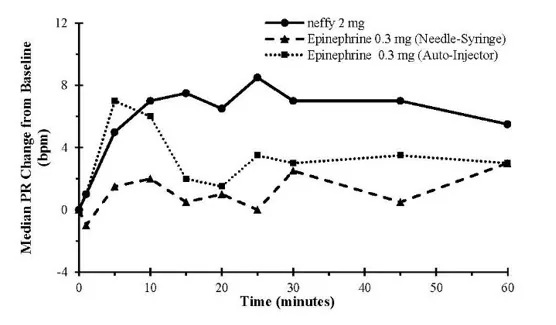
In August 2024, the FDA approved Neffy, a needle-free 2 mg nasal spray made by ARS Pharmaceuticals Operations, Inc. under NDC codes 82580-010-02 and 82580-020-02. In trials with 175 healthy adult volunteers without anaphylaxis, ARS Pharmaceuticals Operations, Inc. showed that nasal delivery matched intramuscular injections in blood levels and heart rate response. Kelly Stone, Associate Director at the FDA Center for Drug Evaluation and Research, explained that nasal options help patients who fear needles. In March 2025, the FDA approved a 1 mg Neffy spray for children weighing 15 to 30 kilograms [6, 8]. The European Medicines Agency authorised Eurneffy, while Armstrong Pharmaceuticals, Inc. packages Primatene Mist under NDC 17270-5512-0 [9, 15].
Rising drug costs have triggered national concern among allergy patients. In The New York Times, Tara Parker-Pope and Rachel Rabkin Peachman reported that Mylan raised EpiPen prices from $103.50 in 2009 to $608.61 in 2016. Michael Rea of Rx Savings Solutions in Overland Park, Kansas, noted that uninsured patients paid $640 per two-pack. Senator Amy Klobuchar called for federal reviews after Sanofi recalled Auvi-Q, while Hollister-Stier offered Twinject before selling it to Verus Pharmaceuticals and Shionogi [13, 14]. Guidelines advise carrying two doses because 16% to 35% of episodes require a second injection within 15 minutes [13]. For accidental injections, families should call poison control at 1-800-222-1222 or emergency services at 911 [7].
- ACADEMIC JOURNAL Hartling, L., Bialy, L. M., Vandermeer, B., Tjosvold, L., Johnson, D. W., Plint, A. C., Klassen, T. P., Patel, H., & Fernandes, R. M. (2011). Epinephrine for bronchiolitis. Cochrane Database of Systematic Reviews, 2011(6), CD003123. [Article Link]
- ACADEMIC JOURNAL Perkins, G. D., Ji, C., Deakin, C. D., Quinn, T., Nolan, J. P., Scomparin, C., Regan, S. E., Long, J. L., Slowther, A., Pocock, H., Black, J. J., Moore, F. P., Fothergill, R. T., Rees, N., O’Shea, L., Docherty, M., Gunson, I. M., Han, K. H., Charlton, K., & Lall, R. (2018). A Randomized Trial of Epinephrine in Out-of-Hospital Cardiac Arrest. New England Journal of Medicine, 379(8), 711-721. [Article Link]
- ACADEMIC JOURNAL Sicherer, S. H., Simons, F. E. R., Section on Allergy and Immunology, Mahr, T. A., Abramson, S. L., Dinakar, C., Fleisher, T. A., Irani, A. A., Kim, J. S., & Matsui, E. C. (2017). Epinephrine for First-aid Management of Anaphylaxis. Pediatrics, 139(3), e20164006. [Article Link]
- ACADEMIC JOURNAL Callaway, C. W. (2012). Epinephrine for cardiac arrest. Current Opinion in Cardiology, 28(1), 36-42. [Article Link]
- ACADEMIC JOURNAL Bjornson, C. L., Russell, K. F., Vandermeer, B., Klassen, T. P., & Johnson, D. W. (2013). Nebulized epinephrine for croup in children. Cochrane Database of Systematic Reviews, 2013(10), CD006619. [Article Link]
- WEBSITE DailyMed. (2026). Neffy (epinephrine spray) prescribing information. National Library of Medicine. [Article Link]
- WEBSITE MedlinePlus. (2026). Epinephrine injection. National Library of Medicine. [Article Link]
- PRESS RELEASE U.S. Food and Drug Administration. (2024). FDA Approves First Nasal Spray for Treatment of Anaphylaxis. [Article Link]
- WEBSITE European Medicines Agency. (2024). Eurneffy (epinephrine) overview. [Article Link]
- WEBSITE Wu, B., & Oakley, A. (2015). Adrenaline: physiology and pharmacology. DermNet New Zealand. [Article Link]
- WEBSITE Wikipedia contributors. (2026). Adrenaline. Wikipedia, The Free Encyclopedia. [Article Link]
- WEBSITE Wikipedia contributors. (2026). Epinephrine (medication). Wikipedia, The Free Encyclopedia. [Article Link]
- WEBSITE Wikipedia contributors. (2026). Epinephrine autoinjector. Wikipedia, The Free Encyclopedia. [Article Link]
- ONLINE NEWS Parker-Pope, T., & Peachman, R. R. (2016). EpiPen price rise sparks concern for allergy sufferers. The New York Times. [Article Link]
- WEBSITE DailyMed. (2026). Primatene Mist (epinephrine inhalation aerosol) label information. National Library of Medicine. [Article Link]
- ACADEMIC JOURNAL Prince, B. T., Mikhail, I. J., & Stukus, D. R. (2018). Underuse of epinephrine for the treatment of anaphylaxis: missed opportunities. Journal of Asthma and Allergy, 11, 143-151. [Article Link]


