






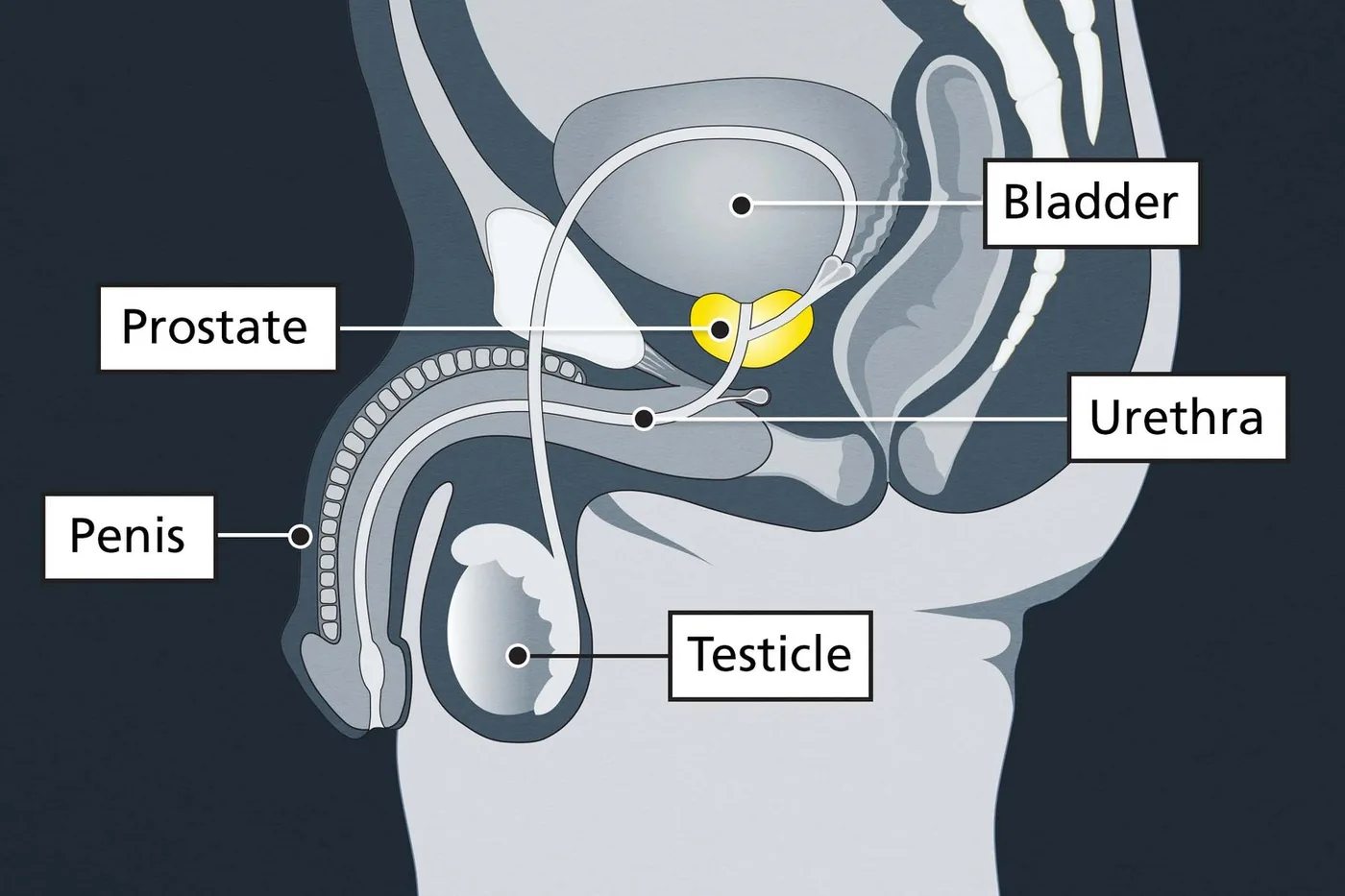
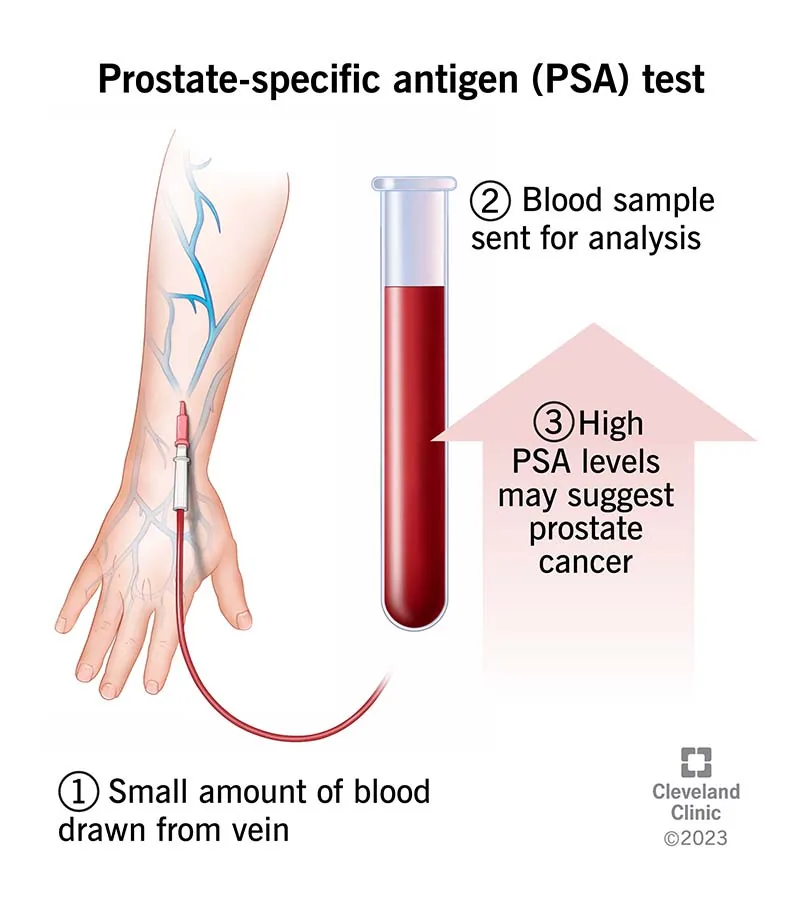
Answering what is psa in blood tests begins with a simple definition of a protein made by normal and cancerous cells in the prostate gland. The prostate sits directly beneath the bladder and wraps around the upper urethra, producing seminal fluid that nourishes and carries sperm during reproduction. While small amounts of this enzyme enter the bloodstream under healthy conditions, blood tests measure PSA levels in nanograms per milliliter to screen for prostate cancer and track known gland problems [1]. A high PSA reading signals prostate cellular activity but does not provide an absolute diagnosis of cancer [2].
- What Is PSA and How Does It Function?
- Biological Role in Semen Liquefaction
- Common Reasons Why PSA Levels Rise
- Age-Adjusted Reference Ranges
- Screening Guidelines for Shared Decision-Making
- Potential Harms of Overdiagnosis
- Secondary Biomarkers and Prostate-Specific Antigen Variants
- Imaging Approaches in Long-Term Monitoring
What Is PSA and How Does It Function?
Prostate cells secrete this protein as a neutral serine protease belonging to the human tissue kallikrein family. The protein is encoded by the KLK3 gene on chromosome 19 at position 19q13. It consists of a single-chain glycoprotein of 237 amino acids with a molecular mass of roughly 33 to 34 kilodaltons [15].
Its main biological job involves cleaving semenogelin I and II proteins to liquefy semen after ejaculation, helping sperm cells swim freely through the female reproductive tract. In prostate tissue, epithelial cells produce an inactive pro-enzyme that needs activation by another kallikrein peptidase known as KLK2. Local zinc levels inside the prostate are ten times higher than in other body fluids, keeping the enzyme inactive until ejaculation occurs. When semen meets the acidic vaginal environment after coitus, the local pH shifts toward neutral values and lowers zinc inhibition, allowing the active enzyme to break down the gel matrix and dissolve cervical mucus barriers [15].
Under healthy conditions, basement membranes and capillary walls keep blood PSA levels low by preventing large amounts from leaking into blood vessels. When disease or inflammation disrupts this cell structure, greater amounts diffuse into surrounding capillaries. Individual cancer cells produce less enzyme than normal cells because cancer alters normal cellular development. Higher blood PSA levels in cancer patients stem from the vast proliferation of abnormal cells, but healthy men keep low amounts of the enzyme in their blood throughout adulthood [15].
Biological Role in Semen Liquefaction
Medical researchers uncovered the antigen through independent studies across several decades, starting with forensic science before expanding into oncology. In the late 1960s, early experiments identified precipitation antigens in human prostate tissue. Japanese legal medicine specialist Mitsuwo Hara characterized gamma-seminoprotein in seminal fluid in 1971 while developing forensic methods to study sexual assault evidence. Two years later, researchers isolated another seminal protein fraction termed E1. Later, Wang, Valenzuela, Murphy, and Chu succeeded in purifying prostate-specific antigen from prostate tissue, confirming it was an independent protein distinct from prostatic acid phosphatase [11].
Commercial blood tests emerged during the mid-1980s as diagnostic makers recognized the value of measuring blood levels. A diagnostic company named Hybritech proposed an upper cutoff of 4.0 ng/mL in 1986 to separate normal from suspicious values. Dr. William Catalona then supported using the PSA test for community screening at a 1988 meeting organized by the National Cancer Institute. By around 2008, as more was learned about both benefits and harms, many professional medical organizations began cautioning against routine population screening [1].
Before blood testing, doctors relied on a digital rectal examination (DRE) to detect abnormalities. By the time a prostate tumor became palpable through the rectal wall during a DRE, nearly 70% of men already had cancer that had spread beyond the gland. Today, nonpalpable localized tumors account for 75% of new diagnoses, and fewer than 3% present with distant spread [14].
Common Reasons Why PSA Levels Rise
Why do blood levels rise when no cancer is present? The most common reason in men over 50 is benign prostatic hyperplasia (BPH), a noncancerous enlargement of the gland. As benign prostate tissue expands in BPH, more cells make the enzyme, causing baseline blood PSA levels to climb gradually without signaling an underlying tumor [2].
Infections and swelling in the prostate gland often trigger sharp rises in blood PSA readings. Severe bacterial prostatitis damages the protective cell lining, causing measured readings to climb above 100 ng/mL before antibiotic therapy resolves the underlying inflammation. Common urinary tract infections irritate the prostate and distort test results, leading urologists to advise waiting four to six weeks after symptoms clear before having a PSA test. Routine medical procedures cause similar problems; catheter placement, cystoscopy, or a recent needle biopsy can raise blood PSA levels for up to six weeks [4].

Everyday physical activities and common medications also alter test results. Ejaculation within 48 hours of testing causes temporary leakage into blood vessels, while vigorous bicycle riding places direct pressure on the prostate that can push numbers higher. In contrast, medications known as 5-alpha reductase inhibitors, such as finasteride and dutasteride used for BPH or hair loss, reduce blood PSA levels by about 50%, requiring doctors to double the measured number when evaluating risk. Dietary supplements such as saw palmetto do not appear to alter blood readings [1].
Age-Adjusted Reference Ranges
Because the prostate gland enlarges naturally throughout adult life, standard reference thresholds often vary across age brackets. A traditional cutoff of 4.0 ng/mL was applied to all adult men, but modern practice frequently uses age-specific ranges to improve clinical precision. Laboratories commonly consider levels between 0 and 2.5 ng/mL normal for men aged 40 to 49, while acceptable values rise to 2.5 to 3.5 ng/mL for those aged 50 to 59. Between ages 60 and 69, readings up to 4.5 ng/mL are typical, and thresholds reach 5.5 to 6.5 ng/mL for men in their seventies who have normal age-related prostate growth [2].
What happens when results fall into intermediate ranges? Circulating values below 1.0 ng/mL indicate a 1.5% probability of harboring aggressive cancer over the subsequent decade. Values between 4.0 and 10.0 ng/mL represent a diagnostic gray zone where about 25% of men undergoing biopsy have cancer. When blood levels exceed 10.0 ng/mL, the probability of cancer surpasses 50%, prompting doctors to recommend follow-up imaging and tissue sampling [14].
Tracking how fast values climb over time is known as PSA velocity, but clinical evidence advises caution. While annual increases above 0.75 ng/mL were once studied as cancer indicators, a major National Cancer Institute trial led by Dr. Andrew Vickers analyzed over 5,500 men and revealed that adding velocity triggered 433 unnecessary biopsies while finding few aggressive tumors [7].



Screening Guidelines for Shared Decision-Making
Major medical groups recommend that screening decisions come from a personal talk between patients and their doctors instead of universal rules. The United States Preventive Services Task Force recommends individualized shared decision-making for men aged 55 to 69, balancing personal preferences against potential diagnostic complications. The task force advises against routine PSA-based screening in men aged 70 and older, as slow-growing tumors detected at that age rarely shorten life. Currently, Medicare provides coverage for an annual PSA test for all eligible individuals over 50, and the National Health Service in the United Kingdom allows men over 50 to request testing after talking with their general practitioner [1].
Earlier screening talks are advised for men with higher risk factors. Black men face higher rates of aggressive disease, while men with a father or brother diagnosed before 65 or those carrying inherited BRCA2 gene mutations face increased risk. Guidelines from the American Cancer Society and the American Urological Association recommend these men begin testing talks at age 40 or 45 [6].
Correct test preparation prevents false alarms that cause patient worry. Men should avoid sexual activity, hard workouts, and bicycle riding for at least 48 hours before blood collection. When a screening test shows a slightly high PSA reading without symptoms, doctors repeat the blood test two to six weeks later before recommending a biopsy. If values remain borderline, doctors evaluate individual risk factors and order secondary tests [3].
Potential Harms of Overdiagnosis
The main controversy surrounding PSA screening involves the dual problems of overdiagnosis and overtreatment. Many prostate tumors grow very slowly and never cause symptoms or shorten life expectancy. Finding these harmless tumors often leads to surgery or radiation that causes urinary leakage, bowel problems, and erectile dysfunction without helping men live longer [1].
Large randomized screening trials show both the modest mortality benefits and the measurable physical burdens linked to routine testing programs. The European Randomized Study of Screening for Prostate Cancer reported a 20% to 29% relative reduction in cancer mortality after more than a decade of observation. A comparative study published in the European Journal of Cancer by Dr. Pim J. van Leeuwen evaluated screened participants in Rotterdam against unscreened controls in Northern Ireland. That study found a 37% relative reduction in prostate cancer deaths and a 53% drop in metastatic disease over an 8.5-year observation period [12].
Population models highlight the trade-offs clearly. For every 1,000 men aged 55 to 69 screened for 13 years, approximately 1.3 to 2 prostate cancer deaths are avoided, and three men avoid metastatic disease. However, 240 men receive positive screening results that lead to negative biopsies, 80 undergo surgery or radiation, and 50 men experience treatment-related erectile dysfunction while 15 develop urinary incontinence [1].
Secondary Biomarkers and Prostate-Specific Antigen Variants
To reduce unnecessary biopsies, urologists use secondary biomarkers that examine molecular subtypes of the protein. In blood, PSA travels either unbound as free PSA or bound to blood proteins. A free-to-total PSA ratio above 25% strongly indicates benign enlargement, but a ratio below 10% signals a higher probability of prostate cancer [6].
Doctors also evaluate prostate volume using transrectal ultrasound or magnetic resonance imaging (MRI) to calculate PSA density, dividing total blood level by gland volume. A high density indicates that compact prostate tissue is shedding excess protein, raising suspicion of cancer. Advanced multivariable tests combine several kallikrein markers to refine risk estimates. The Prostate Health Index incorporates total, free, and [-2]proPSA forms, as shown in clinical studies by Dr. William Catalona, while the 4Kscore integrates four kallikrein proteins, and the IsoPSA test evaluates structural forms of the protein in blood [10].

Urine-based molecular tests provide another layer of diagnostic safety before doctors recommend a needle biopsy. The Progensa PCA3 assay measures noncoding messenger RNA that is heavily overexpressed in prostate cancer cells. Another urine tool, the ExoDx Prostate IntelliScore, analyzes urinary exosomal RNA for PCA3, ERG, and SPDEF markers, where a validated score above 15.6 identifies men who need a biopsy. The SelectMDx test similarly checks messenger RNA markers in urine to help distinguish low-risk changes from aggressive disease [1].
Imaging Approaches in Long-Term Monitoring
Multiparametric magnetic resonance imaging (MRI) has transformed pre-biopsy checks by mapping suspicious areas within the prostate gland. The IP1-PROSTAGRAM study led by Dr. Eldred-Evans and Dr. Ahmed evaluated 408 men across seven primary care clinics in the United Kingdom, including 132 Black participants. Using a short noncontrast MRI protocol, the researchers found that MRI identified 11 significant cancers compared to 7 identified by standard PSA blood testing, without increasing the total number of biopsies. British research teams are expanding this work through the TRANSFORM trial across the National Health Service to test community screening pathways [9].
PSA blood tests remain vital following definitive cancer treatment to detect early disease recurrence before physical symptoms appear. Following a successful radical prostatectomy, circulating PSA levels should fall below detection limits within several weeks. A confirmed subsequent rise above 0.2 ng/mL defines biochemical recurrence, alerting doctors that residual tumor cells have resumed growth [15].
Monitoring after radiation therapy follows different criteria because benign prostate tissue often survives treatment. Radiation causes PSA levels to decline slowly toward a baseline nadir. Recurrence after radiation is formally diagnosed when blood levels rise by 2.0 ng/mL above that lowest nadir point. In patients with biochemical recurrence, modern positron emission tomography targeting prostate-specific membrane antigen can pinpoint recurrent lesions even when blood PSA levels measure below 0.5 ng/mL, helping doctors guide targeted treatments [8].
- REPORT National Cancer Institute. (2024). Prostate-Specific Antigen (PSA) Test. [Article Link]
- WEBSITE Cleveland Clinic. (2023). PSA (Prostate-Specific Antigen) Test. [Article Link]
- WEBSITE MedlinePlus. (2025). Prostate-Specific Antigen (PSA) Test. [Article Link]
- WEBSITE National Health Service. (2024). PSA Test. [Article Link]
- WEBSITE American Cancer Society. (2026). Can Prostate Cancer Be Found Early? [Article Link]
- WEBSITE American Cancer Society. (2026). PSA Screening Test for Prostate Cancer. [Article Link]
- REPORT National Cancer Institute. (2011). PSA Velocity Does Not Improve Prostate Cancer Detection. [Article Link]
- REPORT Centers for Disease Control and Prevention. (2026). Screening for Prostate Cancer. [Article Link]
- ACADEMIC JOURNAL Eldred-Evans, D., Burak, P., Connor, M. J., Day, E., Evans, M., Fiorentino, F., Gammon, M., Hosking-Jervis, F., Klimowska-Nassar, N., McGuire, W., Padhani, A. R., Prevost, A. T., Price, D., Sokhi, H., Tam, H., Winkler, M., & Ahmed, H. U. (2021). Population-Based Prostate Cancer Screening With Magnetic Resonance Imaging or Ultrasonography. JAMA Oncology, 7(3), 395-402. [Article Link]
- ACADEMIC JOURNAL Catalona, W. J., Partin, A. W., Sanda, M. G., Wei, J. T., Klee, G. G., Bangma, C. H., Slawin, K. M., Marks, L. S., Loeb, S., Broyles, D. L., Shin, S. S., Cruz, A. B., Chan, D. W., Sokoll, L. J., Roberts, W. L., van Schaik, R. H. N., & Mizrahi, I. A. (2011). A Multicenter Study of [-2]Pro-Prostate Specific Antigen Combined With Prostate Specific Antigen and Free Prostate Specific Antigen for Prostate Cancer Detection in the 2.0 to 10.0 ng/ml Prostate Specific Antigen Range. The Journal of Urology, 185(5), 1650-1655. [Article Link]
- ACADEMIC JOURNAL Wang, M., Valenzuela, L., Murphy, G. P., & Chu, T. M. (2016). Purification of a Human Prostate Specific Antigen. The Journal of Urology, 197(2S), 159-163. [Article Link]
- ACADEMIC JOURNAL Van Leeuwen, P. J., Connolly, D., Gavin, A., Roobol, M. J., Black, A., Bangma, C. H., & Schröder, F. H. (2010). Prostate Cancer Mortality in Screen and Clinically Detected Prostate Cancer: Estimating the Screening Benefit. European Journal of Cancer, 46(2), 377-383. [Article Link]
- REPORT Fischer, K. (2024). MRI Screening for Prostate Cancer Shows Promise. NIHR Evidence. [Article Link]
- WEBSITE Medscape. (2026). Prostate-Specific Antigen Testing: Overview, Physiological Characteristics, and Procedure. [Article Link]
- WEBSITE Wikipedia contributors. (2026). Prostate-Specific Antigen. [Article Link]


